Japan does not have one climate. A pleasant week in Kanazawa can be snow in the Japan Alps and swimming weather in Okinawa. Use this page to match a season to a published guide, then reconfirm weather, transport, and opening hours before you go.
Explore Japan month by month
Use this monthly index to find a destination guide and an official seasonal overview. Festival dates, opening times, and transport schedules can change from year to year; confirm each event with its organizer before making plans. For a wider selection, see JNTO’s festivals and events guide.
Jan · Feb · Mar · Apr · May · Jun · Jul · Aug · Sep · Oct · Nov · Dec
January
Snowy onsen towns and New Year travel. Explore Ginzan Onsen on Hidden Japan Guide, and check JNTO’s January guide for seasonal events and current planning advice.
February
Winter festivals and northern landscapes. Explore Hiraizumi on Hidden Japan Guide, and check JNTO’s February guide for seasonal events and current planning advice.
March
Early spring walks and changing weather. Explore Uji on Hidden Japan Guide, and check JNTO’s March guide for seasonal events and current planning advice.
April
Temple grounds and spring day trips. Explore Miyajima on Hidden Japan Guide, and check JNTO’s April guide for seasonal events and current planning advice.
May
Fresh green valleys and village paths. Explore Iya Valley on Hidden Japan Guide, and check JNTO’s May guide for seasonal events and current planning advice.
June
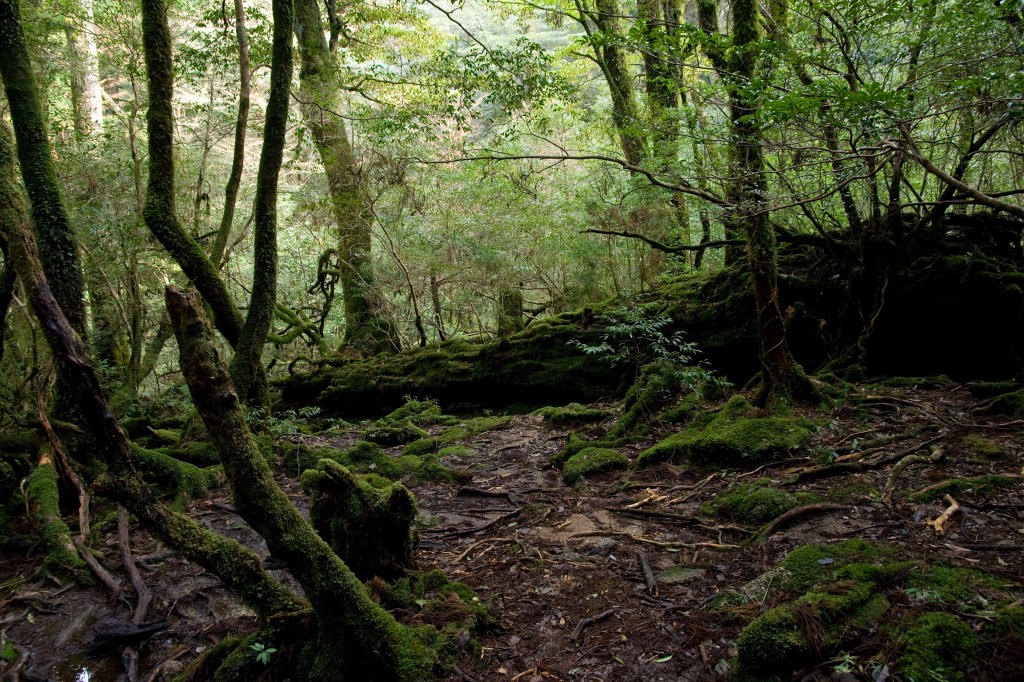
Rainy forests and flexible outdoor plans. Explore Yakushima on Hidden Japan Guide, and check JNTO’s June guide for seasonal events and current planning advice.
July
Hokkaido flower fields and summer festivals. Explore Biei and Furano on Hidden Japan Guide, and check JNTO’s July guide for seasonal events and current planning advice.
August
Island culture and summer travel precautions. Explore Okinawa on Hidden Japan Guide, and check JNTO’s August guide for seasonal events and current planning advice.
September
Art islands and late-summer travel. Explore Naoshima on Hidden Japan Guide, and check JNTO’s September guide for seasonal events and current planning advice.
October
Mountain towns and early autumn color. Explore Takayama on Hidden Japan Guide, and check JNTO’s October guide for seasonal events and current planning advice.
November
Gardens and autumn color. Explore Kanazawa on Hidden Japan Guide, and check JNTO’s November guide for seasonal events and current planning advice.
December
Winter lights and hot-spring evenings. Explore Kusatsu Onsen on Hidden Japan Guide, and check JNTO’s December guide for seasonal events and current planning advice.
Bloom dates, festival days, and last buses are not fixed here. Where a guide on this site mentions a season, the link below says so in plain language.
Spring: blossoms, new green, and busy weekends
Spring is the season most first-time visitors ask for. Cherry trees flower at different times from south to north, and the window at a single temple can be short. Do not treat a photo from last year as this year’s date. New green after the blossoms is often easier for walking, with fewer people pressed onto one viewpoint.
Weekends and holiday weeks fill reserved seats and small inns. If blossom photos are the goal, stay mobile: have a second neighborhood you would still enjoy if the flowers are early or late.
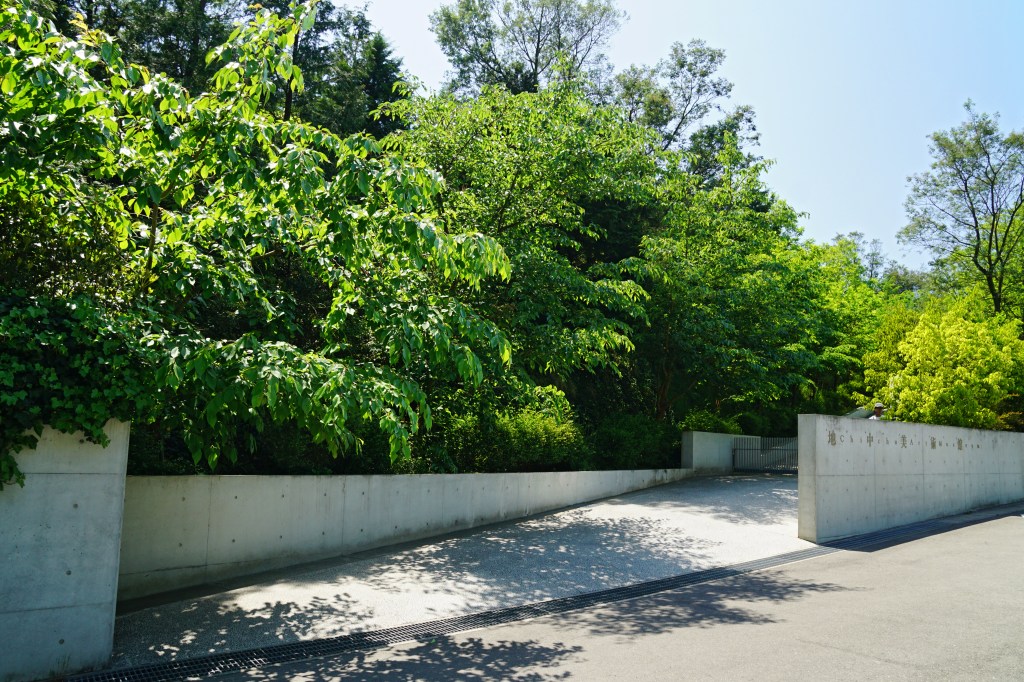
Naoshima
Early May green at the Chichu Art Museum entrance. This is new foliage, not cherry blossom.
The published guides do not include a cherry-blossom photograph, so the other spring places stay in the list below.
- Kanazawa — the guide names fresh spring greenery, and snow scenes in winter, as garden highlights.
- Hiraizumi — spring greenery and autumn color are called out as the photogenic months.
- Shirakawa-go — late spring is described as fresh green and generally pleasant for walking.
- Miyajima — spring and autumn are the busy seasons, with heavier ferry queues on weekends.
- Uji — spring and autumn are popular for mild weather. It is a Kyoto day trip, not a blossom forecast.
- Kawagoe — pleasant for walking in spring and autumn. Rain makes the stone streets slippery.
- Takayama — pleasant in spring and autumn. Keep a margin if you continue into the mountains.
Spring cautions
- Do not book a same-day chain of reserved trains around a single blossom morning.
- Pollen bothers many visitors in early spring. Pack medicine you already know works for you.
- Mountain roads can still be cold after cities feel warm. Shirakawa-go and Takayama are not the same temperature as Kyoto.
Summer: forests, coasts, and heat
Summer is the season for flower fields, gorges, and the sea. It is also humid. Cities feel hotter than the forecast, and midday is a poor time for an exposed shrine walk. Start early, go indoors or under trees at noon, and treat sudden rain as normal.
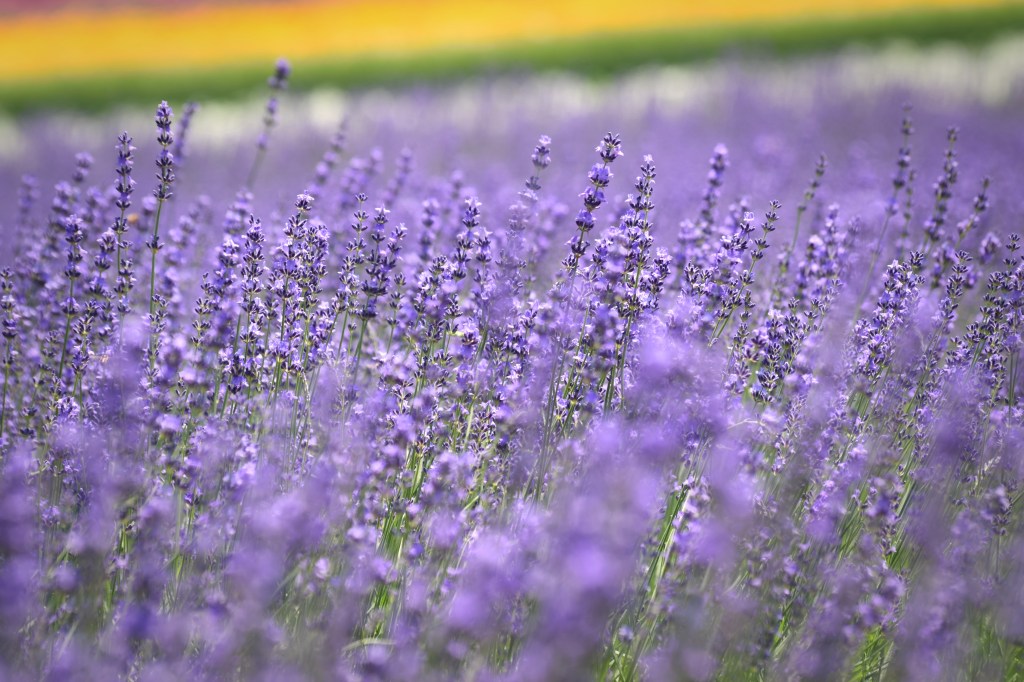
Biei and Furano
Lavender at Furano in July. Bloom dates change each year.
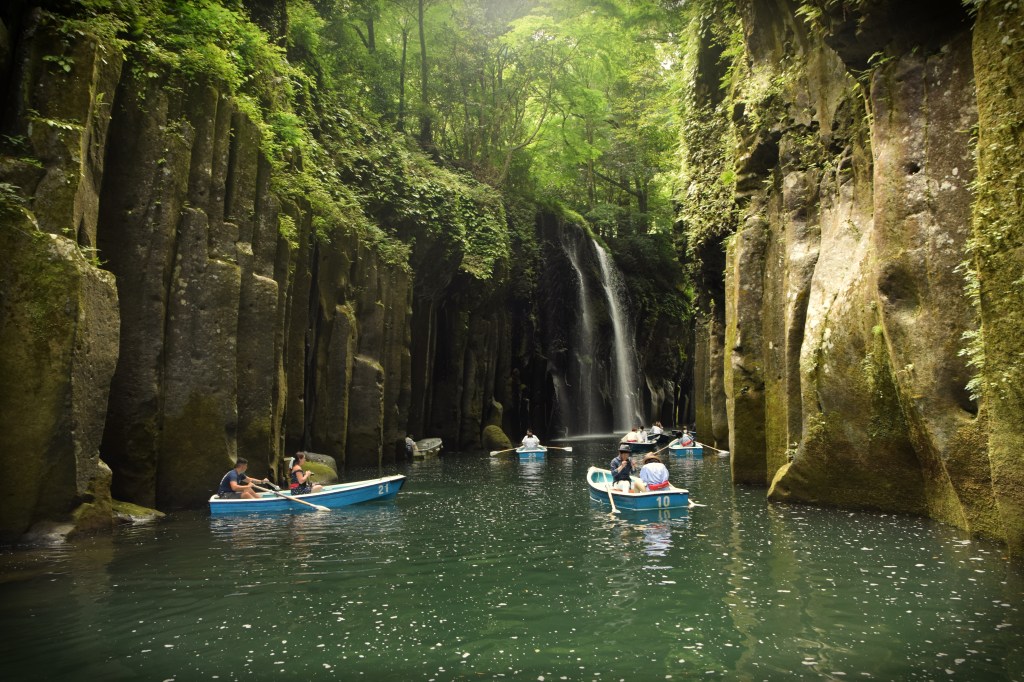
Takachiho Gorge
Boats on the green gorge. Paths are slick after rain.
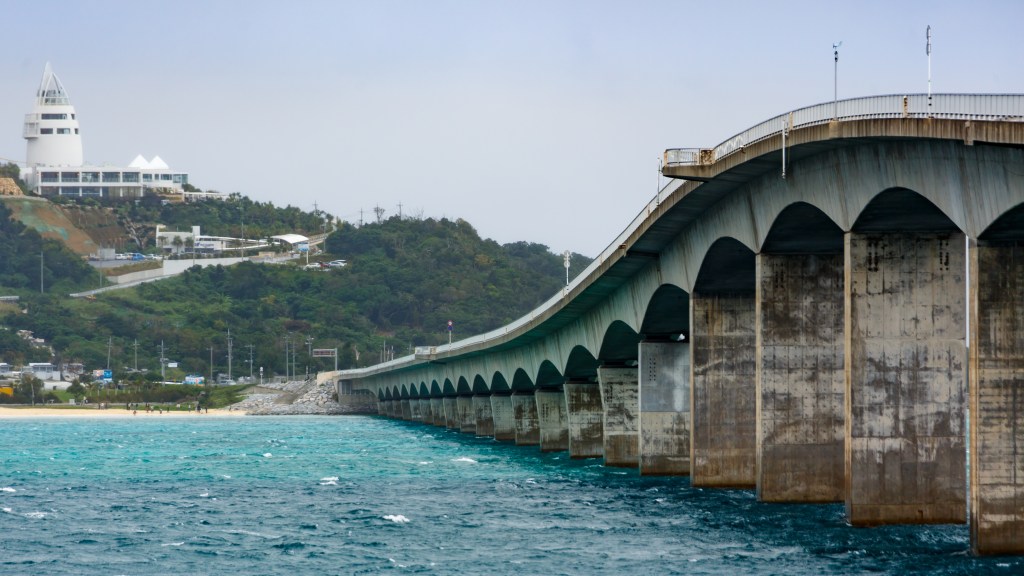
Okinawa
Kouri Bridge and the northern coast. Typhoons can still stop ferries and flights.
- Biei and Furano — summer flowers, including lavender, are the classic draw. The guide says peak bloom dates change and that July and August are the busiest.
- Okinawa — beaches and snorkeling, with high heat and typhoons that can cancel flights and ferries. Read that guide’s storm note and the official updates it points to.
- Takachiho Gorge — lush in the warmer months. Midday heat and boat queues both rise in peak summer, and rain makes the paths slick.
- Kurama and Kibune — summer riverside meals are a reason to go, and they are seasonal. The guide says to confirm the dining window and not assume a table in the stream.
- Yakushima — ancient cedars and wet forest. Rain is expected in any month, so this is not a fair-weather hike.
- Naoshima — the art island is more comfortable in spring and autumn. Summer is hot on the exposed paths.
- Iya Valley — green and humid, with rain that can change mountain-road plans.
Summer cautions
- Carry water, a hat, and a compact rain layer. Convenience stores are the easy refill.
- Check gorge boats, ferries, and island flights the morning you travel. Weather stops them.
- If a typhoon is in the forecast, protect the flight home before you protect a sightseeing day.
Autumn: color in temple gardens and old streets
Autumn color also moves from north to south, and from the mountains down to the cities. A town can be green one week and crowded the next. Go early in the day, and have a street or a garden you can enjoy if the leaves are not at their peak.
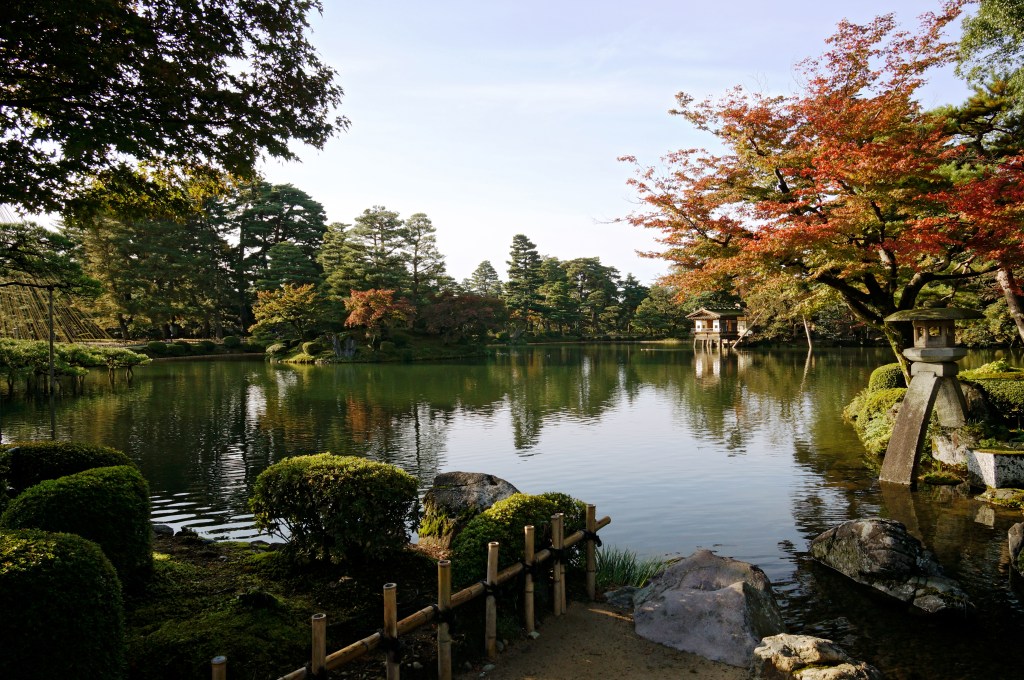
Kanazawa
Kenrokuen in November, with maples beside the pines and pond.
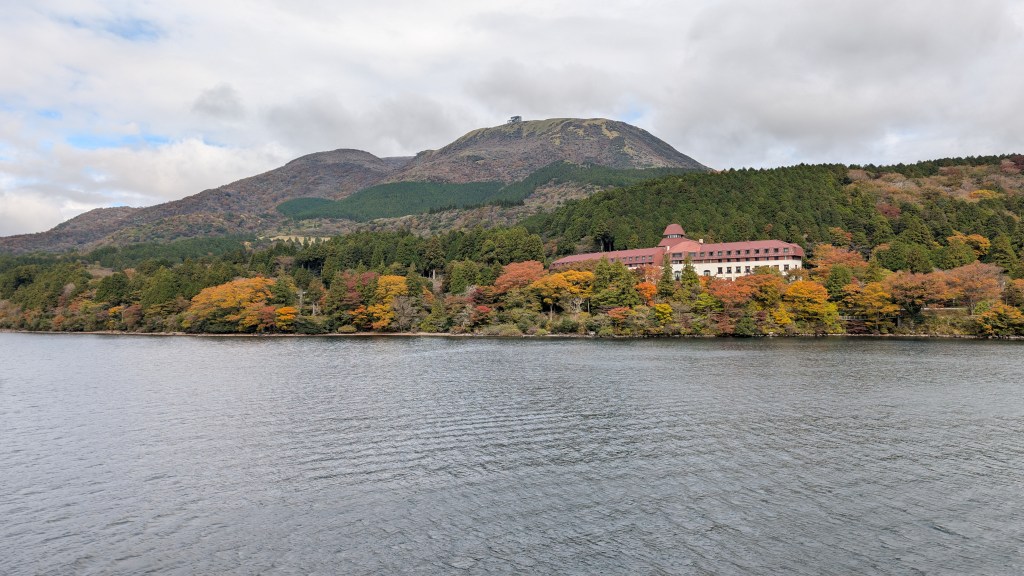
Hakone
Lake Ashi in autumn. This photograph shows the lake and hillside, not a view of Mount Fuji.
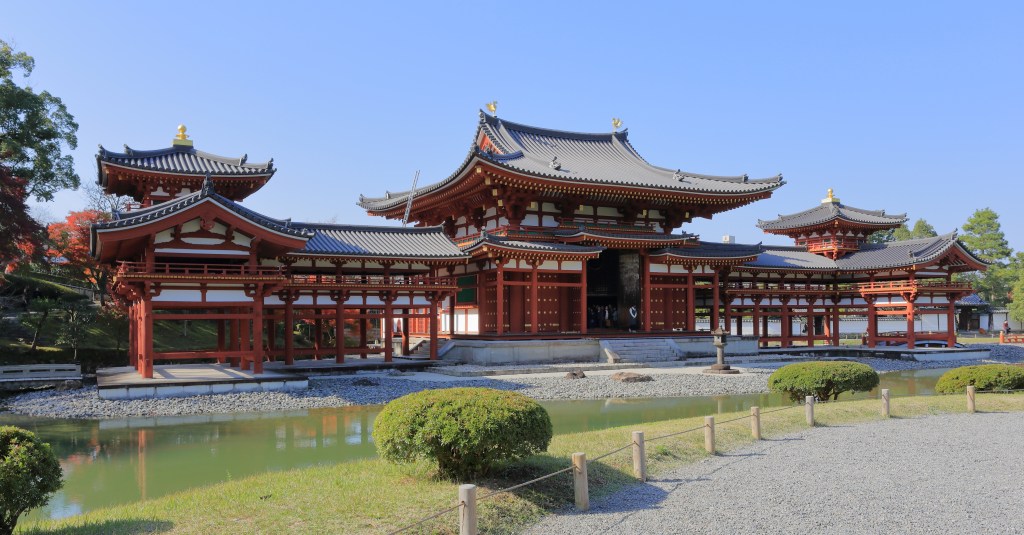
Uji
Byodo-in Phoenix Hall in November, a short train ride from Kyoto.
- Miyajima — Momijidani is named for maple season. The ropeway and trails depend on maintenance, so confirm them.
- Kurama and Kibune — autumn foliage is one of the busy periods. Winter trails can be icy, so do not use a summer plan unchanged.
- Shirakawa-go — the guide lists autumn color among the village’s seasons, and tells you to reserve buses when foliage crowds the road.
- Hiraizumi — autumn color is highlighted alongside spring greenery.
- Iya Valley — spring and autumn are the popular seasons for clear views and foliage. Bridge parking fills on weekends.
- Takayama — a strong old-town walk in autumn, with the same mountain-road caution as in winter if you leave the valley floor.
- Iwami Ginzan — spring and autumn are the comfortable seasons for walking the mine town.
- Kurashiki — a canal and warehouse stroll. Boat rides may be seasonal; the guide says to confirm locally rather than assume a cruise.
Autumn cautions
- Weekend color spots sell out of inn rooms and reserved seats. Book the overnight before you book the viewpoint.
- Evenings cool quickly in the mountains. A city jacket may not be enough in Iya or Shirakawa-go.
- Fallen leaves are slippery when wet. The Kawagoe guide makes the same point about rain on stone.
Winter: snow, steam, and shorter days
Winter is the season for hot springs and snow landscapes, and the season when a missed bus matters. Daylight is short. Roads close, ropeways stop in wind, and a pretty street can be ice.
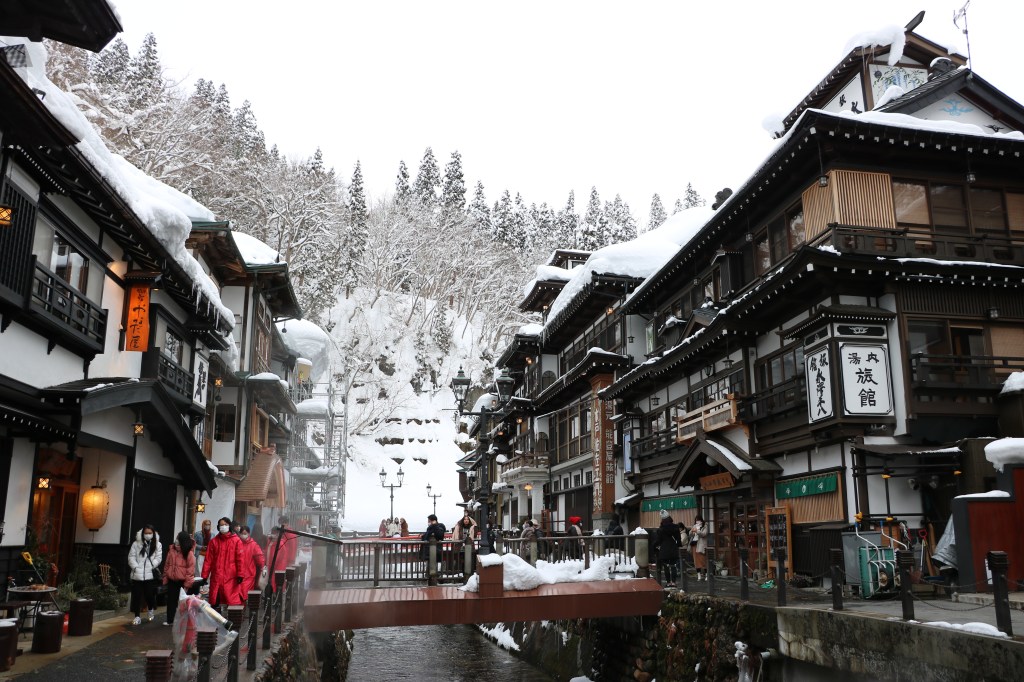
Ginzan Onsen
The riverside inn street in January snow.
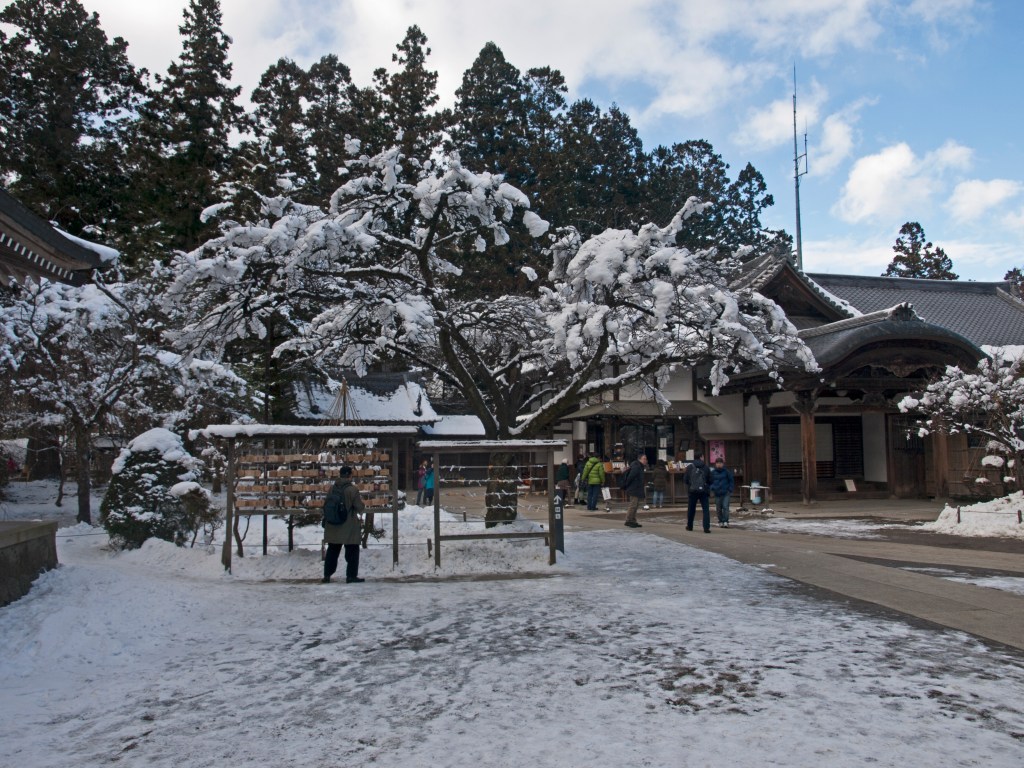
Hiraizumi
Snow in the temple grounds at Chuson-ji.
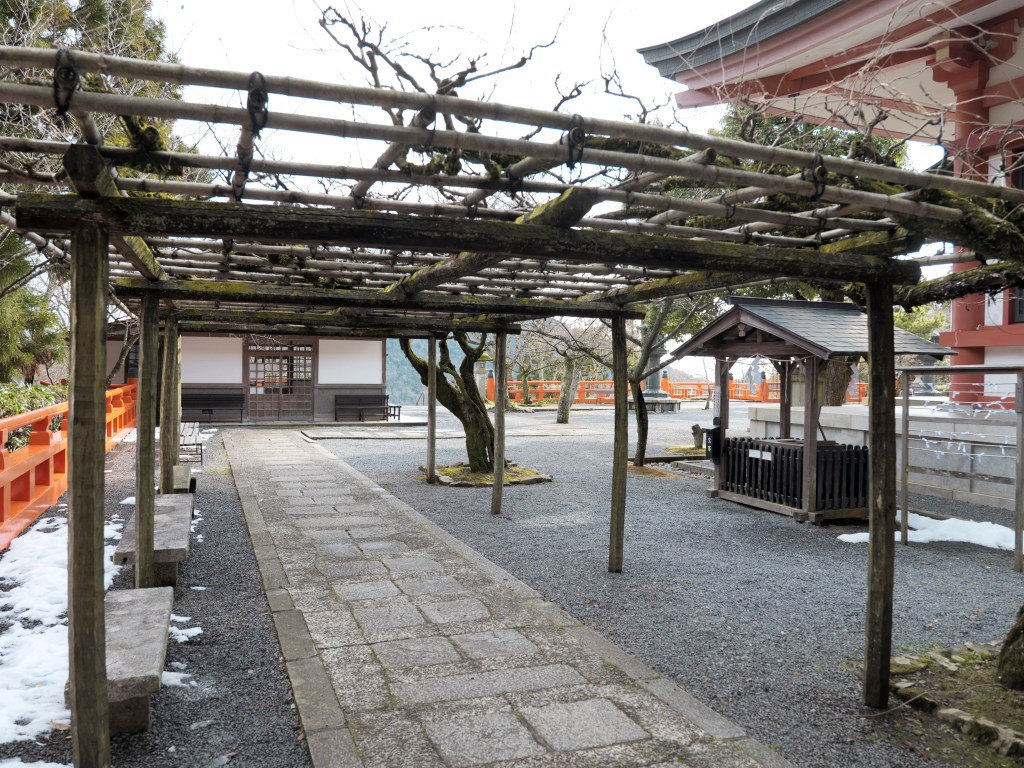
Kurama
Snow in the Kurama-dera courtyard. This is a winter frame, not the autumn foliage season.
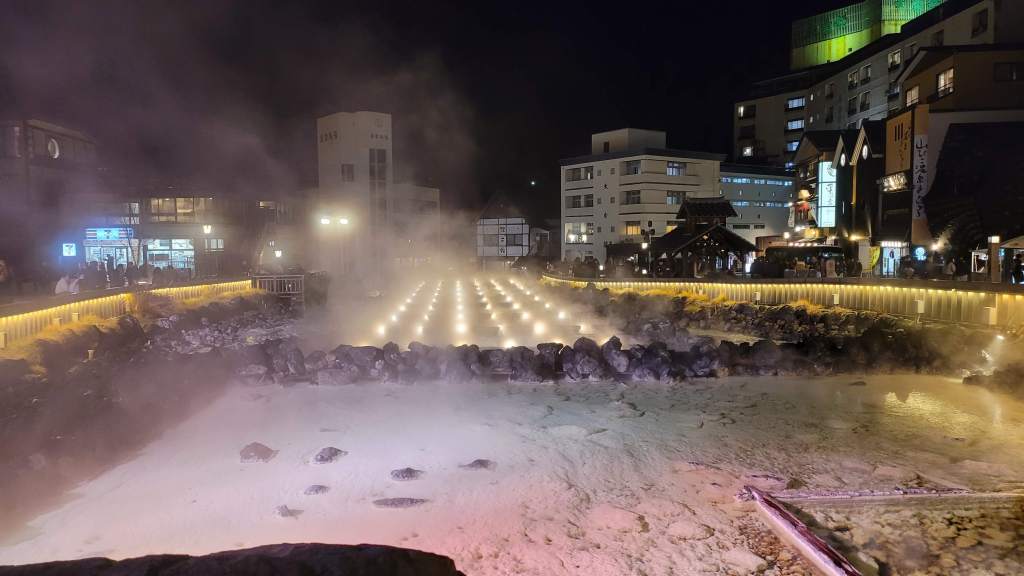
Kusatsu Onsen
The Yubatake at night. The photograph shows steam over the field, not a snow scene.
- Ginzan Onsen — the guide calls winter snow the most photographed season, and says roads and buses need extra time. Ryokan rooms are limited on peak weekends.
- Shirakawa-go — snow is part of why the steep roofs exist. Paths ice over. Some travelers plan around winter light-up evenings; confirm whether an event is actually running.
- Kanazawa — garden snow is a stated highlight. The city is an easier winter base than a mountain village.
- Hakone — clear winter days can help with Mount Fuji views. The guide also says ropeways may stop in strong wind.
- Kusatsu Onsen — open through winter, with steam over the Yubatake and sidewalks that can freeze.
- Biei and Furano — winter is quieter and snowy. Some farm attractions close or shorten their hours.
- Takayama — winter snow is atmospheric and can cut mountain road links.
- Dogo Onsen — described as comfortable year-round, so it is a milder winter bath town than Ginzan or Kusatsu.
Winter cautions
- Wear shoes with a grip. The Ginzan, Kusatsu, and Shirakawa-go guides all mention ice.
- Check the bus or ropeway on the morning you go, not only when you book.
- Leave a buffer before a flight. Snow delays stack up on the last connection.
- Ask which baths, cafes, and viewpoints are actually open. “The town is famous in winter” does not mean every shop is open on a weekday.
If you are choosing a season for a first trip
For a first visit built around walking, late spring or autumn is the usual choice, with the crowds that come with it. Choose summer if flowers, the sea, or a gorge matter more than comfort. Choose winter if an onsen town is the point of the trip. Keep the route short: one base, then the day trips that fit the daylight you actually have.
If this is your first trip, start with First Time in Japan for how to shape a route, use trains, and handle cash and manners.

