Planning Dewa Sanzan in Yamagata? This English guide separates Haguro, Gassan, and Yudono, including the winter limits.
Operational details such as opening hours, admission fees, and train times can change. Prefer official pages and reconfirm before you travel (sources checked on 22 October 2026).
Why visit
- Dewa Sanzan is the collective name for three sacred mountains in Yamagata: Haguro, Gassan, and Yudono. The Haguro Tourist Association is the practical official source.
- They are not one trail you can finish in an afternoon. Haguro is a long stone stairway to shrine buildings. Gassan is an alpine hike with a short season. Yudono has its own opening and closing rites.
- Most first visits should be Haguro. Add Gassan or Yudono only in the months the association says those mountains are open.
Top places and highlights
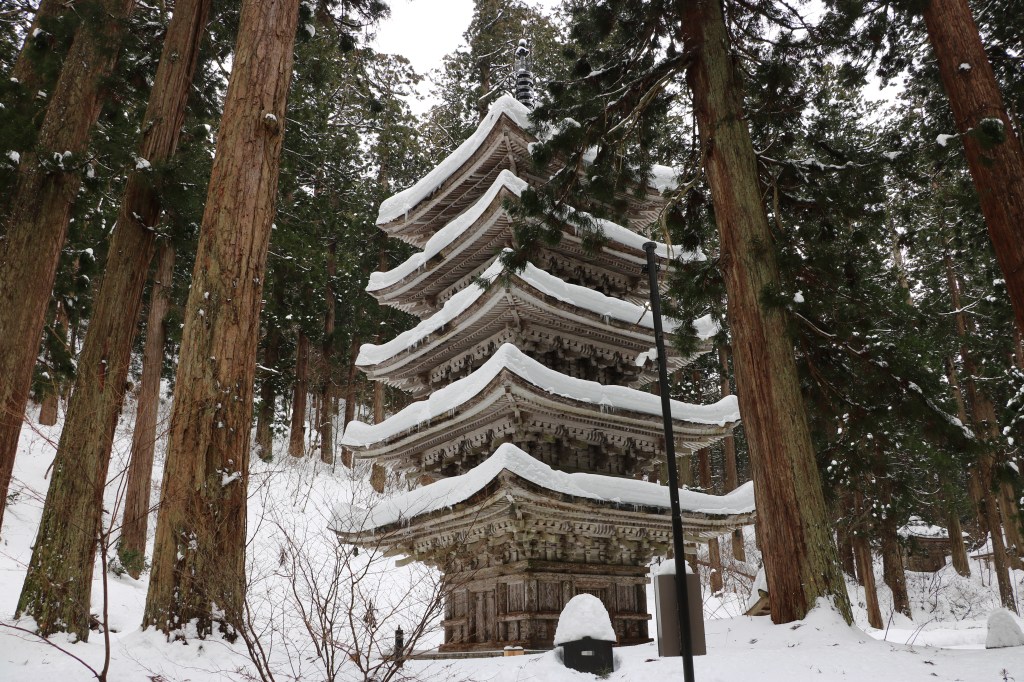


Mount Haguro
The walk is stone steps through cedar to the five-story pagoda, which the association treats as a National Treasure, and on to the Sanjin Gosaiden. The village of Toge at the start has shojin meals tied to the mountain practice. Winter can leave ice on the steps, and buses are thinner. Reconfirm.
In winter the steps are not cleared, and the association asks for boots and poles; the Ideha museum at the foot lends both free. Snow can stop the route at the pagoda, which is the usual limit in January and February. A road reaches the summit for those who cannot climb, but it does not serve the pagoda.
Mount Gassan
This is a mountain, not a shrine stroll. The association’s walks on the marsh at the 8th station run from July until the mountain closes in early autumn, and they ask for hiking boots, warm clothes, and rain gear. The prefecture closes the Gassan park road in winter. In 2026 that notice was posted on 15 October. Read the current date before you go.
Mount Yudono
The association’s calendar puts the opening rite of the main shrine on 1 June and the closing rite on 1 November. Outside that season, do not plan on worship there. Photography rules at the inner shrine are strict. Reconfirm them rather than assuming a viewpoint.
Food and drink
- Shojin meals in Toge are the local food culture. They are a sit-down meal, so check which houses are serving.
- Gassan is not a place to find lunch. Carry food and water if you go above the 8th station.
Getting there and around
- The usual base is Tsuruoka. Buses run to Haguro, and the association explains them. The last bus down matters more than the first bus up.
- Shonai Kotsu buses leave from stop 1 at Tsuruoka Station: about 40 minutes to the Shinshinmon gate at the foot of the steps, or about an hour through to the summit. Walkers get off at Shinshinmon. The steps run 2,446 in total, about 60 minutes one way, with roughly 300 of them to the five-story pagoda.
- Gassan and Yudono need the seasonal road and a bus or a car that is actually running. A winter plan that includes all three mountains will fail.
- Ideha Cultural Museum, in Toge, is the indoor backup when the mountain weather turns. Its hours change in winter. Reconfirm.
Where to stay
- A night in Toge or Tsuruoka makes Haguro a morning walk instead of a race for the bus.
- Gassan is a day from a lodging that can reach the 8th station while the road is open. Do not book it in November and hope.
Best time to visit
- Haguro is the year-round choice, with extra care for ice and fewer buses from December. Gassan’s practical season is July to early autumn.
- Yudono’s own calendar runs from the June opening rite to the November closing rite. The three mountains do not share one open season.
Practical tips
- Pick the mountain that is open. Haguro, Gassan, and Yudono are three visits.
- If a prefecture notice says the Gassan road is closed, it is closed. The marsh walk is not a winter backup.
- The stone-step temple in the same prefecture is the Yamadera travel guide. A different valley, with an onsen street, is the Ginzan Onsen travel guide.
Suggested day-trip outline
- Tsuruoka to Haguro, and the steps as far as the pagoda and the main shrine.
- A shojin meal in Toge if a house is open.
- Add Gassan or Yudono only on a second day inside their season.
Before you go
Timetables, fares, admission fees, and seasonal access rules can change. Check the official tourism and transport sites linked below for the latest information before you travel.
Sources
- Haguro Tourist Association (checked 2026-10-21)
- Haguro Tourist Association (checked 2026-10-22)
- Haguro, bus access (checked 2026-10-22)
- Dewa Sanzan Shrine, access (checked 2026-10-22)
- Haguro Tourist Association (English) (checked 2026-10-21)
- Yudono calendar, Haguro Tourist Association (checked 2026-10-21)


Leave a Reply