Visiting Maruoka Castle in Fukui? This English guide covers the original keep, the 1948 repair, and the restoration now underway.
Operational details such as opening hours, admission fees, and train times can change. Prefer official pages and reconfirm before you travel (sources checked on 22 October 2026).
Why visit
- Maruoka Castle in Sakai, Fukui, is one of Japan’s twelve surviving original keeps, and an Important Cultural Property. The castle calls it the only original keep in Hokuriku. It is not the oldest. Inuyama’s own site claims that title.
- The keep was built in 1576 by Shibata Katsutoyo. Its old form shows in the rough stone wall and the stone roof tiles. People also call it Kasumiga-jo, the castle of mist, for the cherry blossoms.
- The 1948 Fukui earthquake toppled the keep. The castle says the repair reused more than 70 percent of the main timbers and finished in seven years. It is still counted as an original keep, and it is also a castle that has already been rebuilt once from its own wood.
Top places and highlights
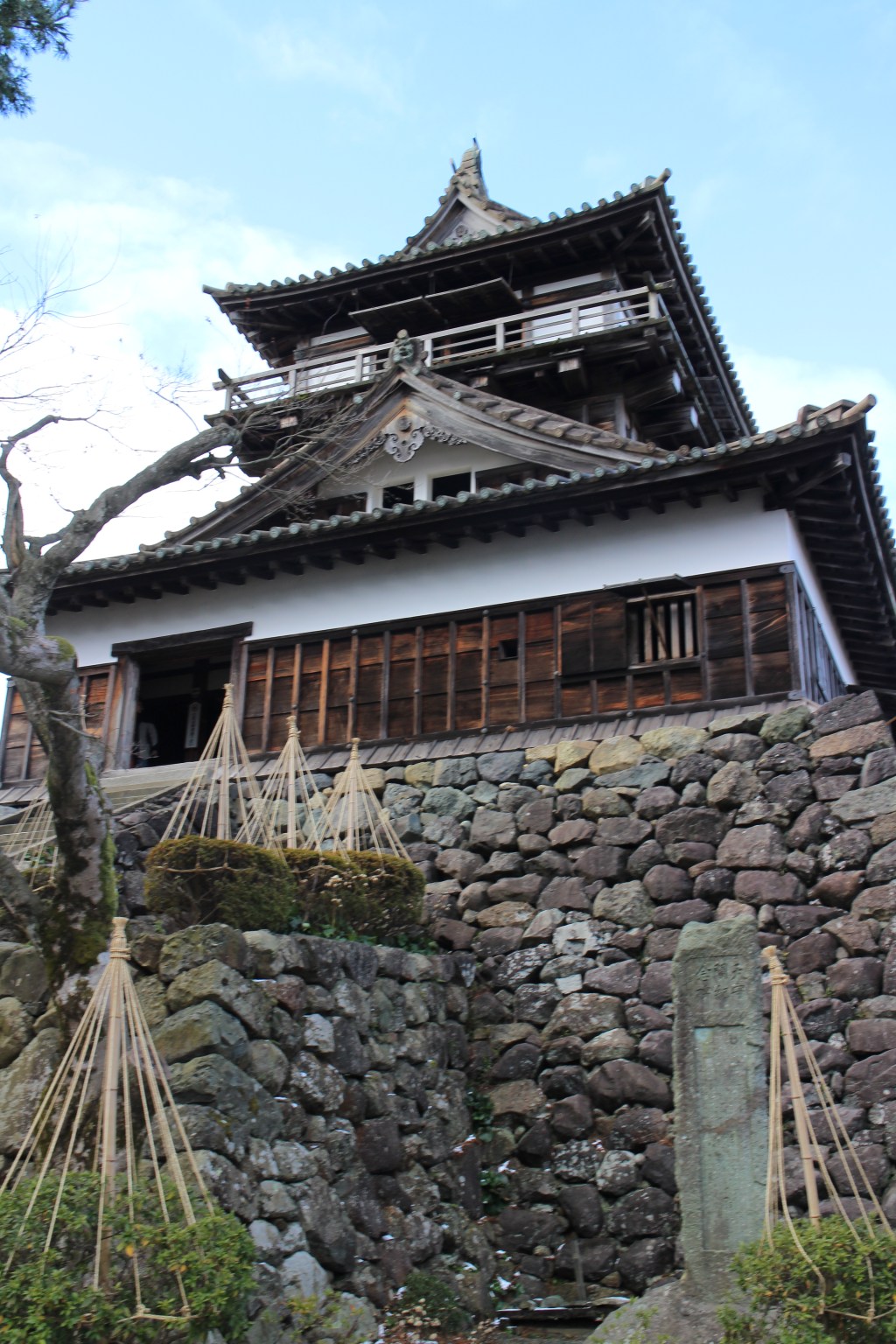
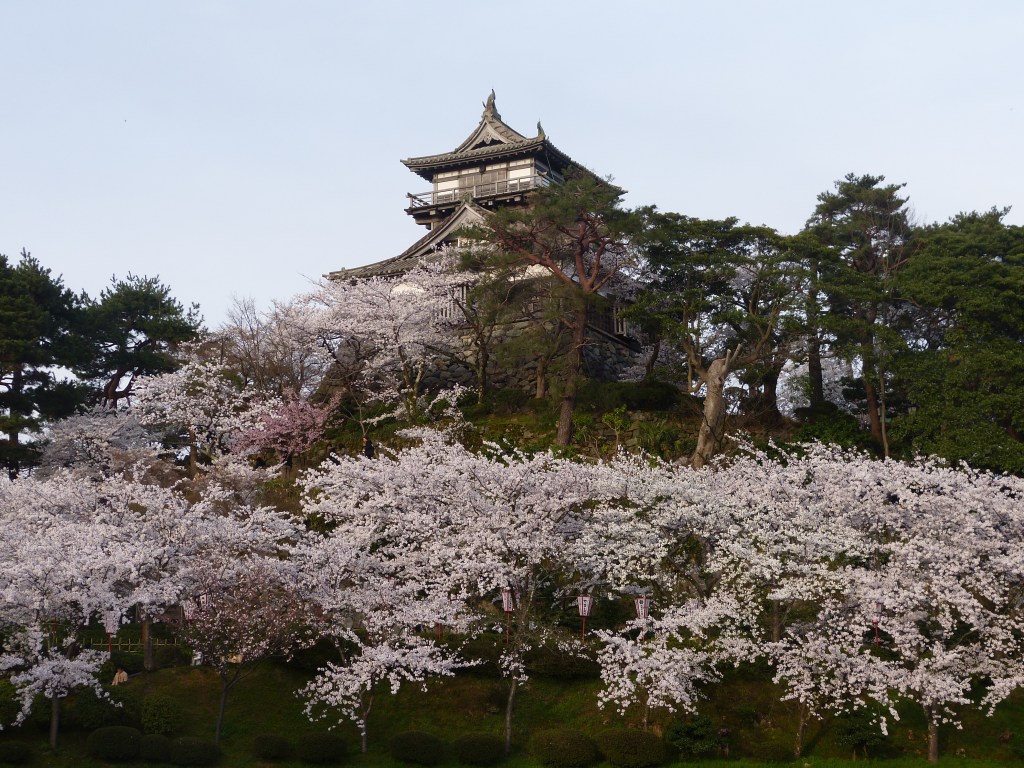
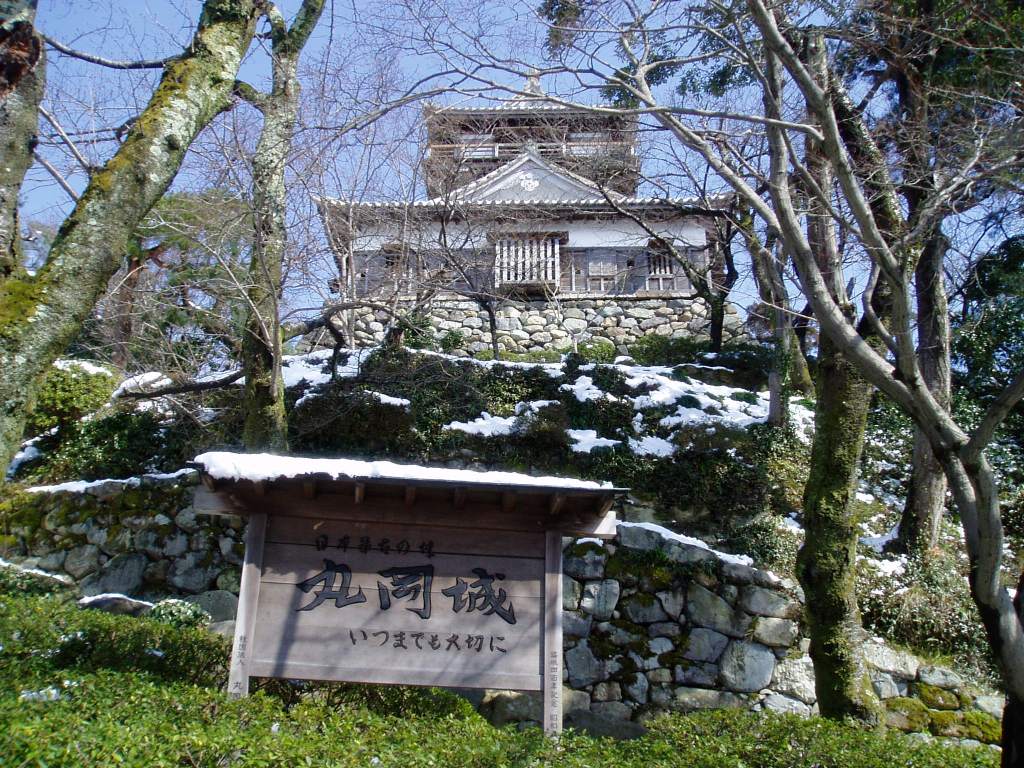
The keep
The tower is small, old, and currently in another major repair. Sakai City says a seismic restoration, including the roof, the third-floor railing, and the walls, runs from March 2026 to about November 2027. Scaffolding and a cover go up for parts of that time. Some of the main enclosure is closed. Interior access changes with the work.
What you can enter in 2026
The castle said the interior would be partly open from 1 October through 31 October 2026, and from 1 November through 8 November. The city schedule posted on 29 September 2026 adds that the third floor is closed from 26 October through 30 October, and that the keep is closed from 9 November through 4 December. Those dates can move. Read the city page the week you go.
The restoration runs through 2027, and the city publishes the interior openings month by month rather than as one season. So the useful check is not whether the castle is open, but whether the current block allows the inside; the hill, the stone base and the blossom are viewable throughout. The ticket is shared with the short-letter museum nearby, which is a sensible wet-weather addition when the keep is shut.
Three floors behind a two-storey face
The keep is smaller than the famous ones and stranger than it looks, which is most of its interest. From outside it reads as two storeys. Inside it is three, and the reason is structural: there is no continuous pillar running from the ground floor to the upper floors, so the first floor carries the weight of the two above it rather than tying into them.
The stairs are the detail people remember. The flight from the first floor to the second is about 65 degrees, and the one above it about 67, which puts them among the steepest castle stairs in the country. They are original in character, not a modern concession, so plan on using both hands and on sending anyone unsteady up first rather than last.
From the top floor there are windows on all four sides. The height is about 18 metres above the main enclosure and roughly 35 metres above the foot of the castle hill, which is enough to see across the Sakai plain without being a tower view of the kind a reconstructed keep offers.
A roof that weighs about 120 tonnes
The roof is not tiled in the ordinary sense. Of roughly 6,000 tiles currently on the building, about a fifth are cut from Shakudani stone, quarried at the foot of Mount Asuwa, and each stone tile weighs somewhere between 20 and 60 kilograms. The roof as a whole is around 120 tonnes, which explains why the repair work is slow and why a wooden tower this size survives at all.
The stone wall below is built in an older style, nozurazumi, with roughly fitted natural stones rather than cut blocks. It looks cruder than later walls and drains better: about 6.2 metres high, and traditionally credited with standing up to heavy rain that would undermine a tighter wall.
The shachi on the roof have their own history. They are timber cored and copper clad, but during the war, when copper was hard to obtain, they were replaced with stone versions; later repairs restored the copper, and the stone pair is displayed in the Machiyori information centre rather than being lost.
The castle town
The approach and the cherry trees are the walk even when the interior is shut. The castle points visitors to a nearby museum of a famous short letter, which is a separate stop. Weekday mornings can include construction noise. Stay out of fenced areas.
The castle’s 450th year, and one date to avoid
The keep was built in 1576, which makes 2026 its 450th year, and the foundation running it has marked the anniversary with commemorative goshuin stamps, including editions sold only in October and November. If you collect castle stamps, that is a reason to buy at the site rather than online afterwards.
One practical date to check before booking: a castle marathon is scheduled for 8 November 2026, and the organisers have announced traffic restrictions around the hill for it. Anyone planning to arrive by bus or car that day should confirm the diversion rather than assuming the usual stop is being served.
The castle town also explains something the guidebooks skip. The short-letter museum nearby is not an arbitrary local museum: the stone monument below the keep carries a letter that Honda Sakusaemon Shigetsugu, a Tokugawa retainer, sent home from a military camp. The line warns his household to watch for fire, not to make his son cry, and to keep the horse fat. It is the reason Sakai City has run a national competition since 1993 for the shortest letter, and why the winning entries are displayed beside the steps up to the main enclosure.
Food and drink
- Eat in Maruoka or back in Fukui. The keep is not a place for lunch, especially during the works.
- Cherry-blossom weekends fill the few cafes. Go early or eat after you leave the hill.
Getting there and around
- JR Awara-Onsen is a nearby station on the Hokuriku line, and Maruoka has local buses from Fukui. Reconfirm the stop and the last bus. A rental car is simpler if you are coming from Kanazawa.
- The bus from the west exit of Fukui Station reaches the castle in about 50 to 60 minutes and runs roughly every half hour. Awara-Onsen Station is the faster approach at about 20 minutes, but only about once an hour. JR Maruoka Station has a bus taking about 20 minutes, roughly every two hours. All of them stop at the castle, and the car parks are free.
- The castle is on a low hill in town, not a mountain climb. The limit in 2026 and 2027 is the restoration, not the walk.
- Admission and hours are on the castle site. During the works, a posted open day can still exclude a floor. Reconfirm.
Where to stay
- Fukui or Awara is the practical night. Kanazawa is close enough for a day trip if the restoration schedule is worth the ride.
- Do not book a room only for the interior until you have read that week’s city notice.
Best time to visit
- Cherry blossom is the famous week, and the hill is crowded. The trees do not depend on the interior being open.
- Snow country winter is a real Fukui season. Combine it with a check that the keep is not in a closed stretch of the works.
Practical tips
- Treat the keep as an original tower under active repair. The exterior may be partly hidden. The interior may be one floor, or none.
- Stay outside the fences. The city warns that cranes and work vehicles use the hill on weekdays.
- Another original keep, and the one that claims to be the oldest, is the Inuyama Castle travel guide.
Suggested day-trip outline
- Read the week’s restoration schedule.
- The hill, the exterior, and the interior only if that day allows it.
- The castle-town street or the short-letter museum, then the train you already checked.
Where to go next
Guides to nearby places on this route, each checked against official sources.
Before you go
Timetables, fares, admission fees, and seasonal access rules can change. Check the official tourism and transport sites linked below for the latest information before you travel.
Sources
- Maruoka Castle (checked 2026-10-21)
- Maruoka Castle (checked 2026-10-22)
- Maruoka Castle, access (checked 2026-10-22)
- Maruoka Castle, autumn 2026 opening notice (checked 2026-10-22)
- Sakai City, keep restoration (checked 2026-10-21)
- Sakai City, autumn 2026 access schedule (checked 2026-10-21)
- Maruoka Castle official, architectural highlights (stairs, roof, stone wall) (checked 2026-10-23)


Leave a Reply