Planning a trip to the Tottori Sand Dunes? This English guide covers the dune walks, visitor center, access from Tottori Station, seasons, and what to reconfirm before you go.
Operational details such as opening hours, admission fees, and train times can change. Prefer official pages and reconfirm before you travel (sources checked on 22 October 2026).
Why visit
- The Tottori Sand Dunes are a broad coastal dune field on the Sea of Japan, unusual enough that many travelers add Tottori for this one landscape.
- You can see the scale from the visitor center area in under an hour, or walk farther toward the shore if the wind is reasonable.
- It gives the Chugoku coast a stop that is not a shrine island or a canal town.
Top places and highlights
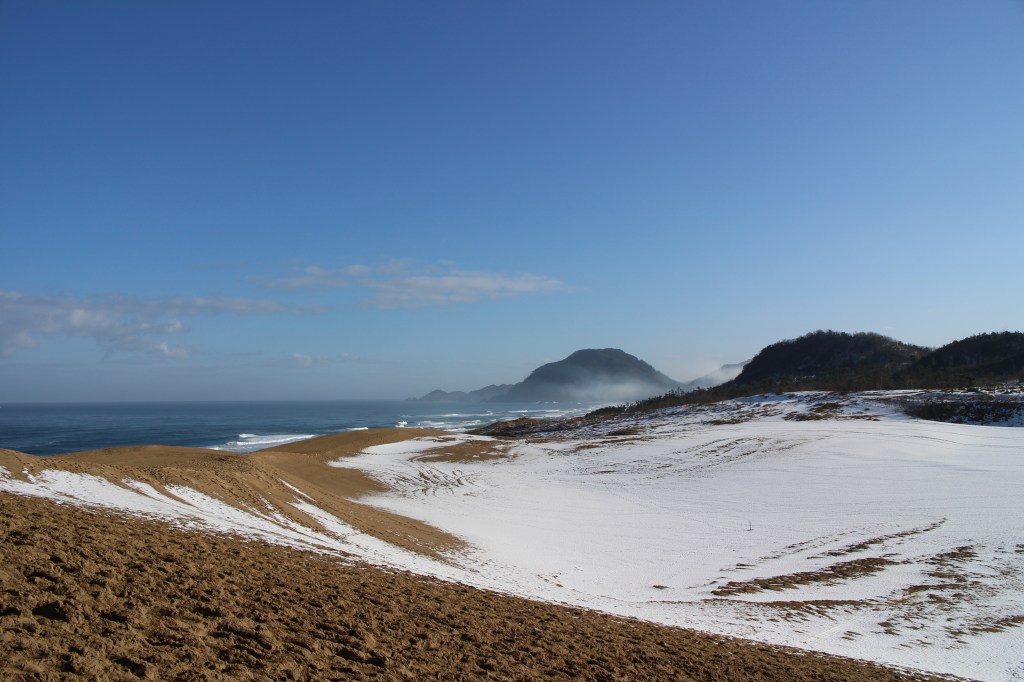
The dune field
Wind shapes ridges between the visitor area and the beach. There is little shade. Take the posted walking guidance seriously when the sand is hot or the wind is strong.
Sand Dunes Visitor Center
The center explains how the dunes formed and is the practical start for maps and current notices. Exhibits and opening hours can change—confirm on the official page.
Shore and seasonal museums
The beach sits beyond the sand, and nearby attractions such as the Sand Museum are seasonal. Treat any exhibit calendar as something to reconfirm, not a fixed promise.
Activities others come for
Walking is the default visit, but several activities are organised on the dunes by separate operators, and they are weather-dependent rather than scheduled like a museum. Sandboarding is offered here and the visitor centre describes it as the only place in Japan to try it. Camel riding runs as a paid experience, with camels resting on some days, so it is not something to promise a child in advance. Paragliding, fat biking and Segway tours also operate from the dunes area.
Book and confirm these with the operator rather than the visitor centre, and treat a windy day as a day when the activities, not just the walking, may be off.
Rules the dunes actually enforce
The dunes have no gate, no ticket and no closing time, which leads people to assume there are no rules. There are, and they come from a local ordinance written specifically for this landscape.
- Do not draw or write in the sand. Sand graffiti and carved messages are prohibited by ordinance, not merely discouraged.
- Do not swim along the dunes coast. Swimming off the sand is prohibited by the same ordinance.
- Sledging is allowed only on the east side of Umanose, the ridge shaped like a horse’s back, and you take your sled or cardboard away with you.
- Dogs are allowed on a leash if you clear up after them, but not inside the visitor centre.
These are the things most often done by visitors who did not read the signs. Knowing them costs nothing and avoids being asked to stop.
Feet, sand, and washing up afterwards
Footwear is the practical problem, and the visitor centre handles it better than most guides admit. Free sandals are lent from the corridor, with your shoes left in the car or a locker, but the supply is limited, there are no reservations, and they are withdrawn in winter and on days when the sand surface is too hot to walk on barefoot. Rubber boots can be rented from the Sakyu Kaikan building on the far side of the visitor centre.
For cleaning up, the visitor centre has free foot showers outside, and the Sakyu Kaikan has coin-operated showers that close for the winter. About three kilometres east of the visitor centre there is also a hot spring, which is a better end to a sandy afternoon than a car park tap.
Drones and staged photography
Drone flight over the dunes is restricted by ordinance because of the crowds, the sea wind and the sand. Where it is permitted at all, it depends on wind speed and on keeping the aircraft in sight, and it is barred outright during the Golden Week holidays and the Bon period in mid-August.
Anything more than a phone snapshot can also need notice in advance. Filming or photography that brings in props and equipment, including cosplay shoots, requires prior notification to the visitor centre, which asks for roughly a week’s lead time, and large-scale equipment can need separate permission under national park and cultural property rules. If you are visiting as an ordinary traveller this will not touch you, but it rules out treating the dunes as a free backdrop for a planned shoot.
Food and drink
- Cafes and restaurants cluster near the visitor center and back toward the city, not out on the dunes.
- Crab is a winter specialty of the Tottori coast. Seasons and prices vary by restaurant—confirm menus locally.
Getting there and around
- Tottori Station is the rail hub, with limited-express and local services depending on your route. Confirm times on official JR West sources.
- Buses link the station area with the dunes. The ride is short, but the last return bus matters if you are not using a taxi.
- The Sakyu line takes about 20 minutes from the station bus terminal. Get off at Sakyu-kaikan for the sand and the visitor center; Sakyu-Higashiguchi serves the eastern end. There is no gate or ticket desk at the dunes themselves—you walk in from the street.
- Fares, bus numbers, and seasonal tourist services should be reconfirmed on the day. A taxi is the simple backup.
- If you drive, the car park in front of the visitor center is a paid lot, and the center has none of its own.
Where to stay
- The dunes themselves are a half-day sight. Many people stay in Tottori city.
- An overnight makes sense if you are connecting along the San’in coast rather than passing through on one train.
Best time to visit
- Spring and autumn are the most comfortable for walking on open sand.
- Summer heat reflects off the dunes. Winter wind is cold, and that is also when local crab dishes are most associated with the coast.
Practical tips
- Bring water, a hat, and a way to keep sand out of your shoes.
- Check the return bus before you walk toward the beach.
- On a longer Chugoku route, the Kurashiki travel guide and the Miyajima travel guide cover two very different stops.
Suggested day-trip outline
- Train to Tottori Station, then bus or taxi to the visitor center.
- Walk a section of the dunes and the shore viewpoint you can finish in time.
- Return to the station or stay in the city.
Before you go
Timetables, fares, admission fees, and seasonal access rules can change. Check the official tourism and transport sites linked below for the latest information before you travel.
Sources
- Tottori Sand Dunes Visitor Center (checked 2026-10-21)
- Tottori Sand Dunes Visitor Center, access (checked 2026-10-22)
- Tottori Prefecture Tourism Guide (checked 2026-10-21)
- Tottori City (checked 2026-10-21)
- Tottori Sand Dunes Visitor Center FAQ (ordinance rules, footwear, drones) (checked 2026-10-23)
- Tottori Sand Dunes activities (checked 2026-10-23)


Leave a Reply