Kawaguchiko Travel Guide: The Fuji Lake in Yamanashi
Planning Lake Kawaguchi? This English guide puts the lake in Yamanashi, explains the Fuji view, and says what to reconfirm.
Operational details such as opening hours, admission fees, and train times can change. Prefer official pages and reconfirm before you travel (sources checked on 21 October 2026).
Why visit
- Lake Kawaguchi is in Fujikawaguchiko, Yamanashi. That is Chubu, on the north side of Mount Fuji, not a Kanto park.
- The visit is the lake and the chance of Fuji. Cloud hides the mountain on plenty of days. The shore is still the trip.
- The town asked visitors, in a notice dated 13 October 2026, to help ease traffic around Oishi Park and to use the temporary lot for large buses. Flower and foliage weekends jam the north shore.
What the lake actually is
Lake Kawaguchi is not one of the five lakes in the loose sense of being nearby. It is one of the five, and the whole group is a component asset of the World Cultural Heritage inscription granted to Fujisan in June 2013 as a sacred place and source of artistic inspiration. That is a plain fact with a practical consequence: the lake and the mountain are protected together, which is why the shoreline is not built over the way a resort lake would be.
The numbers explain the shape of a visit. The lake covers about 5.5 square kilometres and is the second largest of the five, with a shoreline around 19 kilometres long, sitting at roughly 830 metres above sea level. It has the longest shoreline and the lowest elevation of the group, which is why the loop is walkable in sections rather than as one circuit.
It also has no natural outlet. The lake rose and flooded the shore villages for centuries, and it is now drained artificially, into the Miyakawa river and from there into the Katsura, which puts Kawaguchi in the Sagami river system rather than the Fuji river system you might assume from the map. None of that changes a holiday, but it explains why the water level behaves as it does and why the lake looks engineered wherever the shoreline meets a channel.
Sakasa-Fuji, and why the hour matters
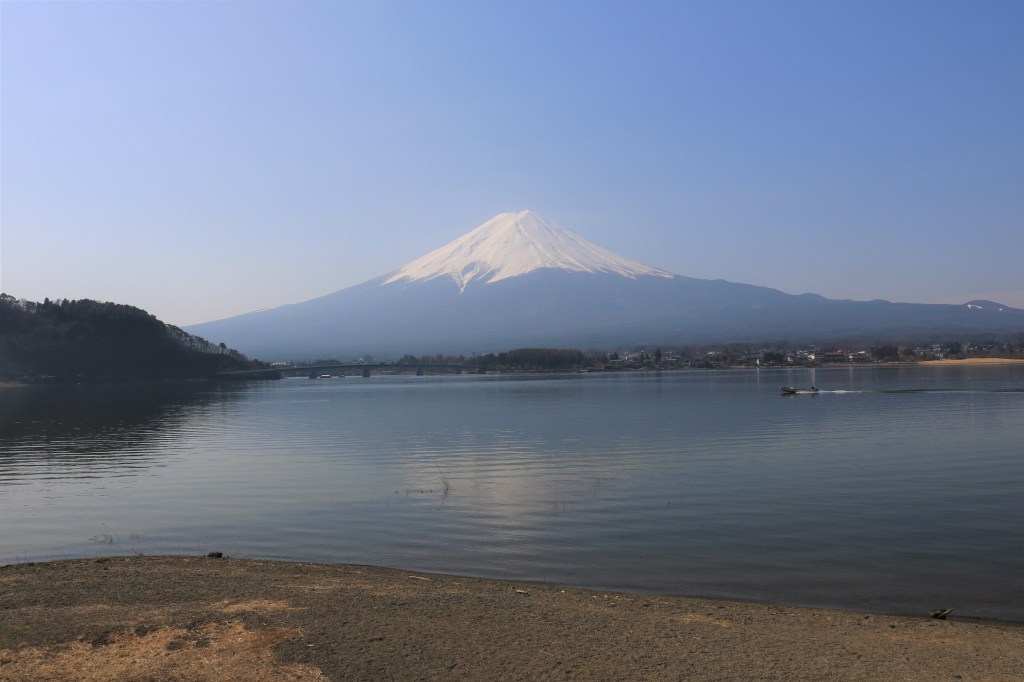
The photograph everyone wants is the inverted reflection, sakasa-Fuji, where the cone repeats in the water. It is a still-water effect. It needs the surface undisturbed, and on this lake that means early, before the day’s wind arrives and before the excursion boats start their circuits.
The geometry favours the north shore, which is why Oishi Park and the road above it are where the queue forms. It also means that a slightly cloudy morning can still be the best morning: the reflection survives broken cloud, and only a completely covered summit removes the subject. What kills the shot is chop, not cloud.
So the sequence that works is a night in the town, an early walk to the north shore, and breakfast afterwards. The day-tripper from Tokyo arrives when the wind is up and the water is no longer a mirror.
Top places and highlights

The north shore
Oishi Park and the northern road are where people wait for Fuji across the water. Go early. A bus that cannot park is not a viewpoint. Read the town’s traffic note if you are on a tour.
The lake itself
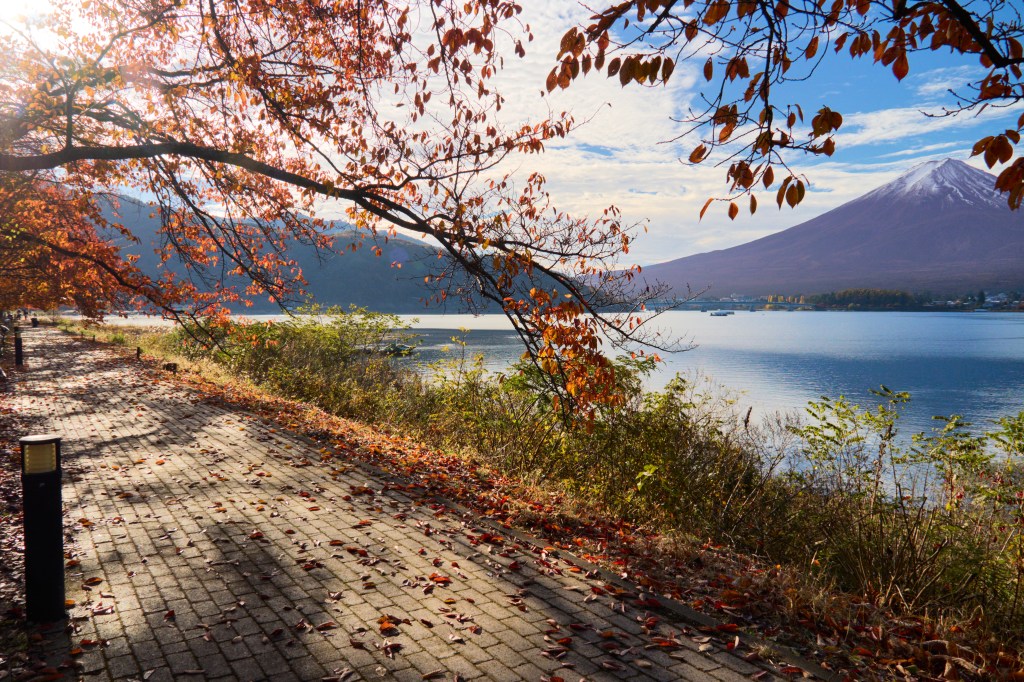
A walk or a rented bicycle follows the shore when the road allows it. The town promotes seasonal events, including foliage. The mountain is weather. Do not promise a photograph.
What this day is not
Climbing Fuji is a separate, seasonal undertaking with its own trail rules. The lakeside is not the trailhead plan. Forest paths near the lava field exist. Stay on the marked route the town describes.
Places to see
Four more stops, with addresses taken from the operator or the town tourism page. Hours and tickets can change. Reconfirm them on the linked page.
Mt. Fuji Panorama Ropeway
A ropeway at Asakawa, on the Kawaguchiko side of the lake. Read the day’s hours on the English page.
Address: Asakawa 1163-1, Fujikawaguchiko, Minamitsuru-gun, Yamanashi Access: The English page lists the approach. Official site: https://www.mtfujiropeway.jp/en/
Itchiku Kubota Art Museum
A museum of kimono art at Kawaguchi. The access page gives the address. Read hours and admission there.
Address: Kawaguchi 2255, Fujikawaguchiko, Minamitsuru-gun, Yamanashi Access: Use the route on the access page. Official site: https://www.itchiku-museum.com/museum/access.html
Kawaguchiko Music Forest Museum
A museum of music boxes, automatic instruments, and gardens. It was formerly the music-box forest. The access page gives the address and says the car park is for people who enter the museum.
Address: Kawaguchi 3077-20, Fujikawaguchiko, Minamitsuru-gun, Yamanashi Access: Read the access page before you drive. Official site: https://kawaguchikomusicforest.jp/access/
Kawaguchi Sengen Shrine
An old shrine of the Fuji faith in the Kawaguchi district. Facts below are from the town tourism page, which also posts the hours. Reconfirm them.
Address: Kawaguchi 1, Fujikawaguchiko, Minamitsuru-gun, Yamanashi Access: The town page lists a drive from the Kawaguchiko interchange and a bus from Kawaguchiko Station. Reconfirm the stop. Town tourism page: https://fujisan.ne.jp/sightseeing/1480/
The shrine deserves more than a tick on a list. It is one of the eight World Heritage component assets inside Fujikawaguchiko, and the district around it grew as an oshi village: households that guided and lodged pilgrims climbing Fuji, a role now kept in physical form by a single surviving house. The shrine’s July festival includes a children’s dance, the Kawaguchi no Chigo no Mai, designated a national Important Intangible Folk Cultural Property, which is the clearest surviving link between the lake villages and the mountain cult that earned the inscription.
If you are choosing between the museums and the shrine on a short trip, the shrine is the one that explains why this lake is on the World Heritage list at all.
Food and drink
- Eat in Kawaguchiko town or along the shore. Hoto noodle stew is the local bowl. Shops follow visitor hours and close when the buses leave.
- A convenience meal is the backup on a wet day when every window table is full.
Where to eat
Four places for hoto, bread, and a brewery cafe. Hours and closing days are on each page. Reconfirm the day you go.
Hoto Laboratory
A seafood-hoto shop at Kawaguchi. Read the posted hours on the shop page before you go.
Address: Kawaguchi 2746-1, Fujikawaguchiko, Minamitsuru-gun, Yamanashi Access: The town tourism page describes a drive from the Kawaguchiko interchange and a loop bus from Kawaguchiko Station. Official site: https://fuji.creative-r.com/pages/hoto-labo
Hoto Kura Funari, Kawaguchiko branch
A hoto shop in Funatsu. The branch address below is from the town tourism page. The company site is linked as well.
Address: Funatsu 6931, Fujikawaguchiko, Minamitsuru-gun, Yamanashi Access: The town page describes a drive from the Kawaguchiko interchange and a bus toward Shoji and Motosu. Town tourism page: https://fujisan.ne.jp/sightseeing/3761/ Company site: https://www.funari.jp/
Le Pain de Daniel
A bakery in Funatsu. The town tourism page says it is about a 7-minute walk from Kawaguchiko Station. Hours change with the season, so read the shop page.
Address: Funatsu 3991, Fujikawaguchiko, Minamitsuru-gun, Yamanashi Access: On foot from Kawaguchiko Station, or a short drive from the interchange. Official site: https://pan-daniel.jp/
Fujizakura Highland Beer
A brewery in Funatsu that uses foothill water. A cafe and shop in the same building pour the beer. Read the day’s hours on the brewery site.
Address: Funatsu, Kenmarubi 6663-1, Fujikawaguchiko, Minamitsuru-gun, Yamanashi Access: The town tourism page lists a drive from the Kawaguchiko interchange and a shuttle from the station. Reconfirm the shuttle. Official site: https://www.fujizakura-beer.jp/
Getting there and around
- The ride to book is the direct bus or the train-and-bus from Tokyo and Otsuki to Kawaguchiko Station. Reconfirm the last bus down. A rental car is simpler for the shore and worse in the Oishi Park jam.
- The station and the best Fuji view are not the same corner. Leave time to move, and do not assume a local bus is waiting.
- This is a Yamanashi day. Combining it with Hakone means crossing the mountain. Pick one.
Where to stay
- Sleep in Kawaguchiko if you want a clear morning. Fuji is often sharpest early, and a day trip from Tokyo spends the best hour on the bus.
- One night is the useful stay. A second night is for a second lake or a second try at the view.
Three hotels if you stay the night. Rates are on the linked page. Reconfirm the room.
Fuji View Hotel
A hotel in Katsuyama. Book on the hotel site, and read its route note before you arrive.
Address: Katsuyama 511, Fujikawaguchiko, Minamitsuru-gun, Yamanashi Access: The hotel page posts the approach. Official site: https://www.fujiview.jp/
Konansou
An onsen hotel in Funatsu. The hotel page gives the address and the route from the Kawaguchiko interchange.
Address: Funatsu 4020, Fujikawaguchiko, Minamitsuru-gun, Yamanashi Access: From the Kawaguchiko interchange. Read the hotel page for the route. Official site: https://www.konansou.com/
Fuji Lake Hotel
A lakeside hotel in Funatsu. The address, the 1932 opening, the lake view, and the hot spring below are from the Fujikawaguchiko town tourism page, checked on 22 October 2026. This card does not include a booking link. Read that page for the hotel, and arrange the stay only through a channel you have checked yourself.
Address: Funatsu 1, Fujikawaguchiko, Minamitsuru-gun, Yamanashi Access: The town page lists a drive from the interchange and a loop bus that stops at the hotel. Town tourism page: https://fujisan.ne.jp/sightseeing/3891/
Best time to visit
- Autumn foliage and late spring are the popular weeks, and the north shore is slow then. Winter can be clear and cold, with a thinner bus timetable.
- Rain and cloud are a normal Fuji day. Have a lake walk that does not need the peak.
Practical tips
- Read the town notice on Oishi Park before a bus tour. The view is the same from a lot that is actually open.
- The onsen and ropeway side of the mountain is the Hakone travel guide.
Suggested day-trip outline
- Bus or train to Kawaguchiko, and a room if you can.
- North shore early, then the town.
- A second look in the morning if the first day was cloud.
Where to go next
Guides to nearby places on this route, each checked against official sources.
Before you go
Timetables, fares, admission fees, and seasonal access rules can change. Check the official tourism and transport sites linked below for the latest information before you travel.
Sources
- Fujikawaguchiko Tourism (checked 2026-10-21)
- Yamanashi Tourism (checked 2026-10-21)
- Mt. Fuji Panorama Ropeway (checked 2026-10-22)
- Itchiku Kubota Art Museum access (checked 2026-10-22)
- Kawaguchiko Music Forest Museum access (checked 2026-10-22)
- Funari company site (checked 2026-10-22)
- Kawaguchi Sengen Shrine, town page (checked 2026-10-22)
- Hoto Laboratory (checked 2026-10-22)
- Hoto Kura Funari Kawaguchiko, town page (checked 2026-10-22)
- Le Pain de Daniel (checked 2026-10-22)
- Fujizakura Highland Beer (checked 2026-10-22)
- Fuji View Hotel (checked 2026-10-22)
- Konansou (checked 2026-10-22)
- Fuji Lake Hotel, town page (checked 2026-10-22)
- Fujikawaguchiko Town, World Heritage component assets guide (checked 2026-10-23)
- Ministry of the Environment, Lake Kawaguchi profile (checked 2026-10-23)


Leave a Reply