Planning a day trip to Dazaifu from Fukuoka? This English guide covers Dazaifu Tenmangu, the Kyushu National Museum, the old capital remains, and how to get there by train.
Operational details such as opening hours, admission fees, and train times can change. Prefer official pages and reconfirm before you travel (sources checked on 26 October 2026).
Why visit
- Dazaifu Tenmangu is the head shrine of more than 12,000 Tenjin shrines across Japan, and it draws more than 10 million visitors a year by its own count.
- The Kyushu National Museum sits on the same hill, so a shrine-and-museum day works without a car.
- The shrine is about a five-minute walk from Dazaifu Station, which the shrine itself describes as easily reached from Tenjin, Hakata, and Fukuoka Airport.
- Dazaifu was the seat of the imperial government’s western administration, and the old capital sites are scattered through an otherwise quiet town.
Top places and highlights
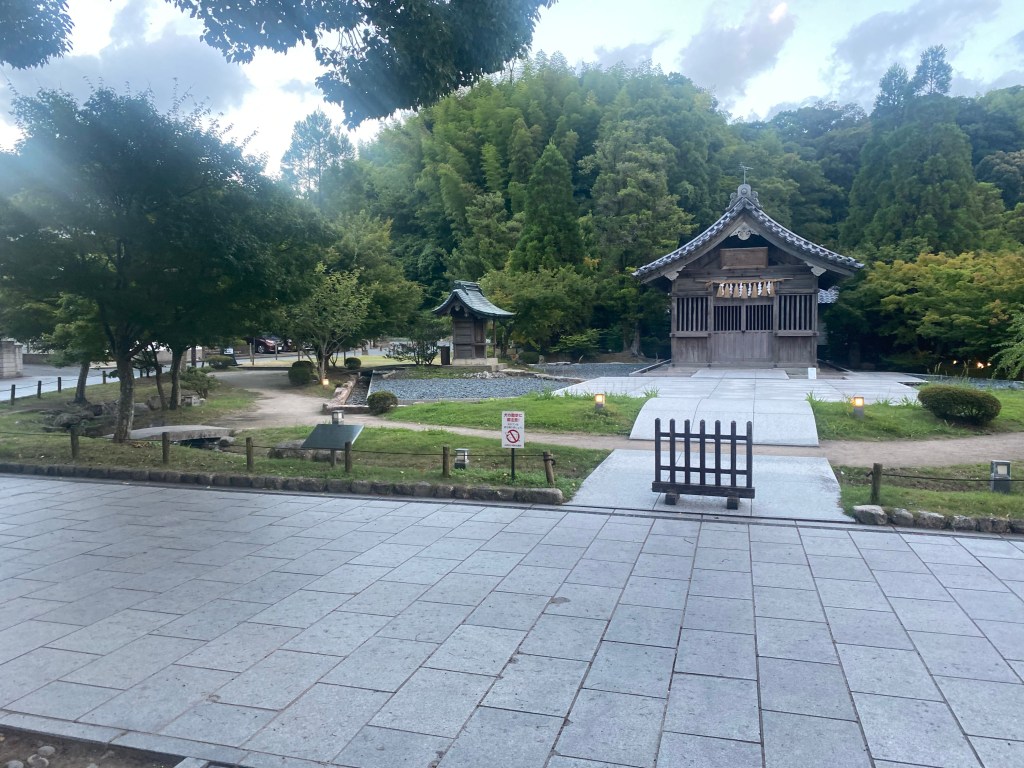
Dazaifu Tenmangu
The shrine enshrines Sugawara Michizane (845–903), the scholar and statesman worshipped as Tenjin, the deity of learning, culture, and the arts. Its own history page explains how a small shrine was built at his grave in 905 by a loyal disciple, replaced by a larger one in 919, and how the present main sanctuary dates to a 1591 reconstruction. Prayer at the main hall is free and open to anyone.
The shrine’s restoration work matters for planning. Worship at the front of the main sanctuary was suspended from spring 2023 for the Reiwa-era restoration, and the shrine announced that front worship resumed on 19 September 2026 after about three and a half years. The restoration itself continues, and the shrine also posts notices about temporary path closures, so check the current notices before you set a route through the grounds.
Kyushu National Museum
A hilltop museum reached through an access tunnel beside the shrine grounds, with escalators, travelators, and a platform lift for wheelchairs and strollers, and a permanent Cultural Exchange Exhibition Hall. Its published hours are 09:30–17:00 with last entry at 16:30, and the museum closes on Mondays. When a public holiday or substitute holiday lands on a Monday, the museum opens that day and closes on the following working day instead, and it also closes at the end of the year. Check official pages for the current calendar before you plan the day.
Admission to the Cultural Exchange Exhibition Hall is 700 yen for adults, 350 yen for university students, and free for high school students and younger, visitors under 18, and visitors over 70; check official pages for current prices before you buy. A combination ticket at 1,000 yen covers the Dazaifu Tenmangu Museum, the Kanko History Museum, and the Kyushu National Museum permanent hall. Reconfirm prices and the closing calendar on the official site, since special exhibitions run on their own schedule and tickets.
Old capital remains
Dazaifu was the administrative centre of Kyushu, and the sites survive as low stone markers and open ground rather than reconstructed buildings: the government office ruins, temple foundations around Kanzeon-ji, and the grid of streets that hints at the old plan. They reward a short walk between the shrine and the museum rather than a dedicated stop, and the local tourism association maps them by area.
Umegae-mochi
It is not a plum cake, whatever the name suggests. The sweet is a disk of blended glutinous and ordinary rice wrapped around azuki paste and pressed in an iron marked with a plum crest; the plum in the story is a branch, not an ingredient. When Sugawara no Michizane was exiled here in 901 he was treated as a criminal, and the order was that he be given neither food nor a horse. The tale is that an old woman living nearby, Jōmyō-ni, passed him cakes through a gap in the fence, skewered on a plum branch; another version has her laying them at his grave. A small shrine to her stands at Enoki-sha, built where he died, and the sweet is sold as her memorial.
The approach holds more than thirty shops in the association, and they all sell essentially the same thing. That is the pleasure of it: one product, fresh off the iron, eaten standing up, hot enough that the paste burns. Wait an hour and the rice skin turns dense and chewy — which is why the boxed souvenir and the street snack are genuinely two different experiences rather than the same one packaged.
Kasa-no-ya has been on the approach since 1922, when it opened as an inn and began selling the cakes to pilgrims, and it still presses them behind glass where you can watch. Its tea room faces a garden and serves the sweet with matcha. On the 17th of each month it makes a version with ancient black rice, and on the 25th — Michizane’s birth and death day — one with mugwort; those dates are shrine festival days too, so expect a longer queue and a different cake.
Food and drink
The approach between the station and the third torii is the densest strip, and the museum’s own walking route points out the umegae-mochi shops along it. Beyond the sweet it is noodle shops and cafes built for a half-day visit rather than a destination meal: expect soba, udon, a few set lunches and a lot of soft-serve. Menus and closing days differ shop by shop, and the town winds down in the late afternoon, so eat before the museums rather than after them.
- The approach between Dazaifu Station and the third torii is the densest strip for food, and the museum’s own walking route notes the umegae-mochi shops along it.
- Umegae-mochi is the item to try; it is sold warm as a single piece and boxed as a souvenir.
- Beyond the sweet, expect noodle shops and cafes aimed at day visitors. Menus and closing days vary by shop, so treat what you see on site as the current information.
Getting there and around
- From Tenjin, the Dazaifu Tourism Association route is the Nishitetsu Tenjin-Omuta Line, changing to the Nishitetsu Dazaifu Line, in about 30 minutes.
- From Hakata Station the same association lists about 45 minutes by subway, Nishitetsu, and the Dazaifu Line, or about 45 minutes on the Dazaifu Liner bus “Tabito”.
- From JR Futsukaichi Station the tourism association gives about 15 minutes by car or taxi, which is a different station from the Nishitetsu interchange.
- The shrine puts the walk from Dazaifu Station at about five minutes, with three torii gates along the approach.
- Inside town, the community bus “Mahoroba” is 100 yen a ride or 300 yen for a day pass, and rental bicycles are available at the Nishitetsu Dazaifu Station ticket gate from 09:00 to 20:00; check official pages for current fares and hours.
Treat times and fares as published figures that can change, and confirm the day’s timetable before you commit to a tight connection.
Where to stay
Dazaifu is a town you visit, not one you sleep in, and the room supply is small enough that this is a planning constraint rather than a preference. The shrine draws its heaviest crowds at New Year and through the examination season in late winter, when students come to pray at the god of learning; those are the weeks when the few local rooms go first.
The practical base is Fukuoka. Tenjin and Hakata put the Nishitetsu line, the airport and an evening’s restaurants within reach, and the ride out is short enough to be at the torii before the tour buses. Staying in the city also solves the other problem: Dazaifu’s restaurants shut early, and a day visitor who lingers at the museum can find the town closed by the time they want dinner.
If you do stay locally, the reason is the morning — the approach before the shops open, the shrine at first light — not the nightlife, of which there is almost none.
- Most visitors stay in Fukuoka and ride out to Dazaifu, which keeps evening food and transport options open.
- Staying near Hakata Station or Tenjin puts both the airport and the Nishitetsu line within easy reach.
- If you want to be in Dazaifu at opening time, book early — the town has far fewer rooms than central Fukuoka, and prices reflect that scarcity.
Best time to visit
- Plum season is the shrine’s signature draw, with the trees blooming in late winter and early spring; the shrine publishes a flower calendar for the current year.
- Weekdays outside holiday periods are calmer, and the approach street is narrow enough that weekend crowds are felt quickly.
- Autumn is comfortable for the walk up to the museum, while summer heat makes an early start the easier choice.
Practical tips
- Check the museum’s closing calendar first, then build the shrine visit around it, since the museum is the part with fixed closed days.
- January and February bring students praying for exam success, which fills the approach on peak days.
- The shrine grounds include slopes and steps toward the museum; the covered walkway and escalator help, but the route is not flat throughout.
- Carry cash for small shops and shrine offerings, since card acceptance varies.
- Read the shrine’s notice page before you go if the main hall or a specific route matters to your visit.
Suggested day-trip outline
- Take the Nishitetsu line from Tenjin or Hakata and arrive at Dazaifu Station in the morning.
- Walk the approach, pass the three torii, and visit the main sanctuary before the crowds build.
- Continue to the Kyushu National Museum and give the Cultural Exchange Exhibition Hall a couple of hours.
- Walk the old capital markers on the way back if daylight and energy allow, then return to Fukuoka for the evening.
Where to go next
These are separate days from a Fukuoka base, not add-ons to a Dazaifu morning.
- Kokura Castle Travel Guide: A Rebuilt Keep in Kitakyushu — another Fukuoka Prefecture stop, useful if you are heading north on the shinkansen.
- Nagasaki Travel Guide: Harbor History, Hills, and Kyushu Flavors — the next major historical port west of Fukuoka.
- Kumamoto Castle Travel Guide: Kato’s Walls and a Rebuilt Keep — a castle day south of Fukuoka on the Kyushu Shinkansen.
- Yufuin Travel Guide: Onsen Town Walks and Mount Yufu Views — an onsen town for the following night rather than a same-day add-on.
Before you go
Dazaifu works best as a half day for the shrine plus a half day for the museum, with the old capital markers as a bonus rather than the main event. Confirm the museum’s closing calendar, recheck the shrine’s restoration notices, and look up the current Nishitetsu connection before you leave, because the transfer at the Futsukaichi interchange is the one part of the trip that is easy to get wrong.
Sources
- Dazaifu Tenmangu official (English) (checked 2026-10-25)
- Dazaifu Tenmangu — history (checked 2026-10-25)
- Dazaifu Tenmangu — getting to Dazaifu (checked 2026-10-25)
- Kyushu National Museum — hours, closing days, admission (checked 2026-10-25)
- Kyushu National Museum — walking route from Dazaifu Station (checked 2026-10-25)
- Dazaifu Tourism Association — access (checked 2026-10-25)


Leave a Reply