Arashiyama and Sagano sit on Kyoto’s western edge: riverside scenery around Togetsukyo Bridge, the famous bamboo grove, UNESCO-listed Tenryu-ji, and a string of quieter hillside temples farther north in Sagano. This English guide helps international travelers plan a realistic walking day—without inventing fares, bus minutes, or hours.
Operational details such as opening hours, admission fees, and transit times can change. Prefer official pages and reconfirm before you travel (sources checked on 17 October 2026).
Why visit
- Arashiyama concentrates Kyoto’s classic “bamboo + river + temple” scenery into a walkable district west of the city center.
- Sagano’s hillside temples (including Jojakko-ji and Gio-ji) offer calmer pauses after the busiest bamboo-path crowds.
- It works well as a Kyoto-base day: overnight nearby or commute from central Kyoto, then keep Higashiyama, Uji, or Kurama–Kibune for separate days rather than forcing everything into one loop.
Top places
Togetsukyo Bridge
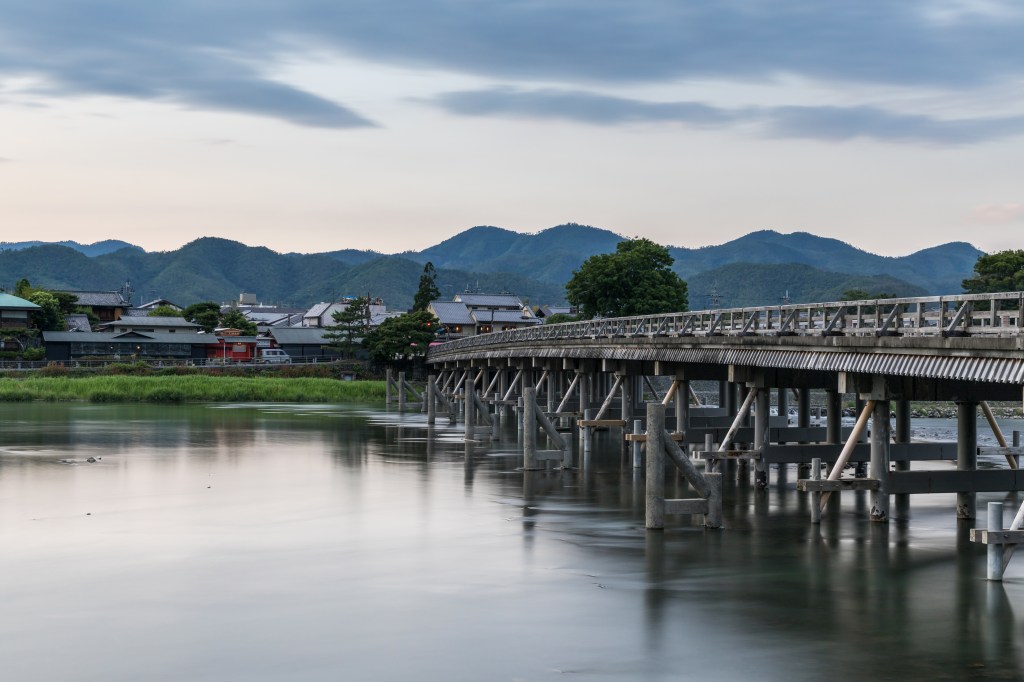
The wooden-looking bridge over the Katsura / Oi River is Arashiyama’s riverside landmark and a natural orientation point between Hankyu Arashiyama approaches and the temple/bamboo cluster. Kyoto Travel’s access guidance uses the bridge area as a walking goal from JR Saga-Arashiyama and Randen Arashiyama stations. Expect heavy foot traffic on the main street (Nagatsuji-dori); stay on sidewalks where marked and keep photo stops brief.

Photo: Basile Morin · CC BY-SA 4.0 · Wikimedia Commons · Modification: none intentional
Tenryu-ji Temple
A UNESCO World Heritage Zen temple with a celebrated landscape garden. The official English visit page publishes admission windows, garden/building ticket options, and access notes from Randen, JR, and Hankyu Arashiyama stations—always reconfirm hours, last entry, and any temporary building closures before you go. Pairing the north-side exit toward the bamboo path is a common walking sequence; treat maps and on-site signs as live data.

Photo: TarnishedPath · CC BY-SA 4.0 · Wikimedia Commons · Modification: none intentional
Arashiyama Bamboo Grove (Sagano Bamboo Forest)
One of Kyoto’s most photographed walks: a tunnel of tall bamboo linking the Tenryu-ji side of Arashiyama with Sagano paths toward Nonomiya Shrine and beyond. JNTO notes approaches from the Tenryu-ji side and a short walk from JR Saga-Arashiyama. Go early when possible; midday can be densely crowded. Stay on the public path, do not cut into private bamboo stands, and keep the walkway clear for rickshaws and other visitors.

Photo: Basile Morin · CC BY-SA 4.0 · Wikimedia Commons · Modification: none intentional
Jojakko-ji Temple
A hillside temple on Mt. Ogura highlighted in Kyoto Travel’s Sagano “hidden temples” itinerary for maple scenery and a pagoda viewpoint over the city. Official Japanese pages cover visiting information—confirm admission and seasonal access before you climb. Useful as the first quieter stop after the bamboo path when heading deeper into Sagano.
Gio-ji Temple
A small moss-garden temple tied to a Tale of the Heike story, with bamboo and maples around a thatched hall. The official English page lists admission windows and notes walking connections within Sagano (including toward Daikaku-ji)—reconfirm fees and last entry on the day. Often calmer than the main Arashiyama street once you leave the bamboo corridor.
Optional extensions: Nison-in, Adashino Nenbutsu-ji, Daikaku-ji
Kyoto Travel’s Sagano temple list also includes Nison-in, Adashino Nenbutsu-ji, and Daikaku-ji farther along the hillside / Saga Toriimoto corridor. Treat them as energy-dependent add-ons; Adashino and Otagi Nenbutsu-ji sit deeper in the area, and Kyoto Travel notes bus returns may be wiser than walking all the way back when tired.
Getting there and around
Gateway: Most travelers start from JR Kyoto Station, then take the JR Sagano Line to Saga-Arashiyama. Kyoto Travel notes that rapid and local trains stop there and that the Sagano Line platform at Kyoto Station is farther than many other platforms—budget extra transfer time inside the station. From Saga-Arashiyama, follow signed sidewalks toward Nagatsuji-dori and Togetsukyo rather than wandering into the roadway.
Other rail edges:
- Keifuku (Randen) Arashiyama — close to Tenryu-ji / Togetsukyo approaches (atmospheric tram from central Kyoto via Shijo-Omiya).
- Hankyu Arashiyama — useful from Kawaramachi / Katsura; walk toward the bridge after exiting (confirm current signed routes).
Within the district: Walking is the main mode between the bridge, Tenryu-ji, the bamboo grove, and Sagano temples. Distances add up on hillside paths—carry water and wear shoes suited to slopes and stone steps.
Buses: City and Kyoto Bus routes serve Arashiyama Tenryu-ji-mae and related stops (examples appear on the Tenryu-ji access table). Route numbers and stop names change—confirm on Kyoto City / Kyoto Bus information and vehicle boards. Kyoto Travel advises avoiding congested Shijo-dori bus approaches from Kawaramachi when time is limited.
Cars: Tenryu-ji publishes limited on-site parking with timed gates; during peak periods, prefer rail. Do not assume street parking near the bamboo path.
Suggested itinerary
One walking day in Arashiyama–Sagano (flexible)
- Arrive via JR Saga-Arashiyama or Randen Arashiyama and walk to Togetsukyo Bridge for orientation.
- Visit Tenryu-ji (garden first; buildings if open and time allows)—reconfirm last entry.
- Continue through the bamboo grove toward Sagano; keep moving on narrow stretches.
- Lunch break near the station / bridge area (reserve if using sit-down restaurants).
- Afternoon: climb toward Jojakko-ji, then continue to Gio-ji if energy remains.
- Optional: push farther to Nison-in or turn back toward the river for an early evening return to central Kyoto or your Arashiyama ryokan.
This is a pacing outline, not a timetable. Skip Sagano temples rather than rushing the bamboo path in a stressed crowd.
Where to Eat
A short list of places to eat after sightseeing. Menus, hours, and closed days change—reconfirm on official pages (or by phone) before you go.
OBU CAFE Arashiyama
Budget fit: Midrange Cuisine: Kyoto-inspired cafe / lunch sets / desserts
A cafe on the second floor of Hannari Hokkori Square at Randen Arashiyama Station, with Arashiyama views and Kyoto-inspired lunch and dessert menus on the official English site.
What to try:
- Kyoto lunch sets (confirm current menu)
- Matcha / hojicha desserts and waffles (confirm)
Address: Hannari Hokkori Square (Randen Arashiyama Station 2F), Kyoto Access: At Randen Arashiyama Station—convenient before or after Tenryu-ji. Hours (confirm): Official English page lists daytime cafe hours—reconfirm. Booking tip: Walk-in cafe; peak times may mean waits—reconfirm hours. Official site: https://obucafe.jp/en/
Arashiyama Daizen
Budget fit: Midrange Cuisine: Kyoto-style sushi
Sushi restaurant in Arashiyama with an official English page describing Kyoto-style sushi, daytime service, and reservation notes for evening courses.
What to try:
- Kyoto-style nigiri / sets (confirm current menu)
- Evening course when reserved (confirm)
Address: 10-3 Isenokami-cho, Saga, Ukyo-ku, Kyoto Access: Sagano / Arashiyama walking area—confirm on a map from your station. Hours (confirm): Official English page lists weekday and weekend windows and Thursday closures—reconfirm. Booking tip: Official page notes advance reservation for dinner courses—reconfirm. Official site: https://www.arashiyama-daizen.com/en.html
KYOTO KITCHO Arashiyama
Budget fit: Upscale Cuisine: Japanese kaiseki
A long-established Japanese cuisine restaurant in Saga-Tenryuji with garden setting and official English pages for hours, access, and reservations.
What to try:
- Seasonal kaiseki courses (confirm)
Address: 58 Susukinobaba-cho, Saga Tenryuji, Ukyo-ku, Kyoto 616-8385 Access: Official English page lists walks from Randen, Hankyu, and JR Arashiyama stations—reconfirm. Hours (confirm): Official English page lists lunch and dinner entry windows and Wednesday closures—reconfirm. Booking tip: Reservations expected for this class of restaurant—use official channels. Official site: https://kyoto-kitcho.com/en/restaurant/arashiyama/
Where to Stay
These overnight picks sit in or beside the Arashiyama walking zone. Hours, rates, and availability change—reconfirm on each official site before you book. Travelers on a tighter budget often day-trip from central Kyoto hotels instead.
Togetsutei
Budget fit: Upscale Stay type: Traditional onsen ryokan by Togetsukyo Bridge
A historic ryokan (est. 1897) beside Togetsukyo Bridge, with official English pages covering rooms, kaiseki dining, and walking access to the bamboo grove and Tenryu-ji.
Why stay here:
- Next to Togetsukyo Bridge
- Walkable to bamboo grove / Tenryu-ji
- Official English information
Address: 54-4 Nakao Shitacho, Arashiyama, Nishikyo-ku, Kyoto 616-0004, Japan Access: Official English page notes walks from Hankyu Arashiyama and JR Saga-Arashiyama—reconfirm. Booking tip: Book via the official website when possible and reconfirm details before arrival. Official site: https://www.togetsutei.co.jp/lg_en/
Hanaikada
Budget fit: Upscale Stay type: Onsen ryokan facing Togetsukyo Bridge
Traditional ryokan with natural hot springs in front of Togetsukyo Bridge. Official English pages note shuttle options from JR Saga-Arashiyama and walking access to major Arashiyama sights.
Why stay here:
- Bridge-front Arashiyama location
- Natural onsen baths (confirm current facilities)
- Official English site
Address: Minami-tsume, Togetsu-kyo, Arashiyama, Nishikyo-ku, Kyoto 616-0004, Japan Access: Official English pages describe JR Saga-Arashiyama pickup notes and short walks to Tenryu-ji / bamboo grove—reconfirm. Booking tip: Book via the official website when possible and reconfirm details before arrival. Official site: http://hanaikada.co.jp/english/
Ryotei Rangetsu
Budget fit: Upscale Stay type: Culinary ryokan in central Arashiyama
A culinary ryokan in Saga-Tenryuji with open-air baths and Kyoto seasonal cuisine, positioned for walks toward Tenryu-ji and the riverfront.
Why stay here:
- Central Arashiyama / Tenryu-ji side
- Focus on Kyoto cuisine stay
- Official English pages
Address: 7 Susukinobaba-cho, Sagatenryuji, Ukyo-ku, Kyoto 616-8385, Japan Access: Near the Tenryu-ji / Randen Arashiyama walking cluster—confirm walking time on a map. Booking tip: Official site lists multiple booking channels—prefer official confirmation of plan details. Official site: https://rangetsu.jp/en/
Practical tips
- Crowds: The bamboo grove and bridge street are among Kyoto’s busiest photo spots. Early arrival helps but is not a guarantee of empty paths.
- Path manners: Keep to public routes; do not block rickshaws or enter private temple/staff areas for photos.
- Hills and footwear: Sagano temples involve slopes and steps beyond the flat bridge area.
- Heat and rain: Summer humidity and sudden showers are common—carry water and a light rain layer.
- Cash and cards: Do not assume every small shop accepts cards.
- Monkey Park / river boats / romantic train: Optional extras with separate tickets and weather limits—confirm on each operator’s official page if you add them.
- A central Kyoto stop on a different day, with its own separate ticket, is the Nijo Castle travel guide .
Where to Go Next
These are separate day trips from a Kyoto base, not walkable extensions of the Arashiyama–Sagano loop.
- Kyoto Higashiyama Travel Guide: Kiyomizu-dera, Gion Streets, and Walking Routes — an eastern Kyoto walking day around Kiyomizu-dera and Gion. Keep it separate from this Arashiyama day.
- Nara Park and Naramachi Travel Guide: Temples, Deer, and Old Town Streets — temples, deer, and Naramachi lanes. Ride it as its own day from Kyoto or Osaka.
- Kurama and Kibune Day Trip from Kyoto: Temples, Forest Trails, and Mountain Air — Mountain temples and forest paths north of central Kyoto; plan as another day.
- Uji Travel Guide: Matcha, Byodo-in Temple, and a Day Trip from Kyoto — Matcha town and Byodo-in south of Kyoto; plan as another day by train.
Explore More of Japan
If you are planning a wider Japan itinerary, these published guides pair well beyond the Kyoto basin:
- Miyajima Travel Guide: Itsukushima Shrine, the Floating Torii, and a Hiroshima Day Trip — Iconic shrine island further west.
- Naoshima Travel Guide: Art Islands, Museums, and the Seto Inland Sea — Art-island contrast to Kyoto’s temple streets.
- Kanazawa Travel Guide: Kenrokuen and Teahouse Districts — Another historic city break with gardens and teahouse quarters.
Before you go
Arashiyama mixes heavy visitor traffic on the bamboo path with quieter hillside temples—build slack into your day and decide in advance whether Sagano temples are a must or a bonus. Rail platform locations at Kyoto Station and bus congestion on central streets can cost more time than the short JR ride suggests. Timetables, fares, admission fees, and seasonal access rules can change. Check the official tourism and transport sites linked below for the latest information before you travel.
Sources
- Kyoto Travel — Comfortable access to Saga/Arashiyama (checked 2026-10-17)
- Kyoto Travel — 6 hidden temples in Saga Arashiyama (checked 2026-10-17)
- JNTO — Sagano & Arashiyama (checked 2026-10-17)
- JNTO — Arashiyama Bamboo Grove (checked 2026-10-17)
- Tenryu-ji official visit / admission (English) (checked 2026-10-17)
- Tenryu-ji official (English) (checked 2026-10-17)
- Gio-ji Temple official (English) (checked 2026-10-17)
- Jojakko-ji Temple official (checked 2026-10-17)
- Japan National Tourism Organization (JNTO) (checked 2026-10-17)
- Togetsutei official (Stay listing) (checked 2026-10-17)
- Hanaikada official (Stay listing) (checked 2026-10-17)
- Ryotei Rangetsu official (Stay listing) (checked 2026-10-17)
- OBU CAFE Arashiyama official (Eat listing) (checked 2026-10-17)
- Arashiyama Daizen official (Eat listing) (checked 2026-10-17)
- KYOTO KITCHO Arashiyama official (Eat listing) (checked 2026-10-17)


Leave a Reply