Planning Tanegashima? This English guide covers the space centre, the firearms museum, the sea cave and access from Kagoshima.
Operational details such as opening hours, admission fees, and train times can change. Prefer official pages and reconfirm before you travel (sources checked on 05 November 2026).
Why visit
- Tanegashima is a long, narrow island south of Kagoshima with two claims on the traveller’s attention: the largest rocket launch site in Japan, and the beach where a Portuguese ship is said to have brought the first firearms into the country in 1543.
- The space centre is free to enter and genuinely interesting even if you have no interest in engineering: real rocket hardware, a full-size engine test model and a launch pad tour that requires a booking but no payment.
- The island is 58 kilometres from north to south with no railway, which keeps it feeling like a place people live in rather than a resort. Driving the coast road is the main activity.
- Its coastline has real variety: an erosion cave you can only enter around low tide, black lava rocks and white sand on the east coast, and two paired rocks on the west coast that are a local power spot.
- It is also a serious surfing destination, with points on both coasts so that one side works whatever the wind is doing, and a local code of conduct you are expected to follow.
- Anno sweet potato, flying fish and the local blacksmithing tradition give the food and shopping a specificity you will not find on the mainland.
- Because it is only a 35-minute flight or a 95-minute jetfoil from Kagoshima, it works as a two-night addition to a Kyushu trip without eating a week of your itinerary.
Top places and highlights
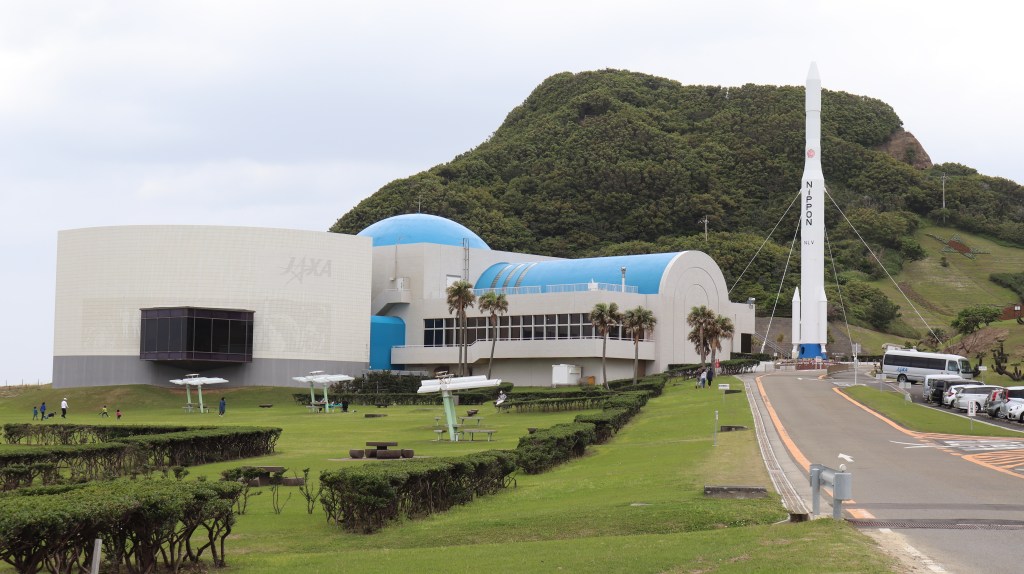
Tanegashima Space Center
The centre occupies a huge coastal site in the south of the island, and entry is free. Start at the Space Science Museum, which is open from 9:30 to 16:30, closed on Mondays unless that Monday is a public holiday, in which case it closes on the Tuesday; there are no closures in August. Displays cover the H3 rocket, satellites and the history of Japan’s launch programme, with full-size test hardware you can walk around. The reason to book ahead is the guided bus tour of the launch pads, which is free but requires a reservation and fills up, and which is the only way to see the actual pad complex. There is free parking for about 37 cars, wheelchairs and strollers are available to borrow, and the site has a cafeteria open at lunch on weekdays only. Once a year, in late November, the centre holds an open day with extra tours and events that need their own reservations.
The old firearms museum at Nishinoomote
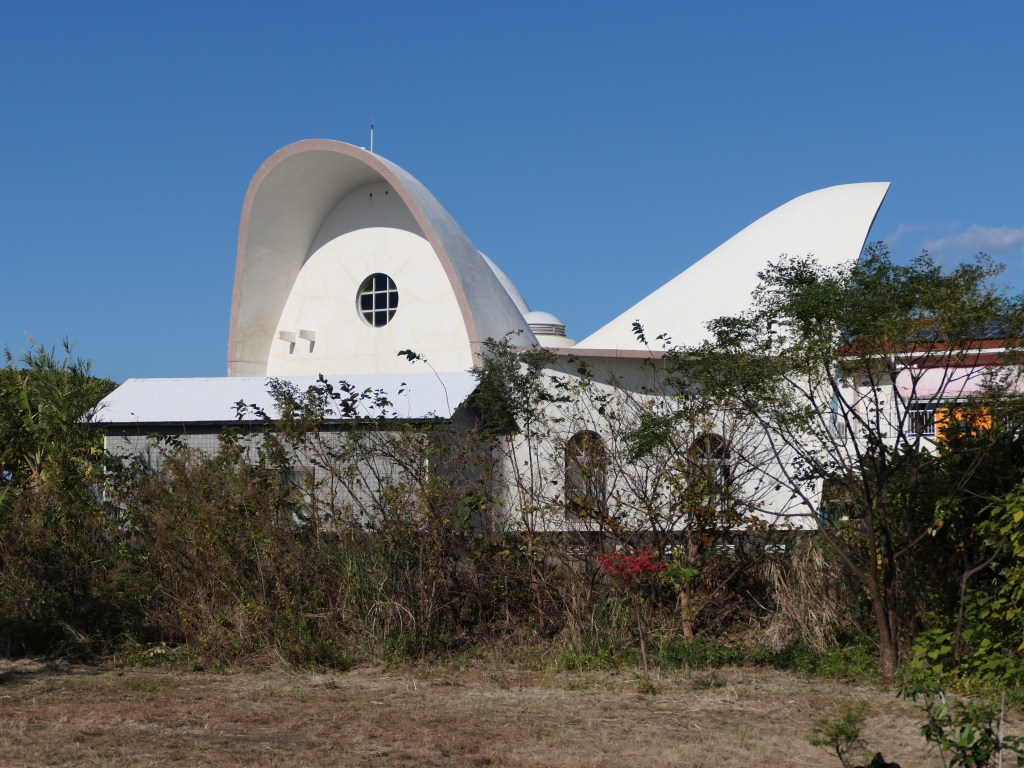
The Tanegashima Development Centre, known simply as the Teppo-kan, is the island’s other essential museum, and the building is shaped and coloured like a Portuguese trading ship. Inside are around a hundred early firearms from Japan and abroad, including a Portuguese original and the first gun made in Japan, alongside the blacksmithing tools and the Tane-gami scissors that came out of the same transfer of technology. Dioramas explain the 1543 landing, and the local history, geology and fishing gear collections give context to the rest of the island. It is a modest, municipal museum rather than a theme attraction, which is why it is good: nothing is over-explained or dramatised. Admission is 440 yen for adults, 280 yen for high school students and 140 yen for younger children, open 8:30 to 17:00 with last entry at 16:30, closed on the 25th of each month except in July, August and on Sundays, and closed 30 December to 2 January. It is five minutes by car from Nishinoomote port.
Cape Kadokura and the landfall of the gun
The island’s southern tip is where the story begins: a Chinese ship carrying Portuguese traders is said to have come ashore near here in 1543, and a monument to the introduction of firearms stands on the headland, with a memorial ceremony held every October. The cape has a viewing platform built in the shape of a Portuguese ship, and from it you can see the launch pads of the space centre to the east and Yakushima across the water to the west. A small shrine with a red torii gate sits at the very point. The coast between the cape and the space centre is a designated scenic area sometimes called the seven-coloured shore for the contrast of white sand, blue water and green hills. There is free parking, no admission charge and no facilities, and the wind is constant, so bring a layer even in summer.
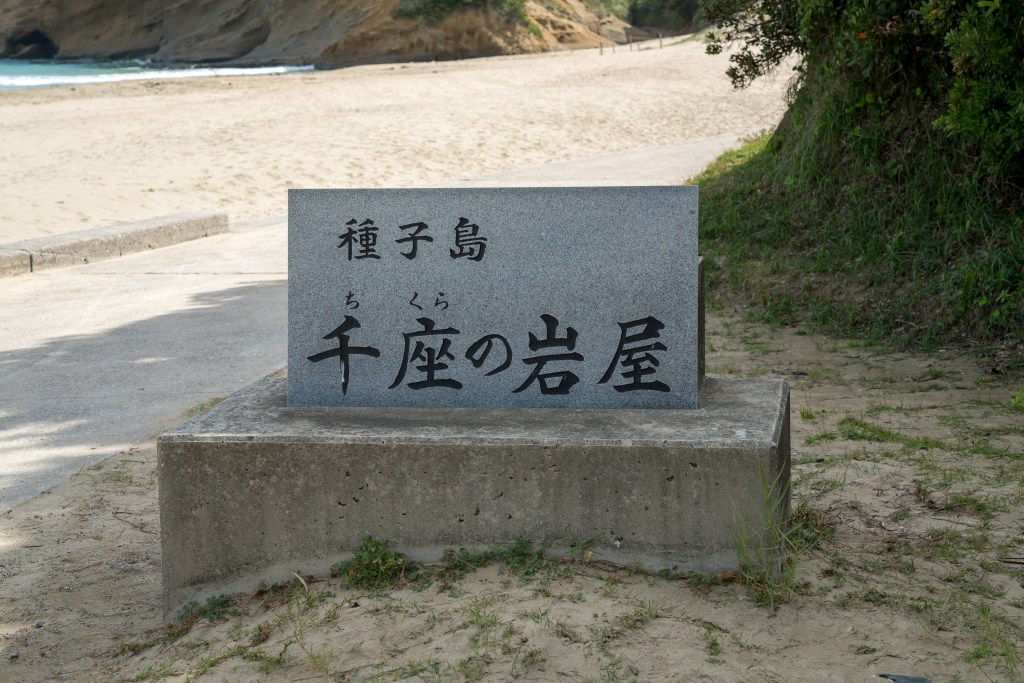
Chikura no Iwaya, the sea cave at Hamada
This is the largest sea cave on the island, cut into the east coast by Pacific swell at Hamada beach, and it is said to be big enough for a thousand people to sit inside, which is where the name comes from. The interior runs about thirty metres deep, and the appeal is the light: from inside the dark chamber, the entrance frames blue water and the offshore rocks. There is a hard constraint on visiting: the cave can only be entered for roughly two hours either side of low tide, and at other times the water fills the mouth. Check a tide table for the day and plan the rest of your drive around it rather than the other way around. Wear shoes with grip, since the floor is wet rock and loose stones. The beach itself is a good swimming spot in summer, with shallow water and reef visible from the sand.
Otatsu and Metatsu, the paired rocks on the west coast
On the west coast along Route 58, two large rocks stand side by side at the water’s edge, tied to each other with a sacred rope. Local tradition explains them as a devoted couple from the village who were swept into the sea by a landslide on a stormy night and returned as stone, and they are visited as a power spot for marriage and long partnership. The rocks are best at sunset, when the sun drops between them and the sky and water turn red, which is the photograph everyone comes for. There is free parking, a short path along the rocky shore, and no charge. Because it faces west and the coast here is exposed, the wind is strong and the footing uneven; keep back from the wet rocks and do not climb on the stones themselves, which are an object of veneration rather than a viewpoint.
The beaches and the surf
Tanegashima has surf on both coasts, which is why it has become a destination rather than a novelty: the shape of the island means you can pick a point according to the wind and swell direction on any given day, and there are beach breaks and reef breaks for different levels. Takezaki beach near the space centre is the best-known, with reef and clear water and the launch site visible along the shore. Hamada on the east coast is the family beach, shallow and sheltered enough for children, with a beach house in season. The local surf community runs an initiative to make visitors welcome while protecting the line-ups, and the etiquette is the ordinary one: greet people in the water, do not drop in, and ask about currents at a point you have not surfed before, because several are reef breaks with shallow sections.
Hirota site museum and the island’s deep history
Before the guns and the rockets, this island had a prehistoric culture of its own. The Hirota site in the south produced large numbers of shell bracelets and human remains from a cemetery used over centuries, and the museum built beside it explains what was found and why it matters: the ornaments suggest wide trade links and a society with surplus and ritual. It is a small, quiet museum with good object displays, and it pairs naturally with the space centre on the same day, since both are in Minamitane. Admission is 300 yen for adults and free for junior high and younger, open 9:00 to 17:00 and closed on Mondays, or the following day when Monday is a public holiday, and over the New Year. Note that launch schedules can cause temporary closures, so check before travelling out.
Driving the island north to south
The island is about 58 kilometres long and has no railway, so a rental car is the difference between seeing three things and seeing the place. The road along the west coast passes fishing ports, the paired rocks and long views to Yakushima, while the east coast road runs behind the beaches and the cave and up toward the launch site. Traffic is light, the speed limits are low, and the drive itself is the attraction: roadside shrines, drying fish, fields of sweet potato and the smell of the sea. Buses exist and are cheap, but frequencies are low and the stops are far from several of the sights, so if you are relying on them, plan two or three fixed stops rather than a loop. Rental cars are available at the airport and at Nishinoomote port, and booking ahead matters in summer and around launch dates.
Food and drink
- Anno sweet potato is the island’s famous crop, honey-sweet and purple-skinned, appearing as roasted potatoes, chips, ice cream and sweets; buy some at a roadside stand rather than a souvenir shop.
- Flying fish is a spring and early summer catch here, served as sashimi, grilled or in fish cakes, and it is the local fish to order if it is on the menu.
- The island’s fishing ports mean simple, cheap seafood lunches: set meals of grilled fish, sashimi and rice rather than elaborate cuisine.
- Tanegashima also has a blacksmithing heritage, and the local scissors and blades make practical souvenirs that are easy to carry.
- Restaurants are few in the south of the island, especially around the space centre, so plan lunch before or after your visit rather than expecting to eat on site.
- The cafeteria at the space centre serves lunch on weekdays only, and closes on Saturdays, Sundays and public holidays.
Getting there and around
- By air: JAL from Kagoshima to Tanegashima takes about 35 to 40 minutes, with four round trips a day. There are also seasonal direct flights from Itami in Osaka during the summer and New Year periods.
- By high-speed boat: the jetfoil from Kagoshima port to Nishinoomote takes about one hour thirty-five minutes. Boarding procedures open an hour before departure, and long surfboards are not carried.
- By car ferry: about three hours thirty minutes from Kagoshima, departing in the morning and returning in the early afternoon; vehicles can be carried, which makes it the option if you are bringing a car.
- From Yakushima: about fifty minutes by jetfoil from Awa or Miyanoura, or sixty-five minutes by the ferry Taiyo from Miyanoura to Shimama on Tanegashima, which also carries vehicles.
- The island has no railway. Rental cars are available at the airport and at Nishinoomote port, and a car is effectively necessary for the southern sights.
- Distances are longer than they look on a map: the space centre is about an hour’s drive from Nishinoomote port, and Cape Kadokura is further still.
Where to stay
- Accommodation is spread between Nishinoomote in the north, Nakatane in the middle and Minamitane in the south, mostly small hotels, guesthouses and minshuku.
- Staying in the south puts you close to the space centre and the cave, but leaves you far from the port and the airport; staying in Nishinoomote is more convenient for arrival and departure.
- Book early around rocket launches, when the island’s limited rooms fill with engineers, press and spectators.
- Surf-oriented guesthouses near the main breaks are the other cluster, and they are the easiest way to learn which point is working on a given day.
Best time to visit
- Spring is the most comfortable season, mild and green, with flying fish arriving and the island’s lilies flowering; it is also the season most often recommended for a first visit.
- Summer brings the clearest water and the best swimming, along with heat, humidity and the possibility of typhoons disrupting boats and flights.
- Autumn is warm and quiet, with the firearms memorial ceremony in October at Cape Kadokura and fewer visitors after the summer holidays.
- Winter is mild but windy, with the sea often rough enough to cancel the jetfoil, and the cave and the coast still visitable on foot if you dress for the wind.
Practical tips
- Check the tide table before planning your day if you want to enter Chikura no Iwaya; the window is about two hours either side of low tide.
- Reserve the free space centre bus tour in advance. Entry to the museum is free and needs no booking, but the launch pad tour does.
- Plan around Monday: the space museum, the Hirota museum and parts of the firearms museum close on Mondays, and the firearms museum also closes on the 25th of the month.
- Rent a car, or accept that you will see a small fraction of the island. Bus frequencies are low and the sights are far apart.
- Bring cash. Outside Nishinoomote, card acceptance is patchy and ATMs are scarce.
- If you are surfing, ask locally about the break before paddling out; several points are reef breaks with shallow sections and strong currents.
- Keep an eye on the launch calendar if you are near the space centre, both because it is worth seeing and because roads and facilities can close around a launch.
- Confirm ferry and flight times, museum closures and tour reservations with the operators or the Tanegashima tourism association before travelling.
Suggested day-trip outline
- Day 1, morning: fly into Tanegashima, collect a car and drive south to the space centre for the museum and, if booked, the launch pad bus tour.
- Day 1, afternoon: Cape Kadokura for the firearms memorial and the view, then Chikura no Iwaya if the tide is right, finishing with the Hirota site museum if it is open.
- Day 1, evening: check in around Nishinoomote or Nakatane, eat local fish, and note the tide and launch times for the next day.
- Day 2, morning: the firearms museum at Nishinoomote, then drive the west coast for the paired rocks and a beach stop.
- Day 2, afternoon: a surf lesson or a swim at Takezaki or Hamada, sunset at the paired rocks, and the evening ferry or a second night.
Before you go
Timetables, fares, admission fees, and seasonal access rules can change. Check the official tourism and transport sites linked below for the latest information before you travel.
Explore More of Japan
Published guides that pair with this one:
Browse every Kyushu guide on this site for the rest of the region.
Sources
- tanekan.jp (checked 2026-11-05)
- city.nishinoomote.lg.jp (checked 2026-11-05)
- fanfun.jaxa.jp (checked 2026-11-05)
- city.nishinoomote.lg.jp (checked 2026-11-05)
- tanekan.jp (checked 2026-11-05)


Leave a Reply