Yambaru is the north of Okinawa Island: three villages, a national park, and a forest that looks nothing like the Okinawa of the resort brochures. There are no high-rise hotels here, no beach clubs, and no monorail. There are narrow roads under a canopy of evergreen oak, rivers that rise fast after rain, mangrove creeks that only make sense at high tide, and a flightless bird that exists nowhere else on earth.
It is also the part of Okinawa that most visitors skip. The guidebooks give it a page, the tour buses turn around at Nago, and the result is a landscape that still feels like a place people live in rather than a place built for looking at. That is the reason to come, and also the reason to plan: buses are few, restaurants close early, and the forest does not perform on demand.
This guide covers what Yambaru is, the species that make it a World Heritage site, the 2026 state of its main facilities, the mangroves at Gesashi, the drive to Cape Hedo, and the practical details — buses, rental cars, road safety, lodging inside the park — that decide whether a visit works. Prices and opening hours were checked on 27 October 2026 and should be reconfirmed before you travel.
Why Yambaru is different
The first surprise is the scale. Yambaru occupies roughly the northern third of Okinawa Island, from the hills behind Nago up to Cape Hedo, and most of it is forest rather than coast. The second surprise is how few people live there: Kunigami village, the largest of the three municipalities in the park, had a population of 4,348 at the end of September 2026. The third is the weather. This is one of the wettest parts of Okinawa, and the forest is green in a way that the limestone south of the island is not.
Yambaru is not a wilderness in the North American sense. People have lived in and used these hills for centuries, cutting timber, growing crops, and maintaining paths. What makes it exceptional is that the forest survived at all, and that it still holds a concentration of endemic species found nowhere else: a flightless rail, a woodpecker, a long-haired rat, a leaf butterfly, and a frog that lays its eggs in tree holes. UNESCO listed the area as part of a serial natural World Heritage site in 2021, together with Amami-Oshima, Tokunoshima and Iriomote.
The name is sometimes confused with a railway. There is no train in Yambaru; the only rail line in Okinawa is the Yui Rail monorail in Naha, more than two hours south. The “Yanbaru rail” you may read about is a bird, the Yanbaru kuina, and it is the reason many people come.
What the national park is
Yambaru National Park was designated on 15 September 2016, absorbing part of the old Okinawa Kaigan Quasi-National Park, and it covers 17,352 hectares of land in Kunigami, Ogimi and Higashi villages. It is Japan’s 33rd national park. In 2026 it marked its tenth anniversary with a logo built from the Okinawa rail, the Ryukyu long-haired rat, the leaf butterfly and the two forests that define the place — subtropical evergreen oak and mangrove. The anniversary slogan is a good summary of how the park is managed: mountains and sea, and the stories that connect people to them.
What that means on the ground is unusual. The park is not a fenced reserve. Villages, farms, roads and a few hotels sit inside it, and much of the land is privately owned. Some core areas are special protection zones where entry is restricted or guided; other parts are ordinary forest that anyone can walk. The practical consequence is that you should not assume a trailhead exists because a map shows a green area, and you should check local rules before heading into the interior.
The park’s own guidance is simple: stay on trails, take your rubbish home, do not collect plants or animals, and do not feed or call wildlife. Those rules matter more here than in most parks because the species are few in number and the forest is small enough for a single bad season to matter.
The forest and the species you might see
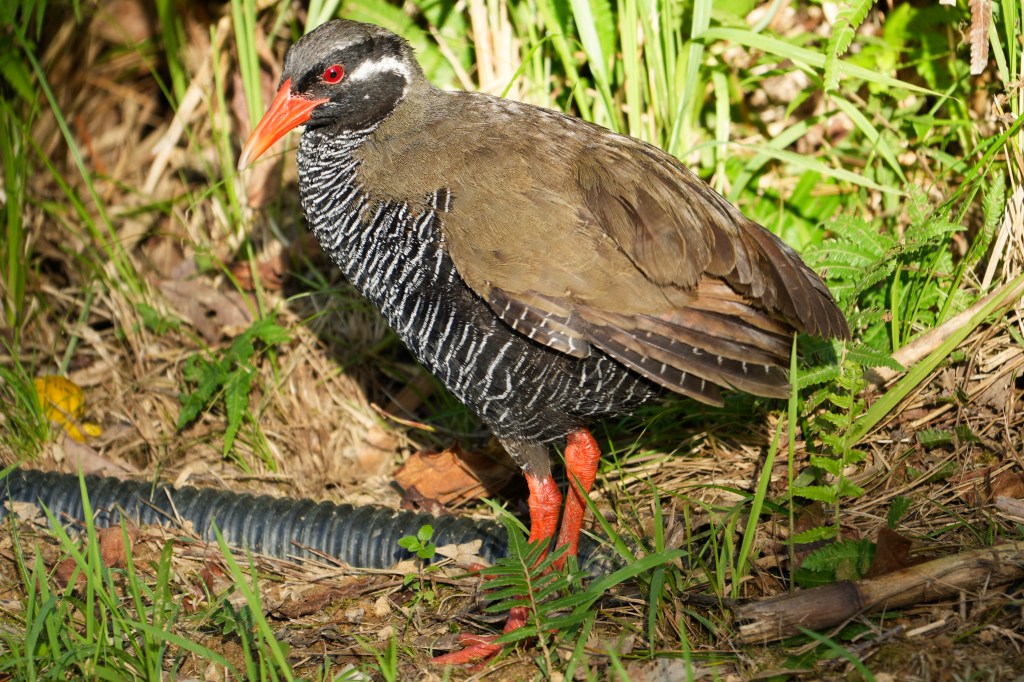
The dominant tree is itajii, a kind of evergreen oak, mixed with other subtropical species and a dense understorey of ferns. The forest is dark, humid and surprisingly cool, and it looks more like a cloud forest than a tropical beach backdrop. In spring and early summer the calls of birds carry a long way; in winter the forest is quieter but easier to see into.
The Okinawa rail, locally Yanbaru kuina, was discovered in 1981 and is flightless. It is a small, dark bird with a red bill and striped flanks, and it lives on the forest floor, which is exactly why it is vulnerable. The environment ministry’s 2023 survey estimated 1,345 birds, with a wide confidence range; the current wild population is usually described as around 1,500. That is a recovery from roughly 700 in 2005, achieved mainly by removing invasive mongooses, but it is still a small number.
Roads are the main killer. The Ufugi center logged 31 Okinawa rail roadkill in 2024, and by late October 2026 it had already recorded 40 for the year, along with 43 Ryukyu long-haired rats. Most incidents happen in the breeding season from April to June, with a peak in May, and most are on Prefectural Roads 2 and 70, the two routes that cut through the forest. The pattern is not random: birds come to the road at dawn and dusk, and chicks appear in early summer. If you drive here, slow down, use high beams at night, and be ready to stop on a blind bend.
The other endemic species are harder to see. The Okinawa woodpecker, Noguchigera, is a dark, heavy-billed bird and a Special Natural Monument, and it too turns up in the roadkill data. The Ryukyu long-haired rat is a large, spiny-furred rodent with a long tail. The leaf butterfly, konoha cho, is the park’s logo species and looks like a dead leaf when it closes its wings. Ishikawa’s frog, which breeds in tree holes, is heard more often than seen.
Night tours are the standard way to look for rails, and a good guide will use a red light, keep distance, and avoid playback. Ask before you book. A bird called in by a recording is a bird that has been pulled away from feeding or nesting, and the population is not large enough to absorb much of that. The same applies to owls and frogs: look, do not handle.
Places to build a day around
Yambaru World Heritage Center (Ufugi Nature Museum)
The best first stop is the World Heritage Center at Hiji, in Kunigami village, which reopened on 16 July 2026 after a renovation. It is a small, well-made museum about the forest and its species, with taxidermy, skulls, a film, and staff who can tell you which trails are open. Admission is a cooperation fee of 300 yen for junior high school students and older. It is open from 10:00 to 17:00 and closed on Mondays, public holidays, 29 December to 3 January, and 23 June, the Okinawan memorial day.
The center is about 50 minutes by car from Kyoda Interchange on the expressway. By bus, take route 67 from Nago bus terminal and get off at Okuma Beach entrance, then walk about 15 minutes. The road in is narrow in places but signed. Allow an hour, more if you want to read everything.
Kuina no Mori
The Yanbaru kuina exhibition facility at Yasuda, in the south-east of Kunigami village, is the one place where you are almost certain to see a live Okinawa rail. It is not a zoo in the usual sense: the birds are in a recreated forest enclosure, and the observation windows let you watch them walk, probe the leaf litter and disappear into cover. It is the right choice for families, for anyone with limited mobility, and for anyone who wants to understand the bird before trying to find one in the wild.
Admission is 700 yen for high school students and older and 300 yen for elementary and junior high students, with a discount for village residents. It is open from 9:00 to 17:00 with last entry at 16:30, and closed on Wednesdays. The site is at Yasuda 1477-35, inside the Yasuda Kuina Fureai Park, with free parking. Keep voices low and do not tap the glass; the point of the facility is the bird’s welfare as much as your photograph.
Yambaru Forest Toy Museum
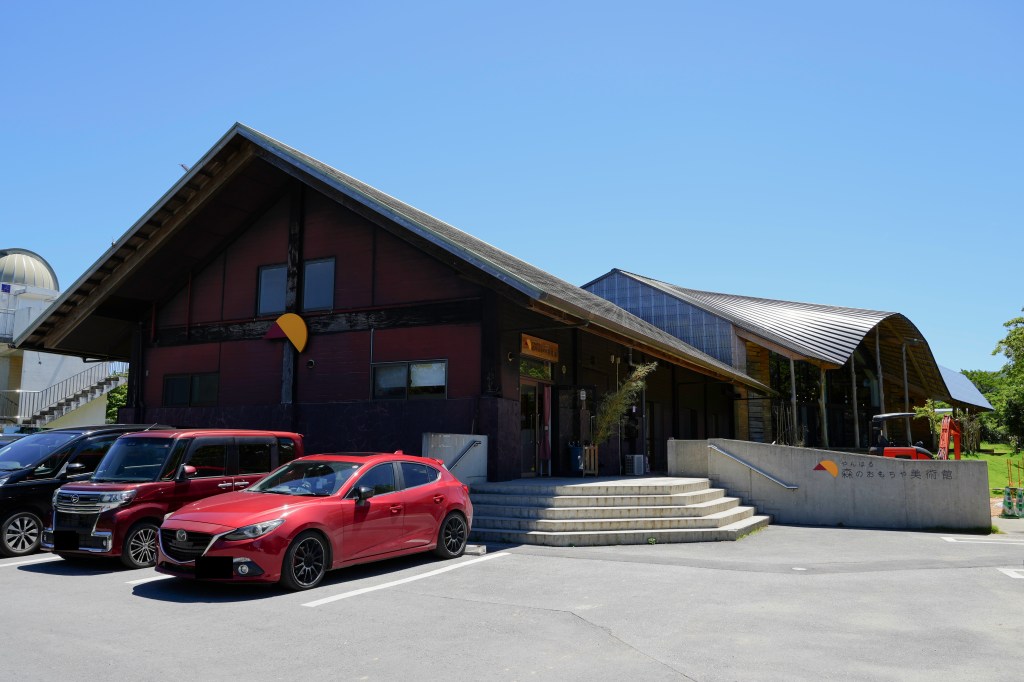
In the Kunigami Village Forest Park at Hentona, the Yambaru Forest Toy Museum reopened on 14 March 2026 with a play area four times its previous size and about 5,000 new toys, many of them made only for this museum. It sounds like a children’s attraction, and it is, but it is also the best rainy-day option in the north: the toys are made from local wood and plant fibres, and the exhibits explain the forest through touch rather than text.
It is open from 10:00 to 16:00 with last admission at 15:30, closed on Thursdays and over the New Year, and charges 1,400 yen for adults and junior high students and 1,000 yen for children from one year old to elementary school. Parking holds about 100 cars. Cards and transport IC are accepted; PayPay is not. The same forest park has campsites, bungalows, walking trails and an observatory, so it can fill an afternoon if the weather turns.
Ogimi and the Yambaru Forest Visitor Center
Ogimi village, on the west coast south of Kunigami, is the park’s front door and its best place to eat. The roadside station, Michi-no-Eki Ogimi, houses the Yambaru Forest Visitor Center: a shop full of shikwasa products, a restaurant, a parlour, and a 360-degree dome theatre where you lie back and watch films about the forest, the wildlife and village life. The theatre costs 300 yen for adults and 100 yen for children, and films run about 25 minutes.
Hours are split by section. The shop is open 9:00 to 18:00, the information facility 9:30 to 17:00 and closed on Wednesdays, the restaurant 11:00 to 15:00 and closed on Tuesdays, and the parlour 11:00 to 16:00 and closed on Mondays and Fridays. There are 110 ordinary parking spaces and nine for buses. Ogimi is also the country’s leading producer of shikwasa, the small citrus that appears in everything from juice to butter, and the shop is the easiest place to buy it.
Kijoka basho-fu
A few minutes inland, the Ogimi Village Basho-fu Hall at Kijoka is a working textile site, not a museum with a gift shop at the end. Basho-fu is cloth woven from the fibres of the Ito-basho banana, and the Kijoka technique is a nationally designated Important Intangible Cultural Property. You can watch the weaving from the second-floor gallery on weekdays; entrance is free, and the hall is open 10:00 to 17:00, closed on Sundays, during Obon and over the New Year. Viewing stops between 12:00 and 13:00.
This is not a place to treat as a photo opportunity. Weavers work in the same room, individual workshops do not accept visitors, and photography requires permission. Go if you are genuinely interested in craft, buy something small from the shop, and keep the visit short.
Cape Hedo
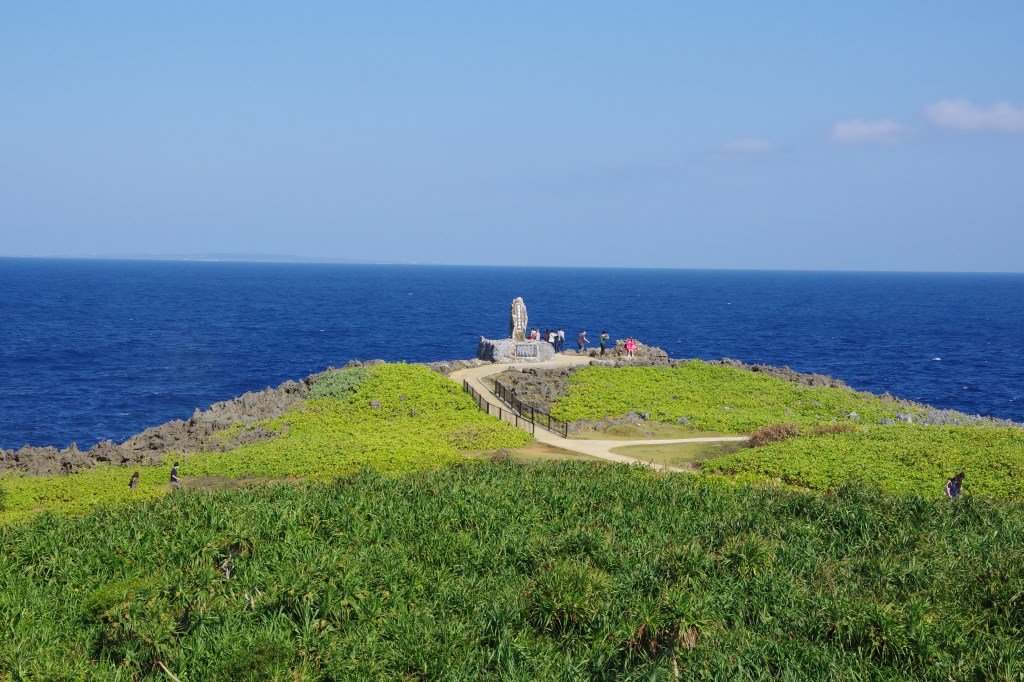
Cape Hedo, at the northern tip of the island, is the end of the road in the most literal sense: the cliffs are raised coral, and on a clear day you can see Yoron Island, about 22 kilometres across the water. The cape has been part of Yambaru National Park since the park was created in 2016. There is a monument to the campaign for Okinawa’s return to Japan, a lighthouse, a visitor information desk, toilets, and free parking for about 70 cars.
It is a 120-kilometre drive from Naha Airport, about two and a half hours with the expressway, and roughly an hour and a half from Kyoda Interchange along the coast. The wind is constant and can be strong enough to make standing uncomfortable; bring a layer even in summer. Sunrise on New Year’s Day is a local tradition and the car park fills early. The cape is outside the forest core, so it is a good add-on rather than a substitute for the interior.
Hiji Falls: currently closed
Hiji Falls is the tallest waterfall on Okinawa Island at about 25.7 metres, and normally one of the most popular walks in Yambaru: a 1.5-kilometre trail each way, about 40 minutes, with a suspension bridge and a pool at the end, for 500 yen for adults and 300 yen for children. It is also closed. Record rain in November 2024 damaged the trail and the campground, and the village’s notice says reopening will take several years.
Do not plan a visit on the strength of an old guidebook, and do not walk past a closure barrier. The forest around the falls is steep and the river rises quickly; the closure is not bureaucratic caution. Check the Kunigami village and prefectural tourism pages before you go, and treat any reopening date you see on social media as unconfirmed until the village announces it.
Mangroves at Gesashi Bay
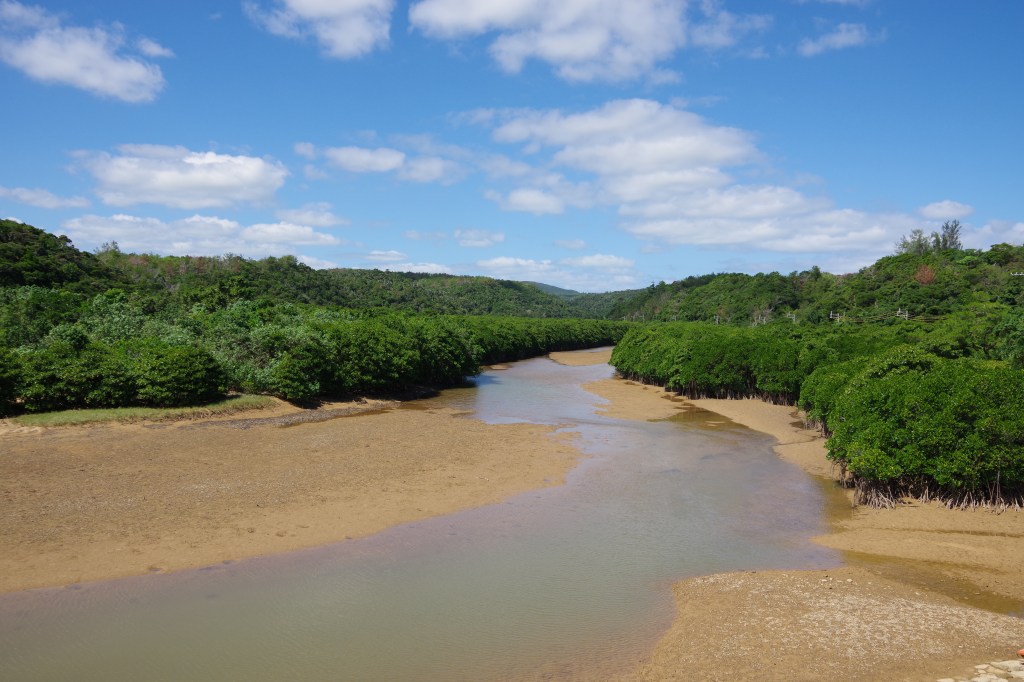
The mangrove forest at Gesashi Bay, in Higashi village, is a nationally designated Natural Monument and the largest on Okinawa Island. Three species grow here — ohirugi, mehirugi and yaeyama hirugi — with the characteristic stilt roots that make the creek look like a flooded cathedral. The forest is best seen from the water, and the standard way is a guided kayak tour from the mouth of the Gesashi river.
Everything depends on the tide. The creek is shallow, and the narrow tributary — about 400 metres of tunnel barely wide enough for one kayak — can only be entered at high water. Operators therefore set their start times each day according to the tide, which means you cannot simply turn up at 10:00 and expect to go. Book ahead, give the operator your date, and accept the time they offer. On low-tide days the long tributary may be closed and the route shortened.
Prices in 2026 are around 5,000 to 7,000 yen per adult for tours of one and a half to two and a half hours, with children cheaper; one local operator charges 5,500 yen for adults and 4,500 yen for children on a two-hour tour, another 5,000 yen for 90 minutes and 7,000 yen for two and a half hours. Tours run year-round, need two or more people, and usually require booking by the previous day. The meeting points are around Gesashi, on the coast road east of Nago.
Parking at the Fureai Hirugi Park became paid in April 2026 at 500 yen per car, so check whether your operator includes parking or has its own lot. Do not pick leaves, do not take crabs or shells, and do not stand on the aerial roots. The mangrove is a nursery for fish and crustaceans, and it is also a memorial landscape for the village; treat it as both.
Walking in the forest
There is no single long-distance trail through Yambaru, and the walking is more fragmented than the park’s size suggests. The most reliable base is the Kunigami Village Forest Park at Hentona, which has short trails, campsites and an observatory, and the Yambaru Discovery Forest at Aha, deeper in the park, which has its own network of paths and guided programmes. Other routes are maintained by villages, forestry cooperatives or tour operators, and some are closed after typhoons or for conservation.
The forest is not technically difficult, but it is wet, slippery and full of things that bite. Leeches are common after rain, the Okinawan pit viper, habu, is present though rarely seen, and mosquitoes are persistent. Wear long trousers, closed shoes with grip, and carry rain gear and water. Trails can be muddy enough to slow you to half your normal pace. Mobile coverage is patchy in the valleys, so download offline maps and tell someone where you are going.
Guided walks are worth the money, not because the paths are hard to follow but because a guide will find things you would walk past: a frog in a tree hole, a rail’s footprint, the difference between two similar ferns. Operators registered with the three villages follow shared field rules, which include no collecting, no playback, and no off-trail shortcuts. If you want a night walk, book one that is explicit about its wildlife policy.
The three villages
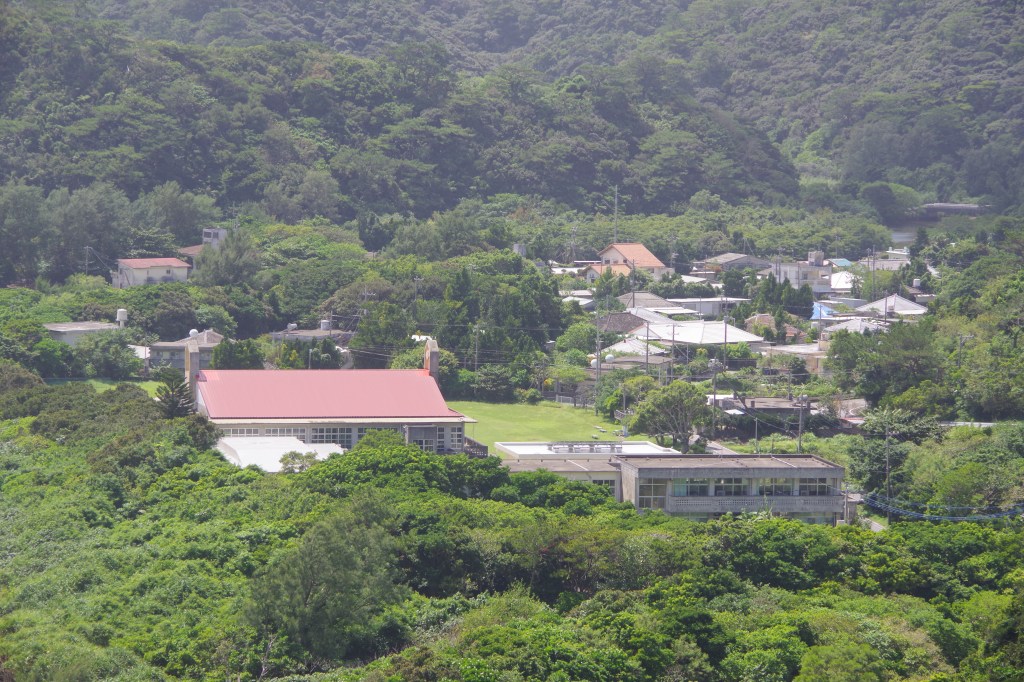
Kunigami is the largest and wildest, running from the west coast at Okuma across the mountains to the east coast at Yasuda and Ada, with the old settlements of Oku and Hentona in between. It is where most of the park’s facilities are, including Ufugi, Kuina no Mori, the toy museum and the forest park. Hentona has the village office, a supermarket, a few restaurants and the bus terminal; Oku is smaller and quieter, with a post office, a shop and the road to Cape Hedo.
Ogimi, south of Kunigami on the west coast, is famous in Japan as a village of long-lived people, a reputation that turned into an international brand after the book Ikigai. The reality is less exotic and more interesting: small farms, a strong local food culture, shikwasa orchards, and a textile tradition that goes back centuries. It is also the easiest place in the park to eat a proper lunch.
Higashi, on the east coast, is the mangrove village. Gesashi Bay is its centre, and the coast road south from there is one of the prettiest drives on the island, with the sea on one side and forest on the other. The village is small and has few restaurants; plan around the roadside station at Ogimi or the shops in Nago.
Food in Yambaru is local and unsophisticated in the best sense. Look for Okinawa soba, Yambaru pork, shikwasa juice and dressing, sea grapes, and the sweet potato pastries sold at roadside stations. The seafood is good but the fishing ports are small; do not expect the market culture of the south. Restaurants keep short hours, close on seemingly random weekdays, and often stop serving by 14:00. Carry cash, and do not assume you will find dinner after 19:00 outside Nago.
Getting there
Fly to Naha, then drive or take the bus north. By car, take the Okinawa Expressway to Kyoda Interchange, about 55 minutes from the airport, then Route 58 north along the west coast; Kunigami is roughly an hour further, and Cape Hedo about an hour and a half. The expressway toll from the airport area to Kyoda is around 950 yen for a normal car, and an ETC card makes it easier.
By bus, take express route 111 or 117 from Naha Airport to Nago bus terminal, about 1 hour 40 minutes and 2,230 yen. From Nago, route 67 runs to Hentona bus terminal in about an hour for 1,070 yen. From Hentona, Kunigami village buses run to Oku (about 34 minutes, 500 yen) and along the east coast to Aha and Yasuda, but only a couple of times a day. The timetables are posted on the village website and at the terminal; miss the last bus and your options are a taxi or a long walk.
For Ufugi, stay on route 67 past Hentona to Okuma Beach entrance and walk 15 minutes. For Kuina no Mori and the east coast, the village bus is the only public transport, and it is not designed around visitors. If you are relying on buses, pick one base — Nago or Hentona — and accept that you will see less.
Getting around
A rental car is close to essential. The park is large, the bus network is thin, and the places worth seeing are spread across two coasts. Roads are narrow, winding and often single-lane with passing places; allow more time than the distance suggests. Route 58 runs up the west coast, Route 70 along the east, and Routes 2 and 70 through the forest are where wildlife crossings happen.
Fuel stations are concentrated in Nago, Hentona and a few villages, and some close in the evening. Fill up before heading into Oku or up to Cape Hedo. There are convenience stores along Route 58 south of Kunigami but almost none in the interior, so carry water and food. Navigation apps work on the main roads but can lose confidence in the forest; the park’s own maps and the roadside station leaflets are more reliable for trailheads.
Drive slowly, especially at dawn and dusk. The speed limit on many of these roads is 40 km/h, and it is not a suggestion: a rail can appear from the verge with no warning, and a stopped car in the middle of the road is a common sight when one does. If you see a bird on the road, stop and wait; do not sound the horn or try to herd it.
Where to stay
Nago, 30 to 60 minutes from the park boundary, is the practical base for most visitors: business hotels, resort hotels, restaurants, car rental, and the bus terminal. It is also the closest thing to nightlife in the north. Staying in Nago means an early start if you want dawn in the forest, but it gives you options if it rains.
Inside the park, the Yambaru Discovery Forest at Aha is the most atmospheric choice. It is a village environmental education centre with twin rooms and family rooms, a maximum capacity of 82, and no televisions in the rooms — deliberately. There is a large bath with a view of the forest (600 yen for adults, 400 yen for children), breakfast and dinner plans, and trails from the door. Rates in 2026 started around 20,800 yen for two with breakfast and around 26,300 yen with two meals, depending on room and season. Check-in is 15:00 and check-out 10:00.
There are also small guesthouses and minshuku in Hentona, Oku and Higashi, and a handful of campsites, including the Kunigami Village Forest Park. Book ahead for weekends, Japanese holidays and the summer school break; the supply of rooms is small and the park is a domestic destination as well as an international one. If you want Cape Hedo at sunrise, staying in Oku or Hentona saves an hour of dark driving.
When to go
Winter, from December to February, is the driest and coolest season, with temperatures around 15 to 20 degrees Celsius on the coast and cooler in the forest. It is the best time for walking and for driving, though rain is still possible and the wind on the north coast is strong. The forest stays green all year, so you do not lose the scenery by coming outside summer.
The rainy season runs from May into June, and it is genuinely wet: trails turn to mud, rivers rise, and leeches appear. It is also the breeding season for the Okinawa rail, which means more birds and more roadkill; if you drive then, be extra careful. Typhoon season peaks from August to September, and a single storm can close trails, cancel ferries and knock out power for days.
July and August are hot and humid, with temperatures in the low 30s and high humidity. Walking is possible early in the morning but unpleasant by midday, and the mangrove tours are more comfortable at the start or end of the day. October and November are a good compromise: the typhoon risk falls, the sea is still warm, and the light is clear. Whenever you come, check the tide before booking a mangrove tour and check trail closures after any heavy rain.
Two days, or three
With two days, base yourself in Nago or Hentona and split the park into east and west. On day one, drive north on Route 58, stop at the Ogimi roadside station for the dome theatre and lunch, then cross to Higashi for a high-tide mangrove tour at Gesashi. In the afternoon, follow Route 70 north to Kuina no Mori at Yasuda, then continue to Oku for the night. On day two, visit Ufugi in the morning, drive up to Cape Hedo for the cliffs and the view to Yoron, then return south along Route 58, with a stop at the toy museum or the forest park if it rains.
With three days, add a guided forest walk or a night tour, and give the interior a full morning rather than treating it as a corridor. A good third day starts before dawn on Route 2 or 70, when the rails are most active and the light is best, then returns to Ufugi for context, and finishes with basho-fu at Kijoka or a slow lunch in Ogimi. If you have children, swap the dawn start for the toy museum and Kuina no Mori, and keep the forest walk short.
Without a car, pick one village and stay there. Hentona gives you buses, a supermarket and access to Ufugi and Cape Hedo; Nago gives you more choice but a longer commute. Trying to cover both coasts by bus in two days is a recipe for standing at a stop in the rain.
Budget
Yambaru is not expensive by Japanese standards, but transport dominates. A compact rental car costs roughly 5,000 to 8,000 yen a day in 2026, plus fuel and expressway tolls; budget 2,000 to 3,000 yen for a day of driving. A mangrove kayak tour is 5,000 to 7,000 yen per adult. Museum entries are small: 300 yen at Ufugi, 700 yen at Kuina no Mori, 1,400 yen at the toy museum, 300 yen for the dome theatre at Ogimi.
Lodging runs from about 8,000 yen per person for a simple guesthouse to 15,000 to 25,000 yen for a room with meals inside the park. Meals are 800 to 1,500 yen for lunch and 1,500 to 3,000 yen for dinner, more at a hotel. A two-day trip for two people, with a car, one night, a kayak tour and a few entries, realistically costs 50,000 to 70,000 yen; a three-day trip with two nights is 75,000 to 100,000 yen.
Practical tips
- Book the mangrove tour around the tide, not around your schedule. Start times change daily.
- Check trail and facility closures after rain; Hiji Falls has been closed since November 2024.
- Carry cash. Many small restaurants and shops do not take cards, and some do not take electronic money.
- Fill the tank before Oku and Cape Hedo; fuel stations are few and close early.
- Drive at 40 km/h or below on Routes 2 and 70, especially at dawn, dusk and in the breeding season.
- Do not use playback recordings or feed wildlife. Ask a tour operator about their policy before booking.
- Wear long trousers and closed shoes; leeches and mosquitoes are part of the experience.
- Rivers rise fast. Do not swim in a creek that is running brown, and follow a guide’s advice.
- Learn a few words of Japanese. English is limited outside the main facilities.
- Take your rubbish home. Bins are rare, and the villages deal with tourist waste themselves.
- Respect the villages: do not photograph people or houses without asking, and keep voices low near homes.
- Check the weather before Cape Hedo; the cape is exposed and can be unpleasant in wind and rain.
Before you go
Decide what you want from Yambaru before you book. If it is the bird, plan around a night tour or Kuina no Mori and give yourself two nights; a single dawn drive is not a wildlife guarantee. If it is the forest, come in winter, bring proper shoes, and book a guide for at least one walk. If it is the coast and the drive, Cape Hedo and Route 70 can be done in a day from Nago, but you will miss the interior.
The park rewards a slower pace than the rest of Okinawa. The distances are short but the roads are slow, the facilities are small, and the best moments — a rail crossing the road at first light, a mangrove creek at slack high tide, a bowl of soba in a village with no other customers — are not ticketed. Build in slack, check the tide and the weather, and accept that the forest will decide what you see.
Sources
- Ministry of the Environment: Yambaru National Park (checked 2026-10-27)
- Ministry of the Environment: park area, designation history and villages (checked 2026-10-27)
- Ministry of the Environment: Yambaru National Park 10th anniversary projects (checked 2026-10-27)
- Ministry of the Environment: Yambaru National Park (English) (checked 2026-10-27)
- UNESCO World Heritage Centre: Amami-Oshima, Tokunoshima, northern Okinawa and Iriomote (checked 2026-10-27)
- Yambaru World Heritage Center (Ufugi Nature Museum): reopening, hours and fees (checked 2026-10-27)
- Ufugi Nature Museum: 2026 wildlife roadkill records (checked 2026-10-27)
- Kuina no Mori: 2026 hours, admission and access (checked 2026-10-27)
- Yambaru Forest Toy Museum: 2026 reopening, hours and admission (checked 2026-10-27)
- Michi-no-Eki Ogimi / Yambaru Forest Visitor Center: hours and dome theatre (checked 2026-10-27)
- Kijoka basho-fu: viewing hours and visiting rules (checked 2026-10-27)
- Kunigami village: village bus timetables and fares (checked 2026-10-27)
- Okinawa bus route 67 timetable (2026) (checked 2026-10-27)
- Yambaru Discovery Forest: rooms, baths and rates (checked 2026-10-27)
- Cape Hedo: access, parking and facilities (checked 2026-10-27)
- Okinawa tourism map: Hiji Falls closure notice, updated February 2026 (checked 2026-10-27)
Explore More of Japan
- Churaumi Aquarium Travel Guide — the coast south of Yambaru
- Nakijin Castle Travel Guide — a World Heritage castle on the way north
- Okinawa Travel Guide — the whole island, from Naha to the north


Leave a Reply