Oarai is a small seaside town an hour and a half north of Tokyo, and it manages to be several kinds of place at once. There is a shrine on a hill with a torii standing in the surf below it, a big aquarium built around sharks and a sunfish, a working port with a fish market next door, a beach that surfers use all winter, and a winter stew made from one of the ugliest fish in the sea.
It is not a resort. The seafront is a mix of hotels, parking and concrete, and the town’s main street is ordinary. But the coast itself is dramatic, the sunrise at the torii is one of the best on the Kanto plain, and the food is better than a town this size has any right to. It also makes a good half-day stop on the way to Hitachi Seaside Park or Mito.
This guide covers the 2026 bus changes, the aquarium’s hours and closures, the anko nabe season, the market at Nakaminato, and how to see the coast without a car.
Why Oarai
Because of the torii. The Kamiiso torii stands on a rock in the sea below Oarai Isosaki Shrine, and at sunrise the sun comes up through or beside it, depending on the season. It is a genuinely striking image, and unlike most famous Japanese views it is free, open early, and best when almost nobody is there.
Because of the aquarium. Aquaworld is one of the best in the Kanto region, with more shark species than any other aquarium in Japan, a huge sunfish, and a night opening on Saturdays that changes the atmosphere completely. It is a full half-day if you have children.
Because of the food. Oarai is the home of anko nabe, the anglerfish hotpot that appears on menus from November, and the fish market at Nakaminato, ten minutes down the coast, is one of the best places near Tokyo for a seafood bowl. Both are reasons to come in winter rather than summer.
The coast and the town
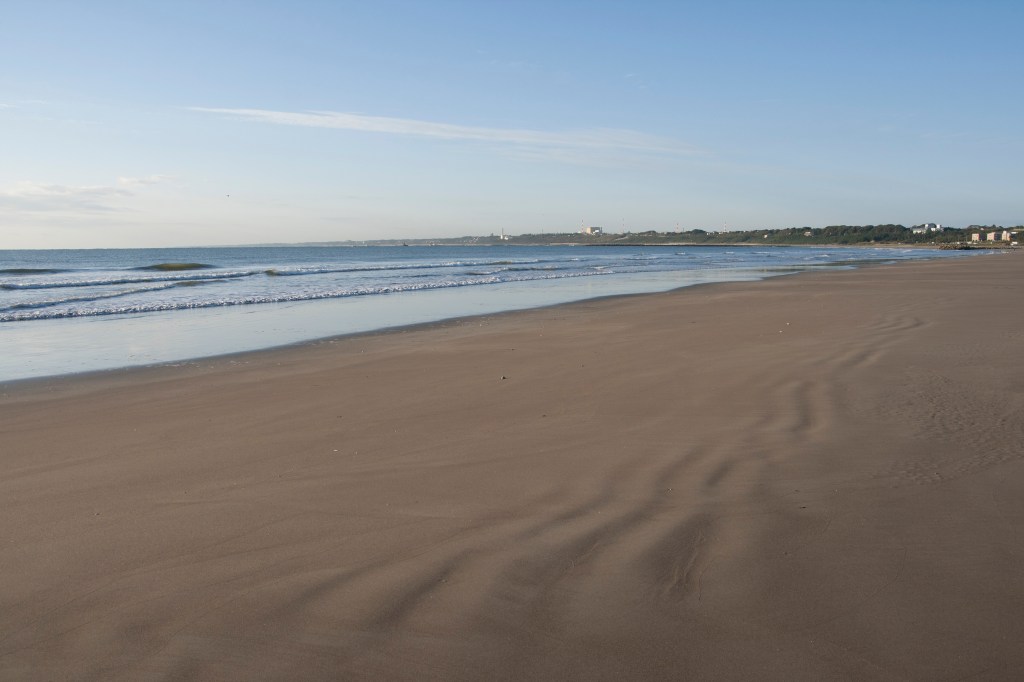
Oarai sits on the Pacific coast of Ibaraki, at the mouth of the Naka river, facing east. The coastline here is a series of sandy beaches broken by rocky points, with the town behind them and the hills of Mito inland. It is a working fishing port as much as a tourist town, and the harbour, the fish processing plants and the market are part of the landscape.
The centre is compact. Oarai Station is inland, about 3 kilometres from the sea, and the seafront strip runs north from the shrine past the aquarium to the beach. The bus between them takes about 15 to 20 minutes. Most visitors arrive by car, park at the aquarium or the shrine, and drive between the two.
Nakaminato, just south across the river mouth, is a separate little port with its own station on the Minato line and a market that has become a destination in its own right. It is close enough to combine with Oarai in one day, and different enough to be worth the detour.
Getting there
From Tokyo, take the Joban line limited express from Ueno to Mito, about 70 to 80 minutes, then change to the Kashima Rinkai Railway’s Oarai-Kashima line for Oarai, about 20 minutes. The railway is a small private line with a single-car train and a view of the fields; it is part of the pleasure.
From Mito Station, buses also run to the Oarai seafront, taking about 40 minutes. From Oarai Station, the town’s loop bus, the Umimachi Line, connects the station, the shrine, the aquarium and the beach for 200 yen a ride, or 500 yen for a day pass. The day pass also gives a 10 percent discount at the aquarium, which covers most of its cost.
By car, take the Joban Expressway to Mito-Oarai Interchange and follow the signs for Oarai, about 15 minutes. Parking at the aquarium is free and holds about 750 cars; the shrine car park is free but opens only from sunrise to 19:00, and fills early on New Year’s morning and on fine autumn weekends.
Getting around
The Umimachi Line is the key to visiting without a car. It replaced the old Kaiyu-go loop bus on 1 October 2026, and its sightseeing route serves Oarai Station, the shrine, the aquarium, the beach and the hotel strip. Buses run roughly every hour, more often in summer, and the day pass is the sensible buy if you are doing more than two rides.
For Nakaminato, take the Kashima Rinkai line back to Mito and change to the Hitachinaka Seaside Railway’s Minato line for Nakaminato Station, then walk 10 minutes to the market. The Minato line is a charming rural railway with a retro station at Nakaminato and a view of the sea at Ajigaura.
A car makes the coast easier: the shrine, the aquarium, the beach and Nakaminato are all within 15 minutes of each other, and Hitachi Seaside Park is another 20 minutes south. Taxis are available at Oarai Station but few and expensive.
Oarai Isosaki Shrine and the sea torii
The shrine is said to have been founded in 856, when the deities Onamuchi and Sukunahikona appeared on the shore at Isozaki. It has been a place of prayer for healing and for safe passage at sea ever since, and the two deities are associated with medicine and with the discovery of hot springs.
The main hall sits on a wooded hill above the coast, reached by a stone staircase lined with lanterns. The gate opens from 5:30 to 18:00 from May to August, and from 6:00 to 17:00 from September to April; the office and seal counter open at 8:30. The view from the top over the Pacific is worth the climb even if you are not interested in the shrine.
Below it, three minutes’ walk down the stairs and across the road, the Kamiiso torii stands on a rock in the surf. This is the photograph. The shrine is careful to point out that every photo you have seen of the sun and the torii is a sunrise, not a sunset, and that people who arrive in the evening are often disappointed. Around the winter solstice the rising sun comes closest to the torii; in summer it rises further left, over the sea.
The rock the torii stands on is a sacred site, and you are asked not to climb it or to take stones from the shore. The waves break over the base at high tide, and the spray in a winter storm is part of the spectacle. There is a small car park by the torii and a larger one by the shrine.
The beach and the coast
Oarai Sun Beach is the main swimming beach, a long curve of sand north of the town with lifeguards in the summer season, usually from mid-July to late August. Outside those weeks it is a walking and surfing beach, and the surf schools operate through the autumn and winter, when the swell is most reliable.
Spring is clamming season. The tidal flats north of the beach open for shellfish gathering from April to June, with tools and buckets for hire and a small fee, and it is a popular family outing. Check the town’s notice for the dates and the tide times, because the flats are only open on certain days.
The coast path north toward Hiraiso and the cliffs at Isozaki is a good walk in any season, with views of the lighthouse and the fishing boats. It is not a formal trail, and parts run along the road, but the combination of rock, pine and open water is the reason people come back.
Aquaworld
Aquaworld, the Ibaraki Prefectural Oarai Aquarium, is the biggest attraction in town and one of the best aquariums in eastern Japan. It is built around a large tank of sharks, with more species on display than any other aquarium in the country, and a sunfish that has become the mascot. The dolphin and sea lion show runs several times a day, and the touch pool and the jellyfish room are good for children.
For 2026 it is open from 9:00 to 17:00, with last entry at 16:00, and admission is 2,300 yen for adults, 1,100 for schoolchildren and 400 for children over three. Parking is free for about 750 cars. The aquarium closes for maintenance on 23 and 24 June and from 7 to 11 December in 2026, and stays open through the New Year holidays.
The night opening, Night Aquaworld, runs on Saturdays from 17:45 to 20:00 with last entry at 19:00, and requires a separate web ticket bought in advance. It is a completely different experience: dim lights, active fish, and far fewer people. Tickets sell out, and there are no sales at the counter.
Book online even for the day ticket. In busy periods the aquarium gives priority to web ticket holders, and the queue for same-day tickets can be long. Allow two to three hours for a visit, more with children.
Anko nabe
Oarai’s winter dish is anko nabe, a hotpot made from anglerfish. The fish is ugly, with a huge head and a mouth full of teeth, and it is also one of the best eating fish in Japan: firm white flesh, gelatinous skin, and a liver that is the point of the whole thing. The season runs from November to March, when the liver is at its largest, though a few restaurants start in October.
There are two main styles. The standard anko nabe is a soy or miso broth with the fish, vegetables, tofu and mushrooms, finished with rice or noodles. Dobujiru is the fisherman’s version: the liver is fried in the pot first, then the fish and vegetables are added with no water at all, so the dish cooks in its own juices and miso. It is richer and stronger, and some restaurants serve it as the main event.
A third local dish, tomozu, is the fish and liver blanched and eaten cold with a vinegar-miso sauce. It is a good starter if you want to understand the ingredient before committing to a whole pot.
As of September 2026 the town’s tourism association listed 26 restaurants and 25 inns serving anko dishes. Several require reservations, especially at weekends in December and January, and some only serve the pot in the evening. Prices vary with the course and the size of the fish, so ask when you book rather than trusting an old guidebook figure.
Nakaminato market
Ten minutes south of Oarai, the Nakaminato Osakana Ichiba is a cluster of fish shops and restaurants around the working port, and it is where locals go for seafood. The shops sell the day’s catch, dried fish, shellfish and processed products, and the restaurants do seafood bowls, sushi, grilled shellfish and set meals.
Hours vary by shop, but most open between 8:30 and 10:00 and close between 16:00 and 18:00, with earlier starts and longer hours at weekends. Some close on Wednesdays or Thursdays. The market’s car park holds about 600 cars and costs 100 yen for up to four hours, which is one of the bargains of the region.
The signature dish is the seafood bowl, and the local fish to look for are flounder, sea bream, tuna, squid and, in season, anglerfish liver. The queues at the most popular restaurants form before noon, so arrive early or eat late. The market is a 10-minute walk from Nakaminato Station on the Minato line.
Oarai and pop culture
Oarai is also the model town for the anime Girls und Panzer, and the connection is not subtle: shops sell character goods, the town has hosted events, and a certain type of fan makes the pilgrimage to the shrine and the streets used in the show. You do not need to know the anime to enjoy the town, but you will notice the posters and the souvenirs, and it explains some of the weekend crowds.
The town leans into it rather than resisting, which is refreshing. It sits alongside the fishing industry and the aquarium without displacing them, and it has brought a younger audience to a coast that might otherwise be overlooked.
Where to stay
Oarai has a strip of seaside hotels and ryokan along the beach and around the aquarium, mostly mid-range, with a few older places that have seen better days. A room with a sea view is worth paying for at sunrise, when the torii and the water are the whole reason for being there.
Mito, 20 minutes inland, has the business hotels, the restaurants and the transport links, and is the practical base if you are combining Oarai with the rest of Ibaraki. Nakaminato has a few small inns near the market.
Book ahead for the New Year holiday and for autumn weekends, when the combination of the aquarium, the shrine and Hitachi Seaside Park fills every room within 30 minutes.
Food and drink
Beyond anko, the coast is seafood country: grilled shellfish, sashimi, seafood bowls, and the small fried fish that Ibaraki does well. The market at Nakaminato covers most of it, and the restaurants around Oarai port are good for a simple lunch.
Ibaraki is also a craft beer prefecture. Hitachino Nest, brewed by Kiuchi in Naka, is the best known, and it appears on menus around Mito and Oarai. Local sake is less famous than the beer but worth trying, and the sweet potato and dried sweet potato products of the region make good souvenirs.
For coffee, the seafront cafes are limited, and the best options are in Mito or at the aquarium. Do not expect a late dinner: the town closes early outside summer weekends.
Seasons
Spring is the busiest season in Ibaraki, because of the nemophila at Hitachi Seaside Park in April and May, and Oarai fills with the overflow. The shrine is at its best at sunrise, when the park crowds are still asleep. Clamming runs from April to June.
Summer is beach season, with swimming from mid-July and the aquarium at its busiest. Autumn brings the kochia at Hitachi Seaside Park, clear air and the start of the anko season in November. Winter is the best season for food, the quietest for the shrine, and the coldest on the coast, with strong winds and spectacular surf.
The sunrise is the thing to plan around. In summer it comes early, around 4:30, and in winter around 6:45. Check the time for your date, arrive 30 minutes before, and bring a jacket: the wind off the Pacific is cold even in spring.
Two days on the Oarai coast
Day 1: shrine, aquarium and the sea
Arrive at Oarai Station in the morning and take the loop bus to the shrine. Walk down to the Kamiiso torii, then climb back up for the view. In the afternoon, visit the aquarium, and if it is Saturday, stay for the night opening. Eat anko nabe for dinner in winter, or seafood in summer.
Day 2: Nakaminato and Hitachi Seaside Park
Take the train to Nakaminato for an early seafood bowl and a walk around the market and the port. In the afternoon, continue to Hitachi Seaside Park for the flowers, or walk the coast path north of Oarai if you want a quieter day. Return to Mito for dinner.
With a third day, add Mito’s Kairakuen garden, one of Japan’s three great landscape gardens, or continue north to the Hitachi coast.
Budget
Oarai is inexpensive. The train from Ueno to Mito is about 3,500 yen by limited express, the loop bus is 200 yen or 500 yen for a day, the shrine is free, and the aquarium is 2,300 yen. A seafood bowl at Nakaminato runs 1,500 to 3,000 yen, and anko nabe at a restaurant is usually 3,000 to 6,000 yen per person, more at an inn with a course.
Hotels on the coast are 10,000 to 20,000 yen for two with meals, cheaper midweek, and Mito business hotels are 7,000 to 12,000. A two-day trip from Tokyo, with one night and the aquarium, is realistically 30,000 to 45,000 yen per person.
Practical tips
- Check the sunrise time before you go, and arrive 30 minutes early for the torii.
- Do not climb the sacred rock or take stones from the shore.
- The shrine car park closes at 19:00; do not leave the car there for dinner.
- Buy aquarium tickets online, especially at weekends and in school holidays.
- Night Aquaworld is Saturday only and web-ticket only; it sells out.
- Anko nabe is a winter dish; book ahead in December and January.
- Nakaminato market shops close in the afternoon, and some take a weekday off.
- The loop bus is hourly outside summer; check the last bus before a late dinner.
- Bring cash for the market and the small restaurants.
- The beach has lifeguards only in the official summer season.
- Wind is constant on the coast; a jacket is worth carrying even in May.
- If you are combining with Hitachi Seaside Park, go there first and finish at the shrine for sunset and dinner.
Before you go
Decide what you are coming for. If it is the torii, come for sunrise, stay one night, and treat the rest of the day as a bonus. If it is the aquarium, come on a weekday, book online, and give it a full morning. If it is the food, come between November and March, book an anko nabe restaurant, and add Nakaminato for lunch the next day.
Oarai is not a place that rewards a checklist. The coast is short, the town is small, and the best hours are early and quiet. A single sunrise at the torii, a bowl of seafood, and an hour in the aquarium is a good day; trying to add three more sights will only mean spending it in traffic. Give it the time it is worth, and it will feel like a discovery rather than a stop on the way to somewhere else.
Sources
- Oarai Isosaki Shrine: opening hours, access and parking (checked 2026-10-26)
- Aquaworld Oarai: 2026 hours and closure days (checked 2026-10-26)
- Aquaworld Oarai: 2026 admission prices and Night Aquaworld (checked 2026-10-26)
- Aquaworld Oarai: train and bus access, Umimachi Line fares (checked 2026-10-26)
- Ibaraki local guide: Oarai anko nabe season and restaurants, September 2026 (checked 2026-10-26)
- Nakaminato Osakana Ichiba: access and parking (checked 2026-10-26)
- Ibaraki local guide: Kamiiso torii sunrise and 2026 bus changes (checked 2026-10-26)
Explore More of Japan
- Hitachi Seaside Park — flowers on the same coast
- Nikko Travel Guide — shrines and waterfalls inland
- Tokyo Travel Guide — the city an hour and a half south
- Matsushima Travel Guide — another coast, further north
- Kawagoe Travel Guide — warehouse streets near Tokyo
- Mount Takao Travel Guide — a temple hike from the city


Leave a Reply