A Japanese garden is a specific thing: a composition of water, stone and clipped planting, usually with a path that reveals it a section at a time. Japan has thousands, from the circuit gardens of the great daimyo to the moss gardens of a single temple. The ones below are covered in detail on this site, grouped by what kind of garden they are.
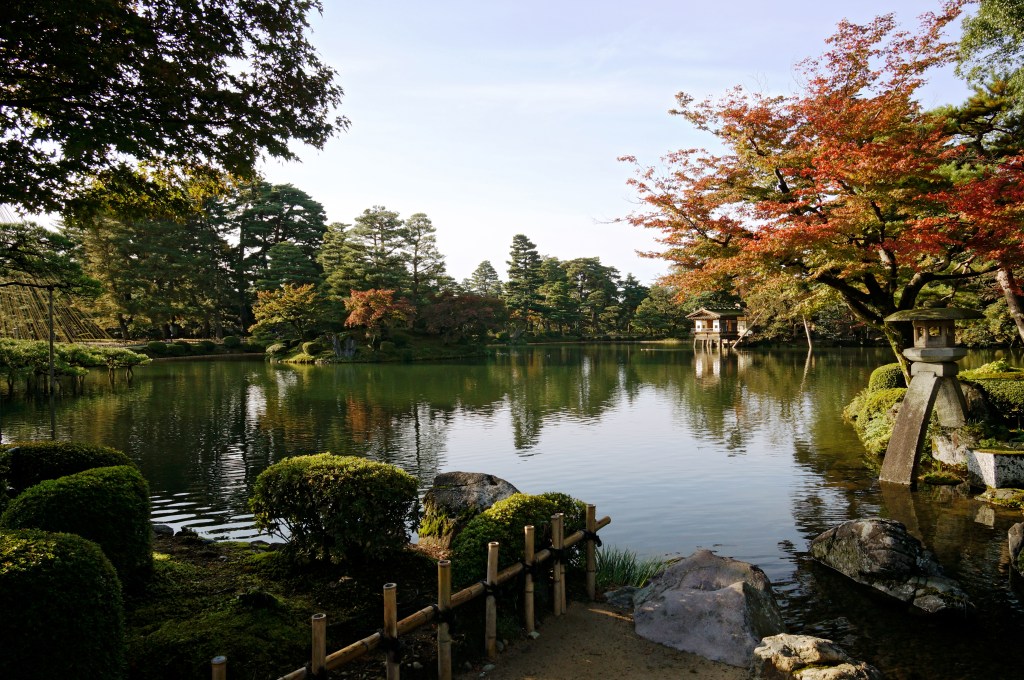
Daimyo circuit gardens
Large gardens built for a feudal lord, designed around a pond you walk around rather than look down on.
- Kenrokuen, Kanazawa — one of the three great gardens, and the reason many people go to Kanazawa
- Okayama Korakuen — laid out in 1687 with open lawns, and Okayama Castle as borrowed scenery
- Ritsurin, Takamatsu — a garden of pine and pond at the foot of Mount Shiun
- Himeji’s castle gardens — the west garden inside the castle grounds, away from the main keep crowds
- Nijo Castle gardens — two gardens on one site, one of them a later addition
Temple and shrine gardens
Where the planting is part of a religious setting rather than a private pleasure ground.
- Motsu-ji, Hiraizumi — a Pure Land garden built to describe paradise, now partly a pond and open ground
- Tenryu-ji, Arashiyama — a Zen garden with the hills behind it as borrowed scenery
- Sanzen-in, Ohara — moss, small stone Buddhas and a garden that suits a wet day
- Kongobuji, Koyasan — the Banryutei rock garden, one of the largest in Japan
- Byodo-in, Uji — the Phoenix Hall over a pond that is meant to be seen across water
Small and specialised
Single-purpose gardens, or a garden that is one stop inside a bigger day.
- Kawagoe’s temple grounds — small grounds inside a town better known for its warehouses
- Kurashiki’s canal quarter — the Ohara Museum garden, and the white-walled lanes around it
Gardens are seasonal in a way castles are not: the same garden is a different place in April, August and November. Every guide linked above covers the season question for that specific garden, because the answer is not the same everywhere.


