Sendai is the capital of Miyagi and the biggest city in Tohoku, which makes it the default stop for anyone travelling north from Tokyo. Most people treat it as a lunch break between shinkansen and the coast. That is a waste. The city has a genuine local food culture, a green spine of zelkova trees running through the centre, and enough history to fill a day before you even start on Matsushima.
It is also unusually easy to use. The station is the transport hub, the sights are on a tourist loop bus, the airport is 20 minutes away by train, and the shinkansen from Tokyo takes about 90 minutes. For a first trip to Tohoku, Sendai is the natural base: two nights here, with day trips east to the coast and west into the mountains, covers more ground than moving hotels every day.
Why visit
- Gyutan, grilled beef tongue, was invented here and the city still has the densest concentration of specialists anywhere in Japan.
- Jozenji-dori, an avenue of mature zelkova trees, is the reason Sendai is called the City of Trees.
- Aoba Castle and the Date family mausoleum give you the story of the domain that shaped the whole region.
- Tanabata in August and the winter Pageant in December are two of the best city festivals in Japan.
- Matsushima, one of the three classic views of Japan, is 40 minutes away by train.
Getting your bearings
Sendai station is on the west side of the city, with the shinkansen on the upper level and the conventional lines and subway below. The west exit opens onto a bus pool and a taxi rank, and a straight walk up to the arcades. Everything a short-stay visitor needs is within about two kilometres of that exit: the covered shopping streets of Ichibancho, the Jozenji-dori avenue, Kotodai Park and, slightly further north, the nightlife district of Kokubuncho.
The city is flat and gridded, so walking works. The one line of the subway that matters for sightseeing is the Tozai line, which runs east to west and connects the station area with the castle hill at International Center station. The Loople Sendai loop bus, a retro-styled tourist bus, leaves the west exit bus pool every 20 minutes from 09:00 and runs a one-way circuit of the main sights; a single ride is 300 yen and a day pass 700 yen, or 1,000 yen with the subway included. The pass also gets you a discount at Zuihoden.
Gyutan: the dish that defines the city
Beef tongue is not an obvious regional speciality, and Sendai is not a beef-producing region. The dish exists because of one cook. Sano Keishiro, born in Yamagata in 1915, trained in Tokyo, and after the war opened a small grill in Sendai that became the restaurant Tasuke in 1948. He had eaten tongue stew in a Western restaurant in Tokyo and thought the cut could be done better for Japanese tastes. What he settled on, after a lot of trial, was thick-sliced tongue, salted and peppered, grilled over charcoal, and served with barley rice, a tail soup and pickles. Tongue appeared on his menu around 1950, and the restaurant became a specialist in 1952.
That set — tongue, barley rice, tail soup, pickles, often with a chilli-miso condiment on the side — is still the standard. The texture is the point: tongue is a dense muscle, and a good shop cuts it thick enough that it stays juicy and slightly springy rather than turning into shoe leather. Cheaper shops slice thin and grill hard; the difference is obvious in the first bite.
There are said to be around a hundred specialists in the city. The easiest cluster is on the third floor of Sendai station, where several famous names have branches and a queue system; the most atmospheric are the original shops in Ichibancho, including Aji Tasuke, which is closed on Tuesdays and still run by the founder’s family. Lunch is cheaper than dinner almost everywhere, and the queues at 12:00 and 18:30 are real. Eat at 11:00 or after 14:00, or pick a weekday.
Jozenji-dori and the festivals
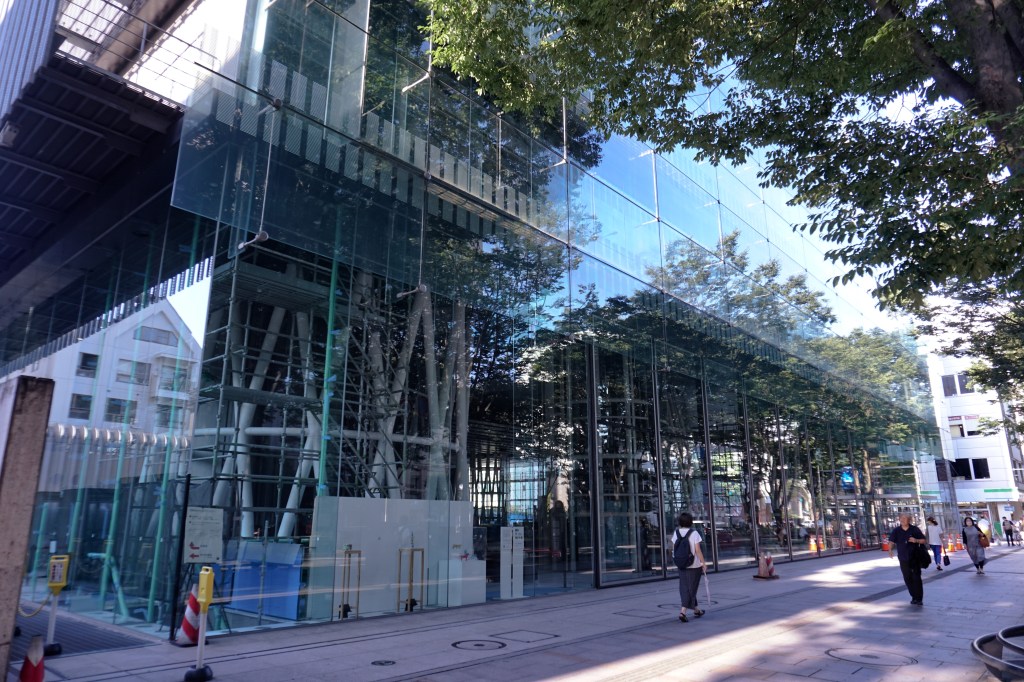
Jozenji-dori runs east to west through the centre, a wide boulevard with a central promenade planted with zelkova trees. In summer the canopy closes over the road and the whole city feels ten degrees cooler; in winter the bare branches are wrapped in lights. The Sendai Mediatheque, a glass box of a building by Toyo Ito, sits on the avenue and is free to enter for the ground-floor gallery and the architecture itself.
Two events are worth planning a trip around. Tanabata, on 6 to 8 August, fills the covered arcades with enormous handmade paper decorations — streamers, origami cranes, hanging ornaments — submitted by local shops and competed over. It is free, it is crowded, and the decorations are taken down on the evening of the 8th. The city’s own website confirms the 2026 dates as 6 to 8 August.
The winter counterpart is the Sendai Pageant of Starlight, which for 2026 runs from 4 to 27 December, lighting 127 zelkova trees along a 600-metre section of Jozenji-dori with around 480,000 LEDs. Lights come on at 18:00 and go off at 21:00 on Sunday to Thursday, and at 22:00 on Friday and Saturday. The Star Light Wink, when the whole avenue goes dark for a minute and then relights, happens three times an evening at 18:30, 19:00 and 20:00. There is no traffic restriction, and the light-up is free to walk through.
Aoba Castle and the Date legacy
Aoba Castle was built by Date Masamune from 1601 on a hill above the city, and it was never a keep-and-tower castle in the way Himeji is: the defences were earthworks, gates and the natural escarpment, with the honmaru at the top. The buildings burned in the air raids of 1945, so what remains is the position, some stone walls, a reconstructed side turret and the view.
That view is the reason to come. From the honmaru you look straight down over the city to the Pacific, and the bronze statue of Masamune on horseback faces the same direction. The site is free, open at any hour, and lit until 22:00 most nights. The museum, the Aoba Castle Exhibition Hall, charges 770 yen for adults and covers the castle and the Date clan with armour, swords and documents; a VR experience is a separate 880 yen, or 1,430 yen combined, and the VR is closed on Wednesdays.
Getting there: the Loople bus stops at the castle site about 20 minutes from the station, or you can take the Tozai subway to International Center and walk up for 15 to 20 minutes. The walk is uphill but pleasant, and it passes through the grounds of Miyagi Gokoku Shrine.
Zuihoden and Osaki Hachimangu
Zuihoden is the mausoleum of Date Masamune, set in cedar forest on a hill south-east of the centre. The building is a reconstruction — the original was lost in the war — but it is a faithful and extraordinarily ornate one, in the Momoyama style with black lacquer, gold leaf and bright colour, and the approach through the trees is worth the trip on its own. Admission is 570 yen for adults, 410 yen for high school students and 210 yen for younger children, open 09:00 to 16:50 from February to November and 20 minutes earlier in winter, closed only on 31 December. The on-site museum reopened on 29 April 2026 after a renovation, with the store rooms partly visible behind glass; holders of the Loople day pass get the group rate.
Osaki Hachimangu, north-west of the centre, is the other essential Date building. It is a national treasure, built in 1607, with a main hall in a flamboyant style unlike anything else in the region, and the grounds are free to walk. The shrine is busy at New Year and during its September festival, and quiet on an ordinary weekday morning.
Day trips that make Sendai a base
Matsushima
The JR Senseki line runs from the station’s underground platforms to Matsushima Kaigan in 38 to 40 minutes for 440 yen, with no change. The bay, the pine islands and the temples are all walkable from the station. This is the single easiest side trip in Tohoku and it deserves a full day rather than an afternoon.
Akiu Onsen
Akiu is a hot spring town in the mountains west of the city, about 50 minutes by bus from the west exit bus pool for 940 yen, or 30 to 40 minutes on the Sendai Western Liner from stop 63 on Aoba-dori for the same fare. The Rairaikyo gorge is a short walk from the town centre, the Akiu Otaki waterfall is a bus or taxi ride further up, and several ryokan sell day-use baths. It is the practical onsen trip if you do not want to go as far as Ginzan or Zao.
The coast
The Sanriku coast north-east of the city was hit by the 2011 tsunami, and reconstruction is still visible. Ishinomaki and the coastal towns are reachable by train, and the area is worth visiting with respect rather than as a sightseeing stop. Check current access before planning anything specific.
Rainy-day and family options
The Sendai Umino-Mori Aquarium, near the port, is the big indoor option, focused on the sea life of the Sanriku coast with a stadium show of dolphins and sea lions. Admission is 2,400 yen for adults, 1,700 yen for middle and high school students, 1,200 yen for primary school children and free under four; it is open 10:00 to 17:00 outside the summer period. Note that part of the first-floor river zone has been closed since 10 September 2026 for a renovation due to finish in spring 2027, so the aquarium is not quite at full strength this winter. Access is 18 minutes on the Senseki line to Nakanosae, then a 15-minute walk or a 200-yen bus.
The city museum and the Miyagi Museum of Art cover the history and modern art of the region, and the Mediatheque is free. For a wet afternoon, the Ichibancho arcades are covered for most of their length.
What else to eat
Beyond gyutan, Sendai has a few things you should not leave without trying. Sasakamaboko, a steamed fish cake, comes in plain and grilled versions and is sold everywhere as a souvenir. Zunda, edamame mashed with sugar and salt, appears on mochi, on toast and in milkshakes, and is a genuinely local flavour rather than a tourist invention. Hiyashi chuka, cold ramen with a vinegar-soy dressing, is claimed by Sendai, and the city has a serious craft beer and coffee scene.
At night, Kokubuncho is the entertainment district: a dense grid of izakaya, bars and small restaurants north of Jozenji-dori. It is safe and walkable, but prices vary wildly, and a bar with no prices on the door is a bar to walk past.
Getting there
By shinkansen, Tokyo to Sendai is about 1 hour 30 minutes on the Hayabusa, with trains roughly every 20 to 30 minutes. Sendai is also on the line north to Shin-Aomori, so it works as a stopover rather than a terminus.
By air, Sendai airport is connected to the station by the Sendai Airport Access line in about 17 to 25 minutes for 660 yen. The airport handles domestic flights and a small number of international routes; the access train is frequent and easy to use with luggage.
By car, the Tohoku Expressway runs from Tokyo to Sendai in about 4.5 to 5 hours. A car is useful for Akiu, the coast and the mountains, but not necessary for the city itself, and parking at hotels is usually charged.
Getting around
The centre is walkable and the subway covers the two axes you need. The Loople bus is convenient but only runs until late afternoon and only in one direction, so plan it as a loop rather than a hop-on service. For Matsushima and the airport, the train is better than any bus. Taxis are plentiful and not expensive for short trips, and a taxi up to the castle saves a 20-minute climb.
Where to stay
The station area has the largest choice of business hotels and the easiest access to the shinkansen, which matters if you are arriving late or leaving early. The Ichibancho and Kokubuncho area is more interesting in the evening, with restaurants and bars on the doorstep, and is still only a 15-minute walk from the station. International-style hotels cluster on the west side; the larger old hotels are north of the centre. Book well ahead for Tanabata in August and for the December weekends of the Pageant, when the city fills with domestic visitors.
Best time to visit
- April and May — cherry blossom, mild weather and the green returns to the zelkova avenue.
- 6 to 8 August — Tanabata, the biggest event of the year, hot and extremely busy.
- October and November — the most comfortable months, with colour in the mountains and good food.
- December — the Pageant, cold nights and clear skies; the city is at its best after dark.
June and July are the rainy season, and August is hot and humid between festivals. Winter is cold but dry, with less snow than the mountains to the west, and the streets are easy to walk.
Suggested itineraries
One day
- Arrive on an early Hayabusa, leave bags at the hotel and walk to Ichibancho.
- Gyutan lunch, then the Loople bus to Aoba Castle for the view and the museum.
- Zuihoden in the late afternoon, then dinner in Kokubuncho.
Two nights, with a side trip
- Day one: as above, but add the Pageant or a walk down Jozenji-dori after dark.
- Day two: early train to Matsushima, the bay and the temples, back for dinner.
- Day three: morning at Osaki Hachimangu or a day bath in Akiu, then the shinkansen north or back to Tokyo.
Practical tips
- Gyutan queues are worst at 12:00 and 18:30; shift your meal by an hour.
- The Loople day pass pays for itself after three rides and discounts Zuihoden.
- Buy an IC card at the station; it works on the subway, the Loople and the airport line.
- Check the Tanabata and Pageant dates each year; both are fixed to the calendar but the programme changes.
- If you are heading north afterwards, book the shinkansen seat in advance for holiday weekends.
- Cash is still useful in Kokubuncho’s smaller bars.
Before you go
Fares, hours and prices above were checked against official sources on 26 October 2026, including the city, the prefecture’s tourism site, JR East and the festival organisers. The items most likely to change are gyutan prices, the castle museum and VR fees, the aquarium’s renovation closure, and the festival programme. Reconfirm opening days for the small restaurants, several of which close without notice when they run out of tongue.
Sources
- Sendai city: Aoba Castle site access and facilities (checked 2026-10-26)
- Aoba Castle Exhibition Hall: hours and admission (checked 2026-10-26)
- Sendai city: Zuihoden mausoleum (checked 2026-10-26)
- Aji Tasuke: history of Sendai gyutan (checked 2026-10-26)
- Sendai Tanabata festival: dates and programme (checked 2026-10-26)
- Sendai Pageant of Starlight 2026: dates and lighting times (checked 2026-10-26)
- Sendai Umino-Mori Aquarium: hours and admission (checked 2026-10-26)
- Sendai Umino-Mori Aquarium: access (checked 2026-10-26)
- Miyagi Kotsu: Sendai station to Akiu Onsen timetable and fares (checked 2026-10-26)
- Sendai city tourism: sightseeing bus and city information (checked 2026-10-26)
Explore More of Japan
- Matsushima Travel Guide — the bay and pine islands 40 minutes east
- Yamadera Travel Guide — the cliff temple north of the city
- Hiraizumi Travel Guide — the Fujiwara temples further north
- Ginzan Onsen Travel Guide — the hot spring town in the mountains
- Zao Onsen Travel Guide — snow monsters and sulphur baths


Leave a Reply