Plan an independent visit to MIHO MUSEUM in Shiga with the main sights, food ideas, access checks, and seasonal notes.
Operational details such as opening hours, admission fees, and train times can change. Prefer official pages and reconfirm before you travel (sources checked on 31 October 2026).
Why visit
- MIHO MUSEUM sits in the mountains of Shigaraki in Shiga Prefecture, and the museum’s own account of itself begins with a fable rather than a collection. The design was inspired by the utopia in the Chinese tale The Peach Blossom Spring, in which a traveller follows blossom past a hidden way and finds a world apart. Every part of the visit is shaped by that idea: you leave the bus at a reception pavilion, then walk roughly 500 metres through the landscape to the museum building, which takes seven or eight minutes, or take the electric shuttle. The approach is deliberately slow, and it is the point.
- The architect is I. M. Pei, whose other work the museum lists as the glass pyramid at the Louvre, the East Building of the National Gallery of Art in Washington and the Bank of China Tower in Hong Kong. The museum’s architecture section is organised around statements rather than specifications, and its central claim is that light is the key. Whatever you know of Pei’s museums, the attraction here is the combination of a very small building programme with a large landscape, rather than a monument inserted into a city.
- The collection began as something else entirely. Founder Mihoko Koyama spent more than 40 years collecting Japanese art, including tea ceremony utensils, Shinto and Buddhist art, painting and calligraphy, ceramics and lacquerware, and it was the meeting with Pei that turned that private accumulation into a museum. The collection then expanded into ancient art from around the world. The name Miho is a shortening of the founder’s first name, which tells you how personal the institution is.
- The scale of the display is unusual. The museum holds about 3,000 works from Japan and the ancient Orient, and it shows between 250 and 500 of them at any one time. That means a substantial part of the collection is always accessible rather than a token selection, but it also means specific objects rotate. The museum advises asking in advance about the display period of an individual work, which is unusually honest advice from a museum and worth taking seriously if you are travelling for one piece.
- Shigaraki is a ceramics town, and the museum is a 15-minute drive from the Shigaraki Ceramic Cultural Park, with the town itself 15 to 20 minutes away. That makes the museum part of a day rather than a standalone destination, and the drive in through the mountains is part of it. The practical cost is that this is not a museum you pass on the way to somewhere else: the bus from JR Ishiyama takes about 50 minutes, so the trip is deliberate. For the kind of visitor who plans a day around one collection, that is the correct trade.
Top places and highlights
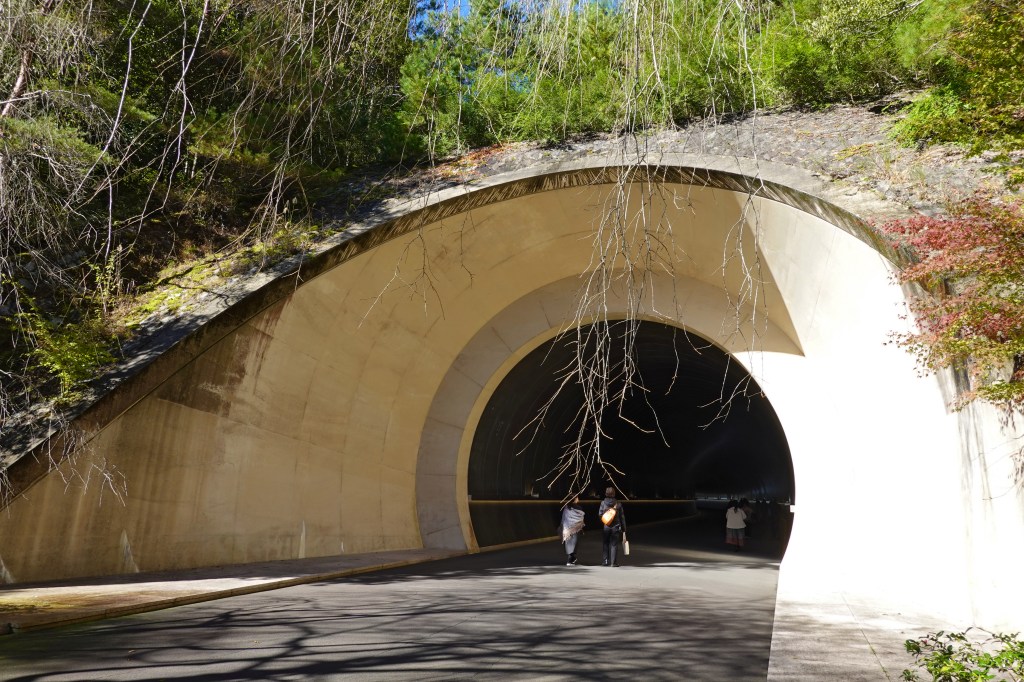
The approach from the reception pavilion
You do not arrive at the gallery. You arrive at a reception pavilion, and from there the museum building is about 500 metres away, seven or eight minutes on foot, with a free electric shuttle that is suspended when the museum is busy. The walk is the museum’s first exhibit, and it is the part that carries the Peach Blossom Spring idea: the building is withheld until you have crossed the landscape to it. On a crowded day the shuttle runs and most people take it, which means the walk is emptiest when the museum is full. Take the path anyway.
I. M. Pei’s building
The museum was designed by I. M. Pei, and the museum’s own architecture pages are built around two claims: that it is a real-world Shangri-La, and that light is the key. Those two phrases are the right things to hold on to. The building is not presented as a stylistic monument but as a sequence of framed daylight, and the collection is shown in spaces whose main material is the light coming into them. If you have seen Pei’s other museums, the interest here is how the same approach works at a much smaller scale, in a mountain rather than a capital.
The Japanese collection
The core of the museum is the Japanese art Mihoko Koyama collected over more than 40 years: tea ceremony utensils, Shinto and Buddhist art, painting and calligraphy, ceramics and lacquerware. That is not a random list, it is the range of a serious private collector working in the Japanese tradition, and the tea utensils in particular connect the collection to a practice rather than only to connoisseurship. The museum traces its whole existence to that accumulation, and the founding vision of promoting beauty, peace and joy through art comes from it. Start here rather than with the ancient galleries.
Ancient art from around the world
The collection expanded beyond Japan after the meeting with Pei, and now includes ancient art from around the world alongside the Japanese material. That is the part of the museum that surprises people who arrive expecting a Japanese tea collection: the building’s international architecture and the founder’s Japanese core are joined by objects from the ancient Orient and beyond. Because the museum shows 250 to 500 of its roughly 3,000 works at a time, what is on view in this section changes. Check the display period of any specific piece before you travel, since the museum itself advises it.
Peach Valley Restaurant
The restaurant is in the Reception Pavilion, which is the building you reach first, and it serves from 11:30 to 14:30. The museum states that its menu is produced without agricultural chemicals or chemical fertilisers, and lunch items run from about 1,200 to 1,800 yen, with snacks and sweets around 600 to 1,000 yen and drinks around 600 to 800 yen. Sitting here before the walk to the galleries is the natural order, since the pavilion is where you arrive and the restaurant closes in the early afternoon. Tables cannot be reserved.
Pine View Tea Room
The tea room is in the Museum Building rather than the reception pavilion, and it runs from 10:30 to 16:30, which makes it the option that fits the middle or end of the gallery visit. It shares the same approach to food, with a menu produced without agricultural chemicals or chemical fertilisers. Because it is inside the museum building, you reach it after the walk, which makes it the better stop for a break between the two wings rather than a meal on arrival. Seating is limited and there can be a wait at weekends and holidays.
Shigaraki and the surrounding valley
The museum is in Shigaraki, a ceramics town, and the Shigaraki Ceramic Cultural Park is about a 15-minute drive away, reached by heading south on Prefectural Road 12, turning left onto National Route 307 and left again at the ceramic park intersection. The town itself is 15 to 20 minutes by car. This matters because the museum is otherwise isolated, and the day works best when the ceramics context is included. The address itself is Momodani, or peach valley, which is one of those details that makes the Peach Blossom Spring concept look less like a conceit.
Food and drink
- The Peach Valley Restaurant in the Reception Pavilion serves from 11:30 to 14:30, and it is the place to eat on arrival. Lunch items cost roughly 1,200 to 1,800 yen, snacks and sweets 600 to 1,000 yen, and drinks 600 to 800 yen, and the museum states that the menu is produced without agricultural chemicals or chemical fertilisers. Tables cannot be reserved, and there can be a wait at weekends and holidays, with the museum’s schedule marking the days expected to be busy. Arriving on an early bus is the simplest way to eat without queueing.
- The Pine View Tea Room in the Museum Building serves from 10:30 to 16:30 and is the better fit for a break during the galleries. It follows the same no-agrochemicals approach as the restaurant. Because it is inside the museum building rather than at the pavilion, it comes after the walk, which makes it the natural stop between the Japanese collection and the ancient galleries rather than a lunch on arrival. Seating is limited, and the museum is straightforward that a wait is possible.
- Outside food and drink are not permitted in the restaurant or the tea room, but the museum allows them in the Reception Pavilion eating area and on the outdoor benches. That is a useful exception: it means a picnic is possible at the pavilion, where you arrive, without carrying it into the galleries. Takeaway is not available except for bread and some drinks at the restaurant, so the picnic option requires bringing your own food rather than buying it there.
- Shigaraki town is 15 to 20 minutes away by car and is the alternative for a fuller meal, along with the Shigaraki Ceramic Cultural Park about 15 minutes away. Because the museum’s restaurant closes at 14:30 and the tea room at 16:30, an evening meal requires leaving the valley. If you are coming by bus from JR Ishiyama, the return trip is about 50 minutes, so the realistic pattern is lunch at the museum and dinner back in Otsu, Kusatsu or Kyoto rather than in Shigaraki.
Getting there and around
- The public transport route is the Teisan Bus from JR Ishiyama Station, bound for Miho Museum, which takes about 50 minutes and terminates at the museum. Departures are at 9:10, 9:50, 10:10, 11:10, 12:10, 13:10 and 14:10, with the 9:50 and 14:10 services running only at weekends and on holidays. That timetable is the single most important thing to check, because the bus is infrequent and the museum is at the end of the line.
- By taxi, the nearest stations are Ishiyama, Seta and Minami-Kusatsu, and a taxi from any of them takes about 30 to 40 minutes and costs roughly 6,000 to 7,000 yen. From Shigaraki Station on the Shigaraki Kogen Railway, a taxi costs about 3,000 to 4,000 yen for a trip of about 20 minutes. For a group of two or three the taxi is competitive with the bus and much faster, and it removes the timetable constraint that makes the bus the limiting factor.
- By car, the museum is about 15 minutes from the Shigaraki Interchange on the Shin-Meishin Expressway, about 20 minutes from Kusatsu-Tanakami on the same road, about 30 minutes from the Ritto Interchange on the Meishin Expressway, about 30 minutes from Seta-Higashi on the Keiji Bypass, and about 35 minutes from the Mibuno Interchange on the Meihan Expressway. Parking is free, with room for 20 tour buses and 300 cars, which is generous for a museum of this size and reflects how car-dependent the location is.
- From the car park to the galleries takes about 10 to 15 minutes on foot, and slightly longer from the overflow car park. Visitors arriving by sightseeing bus are dropped at the entrance in front of the reception pavilion and then walk about seven or eight minutes to the museum building, or take the electric shuttle. The shuttle is free and runs about 500 metres, but it is suspended during peak visiting hours, so the walk is not optional on the busiest days.
- The site is barrier-free in the practical sense: wheelchairs, infant strollers and walking sticks are lent free of charge, and there are free lockers in both the Reception Pavilion and the Museum Building. The distance between the two buildings is the main accessibility issue, and the electric shuttle exists for it. If you need the shuttle, plan around the fact that it stops running when the museum is busiest, which is exactly when you would want it.
Where to stay
- Kyoto is the most comfortable base for this museum, despite the distance. The bus leaves from JR Ishiyama, which is on the line from Kyoto, and the total journey is a half-day out and a half-day back rather than a quick hop. A Kyoto hotel also gives you an evening, which Shigaraki does not. The trade-off is the bus timetable, so plan the day around the 9:10 or 10:10 departure rather than arriving at the station and hoping.
- Otsu and Kusatsu are closer alternatives and make the bus connection simpler. They are ordinary cities rather than tourist destinations, with hotels that cost less than Kyoto’s and quick access to Ishiyama or the expressway interchanges. For anyone driving, Kusatsu also puts the Kusatsu-Tanakami interchange within reach, cutting the drive to about 20 minutes. This is the practical base for a museum-focused trip.
- Staying in Shigaraki is possible and puts the ceramics town within walking distance, but the accommodation is limited and the evening is quiet. It suits a ceramics-focused visit that combines the museum with the Shigaraki Ceramic Cultural Park and the town’s kilns. For most travellers the extra distance from Kyoto or Otsu is small compared with the gain in evening options, so Shigaraki works better as a day than as a base.
Best time to visit
- The museum keeps a seasonal calendar rather than a year-round one. It is open from 10:00 to 17:00 with last admission at 16:00, and it is closed every Monday, or the next business day when Monday is a national holiday, during the spring, summer and autumn periods of regular operation. Outside those periods it is closed entirely, and it may also close for exhibit changes. The museum publishes a schedule with the days expected to be busy marked, and it advises checking before planning.
- The museum’s own advice about busy days is unusually specific: the schedule marks in red the dates when the restaurant and tea room may be full at the time you want. That is a useful warning for a site where the two food options are the only ones in the valley. If you are visiting on a marked day, eat early or accept a wait, and do not plan a tight connection back to the 50-minute bus.
- There are two distinct seasons of the visit, the galleries and the walk between the buildings. The approach is about 500 metres outdoors, and in bad weather the electric shuttle becomes the sensible option, except that it is suspended at peak times. Spring and autumn are the comfortable months for the walk, and the Peach Blossom Spring idea is at its most literal then. Winter is quieter, but confirm the museum is inside its regular operating period before booking, because outside it the museum is closed.
- The collection rotates, so the season also determines what you see. With 250 to 500 of about 3,000 works on display at a time, the specific objects matter and the museum advises enquiring in advance about the display period of individual works. If you are travelling for one piece, that enquiry is the most valuable planning step available, more than the weather or the crowd calendar. If you are going for the building and the collection as a whole, any open day works.
Practical tips
- Check the season before anything else. The museum is open from 10:00 to 17:00 with last admission at 16:00, and during spring, summer and autumn it closes on Mondays, or the next business day if Monday is a holiday. Outside those regular operating periods it is closed entirely, and it may close for exhibit changes. A trip built on the assumption that a museum is always open is the mistake this site punishes most.
- Take the bus timetable seriously. The Teisan Bus from JR Ishiyama runs at 9:10, 9:50, 10:10, 11:10, 12:10, 13:10 and 14:10, with the 9:50 and 14:10 services only at weekends and holidays, and the ride takes about 50 minutes. There are only seven departures a day, so the return trip has to be checked on arrival. A taxi from Ishiyama or Seta costs about 6,000 to 7,000 yen and takes 30 to 40 minutes, which is the escape route if the bus does not fit.
- Admission is 1,300 yen for adults, 1,000 yen for high school and university students, and free for elementary and junior high school students. Groups of 20 or more pay 200 yen less per person. Visitors with a disability certificate are admitted free while one helper pays the group rate. Visa, American Express and MasterCard are accepted for tickets, and the restaurant, tea room and shops also take JCB, Diners, DC, Nicos, MUFJ, UFJ and UnionPay.
- Photography is prohibited in the exhibition spaces, and so are mobile phone use and any writing implement other than a pencil. Tripods, selfie sticks, drones and commercial shooting are banned outright. For a museum whose architecture is its other attraction, that is a real constraint: the building and the approach can be photographed, the objects cannot. Bring a pencil if you want to take notes, and leave the phone in your bag inside the galleries.
- Allow 90 to 120 minutes for the exhibits including the walking between facilities, and more if you want lunch and the shops. The distance from the car park to the galleries alone is 10 to 15 minutes on foot, and the reception pavilion to museum building leg is another seven or eight. A visit that budgets an hour will see one wing. Because the museum is at the end of a 50-minute bus route, the realistic total is most of a day.
- Ask about re-entry before you leave. The museum allows same-day re-entry without buying another ticket if you request a re-entry pass at reception when you go out. That matters because the restaurant in the reception pavilion closes at 14:30 and the tea room at 16:30, so the sequence of eating and viewing can force you out and back in. Outside food is allowed in the pavilion eating area and on the outdoor benches, but not in the restaurant or tea room.
- If you need assistance, ask on arrival. Wheelchairs, strollers and walking sticks are lent free of charge, and there are free lockers in both the Reception Pavilion and the Museum Building. The electric shuttle covers the 500-metre gap between them, but it is suspended during peak visiting hours, so a visitor who depends on it should choose a quieter day. The museum publishes barrier-free information separately, and it is worth reading before you commit to the bus.
Suggested day-trip outline
- Take the Teisan Bus from JR Ishiyama Station, which runs about 50 minutes to the museum and leaves at 9:10, 9:50, 10:10, 11:10, 12:10, 13:10 and 14:10, with the 9:50 and 14:10 services on weekends and holidays only. Aim for an early departure so the arrival, the walk and lunch all fit before the restaurant closes at 14:30.
- Eat at the Peach Valley Restaurant in the Reception Pavilion first, or at least decide about it then, because it serves from 11:30 to 14:30 and cannot be reserved. The menu is produced without agricultural chemicals or chemical fertilisers, and lunch runs about 1,200 to 1,800 yen. If you are not eating, still use the pavilion: outside food is allowed in its eating area and on the outdoor benches.
- Walk the roughly 500 metres to the museum building rather than taking the shuttle, if you can. The approach is the part of the visit that carries the Peach Blossom Spring idea, and it is emptiest when the museum is busiest, because that is when everyone takes the shuttle. The walk takes seven or eight minutes, and the landscape is the setting the building was designed against.
- Start with the Japanese collection, the tea utensils, Shinto and Buddhist art, painting and calligraphy, ceramics and lacquerware that Mihoko Koyama collected over more than 40 years. Then move into the ancient art from around the world, the section that expanded after I. M. Pei became involved. Allow 90 to 120 minutes for the exhibits including the walking, and take the Pine View Tea Room in the museum building as the break between the two halves.
- Leave time for the shop and the return bus, which is the fixed point of the day. If you want to continue, the Shigaraki Ceramic Cultural Park is about a 15-minute drive away, and Shigaraki town is 15 to 20 minutes by car, which is where the ceramics context of the museum becomes visible. Otherwise take the bus back to JR Ishiyama and continue to Kyoto or Otsu for dinner, since the valley has no evening.
Before you go
Timetables, fares, admission fees, and seasonal access rules can change. Check the official tourism and transport sites linked below for the latest information before you travel.
Explore More of Japan
Published guides that pair with this one:
- Enryaku-ji Travel Guide: The Tendai Monastery on Mount Hiei
- Hikone Castle Travel Guide: A National Treasure Keep by Lake Biwa
- Kiyomizu-dera Travel Guide: The Wooden Stage, the Waterfall and the 6 a.m. Start
- Uji Travel Guide: Matcha, Byodo-in Temple, and a Day Trip from Kyoto
Browse every Kansai guide on this site for the rest of the region.
Sources
- miho.jp — Visitor information (checked 2026-10-31)
- miho.jp — FAQ (checked 2026-10-31)
- miho.jp — Collection (checked 2026-10-31)
- miho.jp — Architecture (checked 2026-10-31)
- miho.jp — First-time visitors (checked 2026-10-31)


Leave a Reply