Plan an independent visit to Nikka Whisky Yoichi Distillery in Hokkaido with highlights, access, tour booking notes, and seasonal advice.
Operational details such as opening hours, admission fees, and train times can change. Prefer official pages and reconfirm before you travel (sources checked on 02 November 2026).
Why visit
- The Yoichi distillery is where Japanese whisky as a deliberate project began, and it is the older of Nikka’s two distilleries. Masataka Taketsuru founded the company here in 1934 after studying in Scotland, working at Yamazaki, and then deciding that Hokkaido offered the climate he had seen in Scotland. The site is still working: this is not a museum of a dead industry, it is a distillery that produces single malt Yoichi while letting visitors walk its outdoor production area on a guided tour. That combination of an origin story and a live production line is what makes it worth the trip from Sapporo.
- The location is the argument. Yoichi sits at the base of the Shakotan Peninsula, with the Sea of Japan to the north and mountains on three sides, and the snow that falls on those mountains becomes the meltwater that feeds the Yoichi River, which is the water used for mashing. The cold climate slows maturation, and the sea breeze and river fog are said to shape what the casks take in, which is why people describe Yoichi malt as having a coastal character. You do not need to accept the tasting notes to see that the site was chosen for its conditions rather than its convenience.
- The production method is deliberately old. Yoichi still uses direct coal firing under its pot stills, and the stills themselves are straight-head with a downward line arm, the same configuration as at Longmorn, where Taketsuru learned. Coal firing is labour-intensive and nearly extinct in Scotland, and the distillery says the result is a spirit that retains more of the compounds other than alcohol, which gives it a heavier and more complex character. Whether or not you can taste that, seeing a still house run on shovelled coal in the twenty-first century is the reason this distillery is different from a modern plant.
- The visit is free, which is rare for a working distillery of this reputation. The guided tour costs nothing, includes a tasting of three whiskies, and lasts long enough to explain the process rather than pointing at tanks. The catch is that it requires a reservation, it is conducted in Japanese only, and places open four weeks in advance, so it rewards planning rather than spontaneity. For non-Japanese speakers, the museum, the paid tasting bar and the shop are open without a reservation and without a guide, which makes the site workable either way.
- Access is the practical reason this is a day trip rather than an afterthought. Yoichi Station is a five-minute walk from the distillery, and the journey from Sapporo is about 35 minutes by the Hakodate line. From Otaru it is about 30 minutes, though trains are infrequent, and from New Chitose Airport it is about an hour by car. The result is that the distillery combines naturally with Otaru or with a drive along the Shakotan coast, and it does not need a dedicated day of its own.
Top places and highlights
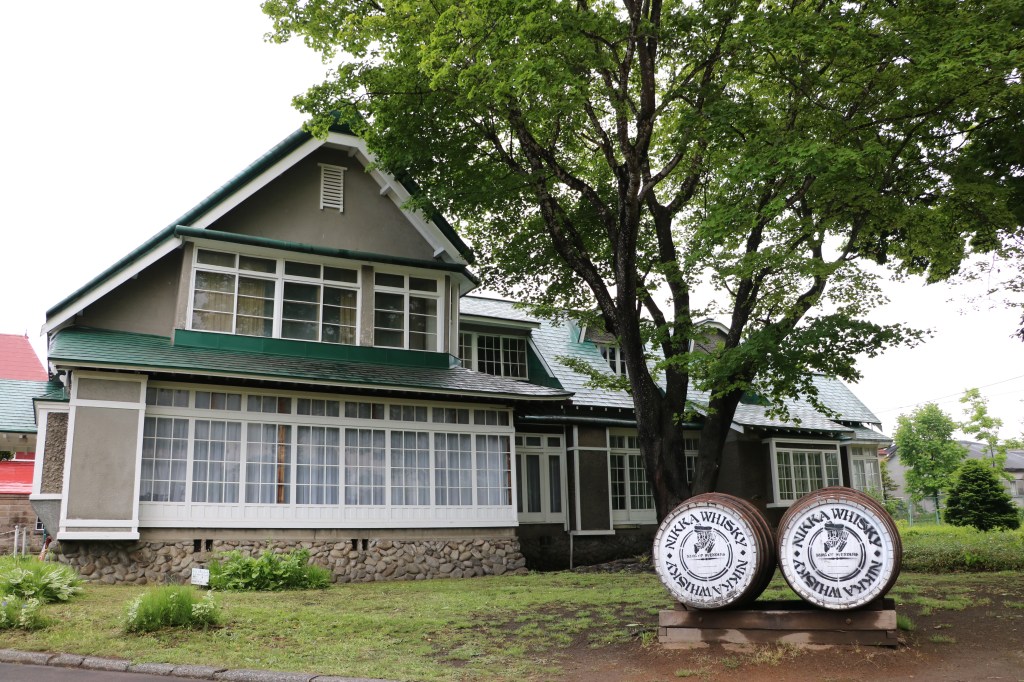
The guided tour of the production area
The free guided tour is the centre of the visit, and it is the only way to see the outdoor production area. A guide walks you through the working site and explains the process and the company’s history, ending with a tasting of three whiskies, one glass of each. The tour is in Japanese only, requires a reservation, and takes groups of one to nine people, so it is not a mass-market attraction. The walk is outdoors, which means it is a different experience in snow than in summer, and the distillery notes that strollers and wheelchairs are possible but that winter conditions make them inadvisable.
The still house and the coal firing
The still house is the part of the tour that justifies the reservation. Yoichi runs pot stills with a straight head and a downward line arm, the same shape as Longmorn, and heats them with direct coal firing rather than steam. The floor of the still exceeds 1,000 degrees Celsius, and a craftsman shovels coal into the fire by hand, which is a job that has almost disappeared from the industry. The distillery’s reasoning is that slower, less uniform heating leaves more of the non-alcohol compounds in the spirit, producing a heavier and more complex malt. Standing in the heat of that room is the most memorable ten minutes of the visit.
The Nikka Museum
The museum needs no reservation and is the part of the site that non-Japanese speakers can use without a guide. It covers the history of Nikka’s whisky making and holds a tasting bar, and it is entered from the shop side of the site rather than the main gate used by tour groups. The story it tells is worth knowing before the tour: Taketsuru went to Scotland in 1918 to study organic chemistry and distilling, worked at Kotobukiya, later Suntory, helped establish Japan’s first commercial whisky distillery at Yamazaki in 1923, and then left in 1934 to found his own company in Hokkaido, initially making fruit juice before whisky.
The paid tasting bar
The tasting bar is separate from the free tasting at the end of the tour, needs no reservation, and charges per pour. It is the place to try distillery-limited bottles and the wider Nikka range side by side, and you can make your own highball or mizuwari at the counter rather than ordering a finished drink. This is the practical option for anyone who could not get a tour place, and it is also the better option for anyone who wants to taste deliberately rather than drink what is put in front of them. It is entered from the shop side, and the last entry for that side is 15:30.
The distillery shop
The shop stocks the main Nikka whiskies, distillery-limited bottles, goods and sweets, and it is the reason many Japanese visitors come at all. The limitation is real: production quantities are finite and restocking is irregular, so the distillery-limited items sell out and the shop will not tell you by phone what is in stock on a given day. If a particular bottle is the reason for your visit, arrive earlier rather than later and treat it as luck rather than a guaranteed purchase. Entry to the shop does not require a reservation or a tour booking.
RITA’s Kitchen
The on-site restaurant is RITA’s Kitchen, which serves whisky, Scottish dishes, lunch, light meals and desserts, and it is open to visitors using the shop side of the site without a reservation. The hours are the thing to plan around: it opens at 10:00 and closes at 15:50 with last orders at 15:20, which is early enough that a late tour can leave you with nothing but dessert. The Scottish angle is not accidental, given where the founder trained, and it makes the restaurant a more coherent stop than the average distillery cafe.
The site itself in each season
The distillery is a working site with stone and brick buildings, and the walk between them is part of the tour. It is at its most photographed in winter, when snow sits on the roofs and the sea air is at its coldest, and at its greenest in summer when the trees and the river are in leaf. Autumn is the quietest and clearest season for photographs, and it is also when the tour is least crowded. The distillery closes for the New Year period and for one maintenance day in June, so the seasons are not interchangeable.
Food and drink
- RITA’s Kitchen is the meal on site, and it is a real restaurant rather than a snack counter. It serves Scottish dishes alongside lunch, light meals and desserts, and it uses whisky in ways that make sense for a distillery rather than as a gimmick. The hours are tight: 10:00 to 15:50 with last orders at 15:20, so lunch is the meal it is built around and dinner is not an option. It is open to anyone entering from the shop side, with or without a tour reservation.
- Outside food is not allowed on the site. The distillery is a food factory and its hygiene rules prohibit bringing in bento and snacks, which is unusual for a Japanese sightseeing site and catches out visitors who planned a picnic. The practical consequence is that you eat at RITA’s Kitchen, eat before you arrive, or eat after you leave in Yoichi town.
- Yoichi itself is a small town with a handful of restaurants and cafes, concentrated around the station and the main road, and the range is limited in the evening. If you want a proper meal after the distillery, Otaru is 30 minutes away by train and has a much wider choice, including the sushi and seafood the city is known for. Many visitors do the distillery in the morning and eat in Otaru.
- The tasting itself is not food, but it changes the shape of the day. The free tasting at the end of the tour gives three whiskies, one glass of each, and drivers, riders, anyone under 20, and pregnant or breastfeeding visitors cannot take part, with soft drinks provided instead. If you are driving, plan the meal and the day knowing that the tasting is closed to you, and that the restaurant still serves non-alcoholic options.
Getting there and around
- The simplest route is the JR Hakodate line to Yoichi Station, then a five-minute walk. From Sapporo the train takes about 35 minutes, and from Otaru about 30 minutes, though the distillery warns that trains between Otaru and Yoichi are not frequent. That warning matters if you are building a day around Otaru and Yoichi together, because missing one service can cost an hour.
- From New Chitose Airport the drive is about an hour, from Sapporo about an hour, and from Otaru about 30 minutes. The distillery has free car parks, but they are split: tour participants use the main gate car park, while museum, restaurant and shop visitors use the shop-side car park. There is no parking for chartered coaches, which is worth knowing if you are arriving as part of a group.
- By bus, the route runs from Otaru Station towards Yoichi, Niseko and Iwanai and takes about 40 minutes to Yoichi Station, from which the distillery is a short walk. This is the fallback when the train times do not fit, and it is a scenic run along the coast rather than a highway coach.
- There is no shuttle bus from the station. The distillery states this explicitly, and the five-minute walk is short enough that it does not matter, but in heavy snow it is the part of the trip that requires proper footwear. The walk is flat and straightforward, and the station is small enough that you cannot get lost.
- For drivers, the important rule is that tasting is not available to anyone operating a car, motorbike or bicycle. Soft drinks are provided instead, and the restaurant serves non-alcoholic options. If the tasting is the reason for the visit, the train from Sapporo or Otaru is the better plan, and it removes the one real conflict in the day.
Where to stay
- Sapporo is the practical base for most visitors, with the distillery about 35 minutes away by train and a five-minute walk from Yoichi Station. The city has the widest range of hotels and restaurants in Hokkaido, and the day trip fits easily into a longer stay without moving luggage.
- Otaru is the better base if you want to combine the distillery with the canal and the sushi, and it is closer, at about 30 minutes by train. Otaru has a good stock of hotels and a compact historic centre, and the distillery becomes a morning excursion that leaves the afternoon free. The caveat is the infrequent train service between the two, which needs checking before you commit.
- Yoichi itself has very little accommodation, and staying there only makes sense if the distillery is the sole reason for the trip or if you are driving and want an early start. The town is quiet in the evening, with limited dining, so most travellers are better off based in Otaru or Sapporo and treating Yoichi as a half-day.
Best time to visit
- Winter is the most atmospheric season, with snow on the distillery buildings and cold, clear air, and it is also when the site is quietest outside the New Year holiday. The distillery closes from 23 December to 7 January, so the holiday period is out, and the outdoor tour in snow requires boots and a warm coat. Strollers and wheelchairs are technically possible but the distillery advises against them in winter.
- Summer is the easiest season for the walk and the most comfortable for the outdoor production area, and the surrounding countryside is green. It is also the busiest, with tour places going first, so booking four weeks ahead matters more in July and August than at other times. The restaurant’s early close means an afternoon tour leaves little time for lunch afterwards.
- Autumn is the best balance: the site is quieter than summer, the light is good for photographs, and the weather is still manageable outdoors. The trees along the site turn, and the tour does not require the winter clothing that January does. It is the season to aim for if you have a choice and want the distillery without a crowd.
- Spring is short in Hokkaido and the distillery is a reasonable stop while the rest of the region is still thawing. The fixed closure dates matter more than the season here: 23 December to 7 January and 11 June, with all facilities closing at 16:15 on open days. A visit planned around those dates is a wasted trip, and the June closure in particular is easy to miss.
Practical tips
- Reserve the guided tour four weeks ahead. Bookings open for the next four weeks, the tour is limited to nine people, and it is free, which means it fills quickly. Reservations are taken online or by phone, and if there is space on the day the distillery will take a booking by phone, but the reliable route is to book as soon as your dates open.
- Know what you get without a reservation. The Nikka Museum, the paid tasting bar, the shop and RITA’s Kitchen are all open to visitors who have not booked a tour, entered from the shop side, with last entry at 15:30. If the tour is full, the day still works: the museum explains the history and the bar lets you taste the range.
- Expect the tour in Japanese only. The distillery states plainly that guided tours are conducted in Japanese, and there is no English tour. Non-Japanese speakers can still follow the production areas visually and use the museum’s displays, but the explanation is the part you lose. The tasting needs no language.
- Plan around the 16:15 close. Every facility on the site closes at 16:15, and the last entry from the shop side is 15:30, which is earlier than most Japanese sightseeing sites. An afternoon arrival after 15:00 gives you an hour at most, and a tour booked late in the day leaves no time for the shop or the bar.
- Do not drive if you want to taste. Anyone driving a car, motorbike or bicycle cannot take part in the tasting, and the same applies to visitors under 20 and to pregnant or breastfeeding visitors. Soft drinks are available, but if the whisky is the point, take the train from Sapporo or Otaru.
- Leave the picnic at home. The distillery is a food factory and prohibits bringing in food, including bento and snacks, and it also prohibits pets except assistance dogs. Smoking is not allowed anywhere on the site. These rules are stricter than at a normal sightseeing site and are enforced at the entrance.
- Use the coin lockers if you are between trains. There are paid lockers at the distillery, costing 100 yen which is refunded after use, but they are limited in number and only available to visitors who have booked a tour. If you are travelling with luggage and cannot get a locker, Yoichi Station is the alternative, and the walk back is five minutes.
Suggested day-trip outline
- Take a morning train from Sapporo or Otaru to arrive at Yoichi Station around 10:00, and walk the five minutes to the distillery. If you have a tour reservation, use the main gate; if not, use the shop-side entrance. Arriving at opening gives you time in the museum before the site gets busy and puts you ahead of the shop’s limited bottles selling out.
- Do the guided tour first if you have one, since it is the only access to the production area and it sets up everything else. The still house and the coal firing are the core of it, and the tasting at the end is three whiskies, one glass each. If you are driving, skip the tasting and use the time to look at the buildings.
- Visit the Nikka Museum after the tour, which puts the company’s history in order after you have seen the process. Then go to the paid tasting bar if you want to try specific bottles rather than the tour selection, and make your own highball or mizuwari at the counter.
- Eat at RITA’s Kitchen before 15:20, which is the last order, and remember that outside food is not allowed on site. The Scottish dishes are the coherent order in a distillery founded by a man who trained in Scotland, and the restaurant is open to visitors without a tour booking.
- Finish at the shop, then walk back to Yoichi Station and continue to Otaru for the afternoon and evening, or return to Sapporo. The distillery closes at 16:15, so there is no reason to linger, and Otaru is 30 minutes away with a much wider choice of dinner than Yoichi has.
Before you go
Timetables, fares, admission fees, and seasonal access rules can change. Check the official tourism and transport sites linked below for the latest information before you travel.
Explore More of Japan
Published guides that pair with this one:
- Otaru Travel Guide: Canal Warehouses, Seafood, and a Day Trip from Sapporo
- Sapporo Travel Guide: Food, Parks, and a Hokkaido Base
- Shakotan Peninsula and Cape Kamui: Hokkaido’s Clear-Water Coast
- Niseko Travel Guide: Ski Slopes, Summer Trails, and Mount Yotei
- Sapporo Beer Museum Travel Guide: Highlights, Access, and Planning
Browse every Hokkaido guide on this site for the rest of the region.
Sources
- nikka.com (checked 2026-11-02)
- nikka.com (checked 2026-11-02)
- nikka.com — Access (checked 2026-11-02)
- nikka.com — FAQ (checked 2026-11-02)
- nikka.com (checked 2026-11-02)
- en.wikipedia.org (checked 2026-11-02)
- en.wikipedia.org (checked 2026-11-02)


Leave a Reply