Plan an independent visit to Sapporo Beer Museum in Hokkaido with the main sights, food ideas, access checks, and seasonal notes.
Operational details such as opening hours, admission fees, and train times can change. Prefer official pages and reconfirm before you travel (sources checked on 02 November 2026).
Why visit
- The Sapporo Beer Museum is the only beer museum in Japan, and it occupies a building that has nothing to do with beer in its original purpose. The red-brick structure was built in 1890 as a factory of the Sapporo Sugar Company, and it only became a museum in July 1987. That history matters when you walk in: the industrial shell, the brickwork and the scale of the rooms are 1890s sugar manufacturing, not a purpose-built exhibition hall, and the building was registered as a Hokkaido Heritage site in 2004. You are visiting two histories at once, and the museum does not hide the first one.
- The beer history itself starts earlier and further away than most visitors expect. Beer production in Hokkaido began in the Meiji period as part of the Kaitaku-shi, the Hokkaido development programme, and the Kaitaku-shi Brewery was established on 23 September 1876 on the site of what is now the Sapporo Factory. Its chief engineer was Seibei Nakagawa, who had learned brewing in Germany. The barrels piled in front of the brewery at its inauguration were later restored and are now displayed in the museum grounds, which makes them the single oldest object in the story the museum tells.
- The museum is unusually honest about one thing that other brewery attractions are not: there is no brewing equipment inside. The official site states plainly that the museum has no beer production facilities, so this is not a factory tour and you should not arrive expecting tanks and bottling lines. What you get instead is a documented history exhibition with audio guidance, a tasting hall that serves beer sent directly from the Hokkaido factory and the Sapporo Kaitakushi brewery, and a separate guided tour with tasting. Knowing this before you go turns a potential disappointment into a clear expectation.
- The self-guided route is genuinely low-commitment. You do not need a reservation, admission is 1,000 yen for adults, and the visit takes about 15 to 30 minutes, or 15 to 40 minutes if you use the audio guide. That makes it one of the few substantial Sapporo sights you can fit into a spare hour, and it is open from 11:00 to 18:00 with last entry at 17:30, which suits a late start or an afternoon that has already been spent elsewhere. It is also open year-round apart from 31 December.
- The location in Higashi-ku is the museum’s one real obstacle, and it is worth understanding before you plan. It sits in Sapporo Garden Park beside the Sapporo Beer Garden, about 2 kilometres from Sapporo Station, and the nearest rail station is Naebo on the Hakodate line, an eight-minute walk from the north exit. The alternative is the Chuo bus direct from Sapporo Station’s north exit, or a short taxi ride. None of these is difficult, but none of them is a stroll from the centre, so this is a deliberate excursion rather than a stop you pass on the way to somewhere else.
Top places and highlights
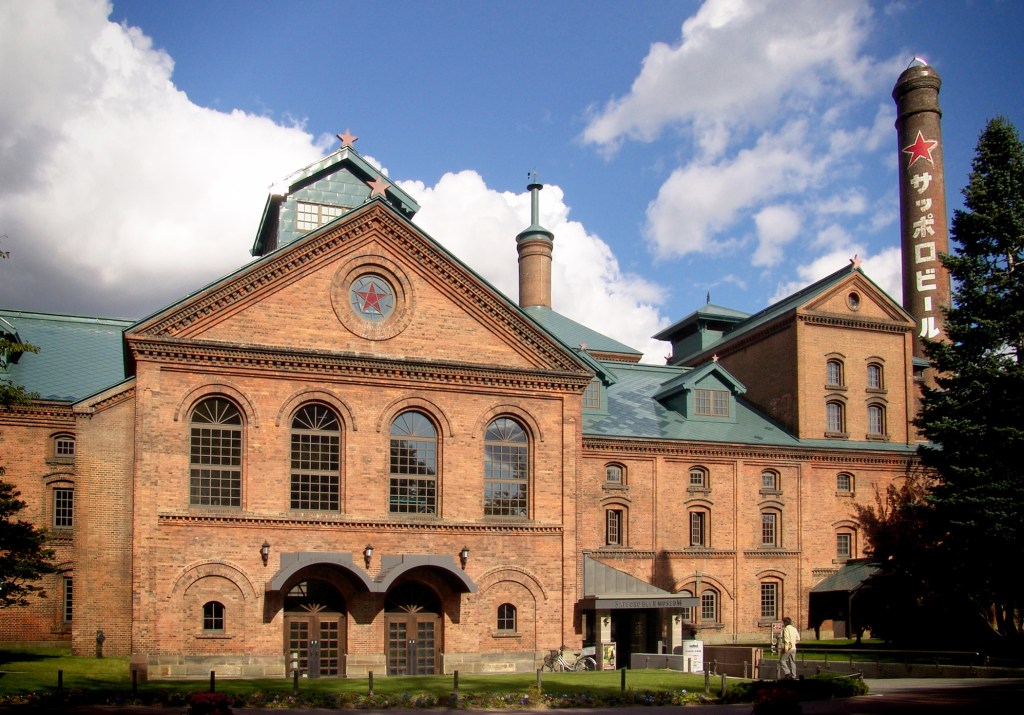
The 1890 sugar factory building
The museum is housed in a red-brick building erected in 1890 as a factory of the Sapporo Sugar Company, with construction supervised by the Hokkaido government and a Germany-based company, Sangerhausen. It became a museum in July 1987 and was registered as Hokkaido Heritage in 2004, together with the adjoining Kaitakushi-kan of the Sapporo Beer Garden. The brickwork is the reason to look up rather than only at the cases: the building is a document of Meiji industrial architecture, and the two brick buildings change character with the season, which is why they are a well-known photographic subject in Sapporo.
The exhibition route on the third floor
The permanent exhibition is arranged in a one-way route that begins on the third floor and descends to the first, using historical documents and materials grouped by era to tell the story of beer making in Sapporo from the Hokkaido development programme to the present. It is a compact exhibition rather than an encyclopaedic one, and the display is designed to be walked rather than studied. Because the route is one-way and includes slopes and stairs, the museum directs visitors with limited mobility and strollers to the small elevators that stop at each floor, and there is no way to go back up once you have descended.
The audio guide, The Story of SAPPORO BEER
The audio guide is the reason the self-guided visit is worth more than the 15 minutes the museum quotes. It is titled The Story of SAPPORO BEER and covers 15 spots around the building, mixing the company’s history with the challenges it faced, and it is available in Japanese, English, Korean and Chinese in both traditional and simplified characters. You listen on your own phone with earphones, which means you can move at your own pace and skip what does not interest you. The museum also rewards completion, with benefits tied to the number of spots experienced, which is a small incentive to walk the whole route.
The tasting hall
The Tasting Hall on the first floor is a paid tasting counter rather than a free sample, and it is where the visit ends. It serves beer sent directly from the Hokkaido factory and from the Sapporo Kaitakushi brewery, including the Hokkaido-only draft Sapporo Classic, the flagship Black Label, and Kaitakushi Beer brewed at the original site. Prices are modest per glass and there is a three-beer comparison set for anyone who wants to taste across the range, plus non-alcoholic beer and soft drinks. Seating is limited to 30 minutes per party, and the last order is at 18:00, half an hour before closing.
The guided tour with tasting
The guided tour is a separate product from admission and needs a reservation. It runs about 55 minutes including tasting, is limited to 16 people, and is conducted in Japanese only, which is the key limitation for overseas visitors. It begins with a film in the tour-only Sapporo Theater, then walks the exhibitions with a brand communicator, and finishes in the Premium Lounge with a comparison of the recreated Kaitakushi beer and today’s Black Label. The first departure is 11:30 and later times vary by day, so the booking site is the only reliable source for a specific date.
The rest of the collection in the grounds
The museum grounds hold more than the building. The barrels restored from the 1876 inauguration of the Kaitaku-shi Brewery stand in the grounds, and they are the physical link to the founding moment of Hokkaido beer. The site is shared with the Sapporo Beer Garden, whose south wing is part of the same complex and whose Kaitakushi-kan is registered as Hokkaido Heritage alongside the museum, and the surrounding Sapporo Garden Park gives the whole thing the feel of a small campus rather than a single attraction. Walking the outside takes ten minutes and is free.
The shop
The museum shop stays open later than the museum itself, from 11:00 to 19:30, and it is open to anyone rather than only to ticket holders, which makes it a practical stop if you are eating at the Beer Garden next door. It stocks Sapporo Beer original goods, Hokkaido sweets and souvenirs, and beer sent directly from the Hokkaido factory along with Kaitakushi Beer. That direct-from-factory detail is the reason to buy here rather than at a souvenir shop in central Sapporo, since some of the range is not distributed through ordinary retail.
Food and drink
- The obvious meal is the Sapporo Beer Garden, which shares the site and the building complex, and whose south wing is part of the same registered heritage property. It is a beer hall and Jingisukan restaurant in the Meiji brick buildings, and the combination of grilled lamb with draft beer is the reason most Japanese visitors come to this part of Higashi-ku at all. It is a large, loud, group-oriented restaurant rather than a quiet one, and it is worth booking in the evening and on weekends.
- The museum’s own Tasting Hall is not a restaurant, but it is where a light stop happens: paid tastings from 11:00 to 18:30 with last order at 18:00, a 30-minute seat limit, and non-alcoholic beer and soft drinks for anyone not drinking. It only accepts visitors who have been through the museum, and the museum asks people not to use it as a standalone bar, so it is a finish rather than a destination.
- Around Sapporo Station and Odori there is everything else, and it is only a short bus or taxi ride away. The advantage of eating in the centre rather than at the Beer Garden is choice and price range, and the disadvantage is that you leave the site. If you are combining the museum with the Sapporo Factory or the Naebo area, eating near the station before or after is the efficient version.
- Soup curry and miso ramen are the two Sapporo dishes worth planning a meal around, and neither is served at the museum. If the museum is your afternoon, an early bowl of ramen near Sapporo Station before the bus, then the Beer Garden or a lighter dinner afterwards, makes a coherent day without any long transfers.
Getting there and around
- The simplest public transport is the Chuo bus direct service, route 188, the Sapporo Beer Garden and Ario line, from stop 2 at the north exit of Sapporo Station, getting off at the Sapporo Beer Garden stop, which is at the site. There is also route 88 loop, which runs from the south exit of Sapporo Station via Odori Park to the same stop, so depending on where you are staying one of the two will usually work without a transfer.
- By train, take the JR Hakodate line to Naebo Station and walk about eight minutes from the north exit. This is the option that appeals to travellers with a rail pass, and Naebo is only one stop from Sapporo, so the total journey from the city centre is short. The walk is through an ordinary residential and industrial district rather than a scenic one, and it is exposed in winter.
- By subway, the Toho line to Higashi-kuyakusho-mae Station, then about ten minutes on foot from exit 4. This is the most reliable option in heavy snow because the subway is unaffected by surface conditions, though the walk is the longest of the three. For anyone staying along the Toho line, it is the obvious choice.
- By taxi it is about 2 kilometres from the north exit of Sapporo Station, 3 kilometres from Odori Park and 3.5 kilometres from Susukino, which puts it in the range of a short and inexpensive ride for two or more people. Taxis are the right answer in winter, when the walk from Naebo or the subway exit is the part that hurts.
- By car there is a shared car park with the Sapporo Beer Garden, operated by Mitsui no Repark, and museum and restaurant visitors get up to five hours free, with the parking ticket taken into the building. The one rule that matters is that drivers cannot be served alcohol, and the museum says soft drinks are available instead. For anyone planning to taste, the bus or subway is the sensible plan.
Where to stay
- Sapporo Station is the most practical base for this museum, because both useful bus routes start there and the JR connection to Naebo is one stop. It also puts you on the shinkansen and airport rail links, which matters if the museum is part of a wider Hokkaido trip rather than a city break.
- Susukino and Odori suit travellers who want the evening in the centre, and the museum is a short taxi ride or a bus ride from there. This is the better base for a first visit to Sapporo, since the main sights, the food districts and the nightlife are within walking distance, and the museum becomes a two-hour excursion rather than the anchor of the day.
- Higashi-ku itself, around the museum and the Naebo area, has limited accommodation and is not a tourist district. Staying here only makes sense if the Beer Garden or the museum is the reason for the trip, and even then most visitors do better in the centre and travel out.
Best time to visit
- Winter is the season most people associate with Sapporo, and the museum is one of the few sights in the city that works in Snow Festival week without standing in the cold. It is indoors, it is open year-round apart from 31 December, and the brick buildings in snow are the photograph the museum’s own material leads with. The trade is that the walk from Naebo or the subway exit is genuinely cold, so the bus or a taxi is worth the money in January and February.
- Summer is the easiest season for the walk and the bus, and it is when the Beer Garden is at its best, with outdoor seating and long evenings. The museum closes at 18:00 with last entry at 17:30, so the natural order in summer is museum in the late afternoon, then the Beer Garden for dinner, then back to the centre.
- Autumn is the quietest and most comfortable season for the exhibition itself, and the brick buildings against the autumn light are the reason the site is a photographic subject. October is also when the museum’s events calendar is busiest, so check the site for special tours if you want one, since the monthly Black Label tour runs only once a month on a weekday.
- Spring is short and cool in Sapporo, and the museum is a reasonable wet-weather option in a season when the city’s outdoor sights are still thawing. The one fixed date to know is 31 December, when the whole building closes. The museum also warns that it may close temporarily on other dates, so a check of the official site before travelling across the city is worth doing.
Practical tips
- Decide between three products before you arrive. Self-guided admission is 1,000 yen for adults, 500 yen for junior high school age up to 20, and free for elementary school age and under. The guided tour with two tastings is 2,000 yen for adults and lasts about 55 minutes, and the Black Label premium tour is 3,000 yen for adults only and runs once a month on a weekday. They are separate bookings, not upgrades.
- Book the guided tour in advance if you want it. It is capped at 16 people, requires a reservation through the ticket site, and the tour itself is in Japanese only, which is the reason many overseas visitors choose the self-guided route with the audio guide instead. Web booking for same-day places closes at 9:30 in the morning, and walk-up places are only available if the tour is not full, up to 20 minutes before the start.
- Ask about the Hokkaido residents’ rate only if you qualify. The discount is real, 700 yen for adults on self-guided admission and 1,700 yen on the guided tour, but it requires photo identification proving Hokkaido residence, such as a My Number card, driving licence or student ID. It is not available to visitors staying in Hokkaido on holiday.
- Charge your phone before you come. The audio guide runs on your own device with your own earphones, and it is the part of the visit that turns a 15-minute walk-through into a proper 40-minute experience. The museum lends the content rather than the hardware, so a dead battery means the plain route.
- Photography is allowed in the exhibition and on the tour, but video recording is not, and the tour also prohibits audio recording. The one-way route includes slopes and stairs, and the small elevators stop at every floor, so visitors with strollers or limited mobility should ask at the desk rather than following the crowd.
- Do not expect a factory. The museum states that there is no brewing equipment on site, so if you want to see production you need a separate brewery tour, and the Sapporo Beer Hokkaido Factory in Eniwa is a different facility in a different city. Travellers regularly confuse the two, and the museum’s own access page warns about it explicitly.
- Check the tour calendar rather than assuming a schedule. The standard guided tour does not run on Mondays, but runs on a Monday public holiday and takes the following Tuesday off instead. The premium Black Label tour runs once a month on a weekday and excludes anyone under 20, including accompanying children. Neither detail is obvious from the ticket page, and both can waste a trip.
Suggested day-trip outline
- Start at Sapporo Station and take the direct Chuo bus from the north exit, or the train one stop to Naebo if the weather is good. Aim to arrive around 14:00, which leaves time for the exhibition, the tasting hall and the shop without rushing, and puts you at the Beer Garden for an early dinner.
- Buy admission and start the audio guide on the third floor. Walk the route downward at your own pace, and do not try to read every panel: the guide covers 15 spots and the exhibition is a compact one. The building itself deserves a few minutes of attention, particularly the brickwork and the height of the rooms, because the 1890 sugar factory is half the reason the museum exists in this shape.
- Finish the route on the first floor and take a seat in the Tasting Hall. The three-beer comparison set is the efficient order if you want to understand the difference between Black Label, Classic and Kaitakushi Beer, and the non-alcoholic options mean a non-drinking companion is not left out. Remember the 30-minute seat limit and the 18:00 last order.
- Visit the shop, which stays open to 19:30, and buy anything you want to take home before dinner rather than carrying it through the Beer Garden. The direct-from-factory beer and the Kaitakushi Beer are the two things that are hard to find elsewhere.
- Eat at the Sapporo Beer Garden if you want the full experience, or take the bus back to Sapporo Station and eat in the centre. If you are driving, remember that the driver cannot taste, and that the car park gives five hours free with validation, so a museum-and-dinner visit fits inside the window.
Before you go
Timetables, fares, admission fees, and seasonal access rules can change. Check the official tourism and transport sites linked below for the latest information before you travel.
Explore More of Japan
Published guides that pair with this one:
- Sapporo Travel Guide: Food, Parks, and a Hokkaido Base
- Otaru Travel Guide: Canal Warehouses, Seafood, and a Day Trip from Sapporo
- Sapporo Snow Festival Guide: Three Sites in February
- Asahikawa Travel Guide: Zoo, Ramen, and a Base for Central Hokkaido
- Shiraoi and Upopoy Guide: Ainu Heritage on Hokkaido’s South Coast
- Lake Mashu and Lake Kussharo Guide: Akan-Mashu National Park
- Shakotan Peninsula and Cape Kamui: Hokkaido’s Clear-Water Coast
- Cape Soya Travel Guide: Japan’s Northernmost Point
- Rebun Island Travel Guide: Japan’s Northern Flower Island
Browse every Hokkaido guide on this site for the rest of the region.
Sources
- sapporobeer.jp (checked 2026-11-02)
- sapporobeer.jp (checked 2026-11-02)
- sapporobeer.jp — Access (checked 2026-11-02)
- en.wikipedia.org (checked 2026-11-02)


Leave a Reply