Planning drift ice in Abashiri? This English guide covers the season, the icebreaker, and why the ice is never guaranteed.
Operational details such as opening hours, admission fees, and train times can change. Prefer official pages and reconfirm before you travel (sources checked on 25 October 2026).
Why visit
- Abashiri sits at 44 degrees north on the Okhotsk coast, where the drift ice reaches the shore in winter.
- The icebreaker Aurora is the main way to get out among the floes. The large ship runs a one-hour cruise about 10 km offshore, not the two-hour Shiretoko boat from Utoro.
- The posted season is 20 January to 31 March. The operator lists the 2027 season as 20 January to 31 March, planned. Ice is never guaranteed inside that window.
- Fares depend on the month: February is the most expensive, and the special seat on the second floor is extra, sold on board only.
- The boat takes cash only. Tickets are not sold the day before, because the operator checks the sea condition on the morning.
- If there is no ice, the large ship becomes a sea cruise to Cape Notoro and the small Aurora 3 is cancelled. That is the risk you are buying.
- The town has three good indoor backups: the Okhotsk Drift Ice Museum, the Abashiri Prison Museum and the Hokkaido Museum of Northern Peoples.
- Abashiri is also a practical winter base for Shiretoko and Akan-Mashu, but the drift ice is its own reason to come.
What the drift ice is
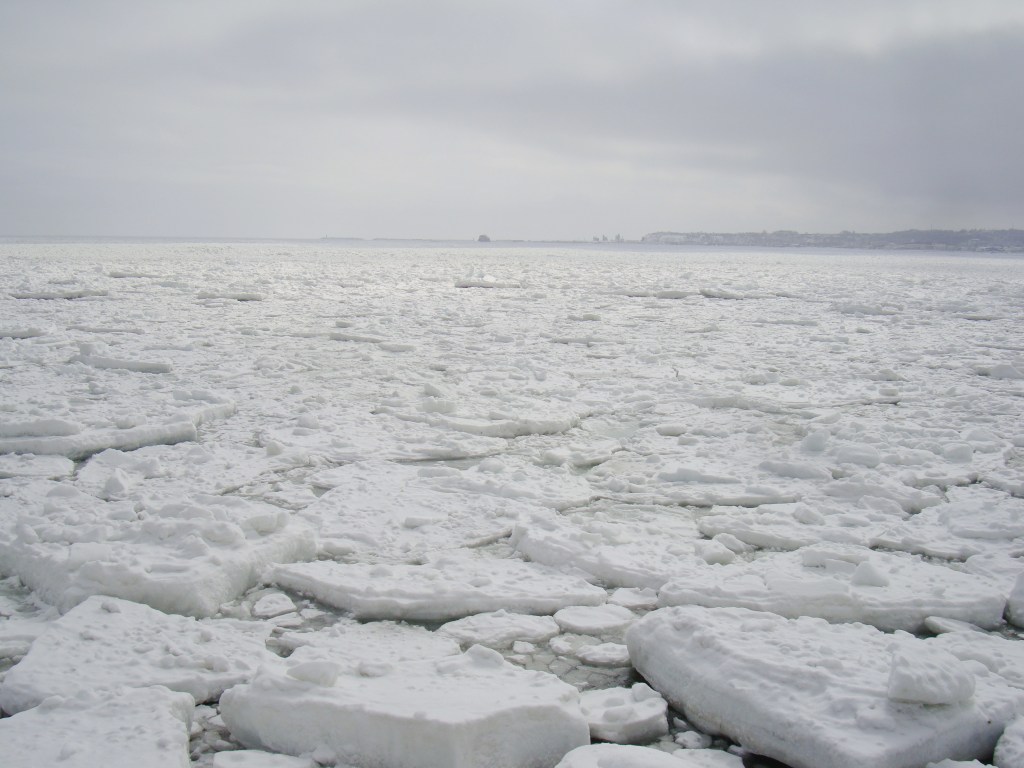
The ice does not form at Abashiri. It forms in the Sea of Okhotsk, where the Amur River pours fresh water into the sea and the surface freezes. Wind and current carry the broken sheets south along the coast. The operator describes the result as a mass of fresh water and salt water spreading south, and Abashiri as the southernmost point where the ocean freezes.
That geography explains both the spectacle and the uncertainty. The ice is a moving field, not a fixed shelf. It can sit against the shore for days, drift offshore overnight, or stay beyond the ship’s cruising range. The operator’s own FAQ says there is no time of day when the ice is more likely, and that the position can change within hours on the same day.
Abashiri keeps its own record. The drift ice museum and the city announce the first day the ice is visible from Tentozan, the first day it touches the coast, and the last day it is seen. In 2026 the first ice was observed on 22 January, the ice came ashore on 1 February, and the last ice was recorded on 19 April. The season lasted 88 days, 13 days longer than the 1991-2020 average. That is a useful corrective to any itinerary built on a fixed date: the season can be early, late, short or long.
The practical peak is mid-February to early March. By then the ice has usually arrived, the days are longer, and the February fare applies. Late March can still be excellent, but the ice is thinning and the odds fall. January is cheaper, and the first ice often appears in the last third of the month.
Top places and highlights
The icebreaker
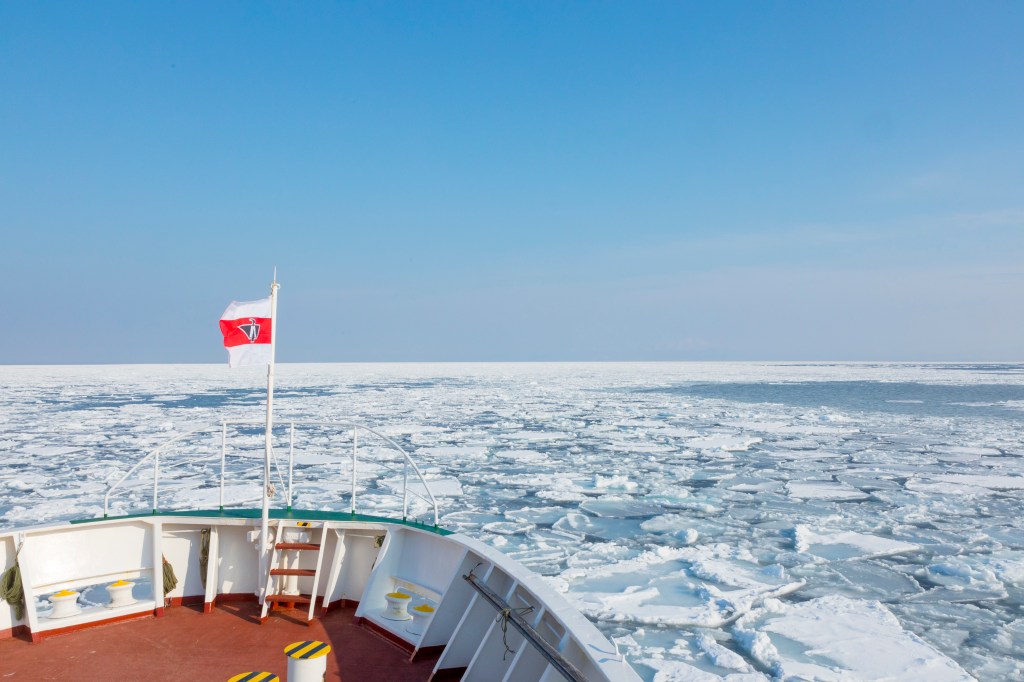
The large ship is built to push through the ice. Inside there are heated rooms on the first and second floors, a coffee lounge, a shop and toilets; outside there is an observation deck where most passengers spend the hour. The ride is steady even while breaking ice, but the deck is exposed and the wind is the part people underestimate.
The cruise runs about one hour and covers roughly 10 km one way. It does not chase the ice indefinitely. If the ice edge is beyond that range, you get open water and a sea cruise, not a refund. The operator is unusually direct about this on its English page, which is why the status check matters more than the forecast.
Boarding is at the roadside station Ryuhyo Kaido in Minami 3, Higashi 4, on the Abashiri waterfront. Parking is free, and there are coin lockers inside the station. Check-in must be completed 20 minutes before departure, and the counter closes five minutes before. The operator decides whether to sail about an hour before each departure and posts the result; it does not call each passenger.
The published 2026 fare table, revised from that season, lists the large ship at 5,000 yen for adults in January and March and 6,000 yen in February. Elementary schoolchildren pay 2,500 or 3,000 yen. Groups of 15 or more get a small discount. The special seat at the front of the second floor is 500 yen extra, first come on board, and cannot be reserved in advance. The offshore route with ice is priced higher, at 7,000 yen adult and 3,500 yen child.
Payment is cash only. Tickets for the next day are not sold in advance, because the operator waits for the morning sea check. Web booking for the 2027 season was due to open in early November 2026, after telephone booking opened on 15 October. Reconfirm both dates before relying on them.
The daily pattern is worth knowing. In the 2026 season the large ship ran at 9:00, 11:00, 13:00 and 15:00 from 20 to 31 January; at 9:30, 11:00, 12:30, 14:00 and 15:30 through February and the first half of March; and at 9:30, 11:30 and 13:30 from 15 March. Extra 8:00 and 16:45 sailings were listed as irregular. Treat this as a pattern, not a timetable for your date.
Aurora 3 is the small boat. It does not break ice and runs a two-hour offshore route, with adult fares of 9,800 yen and child fares of 4,900 yen. It is scheduled from mid-February to late March, usually at 9:00 and 13:00, and it is cancelled outright when there is no ice. The sunset cruise is a separate large-ship sailing: in the 2026 season it was listed for Friday, Saturday and Sunday evenings at 16:30, from 7 February to 8 March.
The ice itself
If the ice has not come in, you may not see the white field you came for. Even when it has, the ship only reaches 10 km offshore, so an offshore ice edge can leave you on open water. The operator says plainly that the ice is not guaranteed, and that no departure time is statistically better than another.
Wildlife is a bonus, not the show. Steller’s sea eagles and seals are the usual sightings; the operator notes that clione, the sea angel, cannot be seen from the ship. Bring binoculars if you have them. Drones are prohibited on the cruise.
The shore is the free alternative. Tentozan, the hill behind the drift ice museum, looks over the Okhotsk Sea, Lake Abashiri and the Shiretoko range, and the observation deck is free. Cape Notoro, about 20 minutes by car, ends in 40-50 m cliffs and is one of the classic places to watch the ice meet the coast. Neither replaces the cruise, but both are worth doing if the sailing is cancelled.
The town in winter
Abashiri is a working port, not only a cruise, and winter gives the town a second layer. The Okhotsk Drift Ice Museum on Tentozan is the place to understand what you just saw. It displays about 100 tonnes of real drift ice in a room kept at minus 15 degrees, where the staff invite you to freeze a wet towel and watch it stiffen. The same building has a clione tank, a 400-inch five-screen theatre and a rooftop gallery with a 360-degree view over the Okhotsk Sea, Lake Abashiri, Lake Notoro and the Shiretoko range. The rooftop is free. The museum is 990 yen for adults, 880 yen for high school students and 770 yen for children, open 9:00-16:30 from November to April with last entry at 16:00, and open every day; the New Year period runs 10:00-15:00.
The Abashiri Prison Museum is the other half of the town’s history. It preserves the old Abashiri prison buildings on a 169,264 square metre site at the foot of Tentozan, with 38 buildings including four Important Cultural Property structures. The story is not comfortable. In 1890 the Meiji government sent 1,200 prisoners to build the Central Road between the interior and the Okhotsk coast; men were chained in pairs, more than 200 died including guards, and the system was abolished in 1894. A fire in 1909 destroyed almost everything, and the radial cellhouse and administration building were rebuilt by 1912 with steam heating, hot water and Abashiri’s first electric lights. The current prison was rebuilt between 1984 and 2010, and the old buildings were moved here as a museum, which opened in 1983.
The prison museum is open 9:00-17:00 with last entry at 16:00, closed only on 31 December and 1 January. Admission is 1,500 yen for adults, 1,000 yen for high school students and 750 yen for children. It is about 4 km from the station, 10 minutes by bus or 7 minutes by taxi. The site is large and outdoor, so allow two hours and wear boots in snow.
The Hokkaido Museum of Northern Peoples, 5 km from the station on the same hill, covers the cultures of the north from Greenland to Siberia. Admission is 550 yen for adults and 200 yen for university and high school students; children and visitors aged 65 and over are free. It is open 9:30-16:30, or 9:00-17:00 from July to September, and closed on Mondays except in July, August, September and February, when it opens daily. The city bus takes about 15 minutes.
The winter festival is the one date to plan around. The 61st Abashiri Okhotsk Drift Ice Festival ran on 7-8 February 2026 at the commercial port wharf, with snow and ice sculptures, local food and some paid events. The city’s event page lists the 2027 edition for 6-7 February. It is a local festival, not a drill-ice embarkation point, and it can be cancelled or changed in bad weather.
Lake Abashiri adds a slower option. In 2026 the smelt fishing venue ran from 5 January to 11 February, a shortened season because the fishery was protecting low stocks. A hands-free set cost 2,200 yen for adults and 1,750 yen for children, including rod, tackle, bait, hole and chair, and reservations were not needed for groups under ten. The 2027 dates and prices need reconfirming. In autumn the same lakeside turns red: the coral grass colony at Lake Notoro covers about 4 hectares and peaks from late August to late September.
Food and drink
- Crab and other Okhotsk seafood are the winter meal in town. Restaurants follow normal hours and can be booked out on festival weekends.
- Eat before you board if you get cold easily. The ship is not a long dinner cruise.
- Abashiri chanpon is the local bowl to try. It was created after a record chikuwa rivalry with Unzen in Nagasaki, and the rules are strict: a soup based on Obama chanpon with Okhotsk scallop or shijimi, a kamaboko from one of Abashiri’s shops, and a dedicated noodle made with Abashiri wheat. The toppings vary by shop.
- The food court at the roadside station, Kinema-kan, serves chanpon with a view of the Okhotsk Sea and the Aurora. It is open 11:00-15:30 and closed only on 31 December and 1 January, which makes it the easy lunch before or after a cruise.
- Lake Abashiri shijimi is a registered geographical indication. The clams are Yamato shijimi grown for about seven years, harvested at 14 mm or more, and the lake accounts for most of Hokkaido’s production. The 2024 catch was 344.7 tonnes. Look for it in soup and rice dishes.
- Okhotsk salmon, scallops and crab are the seasonal seafood. Spring brings crab, sea urchin and scallops; autumn is salmon and chanpon; winter is smelt and crab.
- The prison museum’s Shokudo serves a reconstructed prison meal: barley rice with grilled sanma for 1,100 yen or hokke for 1,200 yen, with side dishes and soup. It is served 11:00-15:00, last order 14:30. It is a historical experience, not a gourmet lunch.
- Coffee and sweets are easy to find around the station and the roadside station. Carry cash for smaller shops; the cruise itself does not take cards.
Getting there and around
- Abashiri Station is the railhead. The Limited Express Okhotsk runs from Sapporo in about 5 hours 15 minutes to 5 hours 26 minutes; a reserved seat was 10,870 yen in October 2026. There are only about two direct trains a day, so book ahead and check the return.
- From Asahikawa, the Sekihoku Main Line continues over the mountains to Abashiri. From the east, the Senmo Line links Abashiri with Shiretoko-Shari and Kushiro. Winter delays are common; do not build a tight connection to a flight.
- Memanbetsu Airport is the nearby airport. The bus to Abashiri takes about 26-30 minutes to the station and 35 minutes to the bus terminal, for 1,050 yen. During the cruise season it continues to the Aurora terminal in about 40 minutes.
- By car from Sapporo, the drive is about 4 hours 50 minutes to 5 hours 30 minutes using the expressways. Winter tires are essential, and the pass roads can close in a blizzard.
- The Aurora terminal is inside the Ryuhyo Kaido roadside station on the waterfront, not at the station. The winter facility loop bus starts there and runs through the bus terminal, the station, the prison, the prison museum, Tentozan and the northern peoples museum, roughly hourly from morning to late afternoon. A one-day pass was 1,100 yen for adults and 550 yen for children, sold as a mobile ticket.
- Parking at the roadside station is free, including for the cruise. In a good ice year the car park can fill before the first departure, so arrive early or take the bus.
- Book the cruise, then check the morning status. A paid ticket does not override a weather cancellation.
- Do not copy a timetable into your plan. Departures differ across January, February and March, and the operator changes them. Use the operator site and the bus company’s winter PDF.
Where to stay
- Stay in Abashiri so a cancelled morning can become an afternoon sailing, if one is still running.
- A one-night dash from Sapporo is a long winter day. Give the ice its own night.
- The station area is the practical base: business hotels, restaurants, the bus terminal and the winter loop bus. It is a short ride to the Aurora terminal and the museums.
- The lakeside onsen hotels are the quieter option, with views over Lake Abashiri. Check dates carefully for the 2026-27 season: Abashiri Kanko Hotel lists a closure from 1 November 2026 to 31 January 2027, reopens from 1 February to 22 March, and then closes again until 30 April.
- Utoro, on the Shiretoko side, is about 1.5 hours by car and is the base for the Shiretoko boat and the drift ice walk. It is a different trip, not a suburb of Abashiri.
- Two nights is the right shape: one for the cruise and one spare for a weather cancellation, with the museums as the fallback.
- Festival weekend and the February peak fill the town. Book early, and check the cancellation policy before paying.
Best time to visit
- The cruise window is 20 January to 31 March. Early January is usually too soon for the large ship, and April is too late.
- Mid-February to early March is the best bet for ice, and February is the busiest and most expensive month.
- The 2026 season shows how much the dates move: first ice on 22 January, ashore on 1 February, last ice on 19 April, 88 days in total against a 75-day average.
- Late March is cheaper and quieter, but the ice is thinning. January is the value month, with a real chance of first ice in the last third.
- Expect 0 to minus 10 degrees in town, colder on the water, and allow for wind. A blizzard can cancel the sailing and close the roads on the same day.
- The sunset cruise is the photographer’s option: Friday, Saturday and Sunday evenings at 16:30 in the 2026 season, listed from 7 February to 8 March. It is weather-dependent and not a separate wildlife trip.
- Outside winter there is no drift ice, but the coast still works: coral grass at Lake Notoro from late August to late September, and the museums open all year. The coral grass car park is closed for boardwalk repairs from 24 October to 18 December 2026.
Practical tips
- Check the operator’s status page before leaving the hotel. The decision is made about an hour before departure, and the company does not call individual passengers.
- Book one departure, not several. The operator asks passengers not to reserve multiple slots as a weather hedge, because it blocks seats for everyone else.
- Carry cash for the cruise. Tickets are sold on the day only, and the counter is busiest in the 30 minutes before sailing.
- Dress for the deck even if you intend to stay inside: thermal layers, a windproof outer shell, gloves, a hat and boots with grip. The interior is heated, the deck is not.
- Bring binoculars for seals and Steller’s sea eagles, and a lens cloth for the spray. Drones are prohibited.
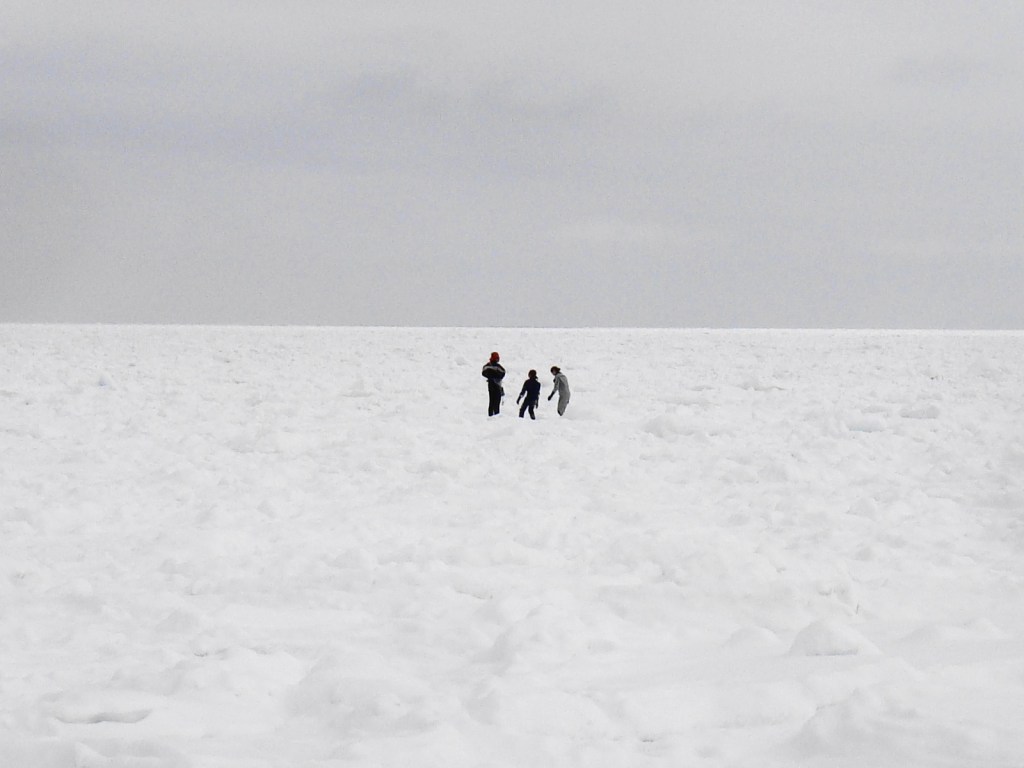
- Do not walk out onto the drift ice. The floes move, the gaps open, and the water is near freezing.
- If the sailing is cancelled, believe it and switch plans. The drift ice museum, the prison museum and the northern peoples museum are all indoors, and the Tentozan viewpoint is free.
- The wild peninsula east of here is a different trip: the Shiretoko travel guide.
- For the inland lakes and the Akan-Mashu caldera, see the Akan-Mashu travel guide.
- For the Hakodate fort and the Boshin War, the Goryokaku travel guide is the other Hokkaido history stop.
Suggested itineraries
Cruise day. Check the status at breakfast, then reach the roadside station 30 minutes before departure. Take the large ship, spend the hour on deck, and warm up with chanpon at Kinema-kan. In the afternoon, visit the drift ice museum on Tentozan and finish at the free observation deck for the sunset. That is a full winter day without a car.
No-ice day. Start at the prison museum when it opens, walk the cellhouse and the grounds, and eat the prison meal at the museum restaurant. Take the loop bus to the northern peoples museum, then finish at Tentozan. If the ice is visible from the shore, drive or take a taxi to Cape Notoro for the last light.
Two days. Day one for the cruise and the drift ice museum; day two for the prison museum and Lake Abashiri, or a run east to Shiretoko. Keep the second morning free as the weather backup, and do not book a flight immediately after a cruise.
- Night in Abashiri, and a morning check of the sailing.
- The cruise if it is running, from the roadside-station terminal.
- A walk on the winter shore, then seafood back in town.
Where to go next
Guides to nearby places on this route, each checked against official sources.
Before you go
Timetables, fares, admission fees, and seasonal access rules can change. Check the official tourism and transport sites linked below for the latest information before you travel.
Sources
- Aurora, fares, timetable and cruise times (checked 2026-10-25)
- Aurora, English guide, FAQ and drift-ice background (checked 2026-10-25)
- Aurora, reservations (checked 2026-10-25)
- Okhotsk Drift Ice Museum, hours and admission (checked 2026-10-25)
- Okhotsk Drift Ice Museum, exhibits (checked 2026-10-25)
- Abashiri Prison Museum, hours, admission and access (checked 2026-10-25)
- Abashiri Prison Museum, the prisoners who built the road (checked 2026-10-25)
- Hokkaido Museum of Northern Peoples, hours and admission (checked 2026-10-25)
- Abashiri Bus, winter facility loop timetable (checked 2026-10-25)
- Abashiri Bus, Memanbetsu Airport line (checked 2026-10-25)
- Abashiri Chanpon Research Association (checked 2026-10-25)
- Abashiri City, fisheries statistics 2024 (checked 2026-10-25)
- Abashiri tourism, event calendar (checked 2026-10-25)
- Abashiri tourism, Lake Abashiri smelt fishing (checked 2026-10-25)
- Hokkaido Love, Cape Notoro (checked 2026-10-25)
- JR Hokkaido, Limited Express Okhotsk timetable (checked 2026-10-25)


Leave a Reply