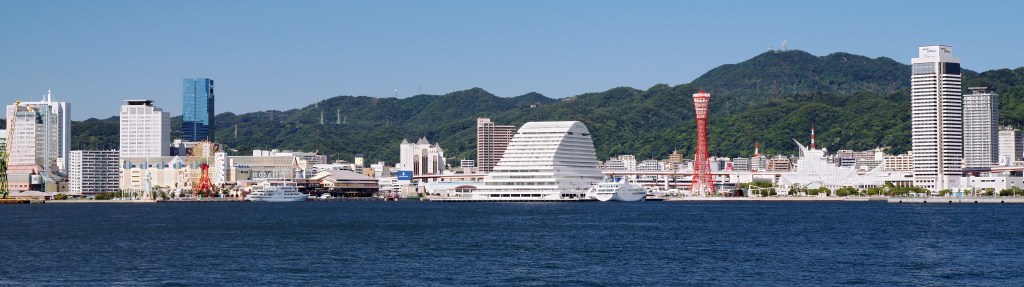
Kobe is a port city that fits between the sea and a wall of hills, and that shape explains most of what you do there. The centre is narrow and walkable, the old foreign settlement sits on the flat land behind the harbour, and the villas of the nineteenth-century merchants climb the slope above it. You can eat Kobe beef at lunch, ride a ropeway in the afternoon and be back in Osaka for dinner.
It is also a city with a hard twentieth century. The 1995 earthquake destroyed much of the waterfront and killed more than 6,000 people, and the memorials along the bay are part of the landscape rather than a separate sight. This guide sticks to places you can reach on foot or by one short train ride, and to prices and hours taken from official sources in October 2026.
Why visit
Four things make Kobe worth a full day rather than a stop between Osaka and Himeji. First, the beef: Kobe beef is a defined product, not a marketing word, and the city has a dense cluster of registered restaurants where you can eat it at a counter. Second, Kitano: a hillside district of Meiji and Taisho villas built by foreign traders, several of them open as small museums. Third, the waterfront, which runs from Meriken Park through Harborland and is best at dusk. Fourth, the mountains directly behind the city, where a ropeway climbs to a herb garden and a cable car continues to Mount Rokko.
Beyond that, Kobe is a working port with a compact Chinatown, a covered shopping arcade, and one of Japan’s great sake districts along the coast to the east. It rewards a slower day than most visitors give it.
Kobe beef: what the name actually means
Kobe beef comes from Tajima cattle, a Japanese Black strain raised in Hyogo Prefecture. The Kobe Beef Marketing and Distribution Promotion Association defines the label tightly. The animal must be a Tajima beef animal bred from Hyogo’s prefectural sires, raised and managed within the prefecture by a registered producer, and shipped to a prefectural meat centre at between 28 and 60 months of age. It must be a virgin female or a steer. The carcass must grade A or B for yield, reach BMS (marbling) No. 6 or higher, and fall within a weight band: 270 to 499.9 kg for females, 300 to 499.9 kg for steers.
That is why the label is worth checking. A restaurant can serve excellent Japanese beef and call it “Kobe-style” without meeting any of it. The association publishes a list of registered shops, and the shops that appear on it are the ones authorised to use the name. If the menu says Kobe beef, the shop should be able to tell you its registration number. In the 2024 financial year the association certified 6,820 head, so the supply is small relative to the number of restaurants in Japan using the word.
What it tastes like is fat, not just tenderness. The marbling melts at low temperature, so a thin slice cooked quickly on a teppan is the usual serving. Expect a small portion: the richness is the point, and a 150 g steak is a full meal. Lunch is the cheaper way in. Teppanyaki counters in Sannomiya and Motomachi run lunch courses at a fraction of their dinner prices, and several registered shops serve Kobe beef in a set with rice, soup and pickles. Prices move with the cut and the season, so read the menu rather than trusting a number online.
A few practical notes. Teppanyaki is a counter seat, not a table, and the chef cooks in front of you in courses. Reserve for dinner, and reserve at lunch on weekends. Some shops ask you to choose the cut by weight when you book. If you want to try several cuts, a smaller portion of two is better than one large steak. And if the price is the obstacle, Kobe beef also appears in croquettes, sushi and rice bowls around town at much lower cost; those are a taste, not the full experience.
Kitano and the foreign houses
The foreign settlement was established after the port opened in 1868, and the merchants who could afford it built villas on the higher ground of Kitano, away from the harbour smells and the summer heat. The result is a grid of steep lanes with brick and timber houses, consulates, a church and a synagogue, many of them still standing and a few open to visitors.
The most recognisable is the Kazamidori no Yakata, the former Thomas house, with its weathervane and red brick. It is a nationally designated Important Cultural Property, open 9:00 to 17:00 with last entry at 16:45, closed on the third Tuesday of the month. Admission is 500 yen for adults, and a combined ticket with the nearby Moegi House costs 800 yen; the combined price rose from 650 yen on 1 April 2026. High school students and younger enter free, as do Kobe residents aged 65 and over.
A few minutes uphill, the Uroko House takes its name from the scale-like shingles on its exterior, and its admission includes a small observation gallery with a view back over the city. It costs 1,100 yen for adults. The same operator runs several other houses and sells passes: a four-house pass with the gallery at 2,200 yen, and a seven-house pass at 3,300 yen, both discounted from the individual totals. If you only want the view, the gallery alone is not sold separately, so the pass only pays off if you actually intend to go inside three or four buildings.
Walk the lanes without entering anything and the district still works: the slope, the consular flags, the small museums and the coffee shops in converted houses. From Sannomiya Station it is a 15-minute uphill walk, and the last stretch is steep enough that you will notice it in summer. A taxi from the station is short and cheap if the hill is unwelcome.
Nankinmachi and the old shopping streets
Nankinmachi is Kobe’s Chinatown, a compact grid of lanes between Motomachi and the waterfront, with two ornate gates and a small park. It is a food street more than a sight: steamed buns, grilled skewers, sweets and a lot of people on weekends. The district was rebuilt after the war and again after the 1995 earthquake, and the current layout is modern even though the community dates back to the 1860s.
Next to it, the Motomachi shopping arcade runs for several blocks and connects to Sannomiya, which makes it a useful rain route rather than a destination. The arcade is where locals shop for clothes, kitchen goods and sweets, and it is a better place to buy a practical souvenir than the airport. South of Motomachi, the old foreign settlement streets around the former consulate and the Kobe City Museum have a quieter, more European scale, with stone buildings and a small park.
The waterfront: Meriken Park and Harborland
The bay is the reason Kobe exists, and the waterfront is where the city shows it. Meriken Park holds the port tower, the maritime museum and a strip of open water where the 1995 earthquake memorial is set. The Kobe Port Tower reopened after a full renovation and is now a red lattice with an open roof deck. Observation floor plus roof deck costs 1,200 yen for adults, the observation floor alone 1,000 yen, and entry is by timed ticket bought online or at the ground-floor counter. It is open 9:00 to 23:00 with last entry at 22:30, and the roof deck closes in rain or strong wind because it is reached by stairs.
West of the tower, Harborland is a shopping and dining complex on the water with a Ferris wheel and a promenade that faces the port at sunset. It is not historic and it does not pretend to be, but it is where the city goes at the weekend, and the walk from Meriken Park around the bay takes about 20 minutes. The mosaic of lights on the opposite shore is the standard evening photograph.
Between the two, the Port of Kobe Earthquake Memorial Park preserves a section of the collapsed pier and the cracked quay from 1995. It is free, open all day, and small. Read the panels: they explain why the port, built on reclaimed land, failed so badly, and what the reconstruction changed.
Nunobiki ropeway and Mount Rokko
Shin-Kobe Station sits at the foot of the mountains, and the Nunobiki ropeway leaves from a five-minute walk behind it. The gondola climbs to the Herb Garden, a terraced garden on the slope with glasshouses, a lawn and a view down over the whole city to the bay. The round trip, including garden entry, costs 2,500 yen for adults and 1,250 yen for children from 1 April 2026, when the price rose from 2,000 yen. A one-way ticket is 1,900 yen. On spring and autumn weekends there is a night rate of 2,000 yen for adults after 17:00, when only the upper viewing area stays open.
Most people turn around at the garden. The more interesting option is to continue by the Rokko cable car and the Rokko Sanjo bus to the top of Mount Rokko, where the view opens over both Osaka Bay and, on clear days, the mountains of Shikoku. The summit area has a garden, a restaurant and a few short trails, and the temperature is several degrees cooler than the city in summer.
Transit on the mountain is not cheap when you add the cable car and bus to the ropeway, and the connections are infrequent in the evening. Go before mid-afternoon and check the last descent time before you start up. The ropeway itself runs about every 15 to 20 minutes, but the upper network is thinner.
Arima Onsen
Arima is one of Japan’s oldest hot spring towns and sits in a valley on the far side of Mount Rokko, about 30 minutes from Sannomiya, either by highway bus or by subway to Tanigami and the Kobe Electric Railway. It is a day trip, or an overnight if you want a ryokan with dinner. The town is small: a river, a few lanes, two public bathhouses and a handful of temples and shrines.
The two public baths are the reason to come without a hotel booking. Kin no Yu, the “gold water” bath, is an iron-rich salt spring that turns brown where it meets air. It costs 800 yen for adults, or 650 yen on weekdays, and 350 yen for school-age children. Gin no Yu, the “silver water” bath, is a carbonate and radium spring, cooler and clear, at 700 yen for adults or 550 yen on weekdays, 300 yen for children. A ticket for both baths is 1,200 yen. Kin no Yu closes on the second and fourth Tuesday of the month, Gin no Yu on the first and third, so check the calendar before you choose a day.
Both baths are small and get crowded at weekends. Go early, bring or buy a towel, and check the bathhouse rules on tattoos before you go, because they vary between facilities. The free foot bath next to Kin no Yu is open during the bathhouse’s hours and needs no ticket.
The earthquake and the museum that explains it
The Great Hanshin-Awaji Earthquake struck on 17 January 1995. More than 6,000 people died, most of them in older wooden houses that collapsed in the first seconds, and the elevated expressway and the port were badly damaged. The city rebuilt, but the event shaped building codes, disaster planning and the way Kobe talks about itself.
The Disaster Reduction and Human Renovation Institution, usually shortened to the Disaster Prevention Museum, tells the story in two buildings. The west building reconstructs the city at the moment of the quake with a large screen and a walk-through of the aftermath; the east building covers preparedness and recovery. The combined ticket is 650 yen for adults, 450 yen for university students and free for high school students and younger. It is open 9:30 to 17:30, closed on Mondays, and free on the 17th of each month. Allow two hours. It is a serious museum rather than an attraction, and the reconstruction room is intense for children.
Nada: sake along the coast
East of the city centre, the Nada district is one of Japan’s largest sake-producing areas, with five historic brewing villages along the coast between Kobe and Nishinomiya. The reason is water: the hard, iron-poor groundwater here produces a dry, clean sake that became the standard for the whole country.
Three breweries run free museums within a short train ride of Sannomiya. Hakutsuru Sake Brewery Museum occupies a Taisho-era brewery and shows the brewing process with full-size figures and equipment; entry is free, 9:30 to 16:30 with last entry at 16:00, closed over New Year and during the Obon period. Kiku-Masamune Sake Brewery Memorial Hall, a few minutes from Hanshin Uozaki Station, is also free, 9:30 to 16:30, and includes a tasting corner. Sawanotsuru Museum, near Hanshin Oishi, is free as well, 10:00 to 16:00, and closed on Wednesdays.
All three are working attractions rather than bars, and the tastings are modest. If you want to compare, plan two of them and take the Hanshin line rather than the JR, because the stations are closer to the breweries. Groups of ten or more need to book.
What else to eat
Kobe beef gets the attention, but the city eats other things. Akashiyaki is the local ancestor of takoyaki: a soft, almost custard-like ball of batter and octopus, served with a clear dashi dip rather than a thick sauce. It is eaten with a spoon or chopsticks and collapses if you are rough with it. Sobameshi, fried rice mixed with noodles and sauce, is a postwar griddle dish and a good cheap lunch. Ikayaki, a whole squid pressed flat and grilled with soy sauce, is sold at stalls and at the harbour.
In Nankinmachi, the buta-man (steamed pork bun) is the standard snack, and the sweet shops sell sesame balls and almond jelly. For a sit-down meal away from beef, the arcades around Sannomiya have curry, ramen and tonkatsu at ordinary prices. Kobe also has a long bakery tradition from the foreign settlement, and the coffee shops in Kitano are a reasonable place to spend an hour.
Getting there
Kobe has two main gateways for travellers: Sannomiya in the centre and Shin-Kobe for the shinkansen. They are one subway stop apart, and the subway ride takes about two minutes.
From Osaka, the JR Kobe Line new rapid reaches Sannomiya in about 22 minutes for 420 yen. Hankyu from Osaka-Umeda to Kobe-Sannomiya takes about 27 minutes for 330 yen, and Hanshin is a similar price with a slightly slower run. From Kyoto, JR special rapid to Sannomiya takes about an hour; Hankyu and Keihan routes involve a change in Osaka. From Shin-Osaka, the shinkansen to Shin-Kobe takes about 12 minutes and costs 1,530 yen unreserved, but you then need the subway to reach Sannomiya.
Kobe Airport sits on an artificial island south of the city and is reached by Port Liner from Sannomiya in about 18 minutes for 340 yen. The airport handles domestic flights; international arrivals mostly come through Kansai International, which is about 65 minutes from Sannomiya by direct limousine bus, or around 90 minutes by train through Osaka.
Getting around
The centre is walkable. Sannomiya, Motomachi, Nankinmachi, the old settlement and Meriken Park form a strip about 2.5 km long, and the walk between them is flat except for Kitano. The subway is useful for Shin-Kobe and for the east end of the city, and the Port Liner serves the airport and Port Island.
For Kitano and the ropeway, walking is realistic if you are fit; the hill is the only difficulty. Taxis are metered and plentiful at Sannomiya, and a short ride to Kitano costs less than a long walk in the rain. The City Loop bus circles the main sights, but its frequency drops outside the middle of the day, and the walk is often faster.
Where to stay
Sannomiya is the practical base: hotels in every price band, the main station, and restaurants open late. Motomachi and the old settlement are quieter and slightly more atmospheric, with smaller hotels and easy access to Chinatown and the waterfront. Harborland has larger chain hotels with bay views and is good for families, but it is a 15-minute walk from the centre and quiet at night.
Arima is the choice for a ryokan night. Rates include dinner and breakfast, and the town is dark and quiet after the day visitors leave. Book well ahead for autumn and for the New Year period.
Best time to visit
Spring and autumn are the easy answers. Cherry blossom in Kitano and along the rivers comes in late March and early April, and the maples turn in late November. Summer is hot and humid, with the bay breeze helping only near the water; the mountains are cooler, which is the reason to go up the ropeway.
Winter is mild and clear, and the Kobe Luminarie, the memorial light festival held in late January and early February, is the biggest event of the year. The 31st edition ran from 30 January to 8 February 2026 across the East Park, the old foreign settlement and Meriken Park, with the Meriken Park section ticketed. Dates change each year, so check before booking. The Kobe Festival in May fills the centre with parades and food stalls for a weekend.
Suggested itineraries
One day, first visit: start at Kitano around 9:00, see the Kazamidori house and walk the lanes, then descend to Nankinmachi for a late-morning snack. Have Kobe beef for lunch in Sannomiya or Motomachi, then walk through the old settlement to Meriken Park, go up the Port Tower, and finish at Harborland for sunset. That is about 8 km on foot and leaves no time for a museum.
One day with the mountains: take the ropeway from Shin-Kobe in the morning, spend an hour in the Herb Garden, and come down for lunch. In the afternoon, do Kitano and the waterfront, and skip the tower if the weather is hazy.
Two days: day one as above; day two, take the bus to Arima Onsen in the morning, soak at Kin no Yu, have lunch in the town, and return via Mount Rokko if the weather is clear. Alternatively, spend the second day at the Disaster Prevention Museum and the Nada breweries, which is a better rainy-day plan.
Practical tips
- Kobe beef restaurants often require a reservation for dinner; lunch is easier.
- Port Tower tickets are timed; buy online for the sunset slot on weekends.
- Kitano is a hill. Wear shoes that grip and carry water in summer.
- Kin no Yu and Gin no Yu close on different Tuesdays; check before travelling to Arima.
- The shinkansen stops at Shin-Kobe, not Sannomiya. Allow 15 minutes to transfer.
- Nada’s museums are free but close early, so go before 15:00.
Before you go
Prices and hours above were checked against official sources on 26 October 2026, including the Kobe Beef Marketing and Distribution Promotion Association, the city of Kobe, the Port Tower, the Herb Garden, the Arima bathhouses and the Disaster Prevention Museum. The items most likely to change are the ropeway fare, the Kitano combined ticket, the Port Tower’s timed-entry rules and the Luminarie dates. Reconfirm the day before, especially for Arima and for any restaurant where the beef is the reason for the trip.
Sources
- Kobe Beef Marketing and Distribution Promotion Association: definition of Kobe beef (checked 2026-10-26)
- Kobe Beef Marketing and Distribution Promotion Association: registered shops (checked 2026-10-26)
- City of Kobe: Kazamidori no Yakata and 2026 combined ticket (checked 2026-10-26)
- Kitano Ijinkan: Uroko House and pass prices (checked 2026-10-26)
- Kobe Port Tower: hours and admission (checked 2026-10-26)
- City of Kobe: Nunobiki ropeway and Herb Garden fares (checked 2026-10-26)
- Arima Onsen: Kin no Yu hours and admission (checked 2026-10-26)
- Arima Onsen: Gin no Yu hours and admission (checked 2026-10-26)
- Disaster Reduction and Human Renovation Institution: hours and admission (checked 2026-10-26)
- Hakutsuru Sake Brewery Museum: hours and admission (checked 2026-10-26)
- Kobe Luminarie 2026: dates, venues and tickets (checked 2026-10-26)
Explore More of Japan
- Himeji Castle Travel Guide — the white castle 40 minutes west
- Osaka Neighborhoods and Food Guide — the city next door
- Kyoto Higashiyama Travel Guide — temples and lanes an hour east
- Koyasan Travel Guide — the mountain temple town south of Osaka


Leave a Reply