Nasu is what Tokyo calls the countryside. Two hours north by Shinkansen, the plain folds into a volcanic highland of dairy farms, chestnut woods, ryokan and a single steaming mountain, and the air is noticeably cooler than the city’s. It has been a summer retreat since the imperial villa was built here in 1926, and it still feels like one.
The area is large and spread out, which is the main thing to understand before you go. There is an onsen village at the foot of the mountain, a highland strip of farms and museums along the main road, and a wilder forest above. This guide covers how to connect them by bus or car, the 2026 ropeway season, the current volcanic status, what to eat, and where to stay.
Why Nasu Highland
Because it does several kinds of holiday at once. You can spend the morning in a 1,400-year-old sulfur bath, the afternoon at a dairy farm with children, and the evening in a ryokan with a private bath. The mountain above is a real volcano with a ropeway and a crater walk, and the forest that belonged to the imperial family is now half open to the public.
It is also easy from Tokyo. The Shinkansen reaches Nasushiobara in about 70 minutes, and buses run from the station to the onsen village in 50 minutes. That makes Nasu a practical two-night add-on to a Tokyo trip, especially in autumn.
The shape of the highland
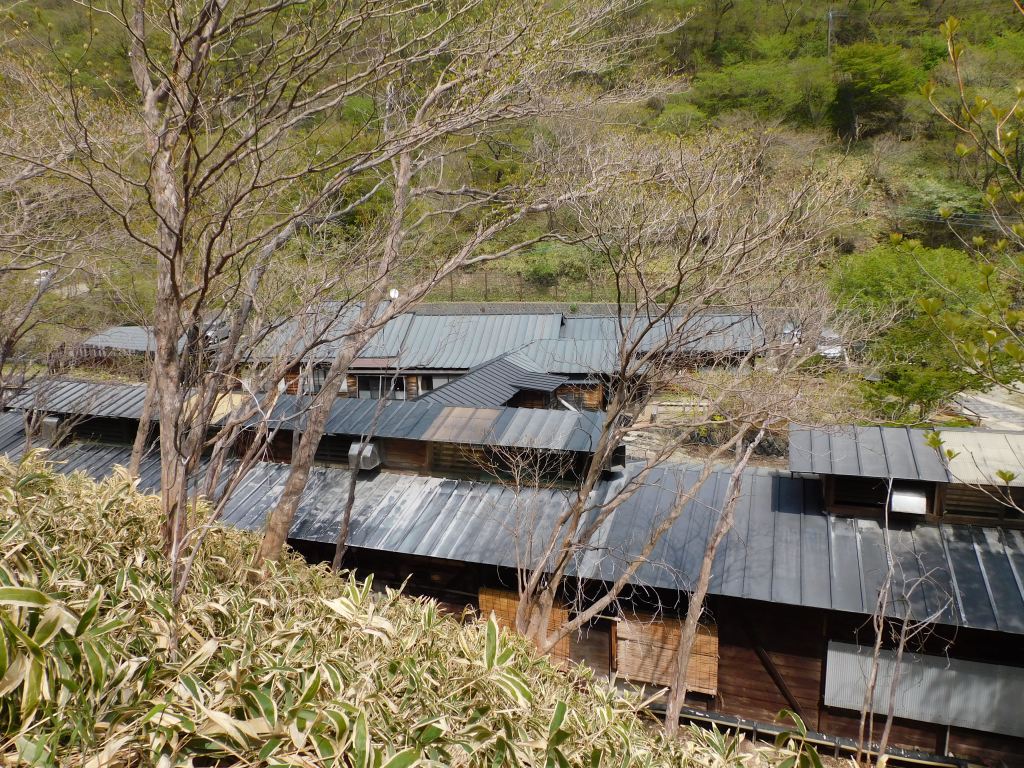
Nasu Yumoto, at the base of the mountain, is the old onsen village: Shika-no-Yu, the Sessho-seki rock, a shrine, and a narrow street of inns. Above it, the road climbs to Omaru Onsen and the ropeway station.
The highland strip along Route 17 is a different world: farms, cheese shops, museums, animal parks and cafes spread along a long straight road. This is where families spend the day. Further east, Nasu Heisei-no-mori is the forested part of the imperial estate, with quiet trails and a visitor centre.
A short history
Nasu Onsen is said to have been discovered around 630, when a local official followed a wounded white deer and found it healing in a hot spring. The deer gave the bath its name, Shika-no-Yu, and the shrine beside it was founded in gratitude. By the early Meiji period the area counted seven springs, the Nasu Shichi-yu, and travellers stopped here on the road north.
The imperial villa was completed in 1926, and the area became a summer refuge for the imperial family and, later, for Tokyo families building second homes. After the resort law of 1986, pensions, museums and theme parks multiplied along the highland road. In 2011, half of the imperial estate was opened as Nasu Heisei-no-mori, a protected forest with public trails.
Getting there
Take the Tohoku Shinkansen from Tokyo to Nasushiobara (about 70 minutes). From the west exit, bus stop 3, the Kanto Bus runs to Nasu Yumoto Onsen in about 50 minutes for 1,170 yen; some services continue to the ropeway in about 77 minutes for 1,640 yen. From Kuroiso Station, one stop closer, the same bus takes about 35 minutes and costs 950 yen.
The last bus from Nasu Yumoto back to Nasushiobara leaves around 19:05, so plan dinner accordingly. By car, take the Tohoku Expressway to Nasu Interchange and follow Route 17 west; the onsen village is about 20 minutes further.
Getting around
A car is the most efficient way to see the highland strip, the forest and the ropeway in one day. Roads are good, parking is generally free at attractions, and the distances are short in kilometres but slow in traffic on autumn weekends.
Without a car, base yourself in Nasu Yumoto and use the buses: they connect the station, the onsen, the ropeway and parts of the highland. A seasonal sightseeing bus also links some attractions, but frequencies are low, so pick two or three stops rather than trying to cover the whole area. Taxis are available from the station and the onsen, and are worth it for the ropeway at dawn.
Shika-no-Yu and the onsen
Shika-no-Yu is the oldest and most atmospheric bath in Nasu: a dim wooden bathhouse with small tubs at different temperatures, from about 41 to 48 degrees, fed by a sulfur spring that scents the whole village. It costs around 500 yen, opens from 8:00 to 18:00, and does not provide soap or shampoo, so bring a towel and wash elsewhere.
The local method is a short, repeated soak. First pour hot water over your head and shoulders with the ladle, a practice called kaburi-yu, then sit in a tub for two or three minutes, come out and rest, and repeat. The whole session is about fifteen minutes, and locals do it up to four times a day. The water is strongly sulfurous, so remove silver jewellery before you go in.
Other baths in the area range from the riverside open-air pool at Omaru Onsen to the small inns of Kita and Benten. Several ryokan open their baths to day visitors in the afternoon for a fee; ask at the tourist desk in Yumoto, or book a private bath if you have tattoos.
The other baths
Shika-no-Yu gets the crowds, but the seven springs each have a character. Kita Onsen, up a narrow road, is a wooden inn with a bath that feels almost unchanged since the Edo period. Omaru Onsen has a riverside open-air pool built into the stream, and Benten and Takao are small, quiet and mostly used by overnight guests.
Day-visit hours vary by inn and by season, and some baths close in the afternoon for cleaning. The tourist desk in Yumoto keeps a current list, and the larger hotels are the safest bet if you are arriving without a reservation.
Sessho-seki and Nasu Yuzen Shrine
Five minutes from the Yumoto bus stop, Sessho-seki is a steaming, sulfur-stained rock in a barren valley, famous as the prison of a nine-tailed fox spirit. The stone split in two in 2022 and is now visibly cracked, which has only added to its reputation. It is free and open at all hours, and the walk takes about 30 minutes including the wooden boardwalk.
Nasu Yuzen Shrine sits just above it, at the top of a stone path lined with small statues. It is the shrine linked to the deer legend, and the atmosphere is quiet and mossy. Combine the two with Shika-no-Yu for a half-day loop on foot.
Mount Chausu and the ropeway
Chausu-dake, 1,915 metres, is the main peak of the Nasu range and the reason the onsen exists. The ropeway climbs from 1,390 to 1,684 metres in about four minutes, and from the top station a rocky trail reaches the crater rim in about 50 minutes; allow two to three hours for the round trip.
In 2026 the ropeway operates from 20 March to 13 December, 8:30 to 16:30, with departures every 20 minutes and the last ascent at 16:00. A round trip costs 2,000 yen for adults and 1,000 yen for children. Strong wind can stop it, so check the official site on the morning of your visit.
The volcano is at alert level 1, which means normal activity with no restrictions beyond the usual warnings, but that can change. Check the Japan Meteorological Agency page before climbing, carry a windproof layer, and wear proper shoes: the upper trail is loose volcanic gravel and the weather turns fast.
Nasu Heisei-no-mori
Half of the imperial estate was opened in 2011 as a nature reserve, and it is the quietest place in Nasu. The visitor centre has maps and exhibits, the trails are free, and the walk to Komadome Falls takes about an hour through beech and oak forest. The inner zone is visited only on ranger-led walks, which need a reservation and a fee.
This is a good rainy-day alternative to the mountain, and a good place to see birds and forest plants without a long hike. The centre is open from 9:00 to 16:30 and closes on some Wednesdays.
Farms, animals and family attractions
The highland road is built for families. Nasu Animal Kingdom has indoor pavilions with capybara and red pandas, plus farm animals and shows, and is open from about 10:00 to 16:30, usually closed on Wednesdays, with an admission of around 2,600 yen. Nasu Safari Park is a separate drive-through park with lions and giraffes.
Dairy farms and cheese shops along the road sell milk, yoghurt, gelato and cheese made on site, and several have cafes with views of the hills. There are also museums for glass, stained glass and toys, and a lake with a family park. Pick two or three rather than trying to do them all.
Seasons
Spring brings the Yawata azaleas, about 200,000 wild plants on the slope below the mountain, usually in mid to late May. Summer is the reason people keep houses here: the highland is several degrees cooler than Tokyo, and the farms and forests are at their greenest.
Autumn is the busiest season. The ropeway slopes and the Ubagadake area colour from late September to early October, earlier than the cities, and the highland road follows into late October and November. Winter is cold and clear, with steam rising from the baths and snow on the peaks; the ropeway closes in mid-December.
Rainy days and coffee
Nasu is well supplied for wet weather. The animal kingdom has indoor pavilions, the museums along the highland road are under cover, and the cheese shops and bakeries make good long stops. The forest trails and the crater walk are the only plans that suffer, and even then the onsen village is at its best in the rain, with steam and wet stone.
Coffee is a small local obsession. Roasters and cafes are scattered along Route 17 and in the back lanes of Yumoto, several with views over the fields, and most open around 9:00 and close by 17:00. For a rainy afternoon, a cafe, a bath and an early dinner is a perfectly good plan.
Where to stay
Nasu Yumoto is the best base for the onsen, the shrine and the ropeway, with ryokan of every size and a few Western-style hotels. The highland road has pensions, cottages and resort hotels with pools and family rooms, better for self-catering and children. Omaru Onsen, higher up, is for people who want the mountain and the river bath.
Book ahead for autumn weekends and the azalea season, when Tokyo families fill the pensions. Many ryokan include dinner and breakfast, and the meal is usually kaiseki with local vegetables and beef.
Food and drink
Dairy is the local speciality: milk, yoghurt, cheese, butter and soft ice cream sold at the farms. Soba is common in the onsen village, and the highland restaurants serve pizza, pasta and burgers made with local produce. Tochigi beef appears on ryokan menus, and the prefecture’s strawberries and chestnuts show up in sweets.
For a quick lunch, the farm shops and bakeries along Route 17 are reliable. Dinner is usually at the inn, because the village closes early and the highland restaurants stop serving around 20:00. Local sake and craft beer are available, but this is not a nightlife destination.
Two days in Nasu
Day 1: onsen village
Arrive at Nasushiobara around midday and take the bus to Yumoto. Visit Sessho-seki and the shrine, then Shika-no-Yu in the late afternoon. Check in, eat at the ryokan, and take a second bath before bed.
Day 2: mountain and highland
Take the early bus to the ropeway, climb to the Chausu crater if the weather is clear, and come down for lunch. In the afternoon, visit a farm or the animal park with children, or walk in Nasu Heisei-no-mori if you want quiet. Catch the bus back to the station, or stay a second night and drive the highland road slowly.
With a third day, add Nikko on the way back to Tokyo, or spend the morning at the ropeway and the afternoon in a day-use bath before the train.
Day trips
Nikko, with Toshogu Shrine and the waterfalls, is about an hour by car and makes a natural combination; see our Nikko travel guide. Shiobara Onsen, deeper in the mountains, is another old spa town with a gorge walk. Utsunomiya, the prefectural capital, is 40 minutes by train and famous for gyoza.
For something different, the Hitachi Seaside Park on the Pacific coast is about two hours by car, and Tokyo is close enough for a late train.
Budget
Nasu is mid-priced. Ryokan with two meals start around 15,000 yen per person and rise sharply in autumn; pensions and cottages are cheaper, especially midweek. The ropeway is 2,000 yen return, Shika-no-Yu about 500 yen, and the animal park around 2,600 yen.
Transport is the variable. The Shinkansen plus bus is convenient but adds up, and a rental car for two days costs about 10,000 yen plus fuel, which is worth it for a family or a group.
Practical tips and etiquette
- Check the ropeway status and volcanic alert before climbing.
- Bring a towel to Shika-no-Yu; soap and shampoo are not provided.
- Remove silver jewellery before sulfur baths.
- Tattoos may be refused at traditional baths; ask first.
- Wear proper shoes for the crater trail; the gravel is loose.
- Carry cash for the bath, the buses and small farm shops.
- Book autumn weekends and azalea season well ahead.
- Check the last bus time from Yumoto; it leaves around 19:05.
- Driving on Route 17 is slow on holiday weekends; allow extra time.
- Do not fly drones near the ropeway or in the national park without permission.
- Keep an eye on children at the river bath; the current and the heat are real risks.
- Most restaurants stop taking orders by 20:00, so eat before the last bus.
Before you go
Decide what kind of trip this is. If you want the onsen and the mountain, stay in Yumoto and do not rent a car. If you are travelling with children, stay on the highland road and drive between farms, animals and museums. In autumn, book early and start the day early, because the ropeway car park fills by mid-morning. And leave time for a second bath: Nasu is not a place to rush, and the best hour is often the one before dinner, when the steam is thick and the village is quiet. If you are coming from Tokyo for a single night, arrive by early afternoon and leave after lunch the next day; anything shorter is mostly train time.
Sources
- Nasu Town: Yumoto hot spring source and the deer legend (checked 2026-10-26)
- Nasu Ropeway: 2026 season, hours and fares (checked 2026-10-26)
- Tochigi tourism: Chausu-dake, Shika-no-Yu and Sessho-seki (checked 2026-10-26)
- Kanto Bus: 2026 Nasu area timetable revision (checked 2026-10-26)
- Japan Meteorological Agency: Nasu volcano activity report, August 2026 (checked 2026-10-26)
Explore More of Japan
- Nikko Travel Guide — shrines and waterfalls
- Hitachi Seaside Park — flowers on the Pacific
- Tokyo Travel Guide — the city two hours south
- Yokohama Travel Guide — harbour and Chinatown
- Kawagoe Travel Guide — warehouse streets near Tokyo
- Mount Takao Travel Guide — a temple hike from the city


Leave a Reply