Nagoya is the fourth-largest city in Japan and the one most travellers pass through without stopping. That is a mistake, but an understandable one: the shinkansen station is a shopping mall, the sights are spread out, and the city does not present itself as prettily as Kyoto or Kanazawa. What it does have is a castle with the finest reconstructed palace in Japan, a food culture that is genuinely its own, and the best base for central Japan if you want to see Inuyama, Gifu or the Kiso Valley.
It is also a manufacturing city, and it is proud of it. Toyota grew up here, the maglev railway is tested here, and the industrial museums are better than most museum attractions in the country. This guide covers a practical day in the centre, a second day for the museums or Ghibli Park, and the prices and hours checked against official sources in October 2026.
Why visit
Four reasons. The castle: the keep is closed, but the Hommaru Palace is a full reconstruction of the shogun’s residence, and it is worth the trip on its own. The food: hitsumabushi, miso katsu, tebasaki and miso nikomi udon are all local, all cheap enough for lunch, and none of them taste like the versions served elsewhere. The shrines: Atsuta is one of Japan’s most important Shinto sites, set in a forest, and free to enter. The museums: the Toyota Techno Museum and the SCMaglev Railway Park are serious, hands-on collections that suit a rainy day or a family.
Add Ghibli Park, which opened in 2022 in a park east of the city and now draws visitors from overseas, and Nagoya becomes a two- or three-night base rather than a transfer.
A castle town that became a factory town
Nagoya was built as a castle town. Tokugawa Ieyasu’s son, Yoshinao, became the first lord of the Owari domain in 1610, and the castle he was given became the centre of a domain that controlled much of the Tokai region. The grid of streets around the castle still shows the plan, and the city’s habit of thinking in large projects dates from the same period.
The twentieth century turned it into an industrial city. The Toyoda family’s loom works became Toyota, the aircraft industry clustered around Mitsubishi, and after the war the region became a centre for cars, ceramics and machine tools. That history is why Nagoya’s museums are about machines rather than tea bowls, and why the food is hearty rather than refined.
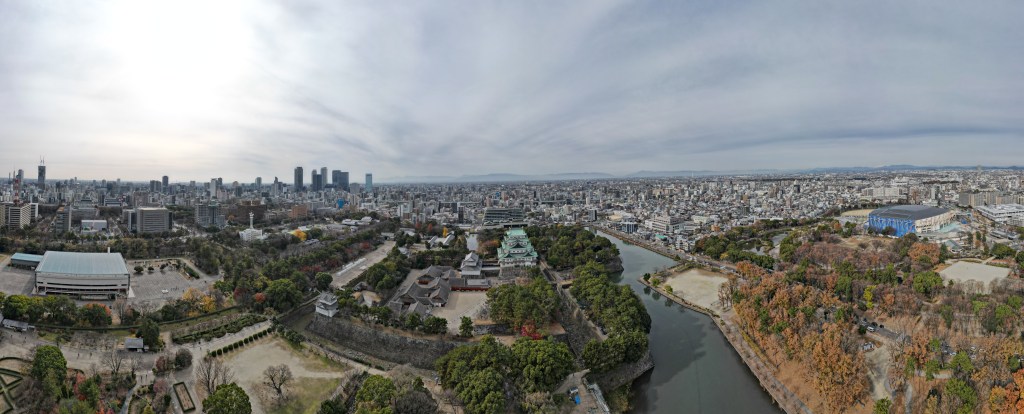
Nagoya Castle
The castle was completed in 1612 and its keep was the first castle building in Japan to be designated a National Treasure. It burned in 1945 and was rebuilt in concrete in 1959. That reconstruction is now closed: the keep has failed seismic standards and cannot be entered, and the city has not settled on a timetable for a wooden reconstruction. Do not plan a trip around climbing it.
What remains is still worth several hours. The Hommaru Palace was the residence of the Owari lords and later the shogun’s lodging, finished in 1615, burned in 1945 and reconstructed with original techniques and materials between 2013 and 2018. The rooms are laid out with painted sliding screens, gilt fittings and cypress floors, and the route through the building shows the sequence from public reception rooms to private chambers. Admission to the palace is included in the castle ticket, but you must enter by 16:00.
The castle grounds cost 1,000 yen for adults, up from 500 yen on 1 October 2026, and are free for junior high school students and younger. The grounds open 9:00 to 16:30 and close from 29 December to 1 January. A combined ticket with the Tokugawa Garden is 1,040 yen, which is only worth it if you were going to the garden anyway, and the garden is a separate 20-minute bus ride.
Allow an hour to 90 minutes. The route from the main gate to the palace takes about 10 minutes on foot, and the stone walls, the moat and the rebuilt turrets are along the way. The castle is a 5-minute walk from Shiyakusho Station on the Meijo subway line, or a 15-minute walk from Nagoya Station if you do not mind the office district.
Nagoya meshi: what to eat and why
Nagoya food is built on soybean miso, a dark, salty fermented paste that the region has made for centuries. It appears in miso katsu, miso nikomi udon and miso oden, and it gives the food a depth that the rest of Japan often finds too strong. The other local staple is eel, and the city has its own way of serving it.
Hitsumabushi
Hitsumabushi is grilled eel cut into strips and served over rice in a lacquered box. It is eaten in three stages: first plain, then with chopped spring onion, wasabi and nori, and finally with dashi or green tea poured over the rice. The style is said to have begun in Nagoya in the late Meiji period, when a restaurant delivered eel to a group by mixing chopped eel through a box of rice. The tare in Aichi is based on tamari soy sauce, darker and thicker than the Kanto version, which is why the rice still tastes of eel when the dashi is added.
Atsuta Horaiken, near Atsuta Shrine, is the best-known house and has been running since 1873. Expect a queue at lunch and a price that reflects eel rather than the setting. Many other restaurants serve it, including in the station area, and the box comes in several sizes; the middle size is enough for one hungry person.
Miso katsu
Miso katsu is a breaded pork cutlet with a thick miso sauce poured over it or served on the side. The sauce is a blend of soybean miso, sugar, mirin and other seasonings, and each shop guards its ratio. The dish spread after the war, and the story most often told is that customers at a street stall dipped skewered cutlets into the pot of miso used for doteni, a braised beef dish. Yabaton, founded in 1947, is the chain most visitors try; its main shop is in Osu and there are branches in the station.
Tebasaki
Tebasaki are chicken wings, fried and coated in a sweet-spicy tare with pepper and sesame. They are a drinking food, sold by the plate of five or so, and the local chains make a point of serving them with beer. The origin story is a ordering mistake at a izakaya in the 1960s, when the kitchen received wings instead of the usual cut and fried them the same way. Yamachan is the biggest chain and the one with the peppery version most visitors know.
Miso nikomi udon and ankake spaghetti
Miso nikomi udon is a clay pot of thick, hard udon simmered in soybean miso broth with chicken, egg and vegetables. The noodles are made with water rather than salt so they hold up to long cooking, and they stay firm in a way that surprises people used to soft udon. The style was developed at a shop in Osu in the Taisho period.
Ankake spaghetti is the city’s own pasta: noodles with a thick, starchy sauce of vegetables, ham and sometimes egg, usually with a little spice. It appeared in the postwar years and is served in old-fashioned coffee shops and Western restaurants rather than Italian places. It is a good cheap lunch and a strange one, in the best way.
Kishimen, tenmusu and coffee shop breakfast
Kishimen are flat, wide noodles served in a soy-based broth, chewier and broader than udon. Tenmusu are small rice balls wrapped in nori with a shrimp tempura inside, invented in the region and sold at stations. And the local coffee shop culture is serious: Komeda, which started here, serves a morning set with a drink that includes toast and an egg, and the older shops in Osu do the same for less.
Atsuta Shrine
Atsuta Jingu is one of Japan’s most important shrines and holds the Kusanagi sword, one of the imperial regalia. The sword is not displayed, and the inner shrine is closed to the public, but the grounds are a dense, quiet forest of old trees and the approach is one of the best walks in the city. Entry is free, and the grounds are open from early morning until evening.
Two museums sit inside the precinct. The treasure hall displays swords, mirrors and documents from the shrine’s collection, and the Kusunagi-kan, opened in 2021, shows about 450 blades from the shrine’s holdings, rotated monthly. Each costs 500 yen for adults, and a combined ticket is 800 yen; both close at 16:30 with last entry at 16:00. The shrine is a 3-minute walk from Meitetsu Jingu-mae Station, or 7 minutes from the Meijo subway line’s Jingu-nishi or Temmacho stations.
Osu: temple, market and shopping streets
Osu Kannon is a Shingon temple founded in 1324 and moved to its present site in 1612 when the castle was built. The hall is free to enter, open from 6:00 to 19:00, and the temple holds antique markets on the 18th and 28th of each month. It is a working temple rather than a monument, and the smell of incense and the sound of the taiko drum at the entrance are part of the visit.
The streets around it form Osu Shopping District, about 1,200 shops spread over a grid of arcades and lanes. It is the most interesting shopping area in the city: second-hand clothes, electronics, street food, vintage cameras, Brazilian groceries and cheap cosmetics, all mixed together. It is also where many of the city’s immigrant communities are based, which is why the food is more varied than the rest of Nagoya. The arcades are covered, so it works in rain.
Sakae and the tower
Sakae is the nightlife and shopping district east of the station, built around Hisaya Odori Park. The Chubu Electric Power MIRAI Tower, the old TV tower, stands in the middle of the park; it is a designated Important Cultural Property and has an observation deck at 90 m plus an outdoor balcony at 100 m. Admission is 1,300 yen for adults and 800 yen for school-age children, open 10:00 to 21:00 with last entry 20 minutes before closing. The lower floors are free and hold shops and cafes.
Next to it, Oasis 21 is a public space with a glass water roof and a bus terminal underneath. The roof is free, and at night it reflects the tower and the surrounding buildings. It is a good place to sit after dinner, and the park is where the city holds its winter illumination.
Ghibli Park
Ghibli Park opened in 2022 inside the Expo 2005 commemorative park in Nagakute, east of the city, and has five areas: the Ghibli Warehouse, Youth Hill, Dondoko Forest, Mononoke Village and the Valley of Witches. It is not a theme park with rides. It is a set of buildings and landscapes you walk through, with the warehouse holding exhibitions and the Valley of Witches holding the largest structures.
Tickets are by reservation only and go on sale two months before the visit date at 14:00 on the 10th. The premium pass, which covers all five areas and the interiors of every building, costs 7,300 yen on weekdays and 7,800 yen at weekends and holidays for adults, with children aged 4 to primary school at about half. The standard pass covers the warehouse, Mononoke Village and the Valley of Witches and costs 3,300 or 3,800 yen; the interiors of Howl’s Castle, Kiki’s house and Osono’s house need an extra same-day ticket. The warehouse has a timed entry, and the other areas do not, so plan the day around that slot.
Access is by Linimo from Fujigaoka, the eastern end of the Higashiyama subway line: 28 minutes from Nagoya Station to Fujigaoka, then 13 minutes to Ai-Chikyuhaku Kinen Koen Station. There is no dedicated car park, and the park is large, with 20 to 30 minutes of walking between the far areas. Wear comfortable shoes and allow at least four hours.
Industrial museums
The Toyota Commemorative Museum of Industry and Technology occupies a red-brick spinning mill near Nagoya Station and traces the company from looms to cars. The textile machinery is demonstrated by staff, and the automobile section has a working production line and hands-on exhibits. Admission is 1,000 yen for adults, 500 yen for university students and 300 yen for high school students, open 9:30 to 17:00 with last entry at 16:30, closed on Mondays. It is a 3-minute walk from Meitetsu Sako Station.
The SCMaglev and Railway Park in Kinjo-futo is the JR Central museum, with locomotives, shinkansen and the maglev test train, plus a simulator that needs a separate reservation. Admission is 1,200 yen for adults, 500 yen for school-age children, open 10:00 to 17:30, closed on Tuesdays. It is reached by Aonami Line from Nagoya Station to Kinjo-futo, about 25 minutes.
Both museums are good in bad weather and both are more interesting for adults than the names suggest. Do not try to do both on the same day; each takes two hours at least, and they are in opposite directions from the station.
Day trips from Nagoya
Inuyama is 30 minutes away on the Meitetsu line and has a National Treasure castle, one of only five in Japan, plus a riverside walk and a cormorant fishing season in summer. Gifu is 20 minutes by JR and has a hilltop castle and a paper lantern industry. The Kiso Valley, with the post towns of Magome and Tsumago, is about 90 minutes by train and bus and makes a full day. Ise Jingu, the most important shrine in Japan, is about 90 minutes by Kintetsu limited express and deserves a day of its own.
Getting there
Nagoya Station is on the Tokaido Shinkansen, and the city is an easy stop between Tokyo and Osaka. From Tokyo, the Nozomi takes about 1 hour 40 minutes and costs 11,300 yen for a reserved seat or 10,560 yen unreserved. From Shin-Osaka, it takes about 48 minutes and costs 6,680 yen reserved or 5,940 yen unreserved. Note that JR Central has announced higher reserved-seat fares from July 2027, so the numbers will change.
Chubu Centrair International Airport sits on an artificial island south of the city. Meitetsu’s μ-SKY runs to Nagoya Station in about 28 minutes for 1,430 yen, including the 450 yen reserved-seat charge; ordinary express trains take 40 to 50 minutes for 980 yen. The airport bus to Nagoya Station takes about an hour and costs 2,000 yen, which is only worth it if you have heavy luggage.
Getting around
The subway is the way to move. Six lines cover the city, and the Meijo Line loops around the centre, connecting Nagoya Station, Sakae, Shiyakusho and Kanayama. Fares start at 210 yen and rise with distance; a one-day pass is available at ticket machines and pays off after four or five rides. The Higashiyama Line connects Nagoya Station with Sakae and Fujigaoka for Ghibli Park.
Walking works within each district but not between them: Nagoya Station to Sakae is about 25 minutes, and the castle is another 15 minutes beyond that. The Me-guru sightseeing bus loops the main sights, but it runs infrequently and is slower than the subway for most trips. Taxis are plentiful and metered.
Where to stay
Nagoya Station is the practical choice: hotels in every price band, the shinkansen, the subway, and a dense grid of restaurants and shops in the station complex. Sakae is better for nightlife and for the park, with more bars and a younger crowd. Kanayama is a quieter alternative one stop south, with good connections to the airport line and the JR lines, and cheaper hotels.
For Ghibli Park, staying near Fujigaoka shortens the morning trip, but there are few hotels there and the city centre is more convenient for everything else.
Best time to visit
Spring and autumn are the best months. The castle grounds have cherry trees, and the parks are pleasant from late March to May; autumn colours come in late November. Summer is hot and humid, with temperatures above 35 degrees in August, and the Nagoya sumo tournament in July fills the hotels. Winter is mild and dry, with the illuminations in Sakae and Hisaya Odori from November.
The city’s biggest festival is the Nagoya Festival in October, with a parade of samurai and a procession of the three heroes of the region. Atsuta Shrine’s festival is on 5 June, and the World Cosplay Summit takes over Sakae in summer. All three are crowded; book trains and hotels early.
Suggested itineraries
One day: Nagoya Castle and the Hommaru Palace in the morning, then subway to Atsuta Shrine and lunch at a hitsumabushi restaurant. In the afternoon, Osu Kannon and the shopping streets, then Sakae for the tower at dusk and dinner. This is a full day with about 10 km of walking.
Two days: keep the first day as above. On the second, choose either Ghibli Park (book tickets two months ahead) or the two industrial museums, then finish with miso katsu or tebasaki near the station.
Three days: add a day trip to Inuyama or Ise. Inuyama is the easier half-day; Ise needs an early start and a full day.
Practical tips
- The castle keep is closed; the palace is the reason to go.
- Castle admission rose to 1,000 yen on 1 October 2026.
- Ghibli Park sells out; book two months ahead at 14:00 on the 10th.
- Hitsumabushi queues peak at lunch; go before noon or after 13:30.
- The subway one-day pass is useful only if you ride four times.
- Nagoya Station is huge; allow 10 minutes to find the right exit.
Before you go
Prices and hours above were checked against official sources on 26 October 2026, including the Nagoya Castle site, Atsuta Shrine, the Ghibli Park ticket page, the Toyota museum, the railway museum and Meitetsu. The items most likely to move are the castle admission, the Ghibli Park ticket types, the tower’s event pricing and the 2027 shinkansen fares. Reconfirm before booking, especially for Ghibli Park, which is reservation-only.
Sources
- Nagoya Castle: admission and hours (checked 2026-10-26)
- Nagoya Castle: keep closure notice (checked 2026-10-26)
- Nagoya Castle: Hommaru Palace (checked 2026-10-26)
- Ghibli Park: ticket types and prices (checked 2026-10-26)
- Toyota Commemorative Museum: admission (checked 2026-10-26)
- SCMaglev and Railway Park: hours and admission (checked 2026-10-26)
- Aichi tourism: Atsuta Shrine (checked 2026-10-26)
- Aichi tourism: Kusunagi-kan (checked 2026-10-26)
- Nagoya meshi: origins of hitsumabushi, miso katsu and tebasaki (checked 2026-10-26)
- Meitetsu: airport train and bus access (checked 2026-10-26)
Explore More of Japan
- Inuyama Castle Travel Guide — a National Treasure castle 30 minutes away
- Gujo Hachiman Travel Guide — water streets and a summer dance
- Gero Onsen Travel Guide — one of Japan’s three famous baths
- Magome and Tsumago Travel Guide — the Kiso Valley post towns


Leave a Reply