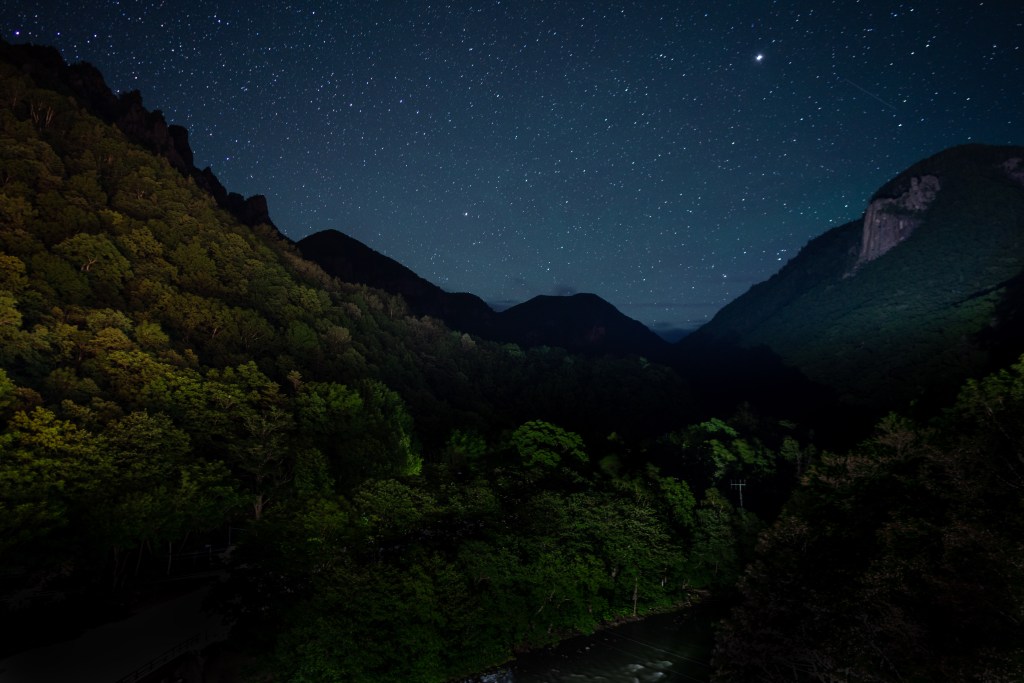
Sounkyo Gorge is a 24-kilometre cut through the western edge of Daisetsuzan National Park, where the Ishikari River runs between welded-tuff cliffs that rise as much as 200 metres. Two celebrated waterfalls pour through those walls, a ropeway climbs to a 1,984-metre summit, and a compact hot-spring village sits at the bottom. It is one of the few places in Hokkaido where a major gorge, an alpine flower zone, a developed onsen town and Japan’s earliest autumn colour can all be reached in a single trip.
That compression is both the appeal and the trap. Sounkyo is often sold as a quick stop between Asahikawa and the Okhotsk coast, and many visitors give it two hours: a photo of the waterfalls, a ride on the ropeway, a bowl of ramen, and back on the bus. That schedule works only if the weather cooperates and you accept that you will see a fraction of the place. With one overnight stay, the gorge begins to make sense. With two, you can hike Kurodake properly, photograph the falls in soft morning light, and use the onsen the way it was meant to be used.
This guide is built around verified 2026 information: the new Kurodake gondolas that entered service in June 2026, the current ropeway and lift fares, the 2026 bus timetable, the 51st Ice Waterfall Festival and the already-announced 52nd edition, the 2026 autumn season as it actually unfolded, and the closures and access rules that catch travellers out. It covers what is worth your time, what is not, and how to see the gorge without a car.
Sounkyo at a glance
- Where: Kamikawa town, Kamikawa subprefecture, central Hokkaido. About 66 km east of Asahikawa and 205 km from Sapporo.
- Park: Daisetsuzan National Park, 226,764 hectares, Japan’s largest national park.
- Gorge: About 24 km long, with cliffs up to 200 m high.
- Main waterfalls: Ginga Falls (about 120 m) and Ryusei Falls (about 90 m).
- Ropeway: 1,650 m line from 670 m to 1,300 m, about 7 minutes. Two new 85-passenger gondolas began service on 27 June 2026.
- Summit: Kurodake, 1,984 m. The hike from the 7th Station takes about 1 hour 20 minutes up.
- Onsen: Simple hot spring at about 670 m; the village is small and walkable.
- Best months: June to October for hiking and waterfalls; late September to early October for autumn colour; late January to early March for the Ice Waterfall Festival.
- Car-free? Yes, but with compromises. The main bus reaches the village; the waterfalls and Obako need a taxi or the seasonal Daisetsuko bus.
- Do not miss: The Sobakudai viewpoint above the falls, the 5th Station nature terrace, and a soak at Kurodake-no-yu.
Last updated: 26 October 2026. Prices, timetables and event dates change; reconfirm before you travel.
Where Sounkyo is, and why it feels remote
Sounkyo is not a town in its own right. It is a hamlet inside Kamikawa, a large and thinly populated municipality that stretches from the Ishikari plain into the Daisetsuzan range. The village sits at roughly 670 metres above sea level, at the mouth of the gorge, and the road through it is Route 39, the same road that continues north-east to Obako, Daisetsuko and eventually the Okhotsk coast.
The nearest city is Asahikawa, 66 km west. That sounds close, and by Hokkaido standards it is, but the bus takes about two hours because Route 39 climbs steadily through Kamikawa basin and then enters the gorge. From Sapporo, the drive is roughly 205 km and takes three hours in good conditions. From Asahikawa Airport, allow 35 to 45 minutes to Asahikawa Station by shuttle bus, then two hours by road to Sounkyo.
This is not a place you pass through by accident. The gorge is a dead-end for most travellers: Route 39 continues north, but the road is narrow, the bus service is thin, and the nearest train station, Kamikawa, is 35 minutes away by bus. That isolation is the point. It also means you should arrive with a plan for food, cash and weather, because the village has only a handful of shops and restaurants.
The geography is simple to picture. The Ishikari River flows north-east through a deep, straight trench. The village occupies a small flat shelf on the river’s west bank. The Kurodake ropeway base station is at the southern end of the village. The waterfalls are 4 to 5 km south-west along Route 39. Obako is about 12 km further north-east. Beyond that, the road climbs to Daisetsuko and the high plateau, where the landscape opens into bog, pine and distant peaks.
How the gorge was made: welded tuff, columnar joints and a river
The cliffs at Sounkyo are not granite, and they are not the layered sedimentary rock you might expect from a river canyon. They are welded tuff: volcanic ash and pumice ejected in enormous pyroclastic flows, hot enough to fuse into a solid rock as they settled. The source was the Ohachidaira caldera, a large volcanic depression in the Daisetsuzan massif. The eruption that produced the Sounkyo tuff occurred roughly 30,000 years ago.
As the tuff cooled, it contracted and cracked into the regular polygonal columns that give the gorge its distinctive organ-pipe appearance. The Ishikari River, cut off from its old course by the volcanic deposits, began to erode a new channel through the soft but coherent rock. Over tens of thousands of years it has sawed a trench about 24 km long and, in places, 200 metres deep. The result is a landscape that looks carved and constructed at the same time.
Columnar jointing is often associated with basalt lava flows, as at the Giant’s Causeway or Iceland’s Svartifoss. Sounkyo is different: the columns are in tuff, and the rock is lighter, rougher and more easily eroded. You can see the difference in the way the cliffs fail. Instead of clean vertical faces, the gorge has gullies, ledges, scree fans and overhangs, with columns exposed where the river has recently undercut them.
The waterfalls are part of the same system. Ginga and Ryusei fall from hanging tributary valleys that were left perched above the main river as it cut down. The hard caprock at the lip of each fall resists erosion; the softer rock beneath wears away, so the falls retreat upstream over time. This is a young, active landscape, not a finished monument. Rockfall is common, which is why some paths and the old Kobako trail are closed.
Daisetsuzan National Park was designated in 1934, among Japan’s first national parks. At 226,764 hectares it is the largest in the country, a volcanic massif of high plateaus, cirques, fumaroles and alpine meadows rather than a single peak. Sounkyo is its north-western gateway, and Kurodake is the most accessible of its summits. The park’s name, Daisetsuzan, means “great snowy mountains”, a name that fits the long winter more than the brief green summer.
Ainu country and the making of an onsen town
Before Sounkyo became a resort, this was Ainu land. The Ainu name often cited for the area is Sounbetsu, meaning a river with many waterfalls, and the wider Daisetsuzan landscape appears in Ainu cosmology as Kamui Mintara, the garden of the gods. The Ainu did not treat the gorge as empty wilderness. It was part of a travelled and named country, with routes between the Ishikari basin and the interior, and with waterfalls, rock formations and hot springs understood as places of spiritual significance.
The modern resort story begins in 1900, when a local hunter named Shioya Suijiro noticed steam rising at the foot of Kurodake. A simple hot-spring hut followed, and by 1915 there was a mountain lodge. In August 1921 the author and poet Omachi Keigetsu visited and gave the place the name Sounkyo, drawing on the Chinese image of clouds stacked in a gorge. The name stuck. Two years later, in 1923, the first full-scale hotel, Sounkaku, opened; it remains the village’s oldest hotel. A new 22-room annex, with an open-air bath in every room, is scheduled to open in January 2028, with a restaurant building to follow by 2030. Construction nearby may affect some views, so ask when you book.
The 1920s and 1930s turned Sounkyo into a fixture of Japanese travel writing and landscape photography. The gorge was celebrated for its scale, its autumn colour and its hot springs, and the new national park status in 1934 gave it a national stage. The Kurodake ropeway opened in 1967, making the alpine zone accessible to day visitors, and the Ice Waterfall Festival began in 1976 as a way to bring travellers to the village in the dead of winter.
That history matters for expectations. Sounkyo is not a preserved historic village. It is a twentieth-century resort built around a natural spectacle, with a strip of hotels, a visitor centre, a ropeway and a few shops. The architecture is mostly utilitarian, and the village can feel quiet, even slightly worn, outside peak season. What makes it worth staying is not the streetscape. It is the combination of the gorge, the onsen and the mountain, all within a few minutes of each other.
There is also a harder history to acknowledge. The Ainu were dispossessed of land and livelihoods through Meiji-era policies, and the tourism narrative around places like Sounkyo has often reduced Ainu culture to a decorative element. If you visit the Ainu-related displays or attend a performance, treat it as a living culture with its own politics and voice, not as a photo opportunity. The Kamikawa area is part of the Japan Heritage story “Ainu People Living with Kamuy”, and local organisations are working to present that heritage with more accuracy than older guidebooks did.
Ginga and Ryusei: the two waterfalls that define the gorge
The waterfalls are the reason most people come, and they deserve more than the ten minutes most tour buses allow. Ginga Falls (Milky Way Falls) and Ryusei Falls (Meteor Falls) sit almost opposite each other on Route 39, about 4.5 km south-west of the village. They are both counted among Japan’s Top 100 Waterfalls, and they are deliberately paired: Ginga is slender and feminine, Ryusei is broad and forceful.
Ginga Falls drops about 120 metres in several thin threads of water, spreading as it falls and often disappearing into mist before it reaches the bottom. The name comes from the way the threads look like a river of stars. In early summer, when snowmelt is high, the falls are fuller and louder; in late summer, they thin into delicate lines. After heavy rain they turn brown with sediment, which is dramatic but less photogenic. In winter they freeze into blue-white curtains, though access and safe viewing depend on snow conditions.
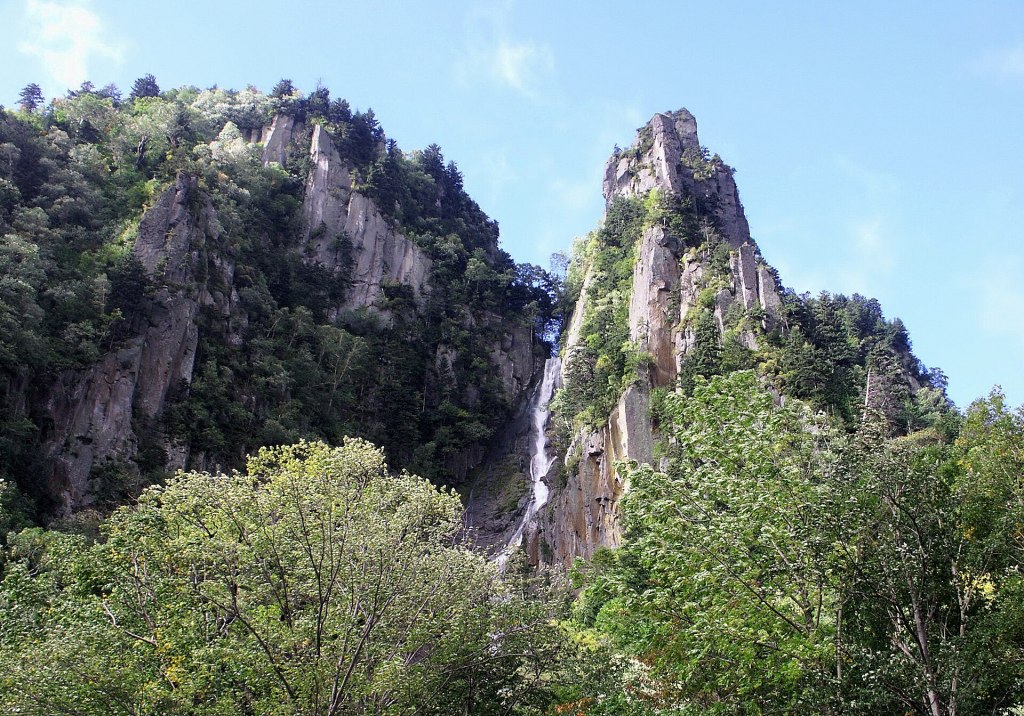
Ryusei Falls is the more obviously powerful of the two: a single cascade of about 90 metres, with a heavy central column and a spray plume that can soak the viewing platform. The name means “meteor”, and the comparison is to a shooting star rather than a steady stream. The best light is in the morning, when the sun reaches the gorge wall from the east; by mid-afternoon the falls can fall into shadow, and in autumn the contrast becomes flat.
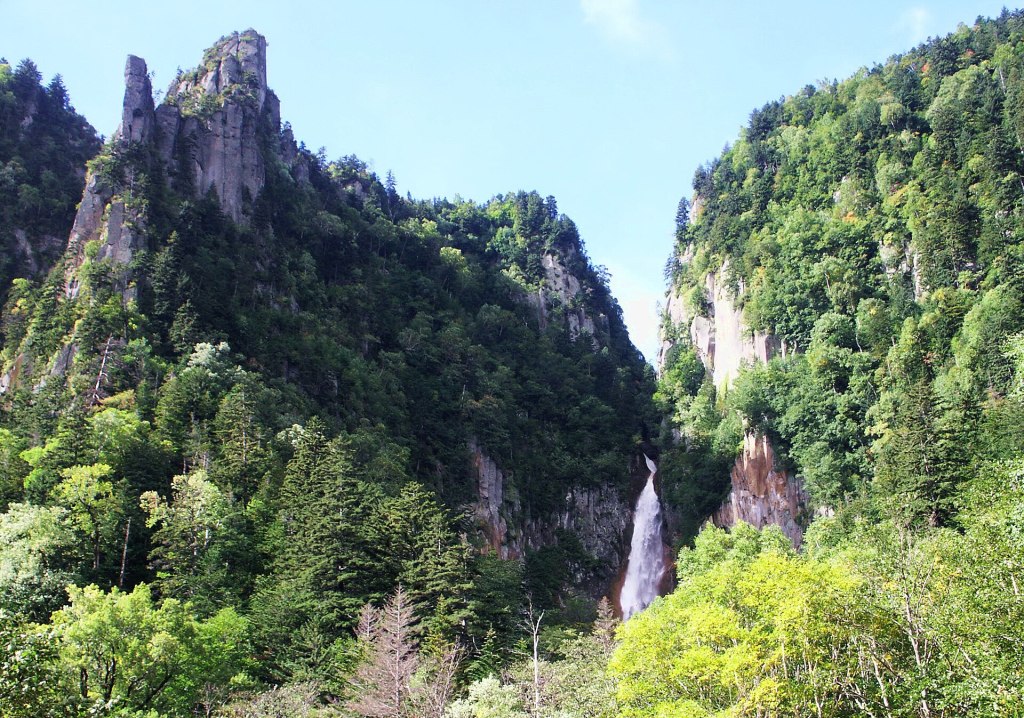
Most visitors view the falls from the road-level platforms, which are a short walk from the parking area. The better view is from Sobakudai, a small viewpoint on the opposite side of the road, reached by a signed trail that climbs for about 20 minutes through forest. The platform sits at roughly 788 metres and looks across the gorge, allowing you to see both falls at once. The climb is short but steep in places, with roots and uneven steps; trainers are fine in dry weather, but the trail is not suitable for wheelchairs or strollers.
There is a second, lesser-known viewpoint further up the old road, but it is not maintained and the footing is poor. Do not scramble over barriers for a better angle. The gorge walls are loose, and rescue in this section is not quick.
Practical points: the falls area has free parking and toilets, but services are seasonal and limited. The road has no pavement for much of the walk from the village, and the shoulder is narrow, so walking from the onsen to the falls is not as pleasant as it looks on a map. If you do not have a car, the seasonal Daisetsuko bus stops at Takimidai for about ten minutes, which is enough for the road-level platforms but not for Sobakudai. A taxi from the village takes about ten minutes and is the simplest car-free option; book it through your hotel, because there is no taxi rank.
Obako, Kobako and the road north
Obako is the second major cliff section of the gorge, about 12 km north-east of the village on Route 39. The rock here is the same welded tuff, but the river has cut a narrower, more angular channel, and the cliffs rise in sheer faces above a small parking area. It is a five-minute stop for most drivers, and that is about right: a short path leads to a viewing platform, the river slides past below, and the scale is impressive without requiring a hike.
The name Obako means “large box”, a reference to the box-like shape of the gorge section; Kobako, “small box”, is the narrower section downstream. Kobako has been closed since 1995 because of rockfall risk, and the closure is not a suggestion. Do not cross barriers or follow informal paths down to the old trail. The rock is fractured, and the river level can rise quickly after rain.
Obako is worth combining with the waterfalls if you have a car, and it is also the turning point for the seasonal Daisetsuko bus. The bus stop is called Obako Iriguchi, a short walk from the parking area. The cliffs are at their best in the morning, when the sun grazes the upper walls, and in autumn, when the maples and rowan on the ledges turn red and yellow against the grey rock. In winter the road is usually open but can close after heavy snow; check the road condition before setting out.
Beyond Obako, Route 39 climbs through Daisetsuko to the high plateau. The landscape changes abruptly: the gorge walls fall away, the forest thins, and you enter a world of bog, dwarf pine and volcanic peaks. This is not a scenic drive in the alpine sense; it is a working road through a remote national park, with long stretches without services. If you continue, fill up with fuel in Kamikawa or Asahikawa first.
The Kurodake Ropeway: what it does and does not do
The Kurodake Ropeway is the northernmost ropeway in Japan. It runs 1,650 metres from the Sanroku Station at 670 metres to the 5th Station at 1,300 metres, climbing through the gorge in about seven minutes. The line is not a summit lift. It gets you to the lower alpine zone; the summit is another 684 metres above you, reached by a chairlift and a hike.
In June 2026 the ropeway replaced its two gondolas for the first time in about 40 years. The new cabins carry 85 passengers each and have large panoramic windows, which makes the climb more comfortable and considerably better for photography than the old cars. The line still runs on a 20-minute interval, and it still closes in high wind, heavy snow or lightning. Check the live camera and operation status before you buy a ticket, especially in autumn and winter.
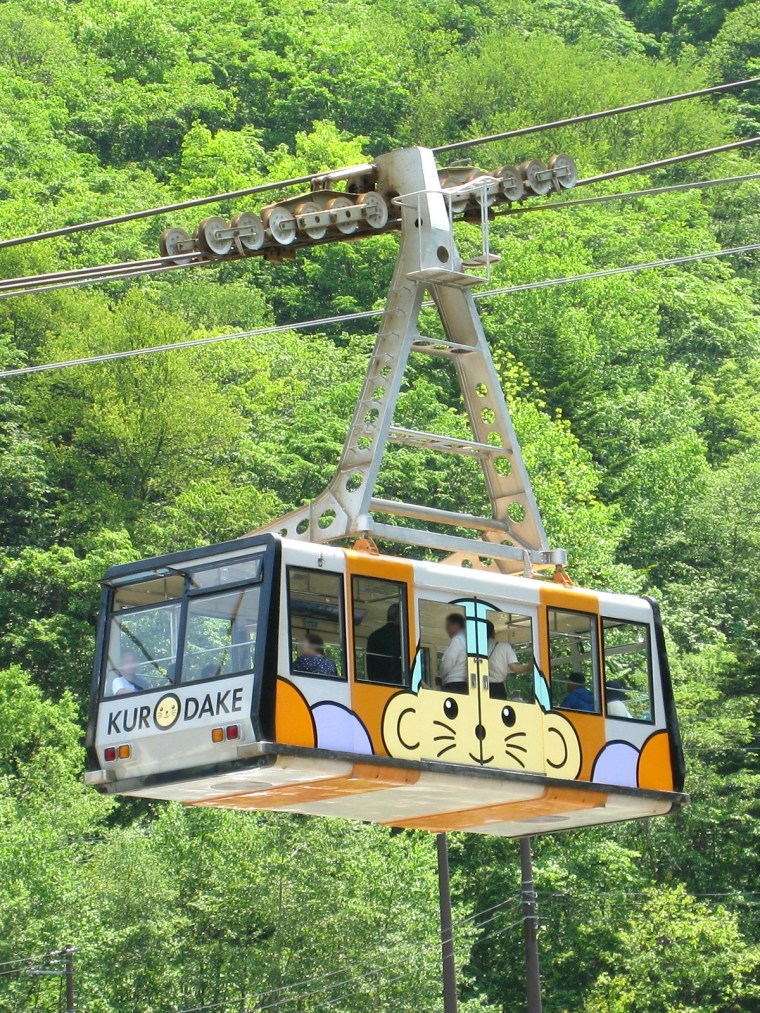
Fares as of October 2026: the adult round trip is ¥3,000, one way ¥1,800; children are ¥1,500 round trip and ¥900 one way. The chairlift from the 5th Station to the 7th Station is ¥1,200 round trip or ¥800 one way for adults, ¥600 round trip or ¥400 one way for children. A combined ropeway-plus-lift round trip is ¥3,900 for adults and ¥1,950 for children. The operator has announced that fares will change on 1 June 2027, with the new prices to be published on its website, so treat these figures as current rather than permanent.
The 5th Station is worth more time than most people give it. There is a 360-degree nature terrace, a short loop trail that takes about 30 minutes, toilets, and a rest area. On a clear day you can see the gorge, the Daisetsuzan plateau and, in the distance, the Tokachi range. The terrace is free once you have paid for the ropeway, and it is the best accessible alpine view in the area: no hiking required. Be aware that neither station has an elevator. There are stairs to the ropeway platform, and staff can operate a stair lift for wheelchair users; the rooftop terrace is reached by a steep staircase and is not step-free. The 5th Station loop trail is partly wheelchair-accessible, and the station has a map at the counter. The summit trail is not accessible.
The ropeway operates in winter for skiing and snowboarding. The Kurodake ski area usually opens in early December and runs until early May, with a day pass around ¥5,200 and hours from 09:00 to 15:20. This is not a resort in the Niseko sense: the terrain is steep, ungroomed in places, and aimed at experienced riders. If you are a beginner, do not treat it as a ski holiday. The ropeway is also a way to see the frozen gorge and the snow-covered peaks without skiing, but the 5th Station is cold and windy, and the last descent is early.
In 2026 the ropeway is closed for maintenance from 9 to 30 November, and the chairlift closes for the season from 16 October, reopening for winter on 1 December. Similar dates are likely in future years, but the exact window changes. If your trip falls in late November, assume the ropeway will be shut and plan the waterfalls and onsen instead.
Hiking Kurodake: the 1,984-metre summit
The Kurodake hike is one of the best half-day mountain walks in Hokkaido, and it is achievable for most reasonably fit travellers. The route has three stages: ropeway to the 5th Station, chairlift to the 7th Station at 1,520 metres, then a trail to the summit at 1,984 metres. The elevation gain from the 7th Station is 464 metres, and the official time is about 1 hour 20 minutes up and 1 hour down. Add time at the top, and budget three to four hours from the base station.
The chairlift takes about 15 minutes in summer and 9 minutes in winter. It is a open-air double chair, so you will be exposed to wind and rain; a waterproof shell is essential even on a sunny morning. From the 7th Station, the trail climbs through alpine scrub and scree, with wooden steps and stone staircases in the steeper sections. There is no technical climbing, but the upper section is rocky and can be slippery after rain. Trail shoes are acceptable in dry weather; boots are better.
The reward is a summit view that takes in the Daisetsuzan plateau, the Tokachi range, and on clear days the Okhotsk Sea. The summit itself is a broad, rocky ridge rather than a sharp peak, with several viewpoints and a small shrine. In July and August the alpine flowers are the main event: Dicentra peregrina (komakusa), Campanula lasiocarpa, Anemone narcissiflora and dozens of others bloom in sequence, with the peak usually from mid-July to late August. The flowers are fragile and strictly protected; do not pick them or step off the trail for a photo.
Snow can persist in gullies until early July, and the first autumn frosts arrive in late August. In early summer, carry microspikes or at least trekking poles; in autumn, add a warm layer, gloves and a hat. The weather changes fast. Kurodake is only 1,984 metres, but it is exposed to the full force of the Siberian air mass in winter and to sudden thunderstorms in summer. Turn back if cloud descends, lightning approaches, or the wind makes the ridge unsafe. There is no shelter above the 7th Station.
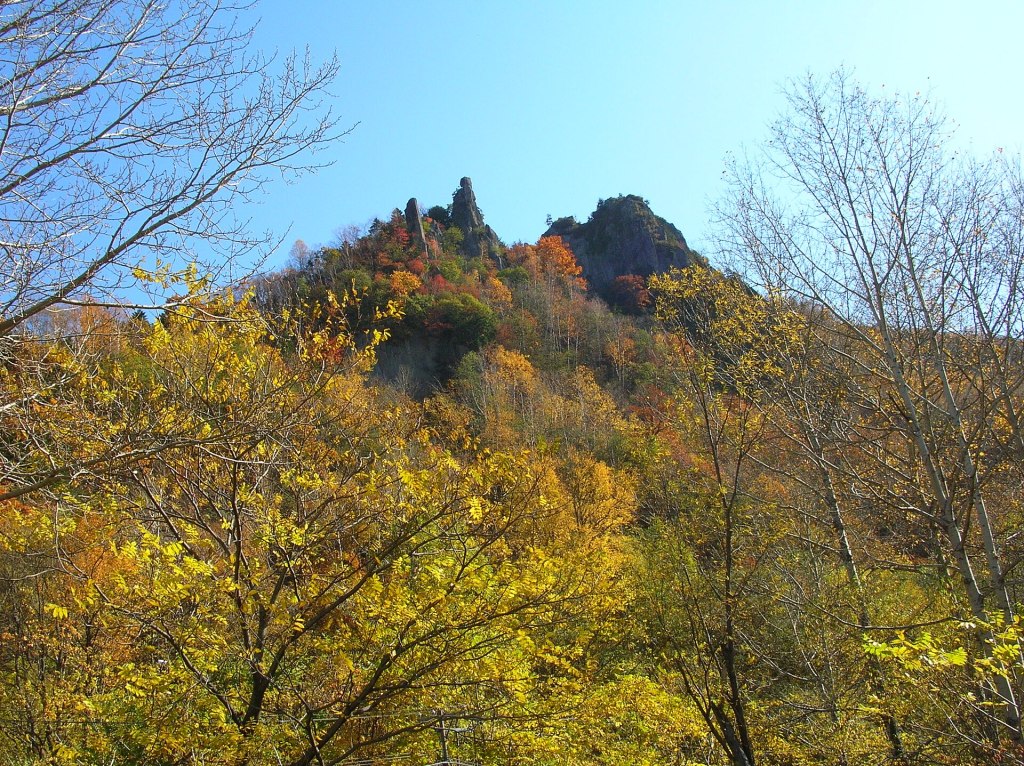
Autumn colour on Kurodake starts at the summit in late August and descends in waves. The 7th Station and the upper trail usually peak in mid to late September, while the 5th Station and the village peak in early October. This is one of the earliest autumn displays in Japan, and it is the reason the ropeway queues can be long on September weekends. Arrive at the base station before 08:30 if you want to beat the groups.
For a shorter outing, the 5th Station loop is about 30 minutes and gives a taste of the alpine zone without the climb. For a longer day, continue from the Kurodake summit along the plateau towards Hakuun-dake or Midori-dake, but only if you have a proper map, experience and a clear weather window. The Daisetsuzan traverse is a serious mountain route, not a sightseeing walk.
Other trails in the area include the Momijidani path, a 700-metre walk from the village to Momiji Falls (about 30 minutes one way), and the old promenade along the Ishikari River. The Momijidani path is popular in autumn and is a good low-effort alternative when the ropeway is closed. The Ginsendai trailhead, on the Akadake side of the park, is a different access point and requires a car or the seasonal shuttle.
Sounkyo Onsen: hot springs at the mouth of the gorge
Sounkyo Onsen is a small village of hotels and pensions strung along Route 39 at the mouth of the gorge. It is not a large resort: you can walk from the ropeway station to the far end of the village in about 15 minutes. That compactness is a virtue. You can hike in the morning, soak in the afternoon, and walk to dinner without thinking about transport.
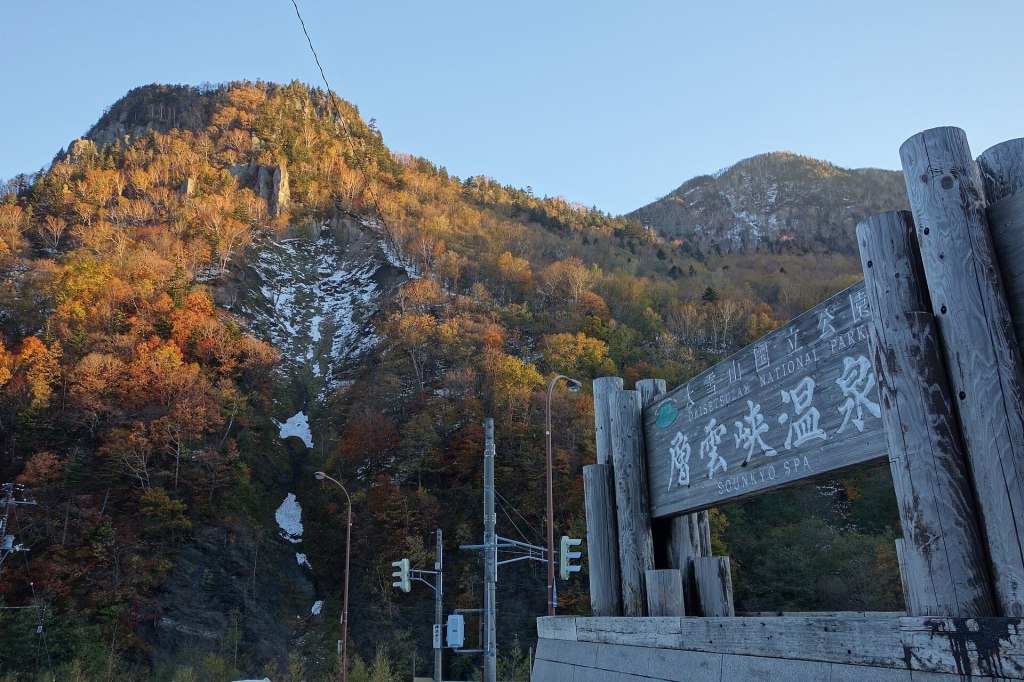
The water varies by bath. The town classifies the public Kurodake-no-Yu bath as a simple hot spring, weakly alkaline, hypotonic and high temperature. Several hotels have their own springs and describe them differently: Hotel Kumoi, for example, advertises a 100% free-flowing simple sulfur spring, while Gensenkaku mixes four sources and seven outlets to produce a weakly alkaline, hypotonic, neutral high-temperature bath. “Simple” is a technical classification, not a judgment: it means the water has relatively low dissolved solids, which makes it gentle on the skin and suitable for a long soak. If a particular spring type matters to you, ask the hotel before booking; not every bath in every hotel is the same.
The public day-use bath is Kurodake-no-Yu, a short walk from the ropeway station. It has indoor and outdoor baths and a free footbath outside. Hours are 10:00 to 22:00 from May to October and 11:00 to 21:30 from November to April, with last entry 30 minutes before closing. The adult fee is ¥800 and the child fee ¥400 according to the town’s facility page, though a separate town page still lists ¥600 and ¥300; bring cash and confirm at the door. Towels are available for purchase or rental, and there is no need to bring soap from your hotel unless you are particular about it.
Some hotels open their baths to day visitors, usually in the afternoon and often with a fee. Availability changes with occupancy and season, so call or ask at the front desk rather than assuming. If you are staying overnight, your hotel bath is included, and the best time to use it is usually early morning, when the day visitors have gone and the steam is thick.
Onsen etiquette is straightforward but worth repeating. Wash thoroughly before entering the bath, keep your hair out of the water, do not wear a swimsuit, and keep voices low. Tattoos are still restricted at many Japanese baths, including some in Hokkaido; if you have visible tattoos, ask in advance or book a room with a private bath. Children should be supervised, and anyone who has been drinking should not bathe.
The village also has a free footbath near the ropeway station, which is a good stop while waiting for a bus. In winter, the combination of hot water and cold air is the point: the bath is not just a way to clean up after hiking, it is the evening’s entertainment.
The Sounkyo Ice Waterfall Festival
The Sounkyo Ice Waterfall Festival (Hyobaku Matsuri) is the village’s winter anchor. It began in 1976, when local hoteliers and young people, advised by the sculptor Takemoto Toshihiro, built ice structures on the Ishikari riverbed to give winter visitors a reason to stay. Fifty years later it is one of Hokkaido’s three great winter festivals, and it has been recognised as a Japan Night View Heritage site for its illuminated ice.
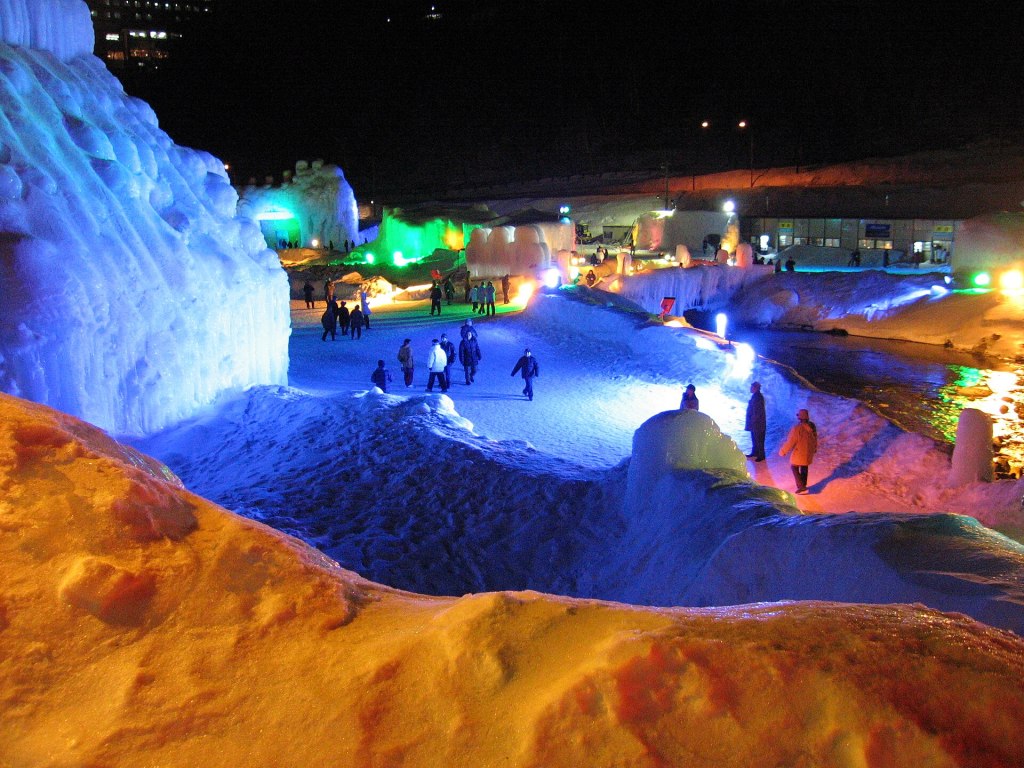
The 51st festival ran from 24 January to 8 March 2026. The 52nd is already scheduled for 23 January to 7 March 2027. The site is a temporary village of about 30 ice structures on the riverbed, including a main ice tower modelled on Kurodake, a roughly 100-metre tunnel, an ice shrine, a slide and a small bar. The largest structures exceed 10 metres, and the viewing platform is about 13 metres high. In 2026 the opening hours were 17:00 to 21:30 on weekdays and 11:00 to 21:30 on weekends and holidays, with last entry at 21:15. The cooperation fee was ¥1,000 for adults and free for primary school children; the 2027 fee had not been published at the time of writing.
The atmosphere is the attraction: coloured light on blue-white ice, wood smoke, hot drinks, and fireworks at 20:30 each evening. The fireworks are short and close, reflected in the ice, and they are the moment most people remember. The site is cold, often between -10°C and -20°C, and the riverbed wind makes it feel colder. Wear insulated boots, mittens, a hat and a warm layer under a windproof shell. Hand warmers help, but they are not a substitute for proper boots.
Access is easy from the village: the site is a 10- to 15-minute walk from the main hotel strip, and there is parking for about 150 cars. From Kamikawa Station, the bus takes about 30 minutes; from Asahikawa, about two hours. The last bus back to Asahikawa leaves in the early evening, so if you want to see the fireworks you need to stay overnight or drive. Taxis are limited at night; book one in advance or stay within walking distance.
Do not expect a theme park. The site is built by hand each year, the paths are snow-packed, and some areas are uneven. It is best at night, but daytime visits are quieter and better for families with small children. The ice shrine is a particular highlight: visitors try to stick a coin to the ice for luck, a practice that is said to help with exams, money and matchmaking. It is a bit of fun, not a religious requirement.
Autumn colour: Japan’s earliest, and how to time it
Daisetsuzan is often called the place where autumn begins in Japan. The colour starts at the highest elevations in late August, when the alpine shrubs turn red and yellow, and descends through the 7th Station, the 5th Station and finally the village. In a typical year the village peaks in early October, about a month after the summit. That gradient is what makes Sounkyo special: you can see three different stages of autumn in one trip if you move up and down the mountain.
2026 was a useful benchmark. The village colour peaked in the first week of October, and by 24 October most of the maples along Route 39 were bare. The ropeway was busy on weekends throughout late September and early October, and queues at the base station can run to 30 minutes or more. If you are planning for 2027, aim for the last week of September to the first week of October for the village, and the second or third week of September for the upper mountain. These are averages, not guarantees; a warm September can delay the peak by a week, and a typhoon can strip the trees overnight.
The classic autumn circuit is the waterfalls in the morning, the ropeway at midday, and the village onsen in the afternoon. Ginga and Ryusei are framed by red and yellow maples in early October, and the Sobakudai viewpoint is the best single spot for both falls. Obako is quieter and has a different palette: the cliffs are darker, and the trees on the ledges turn earlier. The Momijidani path, a 700-metre walk to Momiji Falls, is the easiest way to see colour close to the village.
For the upper mountain, the 7th Station and the Kurodake trail are usually at their best in mid to late September. The larch turn gold, the dwarf pine turns rust-red, and the first snow can dust the summit. Check the ropeway’s live camera before committing: if the upper mountain is in cloud, the village and waterfalls are a better bet.
Autumn is also the season for the Miracle Illuminate, a digital art projection in the Momijidani area. The ninth edition ran from 13 September to 12 October 2026, from 18:00 to 21:00 with last entry at 20:30, and charged a ¥1,000 cooperation fee that included a photo umbrella. The dates and details for 2027 will be announced by the Sounkyo Tourism Association. It is a pleasant evening add-on, not a reason to plan a trip around.
Ginsendai, on the Akadake side of the park, is another famous autumn spot, but it is not in Sounkyo village. In 2026 the town ran a shuttle from the Sounkyo Visitor Center during the peak weekend of 12 to 23 September, charging ¥2,500 one way and requiring a reservation. The road is narrow and private cars are restricted during the peak. If you want to combine Ginsendai with Sounkyo, check the current shuttle rules before you go; the 2026 arrangement is a guide, not a permanent service.
Summer: waterfalls, alpine flowers and the fire festival
Summer is the most reliable season for hiking and the best time to see the gorge without snow. June is green and wet, with lingering snow on the upper trails and the first alpine flowers appearing. July and August are warmer, busier and more colourful, with the alpine flower peak from mid-July to late August. The village itself is cool: Kamikawa’s August mean temperature is 19.4°C, and Sounkyo, at 670 metres, is cooler still. Bring a light jacket even on a sunny day.
The summer event calendar centres on the Sounkyo Canyon Fire Festival (Kyokoku Himatsuri), a fire-and-drum performance that reimagines the gorge’s volcanic landscape. The 64th main festival was held on 25 July 2026, with nightly fireworks from 26 July to 15 August and the “Flame Dance” performances from 31 July to 15 August. These dates move each year, so check the tourism association’s calendar rather than booking around a fixed date.
Summer is also the season for the Daisetsuko bus, which is the only public transport to the waterfalls and Obako. In 2026 it ran from 1 July to 31 October, one round trip a day, leaving Sounkyo at 12:50 and returning at 14:00. That single departure is the key constraint for car-free travellers: you can do the ropeway in the morning, take the bus to the falls and Obako after lunch, and be back in the village by mid-afternoon. It is not enough for a long hike, but it is enough for the main viewpoints.
Rain is a real possibility in July and August, and the trails can be muddy. Waterproof boots and a rain shell are more useful than an umbrella on the mountain. Mosquitoes are present in the forest, especially near the Momijidani path; bring repellent. The gorge is also bear country, so carry a bear bell and know what to do if you meet one.
Winter beyond the festival
Winter transforms Sounkyo into a different place. The waterfalls freeze, the gorge walls hold snow, and the village becomes a base for skiing, snowshoeing and the Ice Waterfall Festival. The ropeway runs to the 5th Station, and the chairlift serves the Kurodake ski area from early December to early May. This is not a beginner’s ski resort: the slopes are steep and often ungroomed, and the lift is exposed. Experienced skiers and snowboarders will find some of the most interesting terrain in Hokkaido; beginners should look elsewhere.
For non-skiers, the winter highlights are the ice festival, the frozen falls (viewed from a safe distance), and the onsen. Snowshoe tours are available from some hotels and local guides, but they are not a substitute for avalanche awareness. Do not walk onto the river ice or climb the frozen falls; the current is strong and the ice is unstable.
Winter driving requires snow tires and experience. Route 39 is usually cleared, but heavy snow can close it, and the road to Daisetsuko is more exposed. If you are not confident driving in Hokkaido winter conditions, take the bus from Asahikawa or Kamikawa. The bus is slower but it removes the stress, and the walk from the Sounkyo bus stop to the hotels is short.
The winter light is beautiful but brief. Sunset is around 16:00 in December and January, and the temperature drops quickly after dark. Plan outdoor activities for the morning and early afternoon, and save the onsen and the ice festival for the evening. Many restaurants close early in winter, so book half-board at your hotel or eat before 19:00.
Where to eat in and around Sounkyo
Sounkyo is not a food destination. The village has a small number of restaurants, most of them attached to hotels, and the independent options are limited. That is not a reason to skip it, but it is a reason to book half-board or to set your expectations accordingly. The best meals are usually the hotel dinners: Hokkaido vegetables, local rice, salmon, pork and dairy, served as a kaiseki-style set or a buffet.
For a casual lunch, Ramen House Tozanken is the most established independent restaurant in the village, serving Asahikawa-style ramen with a pork-and-chicken stock. It is open from early May to late October, closes in winter, and is cash only. Beer Grill Canyon is a meat-and-beer restaurant with a rustic lodge feel, good for dinner after a hike; it closes on Wednesdays from November to January and in April. Taisetsu Shokudo serves rice bowls and noodles, and Taisetsu Bakery is useful for breakfast or a picnic lunch. Mountain Coffee, on the third floor of the ropeway base station, is a good spot for a coffee and a light meal while waiting for the weather to clear; it is closed on Mondays and Tuesdays.
In Kamikawa, the roadside station Kamikawa Daisetsu has a restaurant and a shop selling local produce, and it is a practical stop if you are driving from Asahikawa or waiting for the bus. The town is also known for its rice, and for mushrooms and mountain vegetables in autumn. If you are self-catering, stock up in Asahikawa; the village convenience store is small and not a substitute for a supermarket.
Dietary restrictions are manageable but require notice. Vegetarian and vegan options are limited, and many set meals include fish or meat stock. If you have a serious allergy, tell your hotel when you book and again on arrival; English may not be sufficient, so use a written Japanese phrase or a translation app. Gluten-free options are rare, and cross-contamination is hard to guarantee in small kitchens.
Reservations are not usually necessary for lunch, but dinner can be tight in autumn and during the ice festival. If you are not on half-board, ask your hotel to book a table or arrive early. Kitchens often close by 20:00, and the village is quiet after that.
Where to stay: hotels, pensions and practical choices
Sounkyo has a good range of accommodation for a small village, from large onsen hotels to family-run pensions. The right choice depends on whether you want the biggest bath, the best access to the ropeway, or the lowest price. None of the hotels is luxurious in the international resort sense, but several are comfortable and well run, and the best have excellent food and natural hot-spring baths.
Hotel Taisetsu is one of the village’s largest and most polished options, with 188 rooms, three large baths and two outdoor baths, plus a sauna. A new “Forest Room” category opened in January 2026: 10 rooms on the canyon side of the east wing, with beds instead of futons, step-free interiors and handrails. The hotel sits on high ground above the village, about a 10- to 15-minute walk from the ropeway, and offers free winter shuttle service from the bus stop by arrangement.
Sounkaku is the historic option, opened in 1923 and now styled as Sounkaku Mountain Resort 1923. It has a large outdoor bath and a central location. A new 22-room luxury annex, with an open-air bath in every room, is scheduled to open in January 2028, with a restaurant building to follow by 2030. The existing main building remains open during construction, but works may affect some views and facilities; ask when you book. Its age is part of the appeal, but do not expect contemporary design throughout.
Sounkyo Kanko Hotel is the largest hotel in the village, with 242 rooms, a riverside setting and a wide range of room types. Its large open-air bath is one of the biggest in the area, and part of it uses a yukata-wearing mixed bathing style at certain hours; check the rules if that matters to you. It is popular with groups and tour buses, so it can feel busy at breakfast and dinner. Choyo Resort Hotel sits on a hillside above the village and has good views, though the walk to the ropeway is longer. Hotel Kumoi is a smaller, 35-room property renovated in 2018, with 100% free-flowing sulfur spring water, a bar and lounge, and a location a minute from the ropeway. Gensenkaku is about two minutes from the ropeway and is a good choice for travellers who want a natural spring and easy access to the mountain; it also has barrier-free facilities and a day-use bath.
For budget travellers, there are pensions and guesthouses in the village and along the Momijidani road, some with shared bathrooms and simple meals. The Sounkyo campground is open in the green season, but it is not a winter option. Staying in Kamikawa, 35 minutes away by bus, is cheaper and gives you access to the station, supermarkets and the roadside station, but it adds a bus ride to every Sounkyo activity.
Book early for autumn weekends and the ice festival. Sounkyo is small, and the best rooms sell out months in advance, especially in early October and late January. If you are travelling solo, check the single supplement; Japanese onsen hotels often price per person with two people sharing, and solo stays can be expensive.
Getting to Sounkyo: bus, train, car and air
By air. Asahikawa Airport (AKJ) is the closest airport, 35 to 45 minutes from Asahikawa Station by shuttle bus for ¥750. From the station, take the Dohoku Bus line 81 to Sounkyo. New Chitose Airport (CTS) is the main international gateway; from there, the JR Special Rapid to Asahikawa takes about 2 hours 20 minutes, and the bus to Sounkyo takes another 2 hours. Flying into Asahikawa saves time but has fewer international connections.
By train. JR Kamikawa Station is on the Sekihoku Main Line, about 1 hour 30 minutes from Asahikawa. From the station, the bus to Sounkyo takes about 35 minutes and costs ¥890. This is a useful route if you are coming from Abashiri or the Okhotsk coast, but the train service is infrequent and the connection is not guaranteed. Check the timetable before you commit.
By bus. The Dohoku Bus line 81 is the backbone of car-free access. Buses leave Asahikawa Station stand 8 for Sounkyo in about 2 hours, with seven departures a day in the 2025-26 timetable: 06:55, 09:55, 10:55, 13:25, 14:25, 16:35 and 18:25. The fare is ¥2,140 one way. The first bus arrives at 08:54, which is early enough for the ropeway; the last bus arrives at 20:24, which is enough for a late onsen but not for the ice festival fireworks. Return buses leave Sounkyo at 06:20, 07:30, 10:10, 11:30, 13:30, 14:40 and 17:00. The 17:00 is the last realistic departure for a day trip.
By car. From Asahikawa, take Route 39 east for 66 km; the drive takes about 1 hour 30 minutes. From Sapporo, take the Doto Expressway to Asahikawa and then Route 39; allow 3 hours. From Obihiro or Kitami, the route through Daisetsuko is scenic but slow, with long stretches of single-lane road and a high risk of snow closure in winter. There is free parking at the ropeway, the waterfalls and Obako, but the lots fill early in autumn.
Rental car. Asahikawa Station and the airport have the main rental desks. From November to April, insist on a 4WD vehicle with winter tires; summer tires are dangerous and may violate the rental terms. An international driving permit is required for most foreign licences, and you must carry it with your passport. Fuel stations are scarce beyond Kamikawa, so fill up before you leave Asahikawa.
Taxi. There is no taxi rank in Sounkyo. Hotels can book one for the falls, Obako or the station, but availability is limited and the fare to Asahikawa is high. If you are relying on taxis, budget accordingly and book the return trip at the same time.
Seasonal Daisetsuko bus. The line 86 bus is the car-free traveller’s secret. In 2026 it ran from 1 July to 31 October, one round trip a day, leaving Sounkyo at 12:50 and stopping at Takimidai (the falls) for about ten minutes, then Obako Iriguchi, then Daisetsuko. The fare to Daisetsuko was ¥450 one way; the falls stop was ¥220. It is not a hop-on-hop-off service, and it does not run outside the season. Check the current timetable before planning around it.
Getting around the gorge
The village itself is walkable. The ropeway base station, the visitor centre, the public bath and the main hotels are within 15 minutes of each other on foot. The road has a narrow shoulder in places, but traffic is light and drivers are used to pedestrians. In winter, the pavements can be icy; wear boots with grip.
The waterfalls are 4.5 km from the village, and Obako is about 12 km. Walking to the falls is possible in the green season, but the road is narrow and the walk is not especially pleasant. A taxi is quicker, and the seasonal bus is cheaper. Obako is not walkable in any season; take a car, taxi or the seasonal bus.
If you have a car, the gorge is easy: the waterfalls, Obako and the ropeway are all on Route 39, and the driving times are short. If you do not have a car, plan around the bus timetable. The line 81 gets you to the village, the line 86 gets you to the falls and Obako in season, and taxis fill the gaps. Do not rely on ride-hailing apps; they are not available in this area.
For Ginsendai and the Akadake side of the park, you need a car or the seasonal shuttle. The road is narrow, and private cars are restricted during the autumn peak. The 2026 shuttle ran from the Sounkyo Visitor Center during 12 to 23 September, with a one-way fare of ¥2,500 and a reservation requirement. Check the current rules before you go; the arrangement changes from year to year.
Itineraries that actually work
One day from Asahikawa, without a car
Take the 06:55 bus from Asahikawa Station stand 8 and arrive at Sounkyo at 08:54. Walk to the ropeway and ride up as soon as it opens. Spend 30 minutes on the 5th Station terrace and the loop trail, then take the chairlift to the 7th Station and hike to the summit if the weather is clear. Return to the village by 12:30, have lunch, and catch the 12:50 Daisetsuko bus to Takimidai for the waterfalls. The bus waits about ten minutes, which is enough for the road-level platforms, then continues to Obako and Daisetsuko before returning to Sounkyo at 14:00. Soak at Kurodake-no-Yu, and take the 17:00 bus back to Asahikawa. This is a full day, and it only works if the seasonal bus is running and the ropeway is not delayed by weather.
Two days, one night, by car
Day one: drive from Asahikawa, stop at the waterfalls and Sobakudai, continue to Obako, and check in to your hotel by 15:00. Soak before dinner. Day two: take the first ropeway, hike Kurodake, return for a late lunch, and drive back to Asahikawa in the afternoon. This is the most balanced itinerary, and it gives you a buffer for bad weather.
Autumn photography weekend
Arrive on Friday evening and stay two nights. On Saturday, photograph the waterfalls at first light, then drive to Ginsendai for the upper-mountain colour if the shuttle is running. Return for the Miracle Illuminate in the evening. On Sunday, take the ropeway at opening and hike the Kurodake trail before the crowds. This itinerary is weather-dependent; have a backup plan for rain, and do not try to do Ginsendai and Kurodake on the same day.
Winter ice festival
Stay overnight in the village. Arrive in the afternoon, check in, and visit the ice festival after dark. Watch the 20:30 fireworks, then return to the hotel for a late onsen. The next morning, ride the ropeway for the snowy view, visit the visitor centre, and take the bus back to Asahikawa or Kamikawa. Do not attempt to drive back to Sapporo after the fireworks; the road is dark, icy and tiring.
Bad weather Plan B
If the ropeway is closed and the falls are in cloud, spend the day at the Sounkyo Visitor Center, the Sounkyo Photo Museum (open May to October, 09:00 to 17:00, closed Tuesdays, ¥600), the bakery and the onsen. The visitor centre has dioramas, a relief map and seasonal exhibits, and it is free. It is not a substitute for the mountain, but it is a good way to understand what you are looking at when the cloud lifts.
Practical information
Money. Bring cash. Some restaurants, including Tozanken, are cash only, and the village has no bank. There is a convenience store with an ATM, but it can be out of service. Withdraw cash in Asahikawa or Kamikawa before you arrive.
Connectivity. Mobile signal is usable in the village but weak on the trails and at the waterfalls. Download offline maps and save your bus timetable before you leave. Free Wi-Fi is available at some hotels and the visitor centre, but do not rely on it.
Language. English signage is good at the ropeway and the visitor centre, and menus often have pictures. Outside those places, Japanese is the norm. A translation app and a few phrases go a long way. Staff are helpful but may not speak English.
Accessibility. Neither ropeway station has an elevator. There are stairs to the platform, but staff can operate a stair lift for wheelchair users, and priority parking is available. The 5th Station loop trail is partly wheelchair-accessible, but the rooftop nature terrace is up a steep staircase and is not step-free. The falls viewpoints are reachable by paved paths, but Sobakudai is a steep forest trail. The onsen baths have steps and slippery floors; check with the facility before booking if you have limited mobility. The Kurodake summit trail is not accessible. There is no accessible toilet inside the ropeway facilities; use the visitor centre or the public toilets nearby.
Health and safety. The main risks are weather, cold, bears and road conditions. Carry a bear bell, especially on the Momijidani and Kurodake trails, and know that bear sightings are reported every season. Do not leave food in your car or pack. Check the Japan Meteorological Agency forecast and the Daisetsuzan volcanic alert before hiking; in October 2026, Daisetsuzan was at alert level 1, while Tokachidake, elsewhere in the park, was at level 2. Conditions change.
Etiquette. Do not pick flowers, collect rocks or feed wildlife. Stay on marked trails, carry out your rubbish, and keep quiet in the onsen. Drones are restricted in national parks and may require permission; do not assume you can fly one for a waterfall shot.
Costs. A day trip from Asahikawa costs about ¥4,280 for the bus, ¥3,000 for the ropeway, ¥1,200 for the chairlift and ¥800 for the onsen, plus food. A night in an onsen hotel with dinner and breakfast typically costs ¥15,000 to ¥30,000 per person, depending on the hotel and season. The ice festival adds ¥1,000. These are rough figures; check current prices.
Closures. The ropeway closes for maintenance in November, the chairlift closes in mid-October and reopens in December, Kobako is closed indefinitely, and individual trails can close after typhoons or rockfall. Check the official sites before you travel, and have a backup plan.
Before you go
Sounkyo rewards a little preparation. Reconfirm the ropeway hours and fares, especially if you are travelling after June 2027, when the price change takes effect. Check the Dohoku Bus timetable for your dates; the 2025-26 schedule is a guide, not a guarantee. If you are coming for autumn colour, book accommodation early and arrive at the ropeway before 08:30. If you are coming for the ice festival, book a hotel within walking distance and budget for the cold.
Decide in advance whether you are a car traveller or a bus traveller. With a car, you can see the waterfalls, Obako and the ropeway in one day, and you can chase the weather. Without a car, you are dependent on the line 81 bus and the seasonal line 86, and you should choose either the falls or the ropeway on a short trip rather than trying to do both. That is not a failure of planning; it is the reality of a small mountain village with a thin bus service.
Finally, give the place time. Sounkyo is not a checklist destination. The gorge is best in the early morning, when the tour buses have not arrived and the mist is still in the trees. The onsen is best after a hike, when your legs are tired and the outdoor bath is cold at the edges and hot in the middle. The mountain is best when you have enough time to turn back if the weather changes. Two nights is not too much; one night is enough to wish you had stayed longer.
Related guides
Sounkyo works well as part of a wider Hokkaido trip. These guides cover the places most travellers combine with it:
- Asahikawa Travel Guide — the nearest city, with the airport, station, rental cars, ramen and the bus to Sounkyo.
- Biei and Furano Travel Guide — the flower fields and patchwork hills west of Daisetsuzan, easily combined on a driving loop.
- Sapporo Travel Guide — the main arrival point for Hokkaido and the base for the three-hour drive or train-and-bus journey.
- Noboribetsu Onsen Travel Guide — another Hokkaido onsen town, with a very different volcanic landscape in the south.
- Abashiri Drift Ice Travel Guide — the Okhotsk coast, a natural next stop if you are continuing north-east from Sounkyo in winter.
Official sources and further reading
- Sounkyo Tourism Association — village information, events, access and seasonal updates.
- Sounkyo Ice Waterfall Festival — official dates, hours and cooperation fee.
- Kamikawa Town — local facilities, autumn shuttle rules and public bath details.
- Daisetsuzan National Park — Ministry of the Environment park information.
- Japan Meteorological Agency — weather, warnings and volcanic alert levels.
- Dohoku Bus — line 81 and seasonal line 86 timetables and fares.
- Japan Night View Heritage — Ice Waterfall Festival listing.
Photographs are used under Creative Commons licences; credits appear in the captions. This guide is independent and is not sponsored by any hotel, transport operator or tourism body.


Leave a Reply