Yanagawa is a city built on water and maintained by people who have never quite stopped arguing with it. The land is low, the rivers are close, and the old castle town sits in a web of canals that were dug for drainage, irrigation, fire fighting and transport. More than 400 years after the grid was laid out, the canals still run past houses, temples, gardens and eel restaurants. A boat still poles through them. That continuity, rather than any single monument, is the reason to come.
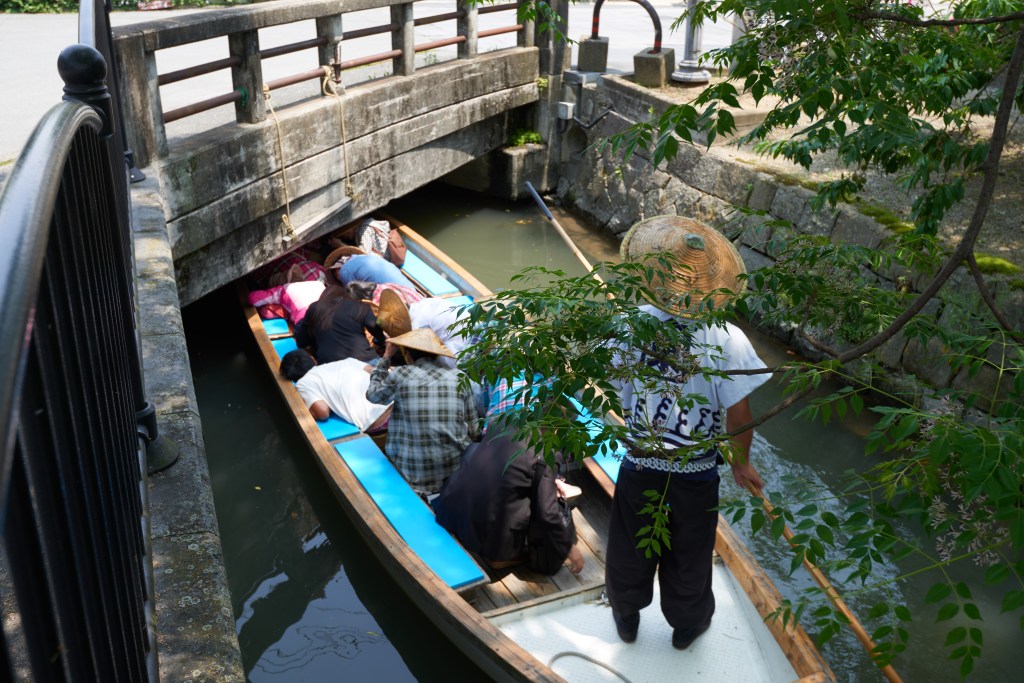
The centrepiece is the donko boat, a low wooden craft that carries passengers through narrow channels and under bridges so low that everyone has to duck. The ride lasts about an hour. It is not a thrill attraction and it is not a theme park. It is a slow, slightly theatrical piece of everyday infrastructure, and it works because the town around it is real: people live on the banks, prune the trees, park bicycles against the walls, and hang laundry in the same frame as the tourists.
Yanagawa is often called the Venice of Kyushu. The comparison is useful for a headline and misleading for a visit. There are no grand palazzi, no wide lagoon, and no gondoliers in striped shirts. What Yanagawa has is a working agricultural and market town with a serious food culture, a remarkable former daimyo residence, a poet’s birthplace, and a shrine to one of Japan’s most celebrated warrior families. The canals are the thread that ties those things together. This guide covers how to use them, what they cost, when to go, what to eat, and where the experience is weaker than the brochure suggests.
Yanagawa at a glance
| Region | Southern Fukuoka Prefecture, on the Chikugo Plain between the Chikugo River and the Ariake Sea |
|---|---|
| Best known for | Donko boat tours, unagi no seiro-mushi, Ohana and Shotoen garden, Kitahara Hakushu, Mihashira Shrine |
| Suggested stay | A full day from Fukuoka; one night for a slower pace and dinner |
| Access | Nishitetsu limited express from Fukuoka (Tenjin) to Nishitetsu Yanagawa, about 49 minutes |
| Getting around | Walkable near the station; bus or taxi for Ohana and Okinohata; boat for the canal route |
| Best season | Late March to early April for blossom and Sagemon; November for the Hakushu Festival and comfortable weather |
| Main caveat | Last boat departures are between 15:00 and 16:00; restaurants close early; some museums and shops close on weekdays |
Why Yanagawa is worth the trip
The first reason is practical. Yanagawa is one of the easiest proper day trips from Fukuoka. A limited express leaves Tenjin roughly every 30 minutes, the station is small, and the main boat piers are a three- to five-minute walk away. You can leave the city after breakfast and be on the water before lunch. That combination of accessibility and distinctiveness is rare. Many day trips from Fukuoka feel like suburbs with a temple. Yanagawa feels like a different settlement pattern altogether.
The second reason is the concentration of things worth doing. Within a couple of kilometres you have the boat, a nationally designated garden, a museum of daimyo material culture, the birthplace of a major modern poet, a shrine to the Tachibana family, and a cluster of eel restaurants that would justify the journey on their own. You do not need a car to connect them, although a bus or taxi helps for the Ohana end.
The third reason is the food. Unagi no seiro-mushi is often described as eel on rice, which is technically true and spiritually incomplete. The rice is mixed with a dark, sweet-salty tare, partly cooked, then steamed with the grilled eel on top and finished with shredded egg. The result is softer and more integrated than a plate of unagi over plain rice. Yanagawa is one of the places where the dish is claimed to have originated, and the old shops still treat it as their core business rather than a tourist add-on.
What Yanagawa is not: a place for nightlife, shopping, or a full day of museum-hopping. Most shops close by late afternoon. The castle is gone. The boat is gentle. If you need constant stimulation, you will be bored by 15:00. If you like water, old buildings, food and walking, the town rewards a day and improves with a night.
Where Yanagawa is, and how to reach it
Yanagawa sits in southern Fukuoka, roughly halfway between Fukuoka city and the Saga prefecture border. The Chikugo River runs to the north and east, the Ariake Sea lies to the west, and the land between is flat, wet and intensively farmed. The city is not on the shinkansen. That is part of why it has kept its scale.
By train from Fukuoka
The standard route is the Nishitetsu Tenjin Omuta Line from Nishitetsu Fukuoka (Tenjin) to Nishitetsu Yanagawa. Limited expresses take about 49 minutes and cost 960 yen one way in 2026. There is no seat reservation on these trains; you take the first available seat. The line runs frequently, and the train is comfortable enough for a day trip. From Hakata Station, take the subway to Tenjin, walk to the Nishitetsu terminal, and allow about 75 to 90 minutes door to door. From Fukuoka Airport, the subway to Tenjin takes about 10 minutes, so the total is similar.
Yanagawa Station is small and easy to use. The east exit has the Route Inn and the main taxi rank. The west exit leads toward the boat piers, the old town and the shopping streets. If you are heading straight to the water, leave by the west exit and walk north. The Shimohyakucho pier used by Suigo Yanagawa Kanko is about three minutes away; the Matsuzuki pier used by Yanagawa Kanko Kaihatsu is about five minutes away, beside the drum bridge of Mihashira Shrine.
From the shinkansen
The nearest shinkansen stations are Shin-Kurume and Chikugo-Funagoya. Shin-Kurume is useful if you are coming from Kagoshima or Kumamoto; Chikugo-Funagoya is convenient for the southern approach. From either station, a local train or taxi will get you to Yanagawa, but the connections are not as smooth as the Nishitetsu route from Tenjin. If you are travelling with a Japan Rail Pass and want to avoid paying for the private railway, the JR route via Setaka and a local bus works, but it is slower and less frequent. For most visitors, the Nishitetsu train is the better choice.
By car
From the Kyushu Expressway, leave at Miyama-Yanagawa Interchange and follow the signs into the city; the drive is about 15 to 20 minutes. From Fukuoka city, allow 50 to 70 minutes depending on traffic. From Saga city, it is about 30 minutes. Parking at the main piers is limited but usually available on weekdays. Suigo Yanagawa Kanko has a free car park at Shimohyakucho; Yanagawa Kanko Kaihatsu has free parking near Matsuzuki pier; Daito has free parking at its restaurant. On weekends during cherry blossom, Sagemon and the Hakushu Festival, those car parks fill early and the access roads slow down.
By air
Fukuoka Airport is the most practical arrival point for international visitors. From the airport, take the subway to Tenjin and change to the Nishitetsu line. Saga Airport is also close by road, about 30 minutes by taxi, but it handles a much smaller network. If you are arriving at Fukuoka and going straight to Yanagawa, allow around 90 minutes from the arrivals hall to the boat pier.
Getting around locally
| On foot | Station to Shimohyakucho pier: 3 minutes. Station to Matsuzuki pier: 5 minutes. Station to Ohana: about 2.8 kilometres, 35 to 40 minutes. |
|---|---|
| Bus | Nishitetsu bus from Nishitetsu Yanagawa to Ohana-mae takes about 15 minutes and costs 220 yen. |
| Taxi | Ohana-mae to Nishitetsu Yanagawa takes about 10 minutes and costs around 1,300 yen. |
| Boat shuttle | Several operators run a shuttle between the Ohana area and the station after a one-way cruise; ask at the pier for the next departure. |
| Car | Useful for Ohana, the wisteria festival and the iris garden; not necessary for the central boat route. |
A word about the walk from the station to Ohana: it is flat and follows ordinary streets, not a scenic canal path for the whole way. It is fine if you have time and comfortable shoes, but it is not the best use of a short visit. Take the bus or taxi to Ohana, then walk back through Okinohata toward the station at the end of the day. That direction gives you the pleasant part of the walk without the long approach.
The canals and the making of Yanagawa
Yanagawa’s water system is not decorative. The city sits on low, flat ground that was historically marshy and prone to flooding. Starting in the late medieval period, and expanded under the early Edo lords, the canals were cut to drain the land, store water, irrigate fields, supply fire fighting water, and move goods. The network grew to about 470 kilometres of channels, from broad navigation canals to narrow ditches behind houses. The grid of streets and waterways that visitors admire today is the visible result of a drainage and transport plan.
The castle history explains why the town is here. The Kamachi clan built a fortress at Yanagawa in the 16th century, and the surrounding town grew around it. In 1581 the Ryuzoji clan destroyed the Kamachi and took the castle. After Toyotomi Hideyoshi’s conquest of Kyushu, Tachibana Muneshige entered Yanagawa in 1587 with a domain of about 132,000 koku. He lost it after siding with the Western army at Sekigahara in 1600. The victors gave the whole of Chikugo to Tanaka Yoshimasa, who rebuilt Yanagawa Castle as a more conventional early modern fortress, with a five-storey keep and a fuller moat system. When the Tanaka line died out in 1620, Muneshige was restored to Yanagawa with about 109,647 koku. The Tachibana family then ruled until the abolition of the domains in 1871.
The castle is the great absence in the townscape. A fire in 1872 destroyed the keep and the main enclosures. The stone walls were later dismantled and used to repair coastal defences, and the inner moat was partly filled in the 20th century. What remains is a small mound on the grounds of a junior high school and the outline of the moat system. Do not plan a castle visit. The castle story is best read in the street plan, the canal widths and the position of the shrines, not in a reconstructed keep.
What did survive was the water. The canals continued to serve the city through the modern period, and the boat tour that visitors take today follows the old inner moat and castle channels. The route is not a preserved theme ride; it is a working piece of the city that has been adapted for visitors. That is why the boat passes ordinary houses, small bridges, temple walls and the occasional parked scooter, and why the experience feels more like a commute through a garden than a staged attraction.
The donko boat: what to expect
The boat is called a donko, a low, flat-bottomed wooden craft that sits close to the water. A boatman stands at the stern and poles or sculls it through the channels. There are cushions on the floor, a low roof frame on some boats, and no seats with backs. Passengers sit on the floor, which is part of the experience and also the main practical warning: this is not a comfortable choice for everyone.
The standard one-way course runs about three kilometres and takes 60 to 70 minutes, depending on the operator and the water level. The route passes through the inner moat, under low bridges, past the city hall and the Kabashima Iris Garden, and ends near Ohana or Okinohata. The boatman gives a commentary in Japanese, points out plants and buildings, and often sings a local song. English commentary is not guaranteed. Some operators have multilingual pamphlets; bring a translation app if you want the detail.
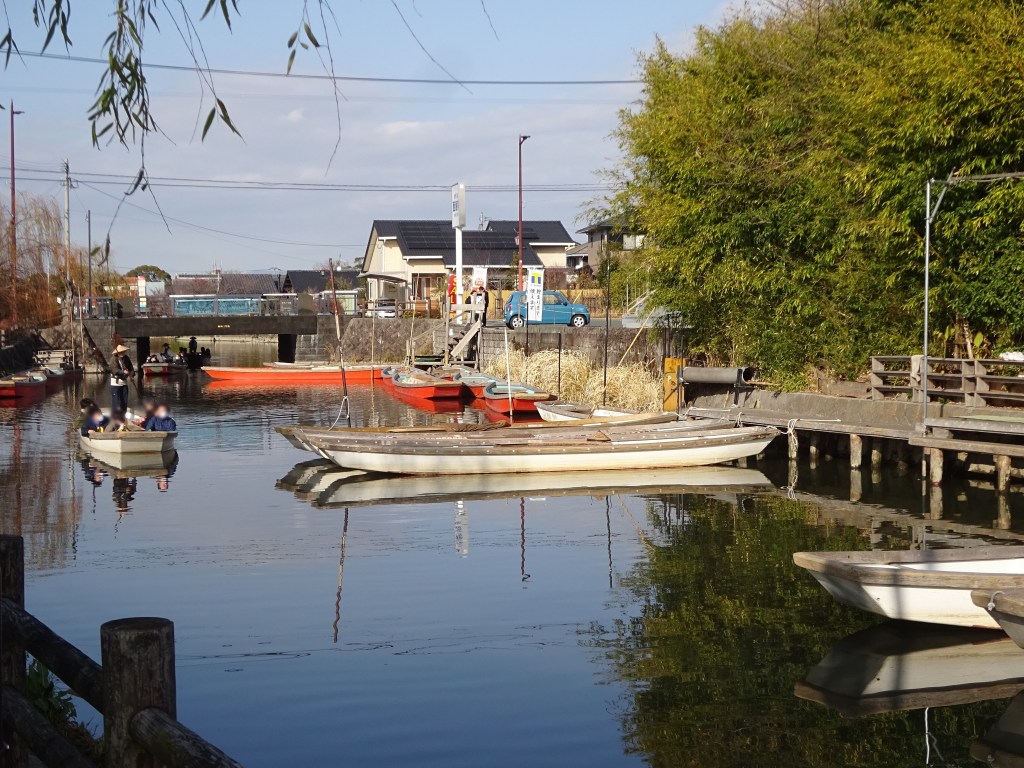
The low bridges are the signature moment. The boatman warns the passengers, everyone ducks, and the boat slides under a beam that looks far too low. It is fun, but it is also the reason umbrellas are not allowed on board: they hit the bridges. The operators rent head-shaped hats for about 100 yen, which are more practical and photograph better than an umbrella. Keep your hands and head inside the boat, and do not stand up to take a photo.
Which boat company should you choose?
| Operator | Pier and access | Course and fare | Notes |
|---|---|---|---|
| Suigo Yanagawa Kanko | Shimohyakucho, 3 minutes from the station | About 60 minutes, 2,000 yen adult, 1,000 yen child | Frequent departures, online booking until 17:00 the day before, free parking |
| Yanagawa Kanko Kaihatsu | Matsuzuki, 5 minutes from the station at Mihashira Shrine | About 60 minutes, 2,200 yen adult, 1,100 yen child | The self-described originator of the tourist boat; Meiji-era Matsuzuki Bunjinkan at the pier |
| Daito Enterprise | Jogoku-machi, 5 to 10 minutes from the station | About 70 minutes, 2,000 yen adult, 1,000 yen child | Also runs an eel restaurant; free parking; last reception 16:00 from March to November |
All three are legitimate, and the differences are small. Choose Suigo Yanagawa Kanko if you want the shortest walk from the station and the most frequent departures. Choose Yanagawa Kanko Kaihatsu if you want to start beside Mihashira Shrine and the historic Matsuzuki building. Choose Daito if you want to combine the boat with lunch and have a car. Private charters are available from all three and cost around 16,000 yen for a small group, which can be good value for a family.
Prices vary slightly by season and operator. The city’s own page gives a range of 1,700 to 2,000 yen, but the operators’ 2026 pages list 2,000 to 2,200 yen for the standard course. Treat 2,000 to 2,200 yen as the realistic budget and confirm at the pier. Children are usually half price, with small children free or charged a seat fee. The February water drawdown shortens the route and reduces the fare.
Timing, booking and crowds
Boats start around 09:30 and the last shared departures are between 15:00 and 16:00, depending on the company and the season. This is the single most important fact for planning. If you arrive at 15:30 expecting a boat, you may be too late. Aim to board by 14:00, and by 13:00 in cherry blossom or Sagemon season. The wait for a shared boat can be up to 30 minutes even outside peak periods, because boats leave when enough passengers have gathered rather than on a fixed timetable.
Reservations are not always necessary, but they help in spring and autumn. Suigo Yanagawa Kanko takes online bookings up to 17:00 the day before. Yanagawa Kanko Kaihatsu takes phone reservations. Daito recommends booking if you want lunch before or after the boat. Walk-ups are usually fine on a weekday in the quieter months.
If it rains, the operators lend ponchos and continue running unless the water is too high or the weather is dangerous. In winter, from December to the end of February, some boats are fitted with a low table and a kotatsu heater, which is a genuinely pleasant way to see the town in cold weather. In heavy rain, the kotatsu may be replaced by a chair boat. Check the operator’s notice on the day.
The February water drawdown
Every February the city drains part of the castle moat for maintenance. In 2026 the lock closed on 16 February and reopened on 25 February, with normal service resuming on 26 February. During that period the standard route is shortened to a loop and the fare drops. The drained canal is interesting in its own way, but it is not the experience most visitors are expecting. If you are travelling in mid-February, check the dates before booking.
Accessibility and comfort
The boat sits low, and boarding involves stepping down from the bank. It is not wheelchair accessible, and passengers with limited mobility should contact the operator in advance to discuss the least difficult boarding point. The floor seating can be hard on knees and backs. Children are welcome, but they need supervision near the water and should not lean over the side. The boat is open to the weather; bring sun protection in summer and a warm layer in winter. There is no toilet on board, so use the facilities at the pier before departure.
Ohana and Shotoen: the Tachibana family estate
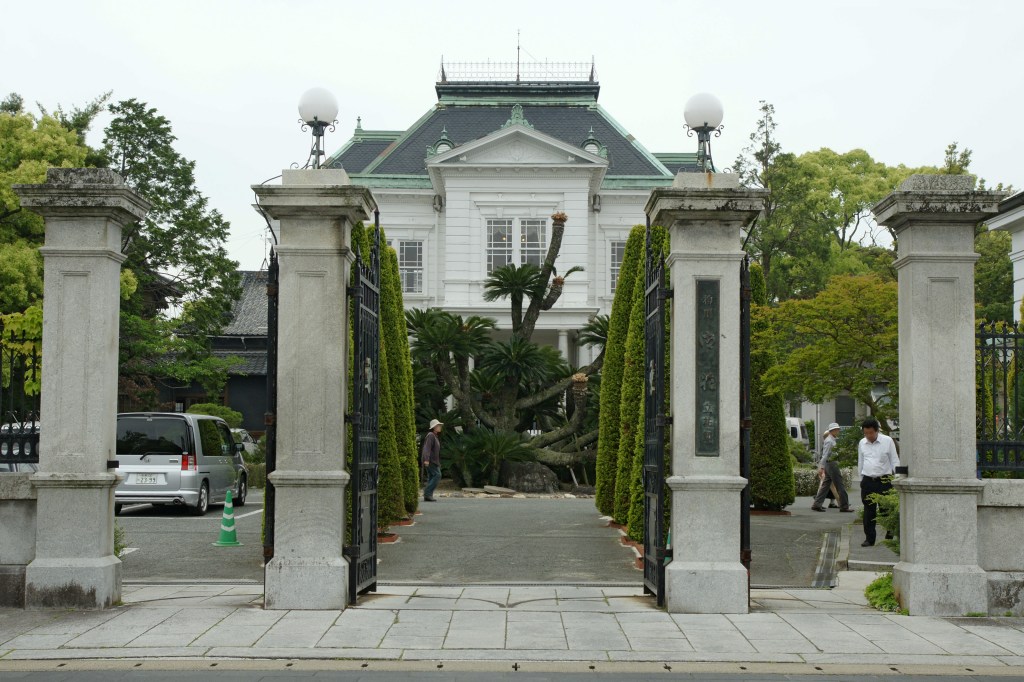
Ohana is the former Tachibana family residence, and it is the most polished sight in Yanagawa. The estate began in 1738 as a retreat for the fifth lord, Tachibana Sadayoshi, inside the castle grounds. The present buildings and the garden were laid out in 1910 by the 14th head of the family, Tachibana Tomoharu, as a count’s residence after the Meiji peerage replaced the old domain. The family opened part of the house as a restaurant and inn in 1950, and the current incarnation reopened in 2025 after a renovation of the guest rooms and public spaces.
The whole estate covers about 7,000 tsubo, roughly 23,000 square metres, and the entire site is a nationally designated place of scenic beauty. That designation is unusual: most gardens are protected, but here the buildings, the garden and the setting are treated as one composition. The main garden, Shotoen, is a pond garden designed to be viewed from the tatami rooms rather than walked through. It contains about 280 black pines, 1,500 garden stones and 14 stone lanterns, arranged around a pond with two main islands and several rock islands. The effect is deliberately calm and slightly formal, with the pines framing the water and the veranda framing the pines.
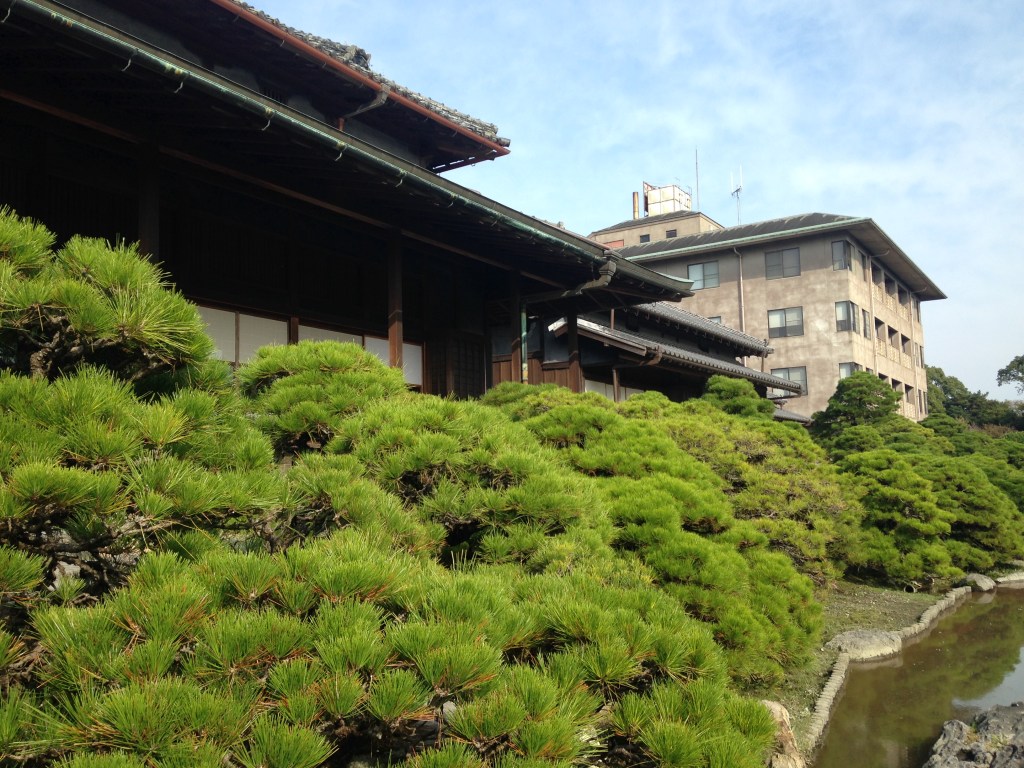
The 100-tatami main hall is the best place to understand the design. The windows open onto the garden at a height and angle that make the landscape look like a scroll. The huge stone at the edge of the veranda is said to have been moved from the base of the old castle keep, a quiet link between the lost castle and the surviving garden. In winter, wild ducks gather on the pond. In spring, the garden is at its most photogenic, but it is rarely as crowded as a Kyoto temple.
What the ticket includes
The Ohana admission ticket covers the garden, the main hall, the Western-style house and the Tachibana family museum. The museum holds armour, swords, wedding furnishings, kimono, tea utensils, Noh masks and Noh costumes, as well as a collection of hina dolls passed down through the family. The quality is high, and the labels are in Japanese with limited English. Even without reading every label, the objects give a sense of how a daimyo family lived after the political power of the domain had gone.
In 2026 the official admission price is 1,200 yen for adults, 500 yen for high school students and 400 yen for elementary and junior high students. The city’s older museum page still lists 500 yen, which is out of date. The official Ohana site is the one to trust. Opening hours are 10:00 to 16:00, and the closing days vary by month, so check the monthly notice before you go. The ticket does not include lunch or the boat.
Lunch and staying at Ohana
Ohana has a restaurant serving eel seiro-mushi and kaiseki-style meals, with lunch from 11:30 and last orders around 14:00. The setting is the draw as much as the food: a private room overlooking the garden is a very different lunch from a station restaurant. Reserve ahead, especially on weekends. The inn has 20 rooms in eight categories, including rooms facing Shotoen and the main hall. Rates started around 38,700 yen per person for two meals when the renovated rooms opened in 2025, so this is a splurge rather than a budget option. For the right trip, it is one of the few places in Japan where you can sleep inside a nationally designated garden.
If you are not staying, Ohana still works as a midday anchor. Visit the garden and museum, have lunch, then take the bus or taxi back toward Okinohata for Hakushu and the shrine. The estate is not a place to rush. Allow at least 60 to 90 minutes for the garden and museum, more if you are eating.
Tachibana Muneshige, Ginchiyo and Mihashira Shrine
Mihashira Shrine sits just outside the old castle town, across a canal from the station side. It enshrines three figures: Tachibana Muneshige, the first lord of the restored Yanagawa domain; his wife Tachibana Ginchiyo, remembered as a capable military commander in her own right; and her father Bekki Akitsura, usually known as Tachibana Dosetsu, Muneshige’s adoptive father and a celebrated warrior. The shrine’s name, “three pillars,” refers to these three deities.
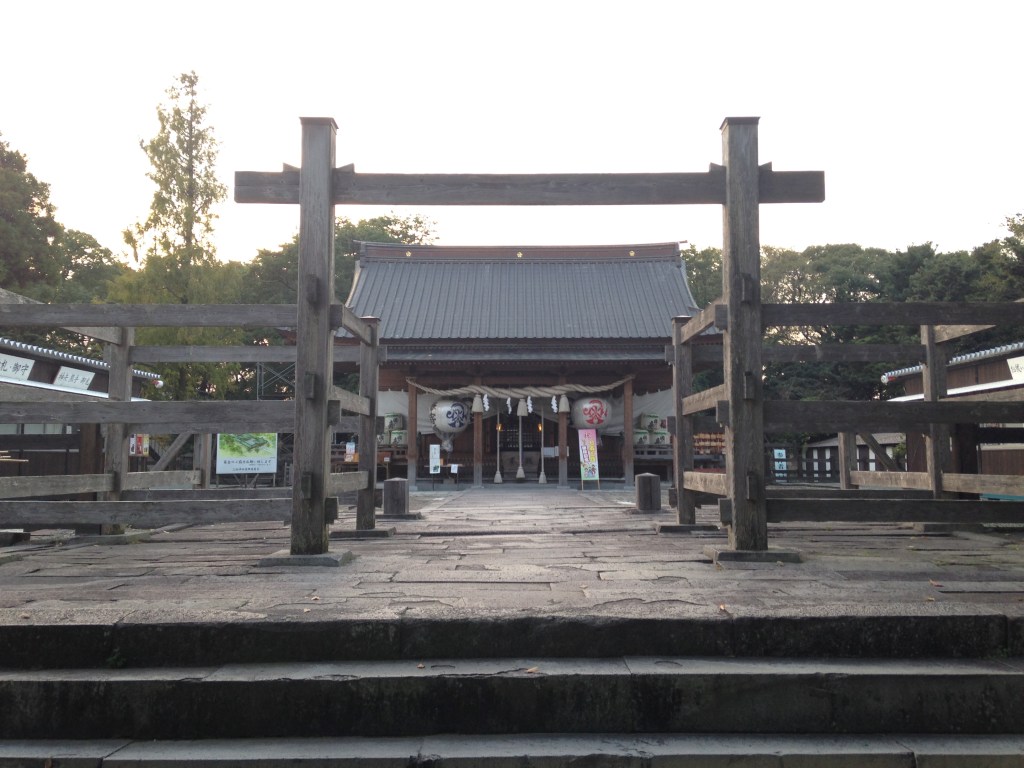
The shrine was established in its present form in 1826, when the ninth lord, Tachibana Akikata, moved the combined deities to the current site to give the domain’s ancestral cult a proper scale. The approach crosses a stone drum bridge and passes through a torii, with the main hall and worship hall arranged in the usual style. In 2005 a fire destroyed the worship hall and part of the gate; the main sanctuary survived. The rebuilding is modern, but the setting and the ritual calendar are older.
Muneshige’s story is the reason the shrine attracts more than local worshippers. He fought at Sekigahara on the losing side, lost his domain, and then regained it in 1620, a restoration that the shrine describes as unique among the defeated lords of that battle. That narrative of comeback and recovery has made him a patron of sorts for people facing their own reversals. The shrine is free to enter and is a pleasant 10-minute walk from the station, which makes it an easy first or last stop.
The Onigie autumn festival
Mihashira’s autumn festival, Onigie, is the city’s biggest traditional event. It is held over three days in October and includes a procession of portable shrines, decorated floats and the dorotsuku-don, a type of drum float whose dancers lean far out from the platform and perform to a fast, percussive rhythm. The float tradition is a prefectural intangible folk cultural property. In 2026 the festival ran from 10 to 12 October, with the main procession on the 11th and an evening competition on the shopping street. Dates move each year, so check the shrine’s website before planning around it.
Even outside the festival, the shrine is worth 20 minutes. The grounds are quiet, the drum bridge is photogenic, and the view back across the canal toward the station explains the old defensive layout. If you are combining the shrine with the boat, start at Matsuzuki pier: the pier is at the foot of the bridge, and the Meiji-era Matsuzuki Bunjinkan building is open free of charge from 09:00 to 17:00.
Kitahara Hakushu and the literary side of Yanagawa
Yanagawa is the birthplace of Kitahara Hakushu (1885-1942), one of modern Japan’s best-known poets and a major figure in the development of children’s songs. He was born into a wealthy sake-brewing family in Okinohata and grew up among the canals, willow trees and seasonal festivals that recur in his work. His poems and nursery rhymes, including Karatachi no Hana and Kono Michi, remain widely known in Japan. Even if you do not know his name, the sensibility of the town, lyrical, seasonal and a little melancholy, is easier to understand after reading a few lines.
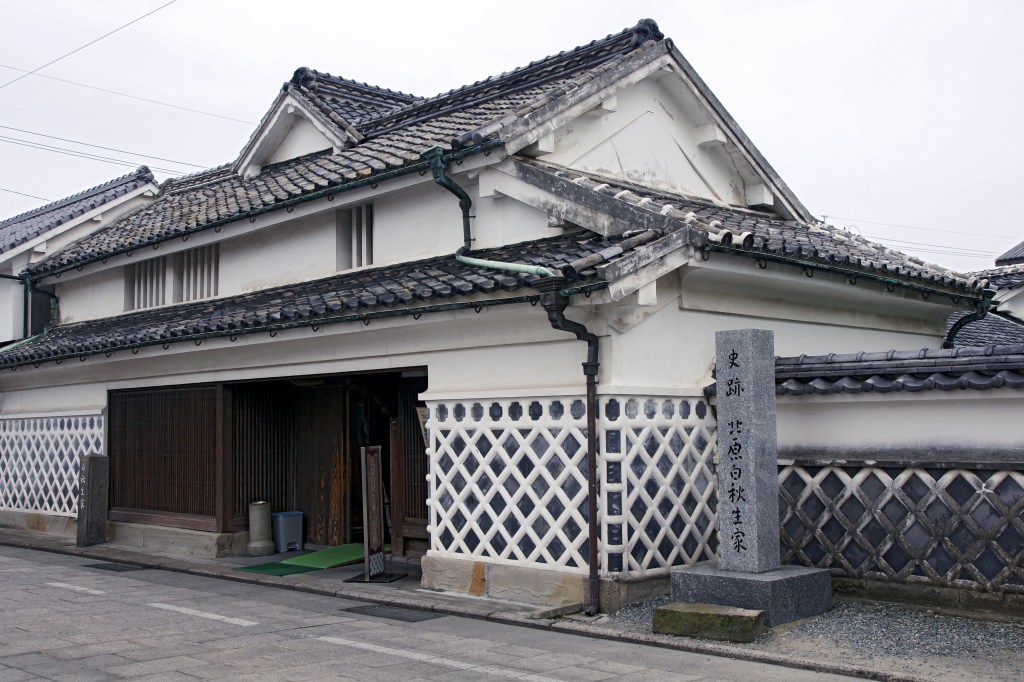
The Kitahara Hakushu Birthplace and Memorial Museum occupies a compound in Okinohata with the restored family house, a storehouse, a garden and a modern museum. The house is a substantial Meiji-era merchant residence rather than a thatched cottage, which tells you something about the family’s standing. The museum covers his life, his travels, his poetry and his connections to other writers and artists. Labels are mostly Japanese, but the objects and photographs carry the story; ask for the English leaflet at reception.
In 2026 the admission price is 1,000 yen for adults, 600 yen for high school and university students, and 400 yen for elementary and junior high students. Opening hours are 09:00 to 17:00, with last entry at 16:30, and the museum closes from 29 December to 3 January. The city’s older page still lists 500 yen; the museum’s own site is the current source. A combined ticket with the nearby Former Toshima House is good value: the Toshima house costs 100 yen on its own and is free to Hakushu ticket holders. It is a well-preserved merchant house with a small garden, and it is closed on Tuesdays.
Two smaller stops round out the literary walk. The Matsuzuki Bunjinkan at Matsuzuki pier is a Meiji-era building associated with Hakushu and is free to enter. The Yanagawa City History and Folklore Museum, also known as the Hakushu Memorial Museum, is a separate facility with displays on the poet and the town; check its opening days before adding it. The walk between these places follows ordinary streets and canal edges, with willow trees, white walls and small bridges. It is the part of Yanagawa that feels least designed for visitors and most like the town Hakushu described.
Walking Yanagawa: a route through the old town
The best way to see the town is a loose loop: start at the station or Matsuzuki pier, take the boat to Ohana, then walk back through Okinohata, Hakushu and the old merchant streets toward Mihashira Shrine and the station. The walk is flat and mostly on pavements or quiet roads. It takes two to three hours without stops, and a full day with museums, lunch and photographs. You do not need a guide, but you do need a map or a phone, because the canal network is not a simple grid.
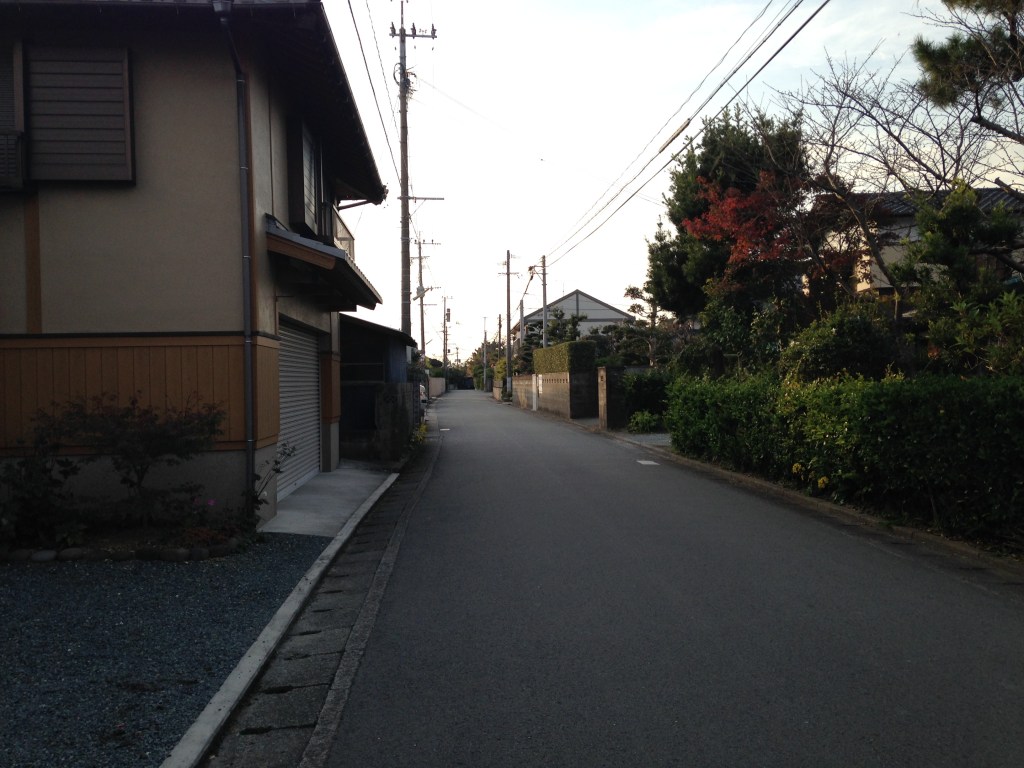
Okinohata is the old port and market quarter at the southern end of the boat route. It has the highest concentration of eel restaurants, the Ohana estate, the Hakushu birthplace and several temples. The streets are narrow, the buildings are a mix of Edo, Meiji and postwar, and the canal is never far away. This is where to linger after the boat. The riverside near Ohana is especially pleasant in the late afternoon, when the tour groups have gone and the light comes across the water.
Yanagikoji and Tsubaharakoji are two of the small streets that preserve the old merchant-town feel. Yanagikoji is named for its willows and runs beside a narrow canal; Tsubaharakoji has a quieter, more residential atmosphere. Neither is a major sight, and that is the point. Walk them slowly, look at the eaves, the shop fronts and the stone edges of the canals, and you will see more than you would from a checklist.
Hiyoshi Shrine is a local shrine with a pleasant precinct and a pond, a few minutes from the centre. It is not a destination in itself, but it is a good place to rest and a reminder that Yanagawa’s religious landscape is not limited to Mihashira. The Yanagawa Castle site is nearby but underwhelming: a small mound on school grounds, with no keep and little interpretation. Treat it as a historical footnote rather than a stop.
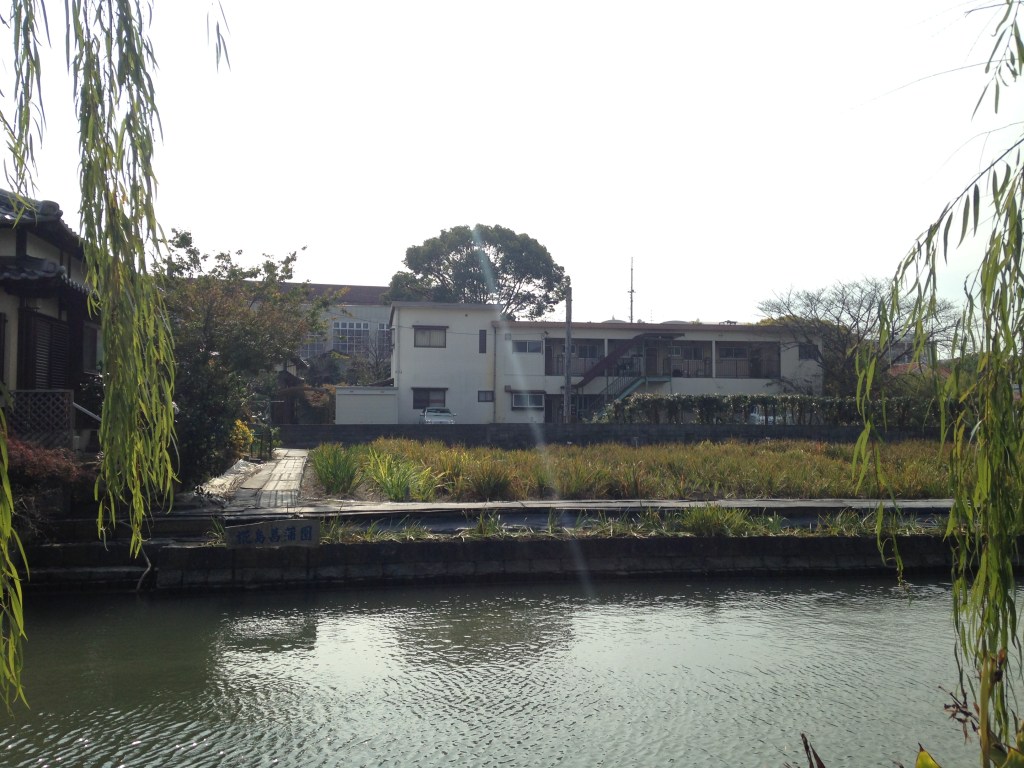
In late May and early June, the Kabashima Iris Garden is the best seasonal addition. It is a private garden beside the boat route, about 200 metres south of the city hall, with around 35 species and 30,000 irises. It is free to enter, open from 09:00 to 17:00 during the season, and the family asks visitors to use the city hall car park rather than the garden’s own space. The view from the boat is arguably better than the view from the path, but the garden is worth a short detour if you are in town at the right time.
What to eat in Yanagawa
Yanagawa’s food is not a side note. It is one of the main reasons people come back. The signature is unagi no seiro-mushi, but the town also has a distinct loach hotpot tradition, a strong udon shop near the station, and a growing number of cafes and bakeries. You will not go hungry, but you do need to plan around closing days and lunch hours.
Unagi no seiro-mushi
Seiro-mushi is made in a bamboo steamer. The rice is cooked, mixed with tare, and partly cooled; the eel is grilled over charcoal, dipped in the same tare, and laid on the rice; the whole thing is steamed again and finished with shredded egg. The technique produces a dish that is softer and less smoky than a straight kabayaki, with the sauce absorbed into the rice rather than sitting on top. It is rich, sweet and filling. One serving is enough for most people, especially if you are also eating later.
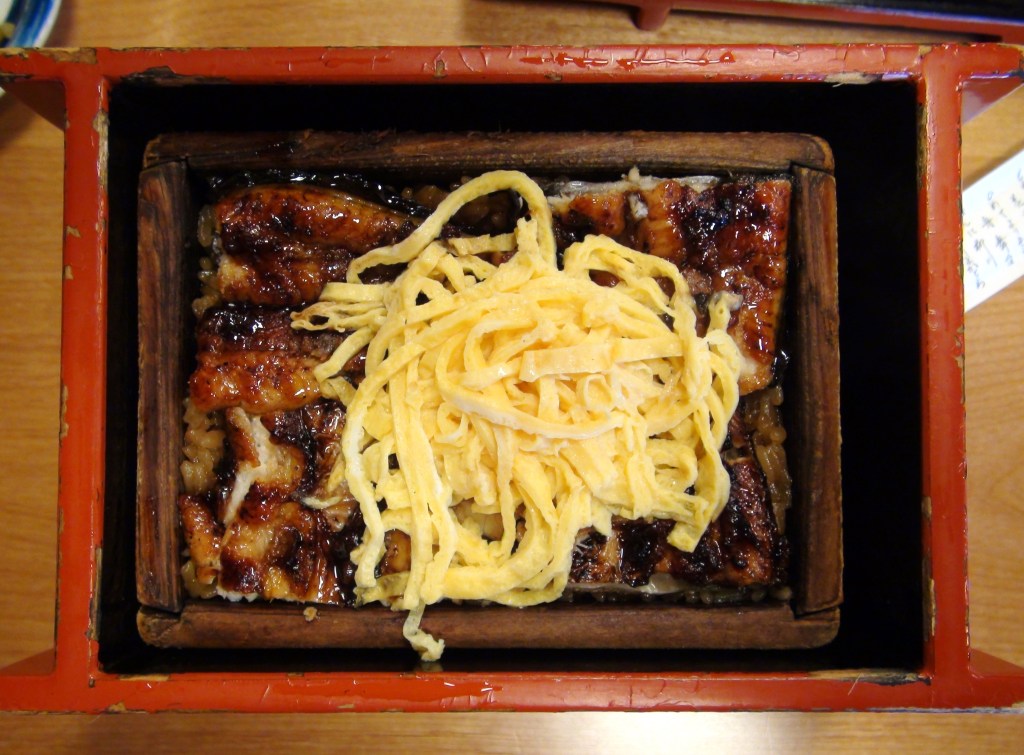
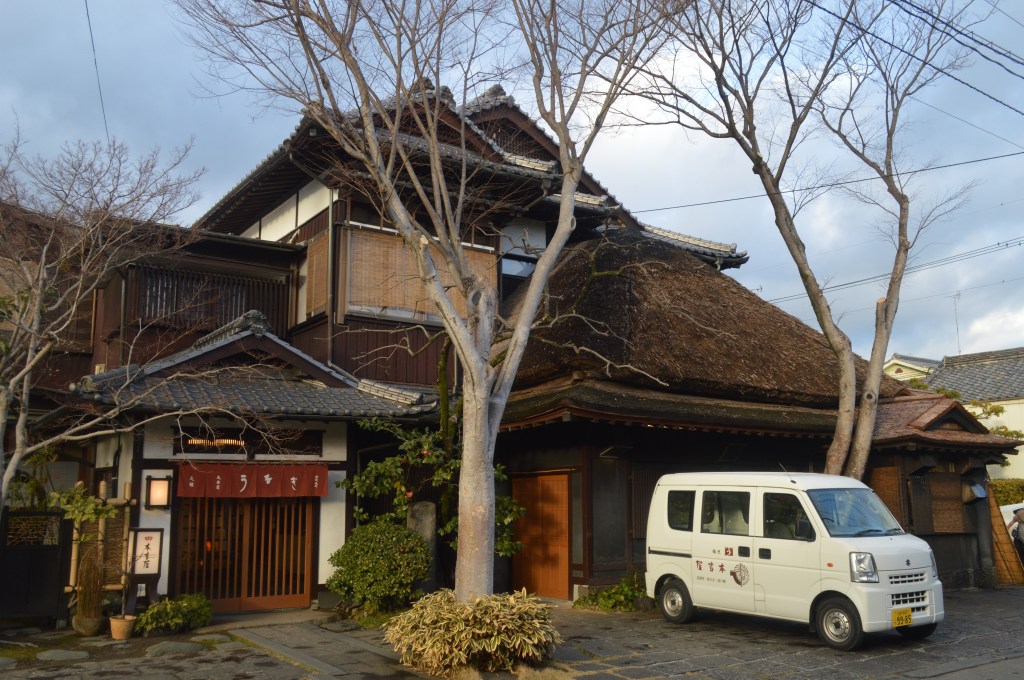
The two classic addresses are Ganso Motoyoshiya and Wakamatsuya. Motoyoshiya dates its founding to 1681 and claims to be the originator of the dish. Its main store is at Asahimachi 69, about 15 minutes on foot from the station, with a thatched roof and a garden. The Okinohata branch is more convenient if you are coming off the boat: it is at Okinohata-machi 12, open from 11:00 to 15:00 with last orders at 14:30, and closed on Mondays. The main store is open from 10:30 to 19:30 with last orders at 19:00, also closed on Mondays. The basic seiro-mushi is 4,800 yen plus tax; the set with vinegar dish, liver soup and pickles is 5,900 yen plus tax.
Wakamatsuya was founded in the 1860s and is still run by the same family, now in its ninth generation. It is in Okinohata, a five-minute walk from the Ohana bus stop, and has a garden view from some rooms. The eel is grilled without skewers, turned repeatedly with chopsticks, and dipped in a tare that has been topped up for generations. The basic seiro-mushi is around 3,850 yen. Opening hours are 11:00 to 14:30 and 17:00 to 19:45, with last orders at 19:00; it closes on Wednesdays and the first and third Tuesdays of the month, but opens on holidays. Reservations are not taken on weekends or the day itself, and waits of an hour are possible in peak season.
Two other options are worth knowing. Daito Enterprise runs both a boat service and an eel restaurant, which makes it a convenient one-stop option if you want lunch and a cruise in the same place. Its seiro-mushi starts at 3,200 yen, and the restaurant is open from 10:00 to 17:00. Keren, near the station, is a 50-year-old eel and loach specialist with a menu that includes both seiro-mushi and Yanagawa nabe; budget around 3,300 to 5,300 yen, and note that it closes on Wednesdays and Thursdays. Kiku Sui, a long-established restaurant in Tsuji-machi, is another local option for eel and Japanese dishes, with irregular closing days.
Yanagawa nabe and loach
Yanagawa nabe is the town’s other famous dish: loach, burdock and egg, simmered in a shallow pot with a soy-based broth. The loach is cleaned and boned, laid over shredded burdock and mushrooms, cooked briefly, and finished with beaten egg and spring onion. It is savoury, soft and warming, and it has a longer local history as ordinary food than the more expensive eel. Keren is the most convenient place to try it near the station, and the dish is also served at some traditional restaurants in Okinohata. The Ministry of Agriculture, Forestry and Fisheries includes it in its regional cuisine collection, which is a good sign that it is not a invented tourist dish.
Udon, snacks and coffee
If you want a cheap, fast meal, Tachibana Udon is a five-minute walk from the station and has been running since 1977. It opens at 09:00 and closes at 20:30, with last orders at 20:15, and closes on Tuesdays except holidays. A plain udon is 429 yen, the popular meat and burdock tempura udon is 902 yen, and the weekday lunch set is 913 yen. It is not a destination restaurant, but it is reliable, family-friendly and useful if you arrive hungry before the eel shops open.
For snacks, look for local rice crackers, pickles and sake in the shops around Okinohata and the station. Yanagawa is in the Chikugo brewing region, and several local breweries produce sake, though the town is not a major tasting destination. The tourist association can point you to current stockists. Coffee is available in the station area and in a few cafes near Ohana; do not expect a specialty coffee scene.
Practical food notes
Reservations matter on weekends, holidays and during Sagemon and cherry blossom season. Many eel restaurants stop taking orders when the rice runs out, which can be before the official closing time. Bring cash: some smaller restaurants and shops do not accept cards, and even those that do may prefer cash during busy periods. If you have a seafood allergy or do not eat eel, check menus in advance; eel restaurants often have limited alternatives. Vegetarians will find udon and some side dishes, but the local specialty is firmly fish-based.
Seasons and festivals
Yanagawa has a clear seasonal rhythm, and the town changes more than the average day-trip destination. Spring is the busiest and most colourful period; autumn is the most comfortable; winter is quiet and best for the kotatsu boat; summer is hot, green and slow.
| Season | What happens | Why it matters |
|---|---|---|
| Spring | Sagemon Hina Festival, cherry blossom, wisteria, irises | The town is at its most decorated and most crowded; book boats and restaurants early |
| Summer | Green canals, long days, heat and humidity | Start early, carry water, and avoid the middle of the afternoon |
| Autumn | Hakushu Festival, Onigie, comfortable temperatures | The best all-round season for walking and photography |
| Winter | Kotatsu boats, fewer visitors, bare trees, February water drawdown | Quiet and atmospheric, but some services are reduced |
Spring: Sagemon, wisteria and irises
The Yanagawa Hina Festival, known as Sagemon Meguri, is the town’s signature spring event. In 2026 it ran from 11 February to 3 April, with decorations in shops, museums and public buildings across the city. The sagemon are hanging cloth ornaments made for a girl’s first Hina Festival: a set normally has 49 small figures and bags arranged in seven rows of seven, plus two large mari balls in the centre, for a total of 51. The extra two are a wish that the child will live longer than the traditional “fifty years” of a woman’s life. The motifs include cranes, turtles, chicks, peaches and dolls, each with its own wish for health, growth or good marriage.
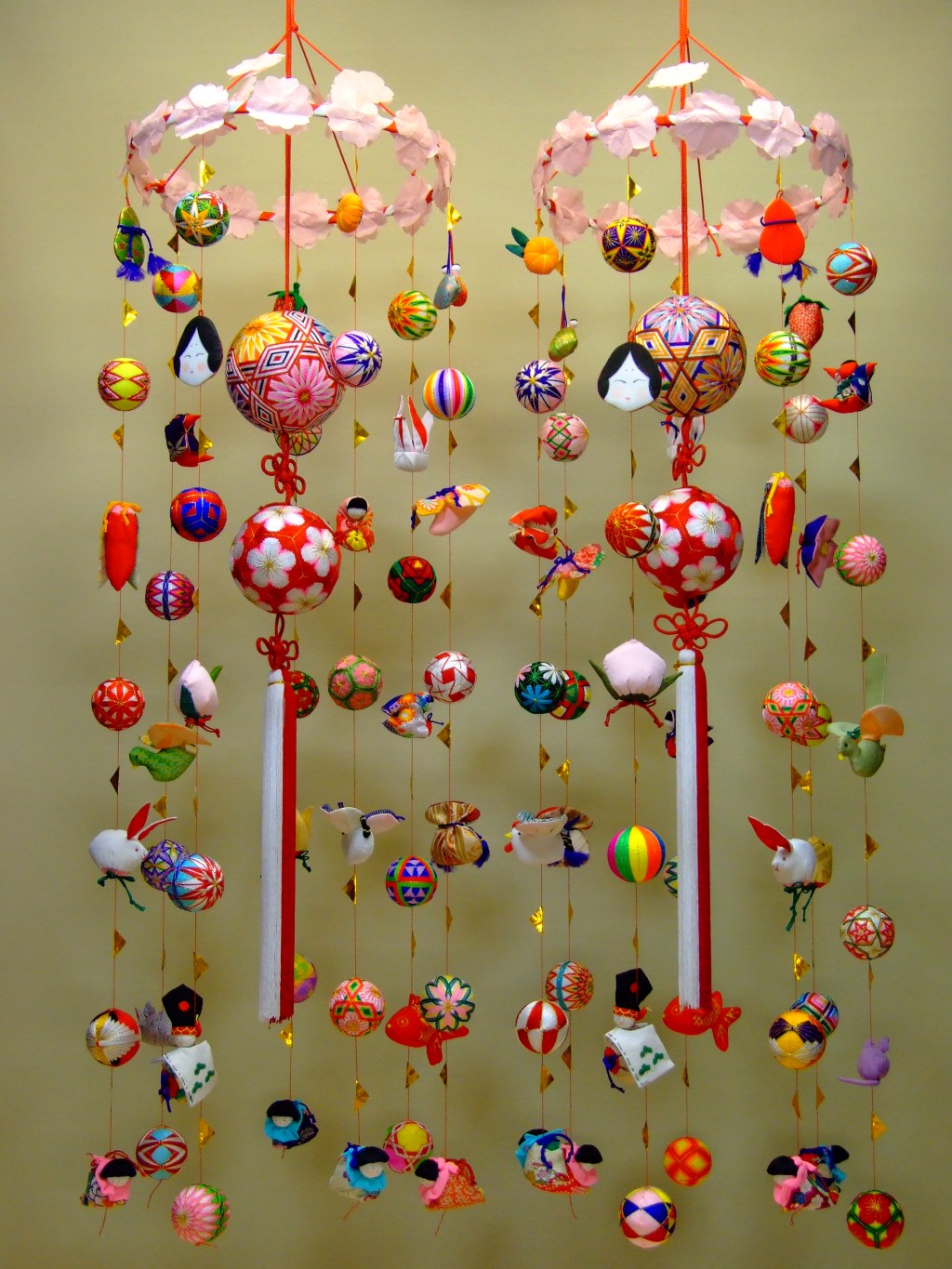
The festival includes an opening ceremony and procession on 11 February, a kimono day in early March, and a water parade on the canal in mid-March. In 2026 the water parade was scheduled for 15 March, with a rain date of 20 March, and the closing ceremony on 3 April. Check the city’s page for the current year, because the dates follow the lunar calendar and the event schedule changes. Even outside the official events, the decorations are visible for seven weeks, and they make the town feel warmer in the last stretch of winter.
The Nakayama Wisteria Festival is a separate spring event, held in 2026 from 15 to 28 April at Nakayama Kumano Shrine, about 12 minutes by car from the station. The wisteria is more than 300 years old and is a prefectural natural monument; the racemes can reach a metre or more. The festival asks for a 100 yen cooperation fee per adult, lights the flowers from dusk to 21:00, and runs temporary buses from the station and from JR Chikugo-Funagoya. It is a worthwhile half-day if you are in the area in late April, but it is not within walking distance of the boat piers.
The Kabashima Iris Garden blooms from late May to mid-June. It is small, free and private, and the best view is from the boat as it passes. If you are already in Yanagawa for the canal, this is a bonus rather than a reason to plan a separate trip.
Summer
Summer in Yanagawa is hot and humid, with temperatures often above 33°C in July and August. The canals are green and the light is strong, but the boat has little shade and the reflection off the water makes it feel hotter. Take the first boat of the day, wear a hat, carry water, and plan the museums and lunch for the middle of the day. The iris garden is finished, the wisteria is long gone, and the town is quieter than in spring. If you are sensitive to heat, consider May or October instead.
Autumn: Hakushu Festival and Onigie
Autumn is the best season for a first visit. The humidity drops, the light softens, and the town is comfortable for walking. The Hakushu Festival is held around the poet’s death anniversary on 2 November. In 2026 the ceremony is scheduled for 2 November at the Hakushu Poetry Monument Park, and the water parade for the evenings of 1 to 3 November, with lanterns on the water, stages along the canal and a fireworks finale. The 2026 boat seats sold out well before the event, but the banks and bridges are free. If you are in town during the festival, expect crowds and book dinner early.
Onigie at Mihashira Shrine is the other autumn anchor. In 2026 it ran from 10 to 12 October, with the main procession on the 11th. The dorotsuku-don floats are the highlight: dancers lean out from the moving platforms and perform with a rapid, almost acrobatic energy that is very different from the calm of the canals. The festival is free to watch, but the shrine grounds are busy and some roads close to traffic. Check the shrine’s schedule and the city’s traffic notices.
Winter and the kotatsu boat
Winter is quiet, and that is its appeal. From December to the end of February, several operators fit their boats with a kotatsu, a low heated table under a blanket, so you sit with your legs warm while the cold air moves over the water. It is one of the most memorable ways to see the town, especially on a clear morning. The trees are bare, the light is low, and the canals take on a grey-green colour that suits the old houses. The trade-off is that some gardens and restaurants have shorter hours, and the February water drawdown interrupts the standard route. Check the dates and dress in layers.
Suggested itineraries
The classic day trip from Fukuoka
| 09:30 | Limited express from Nishitetsu Fukuoka (Tenjin). Arrive at Nishitetsu Yanagawa around 10:20. |
|---|---|
| 10:30 | Walk to Shimohyakucho pier and board a boat. The 60-minute course ends near Ohana. |
| 11:45 | Visit Ohana and Shotoen. Allow 60 to 90 minutes. |
| 13:15 | Lunch at Wakamatsuya or the Motoyoshiya Okinohata branch. Reserve if it is a weekend. |
| 14:45 | Walk to the Hakushu birthplace and museum, then toward Mihashira Shrine. |
| 16:15 | Bus or taxi back to the station. Buy a souvenir and take the 16:45 or 17:00 train. |
This plan works because the boat direction is right: you start near the station, end near Ohana, and walk back toward the station through the sights. If you reverse it, you may find yourself at the far end of town when the last boat is leaving. The schedule is tight but doable. If you want a slower day, drop one museum rather than rushing the garden.
An overnight stay
Day one: arrive around 13:00, check in, visit Ohana in the afternoon, take a late boat or walk the canals, and have dinner at an eel restaurant. Day two: start at Mihashira Shrine, walk to the Hakushu museum, have lunch near the station, and take an afternoon train. Staying overnight gives you the early morning and evening, when the town is at its quietest and the canals are at their best. It also lets you eat dinner without watching the clock.
A rainy day
Rain does not cancel Yanagawa. The boat operators lend ponchos, and the canals look good in wet weather. Start with Ohana and the museum, have a long lunch, then visit Hakushu. If the rain is heavy, skip the boat and use the bus or taxi between sights. The town is small enough that a wet day still works, as long as you have waterproof shoes and a change of socks.
Families and older travellers
Children usually enjoy the boat, the low bridges and the ducks, but the sitting position is uncomfortable for long periods and there is no entertainment beyond the scenery. Bring a snack and a drink. Older travellers should note that the boat requires stepping down and sitting on the floor; ask the operator about the easiest boarding point. Ohana has gravel paths and some steps, and the Hakushu house has thresholds and a garden path. A taxi between the station, Ohana and Okinohata is a reasonable expense if walking is difficult.
A photography-focused day
Start with the first boat, when the water is calm and the light is soft. Sit at the front if you can, but keep your hands inside and do not stand. After the boat, photograph the Ohana garden from the veranda, then walk to the low bridges near the city hall for the classic boat-under-bridge shot. Late afternoon is best for the willow streets and the canal near Mihashira. Respect private property and ask before photographing people at work.
Budget
| Train from Tenjin | 960 yen one way, 1,920 yen return |
|---|---|
| Boat | 2,000 to 2,200 yen adult |
| Ohana | 1,200 yen adult |
| Hakushu museum | 1,000 yen adult |
| Former Toshima House | 100 yen, free with Hakushu ticket |
| Lunch | 2,400 to 5,900 yen for eel; 429 to 1,551 yen for udon |
| Local bus | 220 yen per ride |
| Typical day trip | About 7,000 to 11,000 yen per person, excluding souvenirs |
Where to stay in Yanagawa
Yanagawa has a small but well-distributed range of accommodation. The choice depends on whether you want the cultural experience, a hot spring, or a simple base near the station.
| Ohana | The splurge. Twenty rooms inside a nationally designated garden, with dinner and breakfast. From around 38,700 yen per person for two meals. Best for a special occasion and for seeing the garden without day-trippers. |
|---|---|
| Kamenoi Hotel Yanagawa | A canal-side hotel with a natural hot spring, 40 rooms, a fifth-floor view bath and a day bath for 600 yen. About 15 minutes by bus or car from the station. Best for travellers who want an onsen with the canal view. |
| Hotel Route-Inn Yanagawa Ekimae | 186 rooms, one minute from the east exit, with a large bath, free breakfast and free parking. Best for a reliable, practical overnight. |
| Hotel New Gaea Yanagawa | Three minutes from the station and next to a boat pier, with a guest lounge and simple rooms. Parking is 1,000 yen and limited. Best for budget-conscious travellers who want to walk everywhere. |
| Yanagawa Business Hotel | Five minutes from the west exit, with basic rooms and free parking. Rooms from around 4,800 yen. Best for the lowest-cost stay. |
Book early for Sagemon, cherry blossom, the Hakushu Festival and long weekends. The town is small, and the best rooms sell out. If you are staying at Ohana, ask about the garden-view rooms and the timing of dinner; the experience is as much about the building as the bed.
Nearby places to combine with Yanagawa
Yanagawa works well as part of a wider northern Kyushu trip. Fukuoka is the obvious base, with the best food, shopping and transport connections in the region. Dazaifu is a short train ride from Tenjin and makes a natural pairing with Yanagawa if you have two days. Kurume, about 20 to 30 minutes by train, is known for tonkotsu ramen and the Ishibashi Cultural Center. Yame, further east, is a tea-growing town with a preserved merchant district. Saga is close by road and rail, and Karatsu is a good next stop if you are heading toward the coast.
If you are continuing around Kyushu, the Fukuoka city guide covers the base in detail, the Dazaifu guide explains the shrine and the old capital, and the Karatsu guide covers the castle, pottery and seafood on the Saga coast. For an onsen extension, the Yufuin guide and Beppu guide are useful, and the Nagasaki guide covers the longer western loop.
Is Yanagawa worth it? An honest verdict
Yes, if you want a day that is about water, food and walking rather than checklist sightseeing. The boat is the main event, but it is not thrilling; it is calming, occasionally funny when everyone ducks, and deeply connected to the town’s history. Ohana is genuinely beautiful, the eel is excellent, and the Hakushu museum gives the place an intellectual depth that most canal towns lack. The town is easy to reach, small enough to understand, and different enough from Fukuoka to feel like a real trip.
No, if you need a castle, a big nightlife, or a packed schedule of attractions. The castle is gone, the shops close early, and the boat is a slow ride on a flat canal. Travellers with limited mobility may find the boat difficult. Summer heat can be oppressive. And if you only have one spare day in Kyushu and have not seen Kyoto or Hiroshima, those places may give you more for the time.
The ideal visitor is someone who likes food, old houses, gardens and water, and who is happy to spend an hour sitting low in a boat with nowhere else to be. Yanagawa rewards that kind of attention.
Common mistakes to avoid
Arriving too late for the boat. The last shared departures are between 15:00 and 16:00. Plan to board by 14:00, earlier in peak season.
Doing Ohana first and the boat last. Ohana is at the far end of the route. If you start there, you may have to take a bus back before the last boat, or miss the boat entirely. Boat first, Ohana second, walk back.
Carrying an umbrella on the boat. It will hit the bridges and is not allowed. Bring a hat or rent one at the pier for 100 yen.
Assuming the castle is a sight. There is no keep and no reconstructed castle. The castle story is in the canals and the street plan.
Not checking closing days. Motoyoshiya closes on Mondays, Wakamatsuya on Wednesdays and some Tuesdays, Keren on Wednesdays and Thursdays, and Tachibana Udon on Tuesdays. Ohana’s closure days vary by month. A little planning prevents a wasted trip.
Bringing only cards. Some restaurants and small shops are cash-only. Carry enough yen for lunch and incidentals.
Underestimating the heat. July and August are hot and humid. Take the morning boat and carry water.
Wearing the wrong clothes. The boat requires sitting on the floor and stepping down. Avoid tight skirts, high heels and anything that makes low bridges awkward.
Planning a mid-February boat without checking the water drawdown. The route is shortened and the experience is different.
Treating Yanagawa as a half-day stop. You can see the boat and one sight in half a day, but the town is better with a full day or a night.
Frequently asked questions
How long does the boat take? About 60 minutes on the standard course, 70 minutes with Daito. The route is one way, about three kilometres.
How much does the boat cost? 2,000 to 2,200 yen for adults, about half price for children. Private charters start around 16,000 yen for a small group.
Do I need to book? Not always, but book in spring, autumn and on weekends. Online booking is available from Suigo Yanagawa Kanko until 17:00 the day before.
Is the boat commentary in English? Usually Japanese only. Some operators have English pamphlets; bring a translation app for detail.
Can I take a wheelchair on the boat? No. Boarding involves stepping down, and the boat has floor seating. Contact the operator in advance if mobility is limited.
What happens if it rains? Boats usually run with ponchos. In dangerous weather they may cancel. Museums and Ohana are good wet-weather alternatives.
Is Yanagawa good for children? Yes, especially the boat and the low bridges, but the ride is long and there is no entertainment. Bring snacks and supervise them near the water.
Can I visit Ohana without eating there? Yes. The admission ticket covers the garden, main hall, Western house and museum. Lunch is separate and should be reserved.
Is Ohana worth 1,200 yen? Yes, if you like gardens and old buildings. It is the most refined sight in town, and the ticket includes the museum.
How long should I spend in Yanagawa? A full day for the boat, Ohana, lunch and Hakushu. One night if you want dinner and a slower pace.
What is the best month? November for comfortable weather and the Hakushu Festival; late March to early April for blossom and Sagemon; late April for wisteria; late May for irises.
Can I combine Yanagawa with Fukuoka in one day? Yes. The train is about 50 minutes, and the town is compact. Start early and plan the boat first.
Before you go
- Check the boat operators’ last departure time for your date, especially in winter and during the February water drawdown.
- Reserve lunch if you are visiting on a weekend, holiday or during Sagemon season.
- Bring cash for small restaurants, boat add-ons and the 100 yen hat rental.
- Wear flat shoes and clothes that are comfortable when sitting on the floor.
- Leave the umbrella at the hotel; bring a hat and sunscreen instead.
- Confirm Ohana’s opening days on its official monthly notice, not an old guidebook.
- Check the Hakushu museum’s current admission price; it rose to 1,000 yen in April 2026.
- Allow time for the bus or taxi back from Ohana; do not rely on a last-minute connection.
- Carry water in summer and a warm layer in winter.
- Keep your voice low at Mihashira Shrine and in the museum, and do not touch the exhibits.
Yanagawa does not need to be rushed. The town’s best moments are small: the sound of the pole in the water, the sudden dark under a bridge, the smell of charcoal and tare from an eel shop, the view from a tatami room where the garden has been composed for exactly that angle. Give it a day, or better a night, and the canals will do the rest.


Leave a Reply