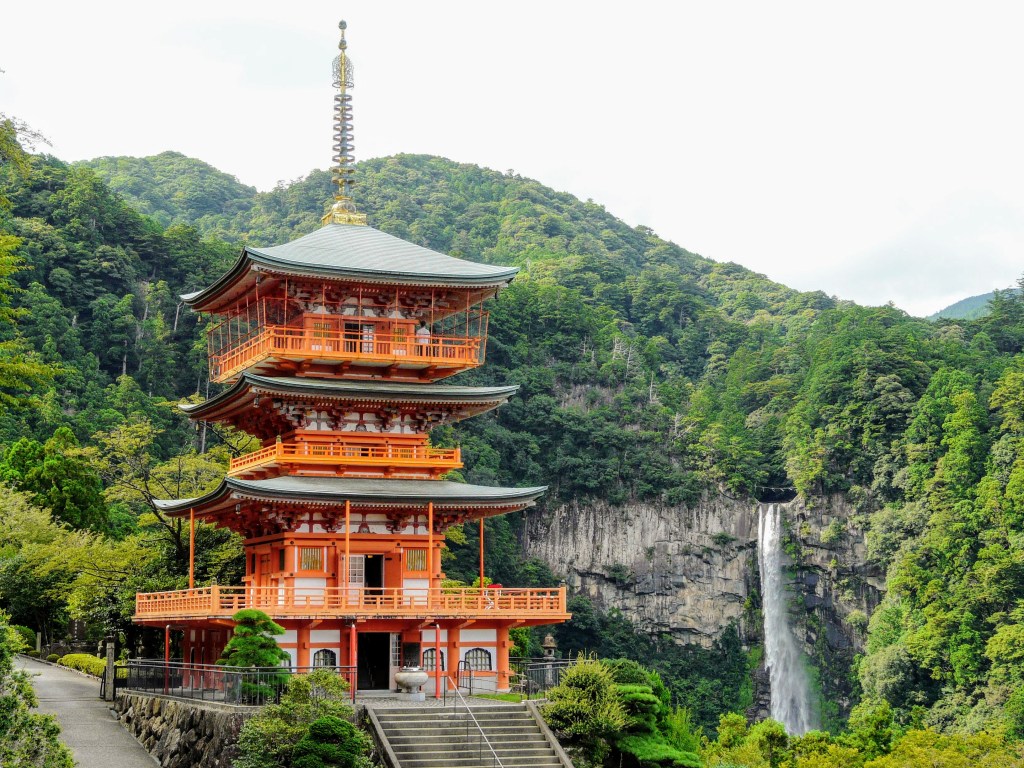
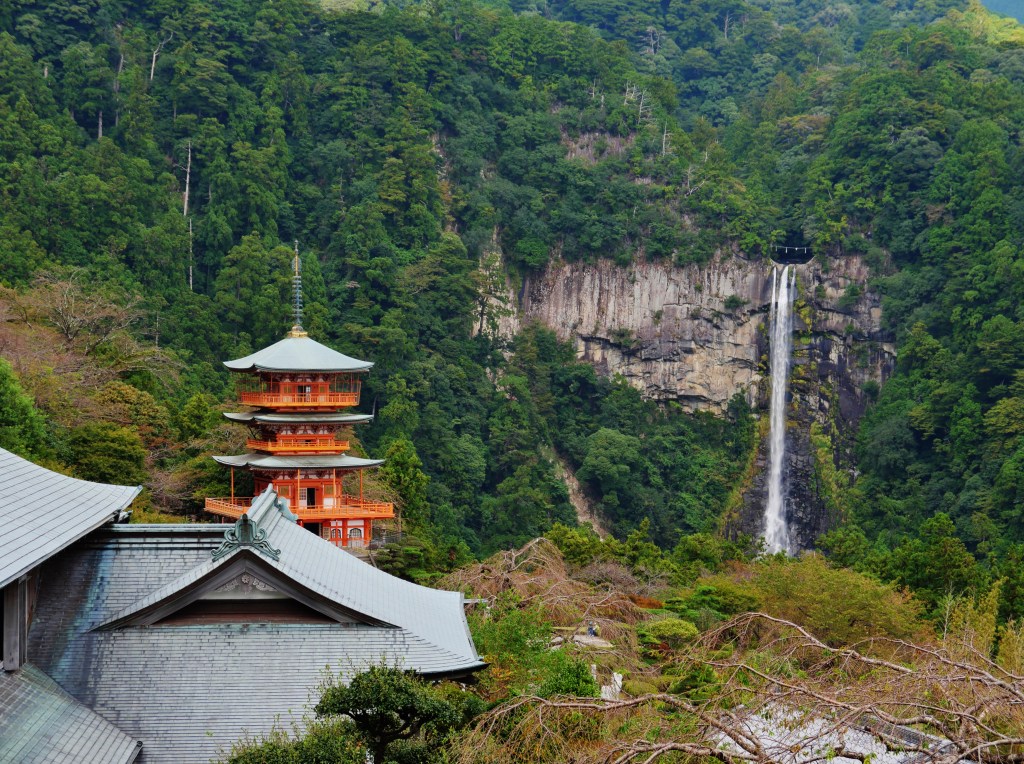
Nachi is one of the few places in Japan where the guidebook photograph undersells the reality. The postcard view is familiar: a vermilion three-storey pagoda, a curtain of cedar forest, and a 133-metre waterfall dropping in a single white line behind it. Standing on the stone steps in the spray, with the boom of the falls filling the trees, is a different thing altogether. Nachi is not a garden or a viewpoint. It is a working pilgrimage site, and the waterfall is not scenery but a deity.
The site sits halfway up Mount Nachi in Wakayama prefecture, in the mountains of the Kii peninsula. It brings together three closely linked places: Kumano Nachi Taisha, one of the three great Kumano shrines; Seiganto-ji, the first temple of the Saigoku Thirty-Three Kannon pilgrimage; and Nachi Falls, worshipped at Hiryu Shrine as the physical body of a god. Around them are the stone steps of Daimon-zaka, the old approach through the forest, and the hot-spring town of Kii-Katsuura on the coast below.
This guide is for travellers who want to see Nachi properly rather than tick it off. It covers the 2026 admission fees and opening times, the bus from Kii-Katsuura, the Daimon-zaka walk, the fire festival, the pagoda view, food and lodging, and the mistakes that turn a memorable day into a rushed one. It also explains what is not open, what is not free, and which parts of the visit need to be reconfirmed before you travel.
Nachi at a glance
| Location | Nachisan, Nachikatsuura town, Higashimuro district, Wakayama prefecture, Kansai |
|---|---|
| Main sites | Kumano Nachi Taisha, Seiganto-ji, Nachi Falls (Hiryu Shrine), Daimon-zaka |
| Altitude | About 350 m at the shrine precinct |
| Waterfall | 133 m high, 13 m wide at the lip, plunge pool about 10 m deep, roughly 1 tonne of water per second |
| UNESCO status | Part of the Sacred Sites and Pilgrimage Routes in the Kii Mountain Range, inscribed in 2004 |
| Shrine grounds | Free; generally open from around 6:00 to 18:00, with the shrine office around 8:00 to 16:30 |
| Seiganto-ji | Free; 7:00 to 16:30 |
| Pagoda | ¥500 adult, ¥300 child; 8:30 to 16:00, with last entry before 16:00 |
| Waterfall viewing platform | ¥500 adult, ¥200 child; preschool free |
| Bus from Kii-Katsuura Station | ¥630 to Nachisan, about 30 minutes; ¥430 to Daimon-zaka, about 20 minutes |
| Time needed | Half a day for the shrine and falls by bus; a full day if you walk Daimon-zaka |
| Main caveat | Many stairs, early closing at the pagoda and platform, and a thin bus timetable in the evening |
Why Nachi feels different
Japan has taller waterfalls and grander shrines. Nachi’s hold comes from the way the three elements are stacked together. The shrine sits on a wooded terrace. Below it, the temple and pagoda face the gorge. Below them, the waterfall drops into a rocky basin. The whole complex is arranged like a mandala in three dimensions, and the path between the parts is short enough to walk but steep enough to feel like a climb.
The second difference is that the site has never been purely decorative. The waterfall was worshipped before the shrine buildings existed. The shrine’s own tradition says that the deity of the falls was already being honoured when the imperial founder figure Jimmu landed at Nachi beach and followed a shining mountain inland. The shrine was moved to its present terrace in 317, according to that tradition, and the falls remained its separate, older sanctuary. When Buddhism arrived, the site became a centre of shugendo, the mountain ascetic tradition, and Shinto and Buddhist practice were combined until the Meiji government separated them in the late nineteenth century.
That layered history is why you will see a Shinto torii, a Buddhist temple, a pagoda and a waterfall shrine within a few minutes of each other. It is also why the site rewards a slower visit. If you arrive, photograph the pagoda, and leave, you miss the reason the photograph exists.
Nachi Falls: the deity in the gorge
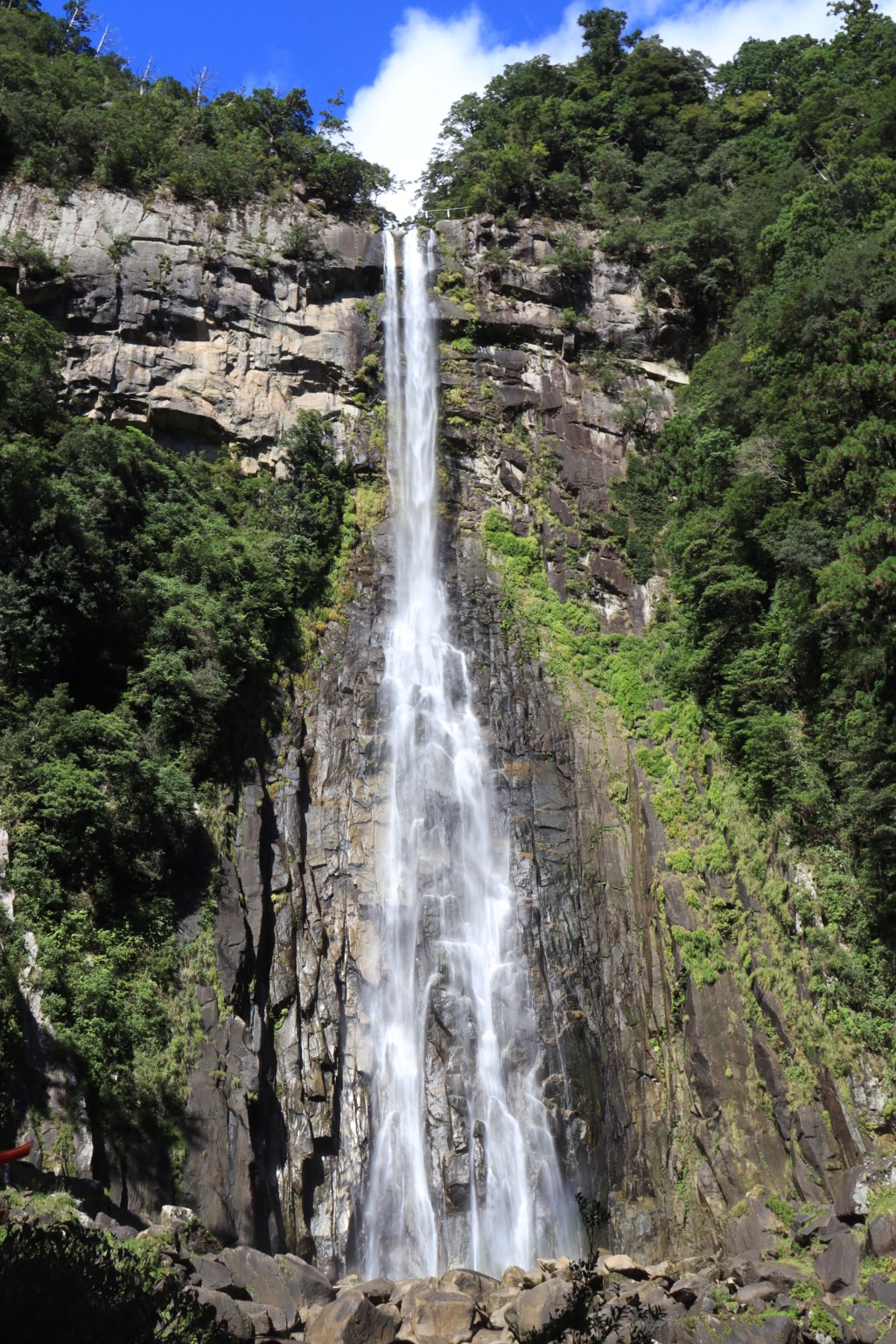
Nachi Falls is called Ichi-no-taki, the first waterfall, to distinguish it from the second and third falls upstream. Together the three are known as Nachi Falls and are designated a national Place of Scenic Beauty. The main drop is 133 metres high, about 13 metres wide at the lip, with a plunge pool around 10 metres deep. On a normal day roughly one tonne of water falls every second.
The claim you will see in guidebooks is that this is Japan’s tallest single-drop waterfall. The Japan National Tourism Organization describes it as Japan’s tallest uninterrupted single drop, and the Japan Records Association recognises it as the tallest single fall in the country. The qualification matters: Japan has taller multi-tiered falls and seasonal falls, but Nachi’s water drops in one unbroken line down a vertical cliff. That is the spectacle.
What the photograph cannot show is the sound. The viewing platform puts you close enough to feel the spray and hear the low, continuous roar behind the trees. On sunny mornings the mist can throw a rainbow across the basin; on windy days the water leans sideways and the platform gets wet. In winter the volume drops and the falls can look thin and cold. After heavy rain they turn brown and violent. The character changes with the weather, which is part of the reason people come back.
The falls are the goshintai, the physical body of the deity, of Hiryu Shrine, a subsidiary shrine of Kumano Nachi Taisha. Hiryu Shrine has no main hall. There is no building to pray in front of, because the waterfall itself is the object of worship. A sacred rope is stretched across the top of the falls and renewed in traditional ceremonies on 9 January and 27 December. The water in the plunge pool is traditionally called the water of long life, and visitors can drink from a dragon-headed pipe on the way to the platform. Treat that as a ritual gesture rather than a medical treatment.
The viewing platform is the only part of the falls that charges admission: ¥500 for adults and ¥200 for children and junior high students, with preschoolers free. The ticket is bought at the Hiryu Shrine office beside the torii, and the walk to the platform takes about three minutes. The platform is not wheelchair accessible, and the path is uneven. If you only want a distant view, you can see the top of the falls from the shrine area and the pagoda without paying, but you cannot see the full drop from there.
Hiryu Shrine and the practice of waterfall worship
Hiryu Shrine is easy to mistake for an entrance gate. There is a torii, a small office, a purification basin and a path leading away from the main shrine complex. The absence of a hall is the point. The shrine’s deity is the falls, and the falls are worshipped directly. The name Hiryu means “flying dragon,” a reference to the shape of the water as it leaves the lip.
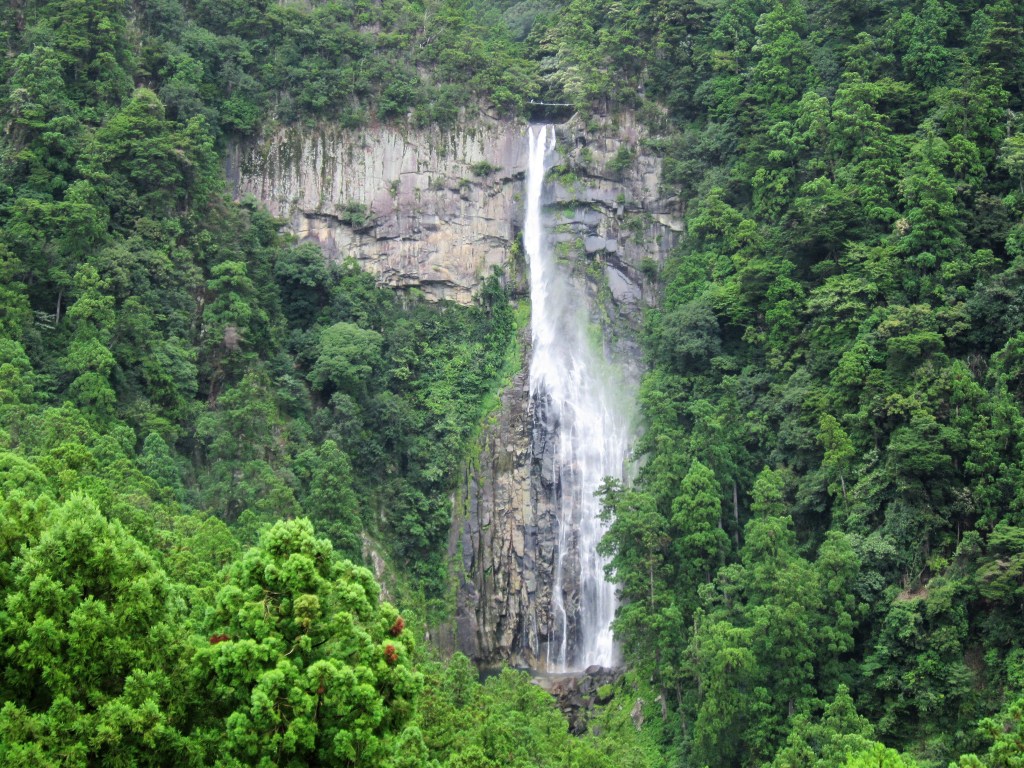
The walk to the platform passes a small shop and a row of stone markers before the path turns into the trees. The platform is a wooden deck set at the base of the gorge, close enough that the air is cool and damp even in summer. There is a railing, but no shelter. Photography is allowed, though spray will cover the lens within seconds. A cloth and a plastic bag for the camera are more useful than a tripod.
The shrine office sells amulets and stamps. If you want the goshuin, ask at the office before walking to the platform, because the office may close before the platform does. The same applies to the shrine’s treasure hall, which has separate hours and a separate fee.
Seiganto-ji: the first temple of the Saigoku pilgrimage
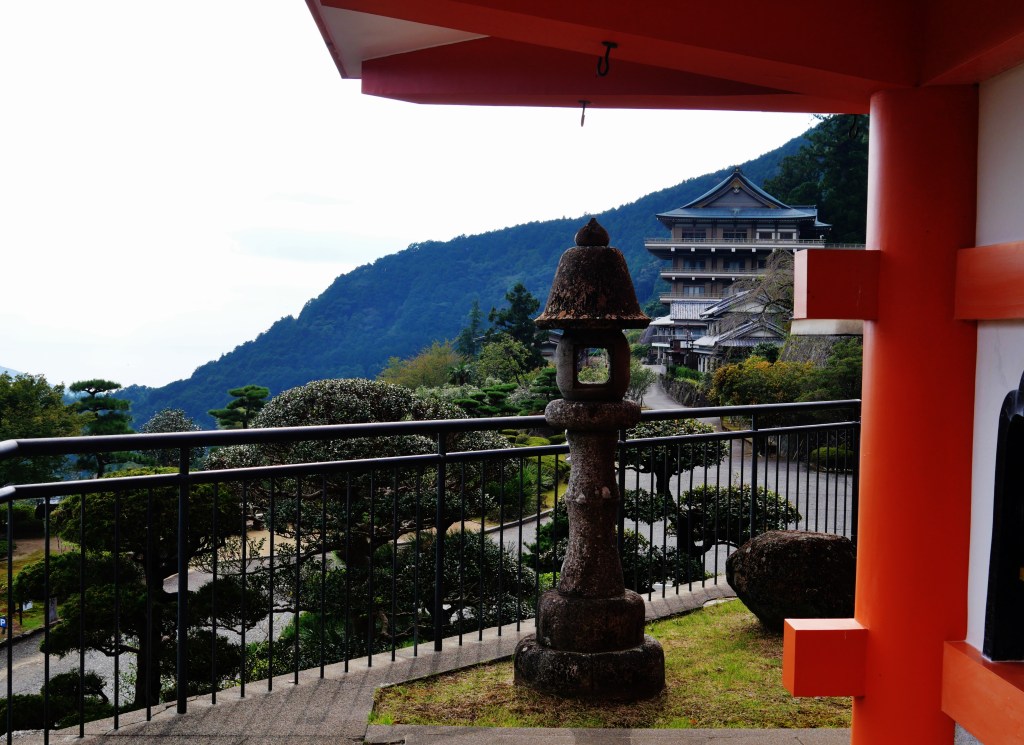
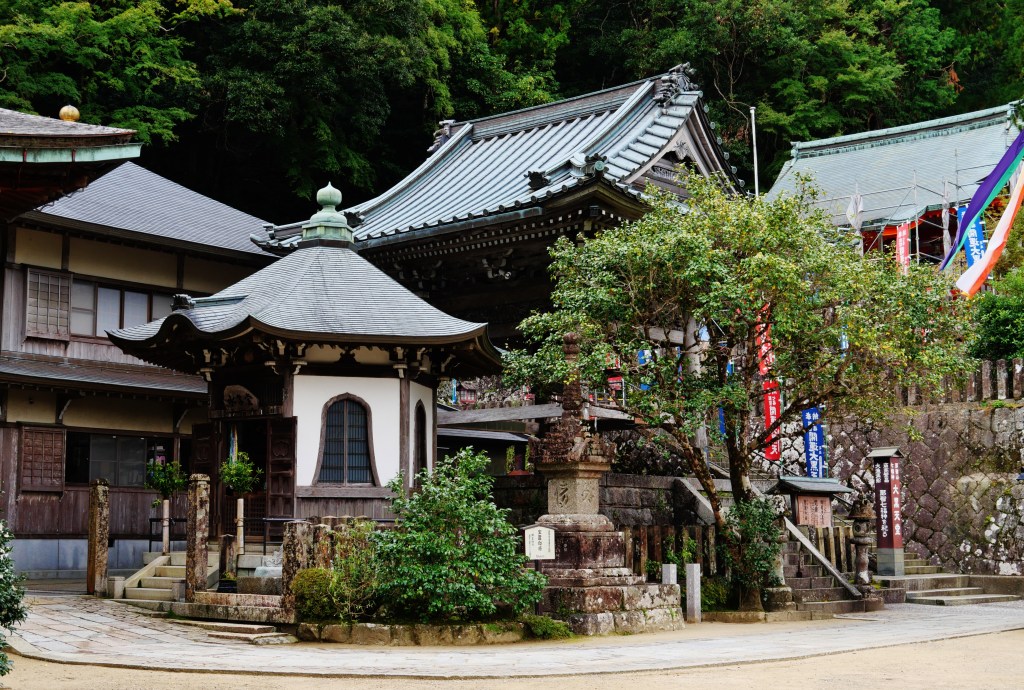
Seiganto-ji stands immediately beside Kumano Nachi Taisha, so close that the two feel like one compound. They are separate institutions. The temple belongs to the Tendai school and is the first of the thirty-three temples of the Saigoku Kannon pilgrimage, a circuit that stretches across western Japan. Its full name, Nachisan Seiganto-ji, means the temple of the blue cliff, a reference to the gorge below.
Tradition credits the temple’s founding to a fourth-century Indian monk called Ragyo Shonin, who is said to have landed at Nachi beach, climbed to the falls and had a vision of Kannon, the bodhisattva of compassion. That would make the temple around 1,600 years old, which is the date the temple itself uses. The present main hall is much later: it was rebuilt in 1590 by Toyotomi Hideyoshi, the warlord who unified Japan, and it retains the robust style of that period. The hall is free to enter, and the dark interior, with its carved beams and hanging lanterns, is a quiet contrast to the bright pagoda outside.
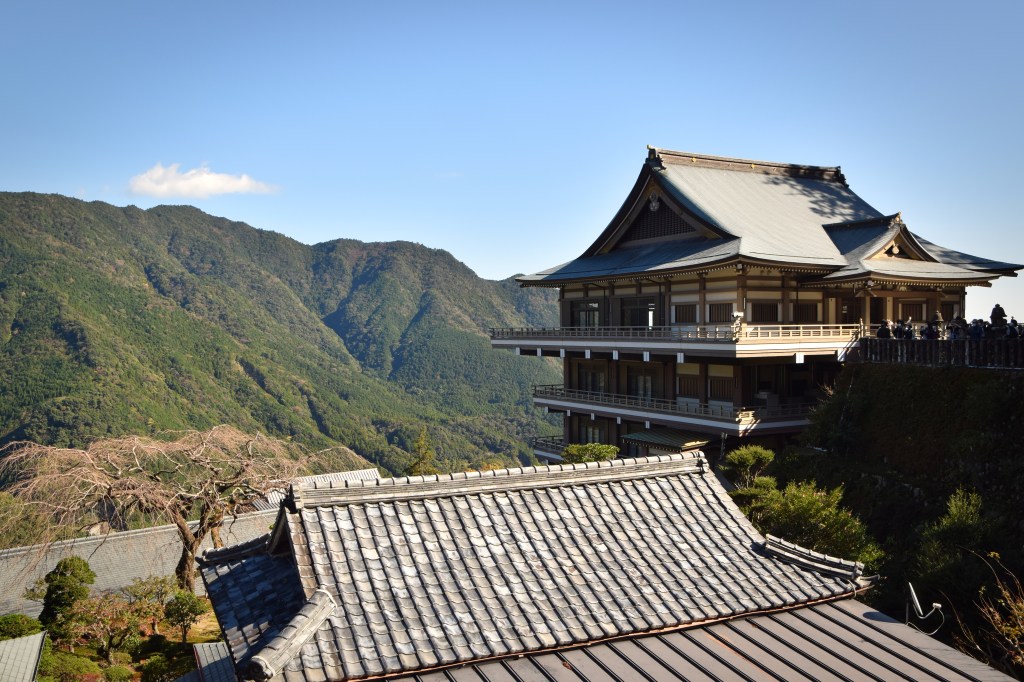
The temple’s most famous structure is the three-storey pagoda behind the main hall. The original pagoda is believed to have been built in the late Heian period and is depicted in the Nachi Pilgrimage Mandala, a painting about five hundred years old. It burned in 1581 during the civil wars of the Sengoku period and was not rebuilt for four centuries. The present pagoda was completed in 1972, which is why it looks newer than the temple beside it. The design follows the original, and the position is the same, but the building is a twentieth-century reconstruction, not a surviving medieval tower.
The pagoda has an elevator to the top floor, which makes the view accessible to people who cannot manage the stairs. The top floor looks north, straight at the waterfall, and the windows frame the drop between the trees. The classic photograph, however, is taken from the slope south of the pagoda, where the building and the falls line up. That shot needs no ticket, but it does need patience: the light changes quickly, and the viewpoint is narrow.
Admission to the pagoda is ¥500 for adults and ¥300 for children and junior high students, with group rates for parties of thirty or more. The official temple page lists opening hours of 8:30 to 16:00, while the town’s reopening notice gives a last entry of 15:40. Arrive by mid-afternoon at the latest. The pagoda reopened in December 2024 after a repainting of its vermilion exterior, so the colour in recent photographs is brighter than in older ones.
Kumano Nachi Taisha: the shrine on the terrace
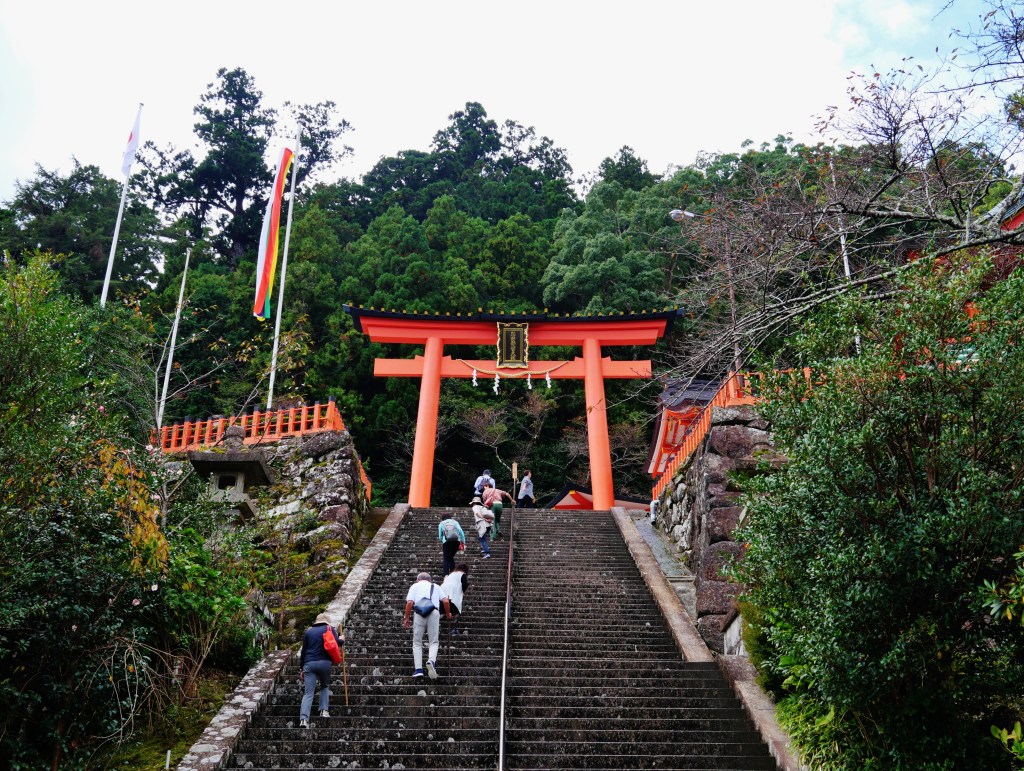
Kumano Nachi Taisha is one of the three great Kumano shrines, together with Kumano Hongu Taisha and Kumano Hayatama Taisha. It is also described as the head of more than four thousand Kumano shrines across Japan. The precinct sits on a terrace about 350 metres above sea level, reached by a long flight of stone steps from the Daimon-zaka side or by a shorter climb from the bus stop and parking area.
The shrine’s origin story begins with the waterfall. According to the shrine, Jimmu, the legendary first emperor, landed at Nachi beach around 662 BCE, saw a mountain glowing in the distance, followed it inland and found the falls. He honoured the waterfall as the manifestation of a great deity. The shrine was moved from the falls to its present terrace in 317, during the reign of Emperor Nintoku. The shrine now enshrines twelve deities of Kumano, with Kumano Fusumi no Okami as the main deity, plus the deity of the waterfall. That extra deity is why Nachi has one more kami than the other two Kumano shrines.
The main hall is a good example of Kumano shrine architecture: a steep cedar-bark roof, a veranda, and a facade of weathered wood and gold fittings. The precinct is compact, with subsidiary shrines, a sacred tree, a water basin and a small treasure hall. The Treasure Hall charges ¥300 for adults and ¥200 for children, is open from 8:30 to 15:30, and closes on Wednesdays. It is small, but the medieval documents and ritual objects are worth twenty minutes if you are interested in the site’s history.
The Enmei-no-mizu, or water of long life, is a spring within the precinct. The name is shared with the water associated with the falls, and the two are often confused. The spring is a short detour from the main hall and is a good place to pause before the climb down to the pagoda. The shrine also has a large sacred tree and a stone associated with the three-legged crow, Yatagarasu, the guide that led Jimmu to Yamato. The crow is a symbol of guidance and safe travel, and the stone is a popular stop for drivers and pilgrims.
The shrine office is generally open from 8:00 to 16:30, and the grounds are open from around 6:00 to 18:00. Night visits are discouraged. The office sells stamps, amulets and pilgrimage goods. If you want a formal prayer, the shrine asks you to arrive before the afternoon cutoff; the reception hours are not the same as the grounds’ hours.
The pagoda view: how to see it and when
The view of the pagoda with the waterfall behind it is the image that brings most visitors to Nachi. It is also the easiest thing to get wrong. The pagoda stands below the main hall of Seiganto-ji, and the falls are in the gorge behind it. From the temple’s main hall, you look down on the pagoda roof. From the slope south of the pagoda, the building and the falls align. From the pagoda’s top floor, you look north through windows at the falls. Each view is different, and all three are worth a few minutes.
The classic shot is best in the morning, when the sun is behind the photographer and the falls are lit. By midday the gorge can be in shadow, and in the afternoon the light falls behind the pagoda. Mist and low cloud are common, especially in spring and autumn, and can hide the falls completely. If the view is closed in, wait twenty minutes; the weather on the mountain changes quickly. A polarising filter helps cut the glare from the wet rock, but it also darkens the already dark cedar forest, so use it with care.
The pagoda’s top floor has windows on all sides, and the north-facing window frames the falls. The stairs are steep, but there is an elevator. The floor is small, and tripods are difficult when it is busy. The temple asks visitors to keep quiet and not to block the windows. If you want the exterior shot, walk back down the slope to the south of the pagoda and look for the gap in the trees. The best position is obvious when you see it: a small clearing with the pagoda on the left and the white line of the falls on the right.
Do not confuse this pagoda with the Chureito Pagoda near Mount Fuji. They are often mistaken for each other in photographs, but they are in different regions, different settings and different architectural traditions. Chureito is a war memorial on a hillside; Nachi’s pagoda is part of a temple complex beside a sacred waterfall.
Daimon-zaka: the old approach
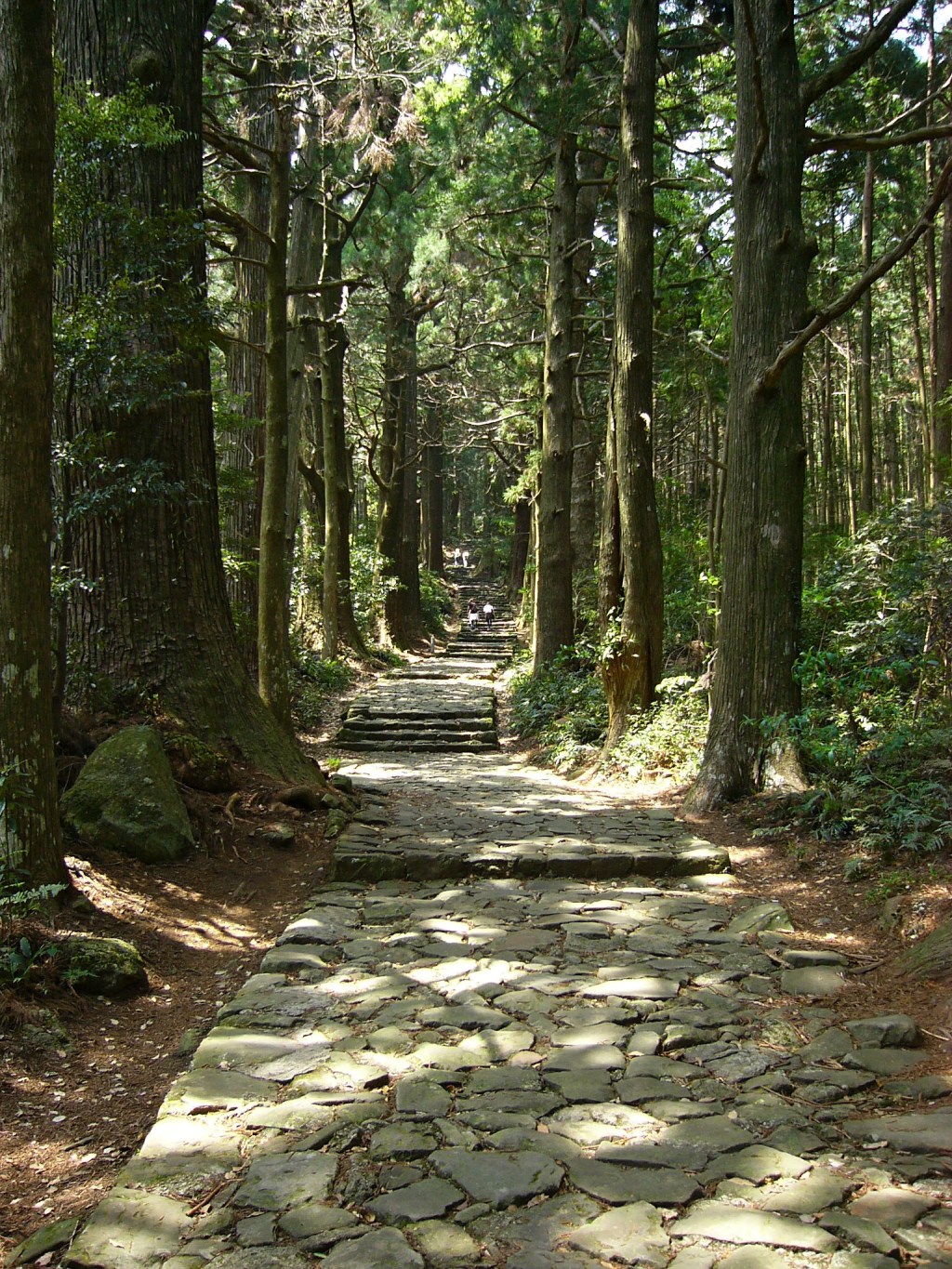
Daimon-zaka is the most atmospheric way to reach Nachi. It is a 650-metre stone-paved slope with 267 steps, climbing more than 100 metres through a tunnel of cedar. The name means “the slope of the great gate,” because a large gate once stood at the top. The gate was moved and now serves as the mountain gate of Seiganto-ji. At the bottom, the path begins near the Furusegawa bridge, which marked the boundary between the ordinary world and the sacred mountain.
The walk takes about 30 minutes for a fit walker without stops, but most people need longer. The stones are uneven, polished by centuries of feet, and slippery when wet. The roots of the giant cedars cross the path, and the slope is steep enough to make you glad of a handrail. Wear shoes with grip. If it has rained, the descent is more dangerous than the ascent, and the bus is a sensible alternative for anyone with knee or balance problems.
Near the top, the trees open and you get a first glimpse of the falls. The path continues past the Daimon-zaka teahouse and a row of shops before the final climb to the shrine. From the top of Daimon-zaka to Kumano Nachi Taisha is another 470 steps, according to the local tourism office, so the full approach is a genuine climb rather than a stroll. The reward is the arrival: the shrine terrace appears suddenly, with the pagoda below and the falls beyond.
To walk the full route, take the bus from Kii-Katsuura Station to the Daimon-zaka stop (¥430, about 20 minutes), walk up the slope, visit the shrine, temple, pagoda and falls, and then take the bus back from Nachisan or Nachi-no-Taki-mae. The one-way walk from the Daimon-zaka entrance to the falls is about 2.5 kilometres and takes around two hours including the shrine and temple, or three to four hours with photos and pauses. The bus stop is about 500 metres from the bottom of the slope, and the Daimon-zaka car park is free.
Walking route and timing
The site is compact but vertical. A sensible order is: arrive at Nachisan by bus, visit Kumano Nachi Taisha first, walk through the connecting path to Seiganto-ji, climb the pagoda, then descend to the waterfall platform, and finish at the falls before taking the bus back. This order keeps the hardest climbing early and saves the pagoda’s closing time.
If you walk up Daimon-zaka, reverse it: start at the bottom, climb to the shrine, visit the temple and pagoda, descend to the falls, and take the bus from the falls stop. The descent from the shrine to the falls is short but steep, with stone steps and tree roots. Allow 15 to 20 minutes, more if it is wet.
A realistic schedule for a half-day visit by bus looks like this:
- 8:25 Bus from Kii-Katsuura Station to Nachisan (arrives around 8:51).
- 9:00 Kumano Nachi Taisha: main hall, Enmei-no-mizu, Yatagarasu stone.
- 10:00 Seiganto-ji: main hall and pagoda.
- 11:00 Nachi Falls: platform and shrine.
- 12:00 Lunch at the shops near the bus stop, or return to Kii-Katsuura for tuna.
- 13:30 Bus back to the station, or walk down Daimon-zaka if time and knees allow.
That schedule is tight but workable. If you want to walk Daimon-zaka as well, start at 7:35 or 8:25, take the bus to Daimon-zaka, and give the whole day to the mountain. The last bus back to Kii-Katsuura leaves in the early evening, and the timetable is thin; check the current PDF at the station or on the bus company’s site before you set out. Missing the last bus means a taxi, and taxis are limited in the evening.
2026 fees, hours and what is free
Nachi is often described as free, which is only partly true. The shrine grounds, the temple grounds and the approach are free. The two experiences most visitors want, the pagoda and the close-up waterfall platform, are both paid. The fees are modest, but they add up for a family, and the closing times are earlier than many people expect.
| Place | Admission | Hours | Notes |
|---|---|---|---|
| Kumano Nachi Taisha grounds | Free | Around 6:00 to 18:00 | Shrine office around 8:00 to 16:30; night visits discouraged |
| Seiganto-ji main hall | Free | 7:00 to 16:30 | Hours can change on New Year and the first of the month |
| Seiganto-ji pagoda | ¥500 adult, ¥300 child | 8:30 to 16:00 | Last entry may be 15:40; elevator to the top floor |
| Nachi Falls viewing platform | ¥500 adult, ¥200 child | Roughly 7:00 to 16:30 | Preschool free; last entry before closing; not wheelchair accessible |
| Treasure Hall | ¥300 adult, ¥200 child | 8:30 to 15:30 | Closed Wednesdays; may close for shrine business |
| Nachi Taisha parking | ¥800 per car | Daytime | About 30 spaces at the shrine office lot; limited |
| Bus from Kii-Katsuura Station | ¥630 to Nachisan | Roughly hourly | Cash only; ¥430 to Daimon-zaka |
The pagoda fee is the one most often misreported. Some English-language pages still list ¥300, which was the old price before the 2024 reopening. The temple’s official page now lists ¥500 for adults and ¥300 for children. The waterfall platform is also sometimes listed as ¥300; the shrine’s official page lists ¥500 for adults and ¥200 for children. Use the official pages, and carry cash in small notes.
The shrine and temple are separate organizations, so a ticket for one does not cover the other. The pagoda ticket is bought at the pagoda entrance, and the waterfall ticket at the Hiryu Shrine office. Neither takes reservations. The treasure hall is a third ticket. If you are travelling with children, note that “child” generally means junior high school and under, while preschoolers are free at the waterfall but may be charged at the pagoda depending on the desk.
The fire festival: Nachi no Ogi Matsuri
Nachi’s great annual festival is the Nachi no Ogi Matsuri, also called the Nachi Fire Festival. It is held every 14 July and is one of Japan’s three great fire festivals. In 2026 it falls on Tuesday 14 July, and the official schedule runs from 10:00 to 15:30. The festival is free to watch, needs no reservation, and is open to the general public.
The festival dramatises the relationship between the shrine and the falls. The twelve deities of Kumano Nachi Taisha are placed on twelve elaborate fan-shaped portable shrines, each about six metres tall, decorated with gold fans, mirrors and paper flowers. They are carried down from the shrine to Hiryu Shrine at the falls, where twelve giant torches, each weighing around 50 kilograms, are lit to purify the path. The contrast between the white water and the orange flames is the moment everyone comes to see.
The 2026 order of events, according to the shrine, is:
- 10:00 Ritual at the main shrine.
- 11:00 Yamato dance offering at the shrine’s temporary stage.
- 11:30 Nachi no Dengaku, a UNESCO intangible cultural heritage performance.
- 12:15 Rice-planting ritual.
- 13:00 The twelve fan shrines leave the main shrine.
- 13:30 The fans are raised at the Fushioji viewpoint.
- 14:00 The fire ritual at the falls, the climax of the day.
- 14:20 Rites at the waterfall.
- 14:50 Rice-harvest ritual and Nachi dance.
- 15:30 The deities return to the main shrine.
The night before, 13 July, has a quieter yoimiya ceremony at 17:00, followed by children’s dance at 19:00 and Dengaku at 19:30. If you are in the area on the 13th, this is a less crowded way to see the ritual performances. The main day is busy: the shrine recommends arriving early, and the town runs shuttle buses from the Daimon-zaka area when the Nachisan car parks fill, usually by mid-morning.
On festival day, the Nachi-no-Taki-mae bus stop may be closed during the procession, and buses divert to the Nachisan stop. Expect delays and crowding. The shrine asks spectators to stay behind the barriers during the fire ritual, to wear shoes with grip, and to bring water and sun protection. The torches throw sparks, and the stone steps are steep. This is not a festival for standing in the front row with a child on your shoulders.
Other festivals and seasonal rituals
The fire festival is the biggest event, but it is not the only one. The shrine holds regular ceremonies through the year, and the waterfall’s sacred rope is renewed on 9 January and 27 December. These are religious events rather than tourist shows, and visitors are welcome to watch respectfully, but they are not announced with the same fanfare as the July festival.
Seiganto-ji has its own calendar, including New Year services and memorial ceremonies. The temple’s main hall is a place of active worship, so a ceremony may close part of the building without notice. The pagoda can also close for maintenance; it was closed for repainting from September to December 2024. Check the temple’s news page before making a special trip if the pagoda is the main reason you are coming.
Spring and autumn are the busiest tourist seasons, but the site’s religious calendar is separate from the tourist calendar. If you want quiet, avoid weekends, public holidays, the New Year period and the July festival. Early morning on a weekday is the best chance of having the pagoda view to yourself.
Getting to Nachi
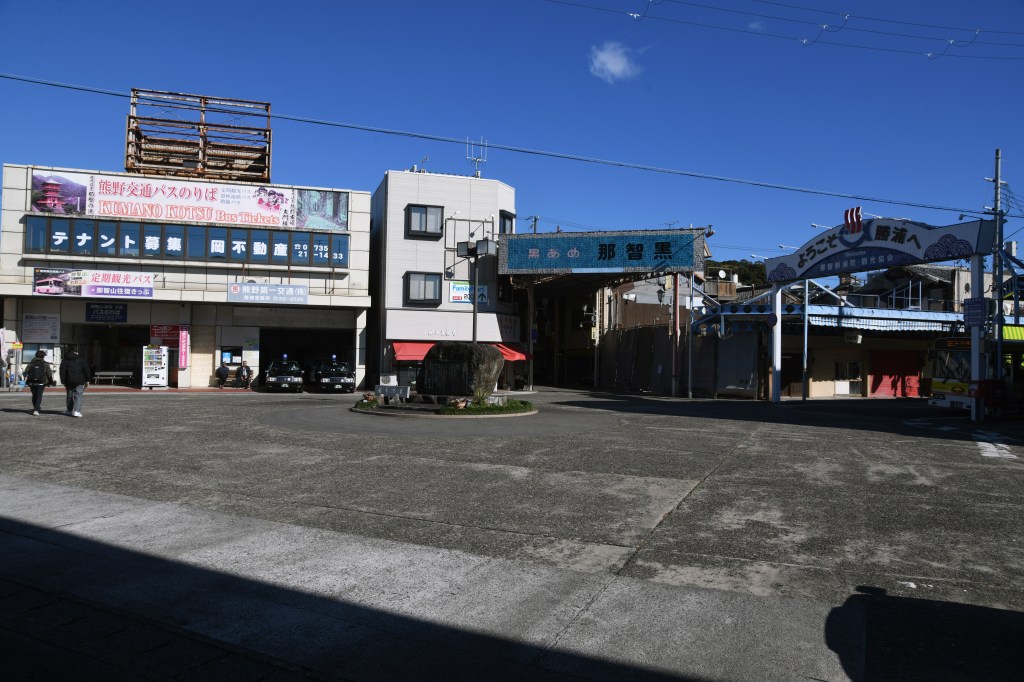
The gateway is Kii-Katsuura Station on the JR Kisei Main Line, on the coast below the mountain. Limited express trains run from Shin-Osaka and Osaka (the Kuroshio) and from Nagoya (the Nanki). The ride from Osaka is roughly four hours, and from Nagoya roughly three and a half, depending on the service and transfers. The route follows the coast for long stretches, with views of the sea and the Kumano mountains.
From the station, the Nachisan Line bus runs to the mountain. The 2026 timetable, revised on 1 April, has about seventeen departures a day from Kii-Katsuura Station, from 6:45 to 17:35. The fare is ¥630 to Nachisan and ¥430 to Daimon-zaka, and the journey takes about 30 or 20 minutes respectively. The bus is cash only; have coins or a ¥1,000 note ready. The route passes Nachi Station, the coast, and the turn-off to Daimon-zaka before climbing the mountain road.
If you are coming by car, the approach is from National Route 42 to the Nachisan road. The shrine’s car park has about 30 spaces and charges ¥800; the Daimon-zaka car park at the bottom is free. On busy days, including the fire festival, the upper car parks fill and drivers are directed to temporary parking with a shuttle bus. The road is narrow and winding, and the mountain can be foggy. Driving is convenient for combining Nachi with Kumano Hongu or Shingu, but it is not the relaxed option.
Taxis from Kii-Katsuura Station or the onsen hotels take about 20 to 30 minutes to Nachisan. They are useful for early starts, for travellers with mobility problems, and for the fire festival, but supply is limited. Book through your hotel the day before, and confirm the return time. A taxi is also the only realistic fallback if you miss the last bus.
Where to stay
Most travellers stay in Kii-Katsuura, the port town at the foot of the mountain. It has the widest range of hotels, the best food, and the bus terminus. The town is famous for its hot springs and its tuna, and the combination makes it a good base for two nights rather than one.
Hotel Urashima is the largest and most famous of the Kii-Katsuura onsen hotels. It occupies a headland reached by a small boat, and its buildings contain two natural cave baths, including the large Bokido. It has four wings, several restaurants and a buffet centred on tuna. It is not a boutique experience, but it is a memorable one, and it is well set up for families and groups. The boat transfer and the long corridors are part of the experience; allow time for them.
Minshuku Kamenoi is a seven-room family-run inn about five minutes’ walk from Kii-Katsuura Station. It specialises in natural tuna, bought by the owner at the Katsuura port, and serves multi-course dinners in a small dining room. Rooms are simple Japanese-style, with toilet and washbasin, and the inn is clear that it is a minshuku rather than a hotel. It is a good choice for travellers who want the food to be the centre of the stay.
Minshuku Wakatake is another small tuna-focused inn, a short walk from the station, with plans that include tuna sashimi, whale, Kumano beef and local sake. It has a hot-spring bath and simple rooms. As with Kamenoi, the appeal is the dinner and the proximity to the station, not luxury facilities.
If you want a quieter mountain stay, there are a few lodges and guesthouses around Nachisan and Kii-Katsuura, but the supply is limited and the best places book out in autumn and around the festival. Staying in Shingu, about 20 to 30 minutes away by train, is another option: it has more business hotels and access to Kumano Hayatama Taisha, but it lacks Kii-Katsuura’s onsen atmosphere. Staying in Kumano Hongu is possible, but it is a long way from Nachi and not a good base for a single visit.
Food: tuna, mehari-zushi and mountain snacks
Kii-Katsuura is one of Japan’s most important tuna ports. The town’s restaurants serve maguro in every form: sashimi, seared, simmered, in rice bowls, and as kama-yaki, the grilled collar. The quality is high and the prices are lower than in Tokyo or Osaka. If you are a tuna eater, plan at least one dinner in town rather than eating at the shrine.
The local specialty you should try at least once is mehari-zushi, a large rice ball wrapped in a pickled mustard leaf. It was a portable food for pilgrims and farmers, and it is still sold at station shops and local delis. The leaf is salty and slightly sour, the rice is plain, and the filling is usually tuna or pickled plum. It travels well, which makes it a good lunch for the Daimon-zaka walk.
Other local products include Kumano sansho, a fragrant Japanese pepper; Kishu umeboshi, the salt-pickled plums of Wakayama; and Kumano beef, a regional wagyu. The mountain shops near the shrine sell sweet potato sweets, rice crackers and hot tea. The options are limited and the hours are short, so do not rely on finding a late lunch at the top. Eat before you climb, or bring a packed lunch.
Vegetarians and vegans will find Kii-Katsuura harder than Kyoto or Osaka. Many small restaurants cook with fish stock, and the tuna culture dominates. Buddhist temple cuisine (shojin ryori) is available at some temples on the Kumano route, but not reliably at Nachi. If you have dietary restrictions, stay somewhere that offers dinner and explain your needs in advance.
One-day itinerary
This is the most efficient way to see Nachi if you are based in Kii-Katsuura and do not want to rush.
- 07:00 Breakfast at the hotel or a station bakery.
- 07:35 Bus from Kii-Katsuura Station to Daimon-zaka (¥430, about 20 minutes).
- 08:00 Walk up Daimon-zaka: 650 metres, 267 steps, about 30 minutes.
- 08:45 Kumano Nachi Taisha: main hall, Enmei-no-mizu, Yatagarasu stone.
- 09:45 Seiganto-ji: main hall and pagoda (¥500).
- 10:45 Walk down to Nachi Falls and buy the platform ticket (¥500).
- 11:30 Hiryu Shrine and the falls; drink from the dragon pipe.
- 12:15 Lunch at the shops near Nachisan bus stop, or take the bus back to Kii-Katsuura for tuna.
- 14:00 Return to Kii-Katsuura, soak in the onsen, and eat dinner in town.
If you are not a walker, take the bus directly to Nachisan, visit the shrine and temple, take the pagoda elevator, and walk down the short path to the falls. That version takes about three hours and avoids the 267 steps, though there are still stairs at the shrine and the falls.
Two-day itinerary: Nachi and the Kumano coast
Two days lets you see Nachi without watching the clock and add one of the other Kumano sites.
Day 1: Arrive in Kii-Katsuura by midday, leave your bags, and take the afternoon bus to Nachisan. Visit the shrine and temple in the softer light, skip the pagoda if it is close to closing, and walk down to the falls. Return to town for a tuna dinner and an onsen. This is a good way to see the site without the morning crowds.
Day 2: Start early and walk Daimon-zaka before the tour groups arrive. Visit the pagoda when it opens, then take the bus back to the station and catch a train to Shingu (about 20 to 30 minutes) to see Kumano Hayatama Taisha, one of the other two Kumano Sanzan. The shrine sits near the mouth of the Kumano River, and the precinct has a different atmosphere from Nachi: flatter, more open, and closer to the town. If you have a car, you can continue to Kumano Hongu Taisha, but the drive and the winding mountain roads make it a full day.
A third day would let you walk a section of the Kumano Kodo or take a boat down the Kumano River, but those are separate trips. Do not try to combine Nachi, Hongu and Hayatama in one day unless you have a car and are content with short visits.
Best time to visit
Nachi is open all year, and each season changes the experience. Spring brings cherry blossom around the shrine and fresh green in the forest, but also school groups and holiday crowds. Early summer is lush and wet, with hydrangeas and mist in the gorge; the rainy season can make the stone steps slippery, but the falls are at their most powerful. Autumn is the most popular season, with red and yellow leaves against the cedar and the vermilion pagoda. The light is beautiful, but the weekends in November are busy.
Winter is quiet and cold. The falls are thinner, the forest is dark, and some shops close early, but you can have the pagoda view almost to yourself. Snow is rare at the shrine’s altitude, though the mountain road can be icy. The fire festival in July is the busiest day of the year, followed by the New Year period. If you want the festival, book accommodation months in advance and expect to stand for hours.
The worst combination is a weekend in November with a late start. The car parks fill, the buses are crowded, and the pagoda’s top floor is a scrum. If you can only come then, arrive on the first bus and go straight to the pagoda before the shrine.
Photography notes
The classic composition places the pagoda on the left and the waterfall on the right, with the dark forest between them. It is shot from the slope south of the pagoda, not from the pagoda itself. A standard lens is enough; a slight telephoto compresses the pagoda and the falls and makes the composition tighter. In the morning, the falls are brighter; in the afternoon, the pagoda is better lit but the gorge falls into shadow.
The top floor of the pagoda gives a framed view of the falls through the windows. The glass reflects, so bring a rubber lens hood or shield the lens with your hand. Tripods are awkward in the narrow space and may be restricted when it is busy. The waterfall platform is a different shot: a wide-angle lens captures the full drop, but spray will spot the front element. Carry a microfibre cloth and wipe between frames.
Daimon-zaka is best early, when the light comes through the cedars in shafts and the stones are still wet. The path is dark, so a fast lens or a high ISO is more useful than a tripod. Be considerate: the path is narrow, and people are walking in both directions. Do not block the steps for a shot. Drones are not appropriate at a shrine and temple; do not assume they are allowed, and ask before flying anywhere in the area.
Etiquette and respect
Nachi is an active religious site, not a theme park. The shrine and temple ask visitors to be quiet, to remove hats in the main halls, and to avoid eating or drinking in the precinct. Photography is allowed in most outdoor areas, but some halls prohibit it; look for signs and follow them. Do not photograph worshippers without permission, and do not stand in the middle of the path to take a group photo.
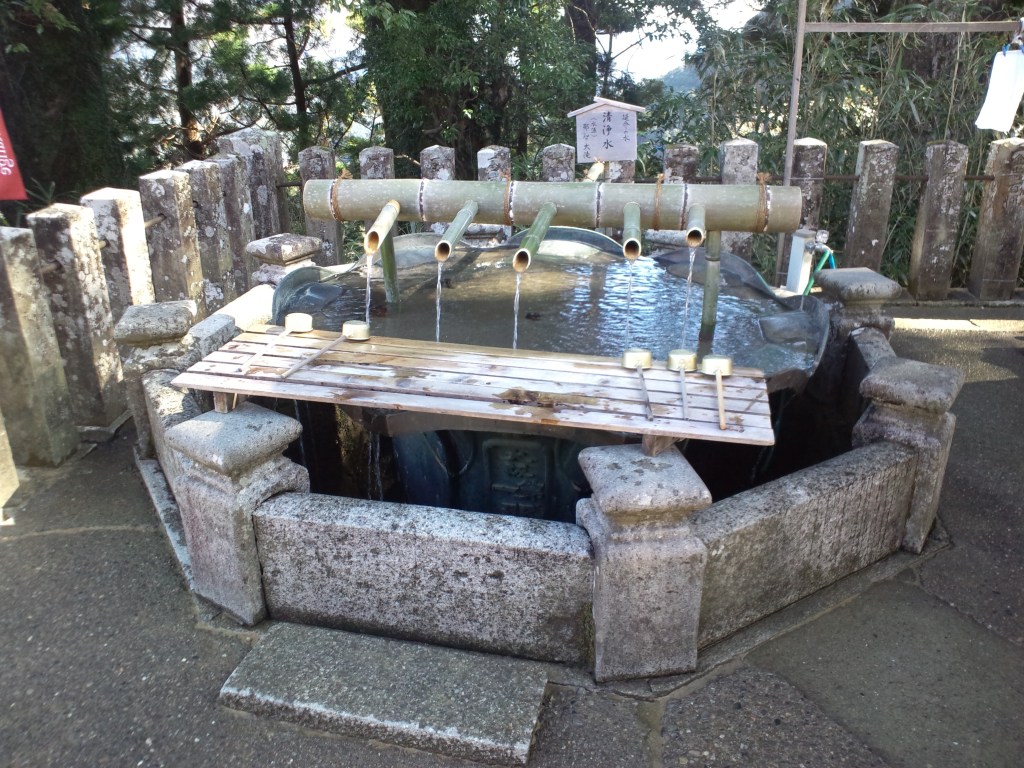
At the shrine, the customary sequence is to bow at the torii, wash your hands and mouth at the temizuya, and bow before the main hall. You do not need to know the formal prayers; a quiet bow and a moment of stillness are enough. At the temple, remove your shoes if you enter the main hall, and do not touch the altar or the statues. The pagoda is a sacred building as well as a viewpoint; keep your voice down and do not lean out of the windows.
The waterfall is a deity, not a swimming hole. Do not climb the rocks, enter the water, or throw coins into the pool. The platform has a railing for a reason. If you drink from the dragon pipe, use the ladle provided and do not put your mouth to the spout. Carry your rubbish out; there are few bins on the mountain.
Accessibility and safety
Nachi is a mountain site with many stone steps, and accessibility is limited. The shrine office has an elevator that takes visitors up to the main hall level, and the shrine says wheelchair users can visit Kumano Nachi Taisha via the office car park and elevator. The waterfall platform, however, cannot be reached by wheelchair, and the path to it is uneven. Seiganto-ji’s main hall has steps, and the pagoda has an elevator but a narrow entrance.
If you have mobility problems, use the shrine office car park (¥800), visit the main hall and the pagoda, and view the falls from the upper path rather than the platform. A taxi from Kii-Katsuura to the shrine office avoids the bus stop climb. Tell the driver you want the sha-musho parking, not the waterfall car park.
The main safety risks are the stone steps, the weather and the crowds. The steps are slippery when wet, and the descent from the shrine to the falls is steep. Wear shoes with grip, use the handrails, and take your time. In summer, the humidity is intense and the climb dehydrates you; carry water. In winter, the shade is cold and the stones can freeze. The mountain road can be foggy, and the last bus is early. Do not start the Daimon-zaka walk after 15:00 unless you have a torch and are confident of the route.
Common mistakes
Treating Nachi as a quick stop. The site deserves at least three hours, and a full day if you walk Daimon-zaka. Tour buses often allow ninety minutes, which is enough for the shrine and a photo of the pagoda but not for the falls or the temple.
Arriving after 16:00. The pagoda closes at 16:00 and the waterfall platform closes in the late afternoon. The grounds remain open, but the two paid experiences are gone. Plan the pagoda first if you arrive late.
Missing the last bus. The Nachisan Line is not a city bus. The last departure from the mountain is in the early evening, and taxis are scarce. Check the timetable before you start walking.
Only seeing the falls. The waterfall is the headline, but the shrine and temple are the reason the site is a World Heritage property. Skipping them leaves you with a photograph and no context.
Wearing smooth-soled shoes. The stone steps of Daimon-zaka and the path to the falls are polished and wet. Trainers with grip are the minimum; sandals and heels are a bad idea.
Assuming you can pay by card. The bus is cash only, and some small shops and the shrine office may not take cards. Carry yen in small notes and coins.
Going on 14 July without a plan. The fire festival is free, but the crowds are heavy, the bus stop changes, and the car parks fill by mid-morning. Arrive early, stay behind the barriers, and do not try to drive to the upper car park at noon.
Thinking the pagoda is ancient. The present pagoda was built in 1972. It is beautiful and historically informed, but it is not a medieval survivor. The temple’s main hall, rebuilt in 1590, is the older building.
Confusing Nachi with Kumano Hongu. They are both part of the Kumano Sanzan, but they are in different valleys and several hours apart by public transport. Do not book a hotel in one and expect to visit the other in an hour.
Trying to do too much. Nachi, Hongu, Hayatama, the Kumano Kodo and Kii-Katsuura’s onsen cannot be done properly in one day. Choose two, and leave something for the next trip.
Before you go
Check the official shrine and temple sites for the latest hours, closures and festival information. The pagoda can close for maintenance, and the shrine can change its reception hours for ceremonies. Confirm the bus timetable on the Kumano Gobou bus site, especially if you are relying on the last departure. Check the weather for Nachikatsuura; the mountain can be wetter and colder than the coast.
Carry cash, a rain jacket, water and shoes with grip. Bring a small towel for the waterfall spray and the onsen. If you want the goshuin, bring a stamp book or buy one at the shrine or temple; the stamps are handwritten and may take a few minutes. If you are visiting the fire festival, bring sun protection, a hat and a light layer for the evening, and arrive on the first bus.
Finally, leave time to sit. The terrace in front of the main hall, the steps below the pagoda, and the rock beside the falls are all places where the site works on you slowly. Nachi is not a place to rush. The waterfall has been falling for far longer than any of us, and it will still be there when you come back.
Sources and further reading
- Kumano Nachi Taisha and Hiryu Shrine official site
- Kumano Nachi Taisha: origin and history
- Hiryu Shrine and Nachi Falls: dimensions, worship and platform fee
- Nachi no Ogi Matsuri: schedule and ritual objects
- Kumano Nachi Taisha: access, parking and accessibility FAQ
- Seiganto-ji official site
- Seiganto-ji: hours, pagoda fee and access
- Seiganto-ji: history and founding tradition
- Wakayama Prefecture: Seiganto-ji and pagoda history
- Wakayama Prefecture: Nachi Falls dimensions and scenery
- Wakayama Prefecture: Daimon-zaka
- Nachikatsuura tourism: bus access and fares
- Kumano Gobou Bus: Nachisan Line timetable, revised 1 April 2026
- Tanabe City Kumano Tourism Bureau: Kumano Nachi Taisha
- Agency for Cultural Affairs: Seiganto-ji pagoda multilingual description
- Hotel Urashima official site
- Minshuku Kamenoi official site
- Minshuku Wakatake official site
- Japan National Tourism Organization: Nachi Falls
Fees, hours and transport were checked against the official sources above in October 2026. Prices and timetables can change; reconfirm before travelling, especially for the pagoda, the waterfall platform and the last bus.


Leave a Reply