Plan an independent visit to Aquamarine Fukushima in Fukushima with the main sights, food ideas, access checks, and seasonal notes.
Operational details such as opening hours, admission fees, and train times can change. Prefer official pages and reconfirm before you travel (sources checked on 31 October 2026).
Why visit
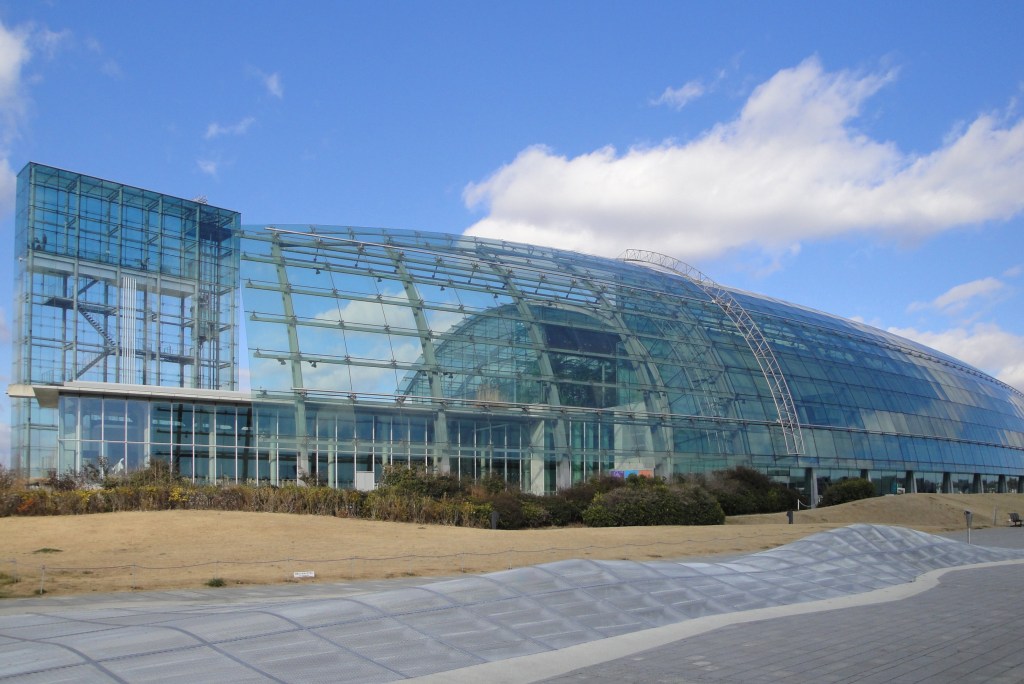
- Aquamarine Fukushima sits on the coast at Onahama in Iwaki, and its whole design is built around one idea: the Kuroshio and Oyashio currents travel thousands of kilometres from south and north and meet off Fukushima. The aquarium turns that meeting point into its central exhibit rather than a theme. Two tanks stand for the two currents and hold 2,050 tonnes of water between them, the largest single tank being 1,500 tonnes. It is an argument about oceanography expressed as architecture, and it gives the visit a spine that most regional aquariums lack.
- The building is filled with natural light and displays plants alongside animals, and the sections follow source regions rather than taxonomy. The museum describes reproducing the Sea of Okhotsk as the source of the Oyashio, tropical Asia as the source of the Kuroshio, and the seas, rivers and mountains of Fukushima itself. That structure means a visit moves between places rather than between tanks, and it explains why the Fukushima river and coastal section is the emotional centre of the building rather than a local add-on.
- It is also a research institution, and the collection reflects that. The aquarium collects specimens off Rausu in Hokkaido and states that it found new species of shrimp in 2014 and 2016, naming them Rausu-tsunonaga-moebi and Daiou-kijin-ebi, and that it gave a Japanese name to a species first confirmed in Japan in 2016 and put it on live display. Coelacanth work has run since the aquarium opened, including filming a live coelacanth in Indonesia with a remotely operated camera in 2006 and surveys in Tanzania. For a family attraction, that is an unusually serious research programme.
- For families, the outdoor Janome Beach is the reason to allow a full half-day. It covers 4,500 square metres and is divided into rocky shore, tidal flat and sandy beach zones, and visitors can walk into the water to look at starfish, sea cucumbers and whatever else is there. It is barefoot, it is outdoors, and it is the part children remember. The aquarium’s own guidance is that a normal visit takes about 90 minutes to three hours, and two hours to half a day if you join the experience programmes.
- Onahama is an easy day from Iwaki, and the aquarium is deliberately positioned for it. JR Izumi Station on the Joban Line is a limited-express stop, a local bus runs to the Onahama shopping district in about 15 minutes, and the last stretch is a five-minute walk. Parking for around 1,600 cars is shared with the neighbouring commercial facilities, which tells you how busy it gets in Golden Week and summer. If you are travelling the Joban coast between Iwaki and Sendai, this is the stop that justifies breaking the journey.
Top places and highlights
Sea of Currents (Shiome no Umi)
This is the exhibit the aquarium is organised around. Two tanks represent the Kuroshio and the Oyashio, and between them they hold 2,050 tonnes of water; the largest single tank in the building holds 1,500 tonnes and displays the migratory fish of the open Kuroshio, including sardines, bonito and tuna. A second, coastal tank is stocked with rocks, seaweed and sea squirts, and the aquarium’s own advice is to look closely, because fish hide in the rock shadows and on the bottom rather than swimming in the open. Read the two tanks as a pair: one is speed and scale, the other is shelter and detail.
Oyashio Ice Box
The cold-current section explains why the northern sea is productive. In the Sea of Okhotsk the surface drops to near zero in winter, the chilled water sinks and nutrient-rich water rises in its place, and that is what allows large kelp to grow; when the water warms in spring, plant and animal plankton bloom and feed everything above them. The aquarium collects at Rausu in Hokkaido and displays what it finds, including small animals caught by hand while diving, using nets or plastic bottles so as not to damage them. This is where the clione, the small swimming sea slug, appears, and it is the section that most rewards a slow second pass.
Sea of Life and Evolution
The evolution section takes the museum’s research seriously. It is framed around living fossils, animals that have kept ancestral body forms while their relatives disappeared, and it uses the nautilus as the opening example, appearing in the Cambrian and flourishing in the Devonian before almost dying out. The coelacanth is the centrepiece: the aquarium has worked on coelacanth ecology since it opened and in 2006 filmed a live coelacanth in Indonesia with a remotely operated camera, with surveys in Tanzania as well. Horseshoe crabs, lancelets and lungfish fill in the story of how backbones and lungs developed. It is the most text-heavy part of the building and the most interesting one for adults.
Coral Reef and Tropical Asia
You pass through a mangrove forest and come out at a coral reef, which mirrors the Kuroshio’s tropical source. The corals are colonies of small animals that both catch food and take nutrients from the algae living inside them, and they build stony skeletons over long periods to make the reef structure. The aquarium points out that corals were once thought to be plants because so many look like branches, though they are cnidarians like anemones and jellyfish. The fish here are the bright ones, damselfish, wrasses, butterflyfish and parrotfish, and the advice to look into the gaps and shadows applies again, since much of the life is hidden rather than swimming.
Janome Beach
This is the outdoor section where the visit stops being an exhibit. Janome Beach covers 4,500 square metres and is divided into three areas, rocky shore, tidal flat and sandy beach, and visitors can go into the water to look at creatures at close range. Starfish and sea cucumbers on the rocks, sand play on the beach, and no fixed route: the aquarium’s own description is that you can play freely. It is barefoot territory, so plan footwear and a towel. In stormy weather the outdoor areas can close, and the passage from the entrance to the main building has long uncovered stretches, so bring an umbrella on a wet day.
Goldfish Hall
The goldfish section is a deliberate change of register, and it is more interesting than its subject suggests. Different tank types are used so that you can see the fish from above and from the side, which is how the aquarium argues each breed’s shape and colour should be judged. The displays include breeds with specific regional histories, including one revived at Nagasu in Kumamoto Prefecture after nearly disappearing, a breed long kept in the Shonai district of Yamagata, a Chinese bubble-eye type brought to Japan in 1958, and the Izumo-nanjin, where the ideal pattern is described in detail and a natural match is said to be rare. It is the part of the aquarium that most rewards reading the labels.
Kuwait-Fukushima Friendship Japanese Garden
After the Great East Japan Earthquake, Kuwait provided three million dollars in reconstruction support, and the aquarium built this Japanese garden as an expression of thanks. It contains a Koi River and a monument to friendship, the Samegawa stone monument, inscribed with Salam, the Arabic word for peace. It is a quiet, landscaped space rather than an exhibit, and it sits oddly and well beside the tanks: a formal garden built to acknowledge a specific act of foreign aid. Most visitors walk through it on the way to somewhere else. Stop, read the explanation, and the garden becomes one of the more affecting corners of the site.
Food and drink
- There are two places to eat inside the aquarium, and they are different propositions. Aqua Cross is positioned to look out over the Onahama sea, which makes it the option for a sit-down meal with a view. The other restaurant, named after the Sea of Currents, serves sushi made with fish caught in nearby waters, and you eat it while looking at the large tank. Both are described by the aquarium as places to use during a break in the visit, which is the right way to plan them: eat in the middle rather than saving the meal for after you leave.
- The sushi option is the more distinctive of the two, because the fish is local and the backdrop is the tank rather than a window onto a car park. It suits anyone who wants the meal to be part of the visit rather than an interruption. Because both restaurants sit inside the ticketed area, the timing matters: build lunch into the middle of the day rather than leaving the building and expecting to come back. Check the current opening hours on the official restaurant page before relying on either for a late lunch.
- There are two museum shops, and one of them can be used without buying admission. The souvenir shop beside the entrance carries plush toys, stationery, sweets and family-oriented goods, and because it sits outside the gate you can shop there without going in. The second, named from the aquarium’s public nickname contest, carries coelacanth goods, locally sourced products, educational toys and books. Shop payments are cash or credit card only, and the aquarium states clearly that electronic money such as PayPay is not accepted.
- For a fuller range of restaurants, the Onahama area around the AEON Mall Iwaki Onahama is the practical fallback, five minutes’ walk from the bus stop where the aquarium’s visitors get off. That is also where the bus from JR Izumi Station terminates, so eating before or after the aquarium fits the journey rather than requiring a detour. The aquarium is explicit that its own parking is shared with the surrounding commercial facilities and gets very crowded in Golden Week and summer, which is a hint that the whole district is busy at those times and worth timing around.
Getting there and around
- By train and bus, the route is JR Izumi Station on the Joban Line, which is a limited-express stop, then a local bus towards Onahama and Ena. The ride to the AEON Mall Iwaki Onahama stop takes about 15 minutes and the aquarium is about five minutes on foot from there. Note the exception: on some services the bus does not stop at the mall, in which case you get off at Shisho-iriguchi and walk about 10 minutes instead. Ask which service you are on, because the difference is five minutes of walking in the wrong direction if you assume.
- From Tokyo or Sendai, the rail approach is to Iwaki Station first, about three hours from either, then the Joban Line to Izumi. There is also a bus between Onahama and Sendai that runs once a day in each direction and stops near the aquarium, which is useful if you are travelling the coast rather than the rail line. Reconfirm that bus before planning around it, since a single daily round trip leaves no margin if it is full or cancelled.
- By car, the aquarium has parking for around 1,600 vehicles, including 27 spaces for people with disabilities, pregnant visitors and similar priority users, plus five spaces in one lot reserved for families with pregnant members or pre-school children. The lots are shared with neighbouring commercial facilities and one is open all day while another opens from 8:00 to 18:00, or to 17:30 in winter. Because Golden Week and summer overwhelm the car parks, the aquarium recommends public transport and posts congestion updates on its official social media account.
- The site is described by the aquarium as fully barrier-free, and strollers and wheelchairs are available for loan. The caveats matter: numbers are limited, they cannot be reserved, and lending may be suspended when the aquarium is busy. If you need one, arrive early rather than hoping to pick one up at midday. For families with very young children, this is the detail that decides whether the visit works, since the outdoor sections involve water and sand and a buggy is not always the right transport.
- Getting between the entrance and the main building involves walking outdoors, and the aquarium warns that many stretches of that route are uncovered. Bring an umbrella on a wet day rather than assuming the whole visit is indoors. In severe weather the outdoor areas, including the forest, the water play area and the creature-contact areas, may close. That is the main weather risk: the indoor tanks are unaffected, but a family visit planned around Janome Beach can lose its centre without warning.
Where to stay
- Iwaki city is the practical base. The aquarium is at Onahama, reached by bus from JR Izumi Station, and Iwaki has the hotels, restaurants and rail connections that the coastal district does not. Staying near Iwaki Station puts the Joban Line within walking distance for both the aquarium and the wider coast. The trade-off is a bus ride each way, which is short but fixed to a timetable, so check the last service before planning a late finish.
- Onahama itself is an option if you want the sea rather than the city. It is a port district with the aquarium, the shopping complex and the coast within a short walk, and staying there removes the bus from the day. It suits a single night built around the aquarium and the waterfront. What it does not give you is the range of an evening in a city, so this is the base for a focused trip rather than a long stay.
- For a wider Tohoku trip, treat the aquarium as a stop on the Joban Line rather than a destination that needs its own night. Iwaki connects north towards Sendai and south towards Mito and Tokyo, and the limited express stopping at Izumi makes the aquarium reachable from either direction. If you are moving along the coast anyway, this is a natural half-day break in the journey rather than a place to book two nights for. Check the aquarium’s opening hours against your train times before committing.
Best time to visit
- The aquarium is open every day of the year, with two seasonal schedules. From 21 March to 30 November it opens from 9:00 to 17:30 with last admission at 16:30; from 1 December to 20 March it runs 9:00 to 17:00 with last admission at 16:00. The winter day is shorter by half an hour, which matters if you are arriving in the afternoon. There are no closing days listed, so the calendar risk is low compared with most museums.
- Hours are extended around long weekends and events, and the aquarium publishes the dates. The pattern is that Golden Week days open earlier, some summer days run longer, and at least one summer evening is extended until the Iwaki fireworks finish, around 21:00. These extensions are worth knowing if you want to avoid the middle of the day, since an early opening or a long evening is the way to see the tanks without crowds. Check the published list for your dates rather than assuming the standard hours.
- Summer is the busiest season and the aquarium says so. Parking is shared with the surrounding commercial facilities and becomes very difficult in Golden Week and summer, and the aquarium recommends public transport at those times. The outdoor Janome Beach is at its best in warm weather, which is exactly why the site fills. If you are going in summer for the beach, arrive at opening rather than midday, and use the bus rather than driving.
- Winter changes what is available rather than closing things. The tanks are indoors and unaffected, but the outdoor areas can be closed in storms, and the passage from the entrance to the main building is largely uncovered. The cold-current exhibits are arguably more legible in winter, since the Oyashio section is about water near zero and the Okhotsk origin of the current. What you lose is the beach. Plan a winter visit around the indoor route and treat the outdoor sections as a bonus.
Practical tips
- Allow more time than a glance at the map suggests. The aquarium’s own guidance is about 90 minutes to three hours for a normal visit, and two hours to half a day if you join the experience programmes such as fishing or the backstage tour. Families with children should plan on the longer figure, because Janome Beach alone absorbs an hour. A stop squeezed between trains will see the main tanks and miss the research sections that make this aquarium different.
- Personal photography is allowed, but there are limits. The aquarium asks visitors not to use large lighting equipment, not to block walkways while shooting, and to avoid flash in designated areas. Commercial or profit-making photography requires permission through the aquarium’s media page. For ordinary visitors this means phones and hand-held cameras are fine throughout, and that the etiquette is about not stopping other people’s view. Flash restrictions are posted at specific tanks rather than applying everywhere.
- Pets are not allowed inside. The aquarium provides a cage at the entrance where animals can be left, but the number is limited and it may not be possible to accept yours; assistance dogs are admitted. If you are travelling with a dog, plan a place to leave it rather than relying on the cage. There is no on-site kennel service beyond that, and the aquarium does not offer to supervise animals during your visit.
- Payments are narrower than most visitors expect. The aquarium accepts Visa, Mastercard, JCB, Diners, American Express and Discover at the ticket counter, and the shops take cash or credit card, but electronic money such as PayPay is not accepted anywhere. Carry a card or cash rather than relying on a phone. Advance tickets bought at the aquarium counter have no expiry date, so a ticket bought for a cancelled trip can be used later.
- Use the priority parking if it applies to you. Of the roughly 1,600 spaces, 27 are reserved for people with disabilities, pregnant visitors and similar users, and one lot holds five spaces for families with a pregnant member or pre-school children. The lots are shared with the surrounding shops, so on a busy day the priority spaces are the difference between parking and circling. Check the official social media account for congestion updates before driving in on a holiday.
- Check the outdoor closure policy before promising a child the beach. Janome Beach and the other outdoor areas, including the forest and the water play sections, can close in severe weather. The indoor route is unaffected, but a visit built around the outdoor experience is vulnerable to a storm. On a wet day, bring an umbrella for the uncovered walk between the entrance and the main building, since a lot of that route is open to the sky.
- Barrier-free access is complete, but equipment is limited. Strollers and wheelchairs are lent free of charge, cannot be reserved, and lending may be suspended when the aquarium is crowded. Arrive at opening if you need one, particularly in summer. The building is fully accessible otherwise, which makes this a realistic option for visitors using wheelchairs, unlike many older aquariums where the outdoor sections are the problem.
Suggested day-trip outline
- Start from JR Izumi Station on the Joban Line and take the local bus towards Onahama and Ena, getting off at AEON Mall Iwaki Onahama after about 15 minutes. If your bus does not serve the mall, get off at Shisho-iriguchi and walk about 10 minutes. Buy the ticket at the counter with a card or cash, and pick up a stroller or wheelchair then if you need one, since supplies are limited.
- Go straight to the Sea of Currents while it is quiet. The two tanks totalling 2,050 tonnes are the argument the building is making, and the 1,500-tonne tank with the migratory fish is the one to stand in front of. Then take the coastal tank slowly and look into the rock shadows, which is what the aquarium itself recommends. Doing this first means the rest of the visit has a frame.
- Work through the source-region sections: the Oyashio Ice Box for the cold current and its small animals, then the mangrove and coral reef for the tropical end of the Kuroshio. Continue into the Sea of Life and Evolution section, which is the most text-heavy part and the one worth reading properly, with the coelacanth story as its centre. If you have children, the Goldfish Hall is the change of pace that keeps them moving.
- Take a break for lunch. Aqua Cross looks out over the Onahama sea, and the sushi restaurant looks into the large tank with fish from nearby waters. Both are inside the ticketed area, so eat now rather than planning to leave and return. After lunch, visit the Kuwait-Fukushima garden, which is quiet and easy to walk past, and read the plaque before moving on.
- Finish outdoors at Janome Beach if the weather allows. It covers 4,500 square metres across rocky shore, tidal flat and sandy beach, and going into the water is the point, so bring a towel and appropriate footwear. In severe weather the outdoor areas close and the indoor route is the whole visit. On the way out, the souvenir shop beside the entrance can be used without admission, and the second shop has the coelacanth goods.
- Return by bus to JR Izumi Station and continue along the Joban Line, or drive if you came by car. Check the time of the last bus before you commit to a late afternoon, since the service is what sets the limit on the day rather than the aquarium’s closing time. If you are heading to Sendai, note that the once-daily Onahama to Sendai bus stops near the aquarium, but confirm it is running before building a plan around a single departure.
Before you go
Timetables, fares, admission fees, and seasonal access rules can change. Check the official tourism and transport sites linked below for the latest information before you travel.
Explore More of Japan
Published guides that pair with this one:
- Urabandai and Goshikinuma: Fukushima’s Coloured Lakes
- Aizu-Wakamatsu Castle Travel Guide: Tsuruga Castle and the Castle Town
- Geibikei Gorge Travel Guide: A Boat Ride in Iwate
- Matsushima Travel Guide: Pine Islands and a Day from Sendai
Browse every Tohoku guide on this site for the rest of the region.
Sources
- aquamarine.or.jp — Visitor information (checked 2026-10-31)
- aquamarine.or.jp — Access (checked 2026-10-31)
- aquamarine.or.jp — FAQ (checked 2026-10-31)
- aquamarine.or.jp — Exhibitions (checked 2026-10-31)
- aquamarine.or.jp (checked 2026-10-31)
- aquamarine.or.jp (checked 2026-10-31)
- aquamarine.or.jp (checked 2026-10-31)
- aquamarine.or.jp (checked 2026-10-31)
- aquamarine.or.jp (checked 2026-10-31)
- aquamarine.or.jp (checked 2026-10-31)
- aquamarine.or.jp (checked 2026-10-31)
- aquamarine.or.jp — Restaurant (checked 2026-10-31)
- aquamarine.or.jp — Shop (checked 2026-10-31)


Leave a Reply