Planning Narai-juku in the Kiso Valley? This English guide covers the 1 km streetscape, parking, access and the seasons.
Operational details such as opening hours, admission fees, and train times can change. Prefer official pages and reconfirm before you travel (sources checked on 04 November 2026).
Why visit
- Narai-juku is a post town on the Nakasendo, one of the two Edo-period highways between Kyoto and Edo, and it is the longest surviving post town in Japan: roughly one kilometre of houses along the valley road, with the mountain behind and the river below. It was the middle of the 69 post towns, and it grew rich on travellers waiting to cross the Torii Pass, the difficult section ahead.
- The streetscape is not a reconstruction or a theme village. The houses are the houses of a living town, and the preservation district, designated in 1978, covers the whole length of the old route. The characteristic form is the dashibari-zukuri, in which the upper floor projects over the street on brackets, and the ground floor is fronted by the fine wooden lattice called senbon-goshi.
- What makes it unusual is the scale of the survival. Most post towns lost their length to fire, road widening or redevelopment. Narai kept its full kilometre, so the experience is not a single preserved house but a street you walk from end to end, with the same roofline, the same dark timber and the same narrow alignment for the whole distance.
- The setting is the Kiso Valley, which is the other reason to come. The valley is steep and forested, the road follows the river, and the old Nakasendo and the railway run side by side through it. Narai is one of a chain of post towns, with Magome and Tsumago further south, and Kiso Hirasawa, the lacquerware town, one stop away.
- The town is small and the visit is slow. There is no castle and no museum that takes an hour, and the pleasure is the street, the side lanes, the small shops and the walk up to the pass. It is a place for people who like walking through a place rather than being shown one.
- It is also easy to reach without a car. The JR Chuo line stops at Narai station, six minutes’ walk from the old route, and the journey from Nagoya or Matsumoto is a straightforward train ride through the valley. That combination of a rural landscape and a station is rare, and it is the reason Narai works as a day trip from either city.
Top places and highlights
The main street
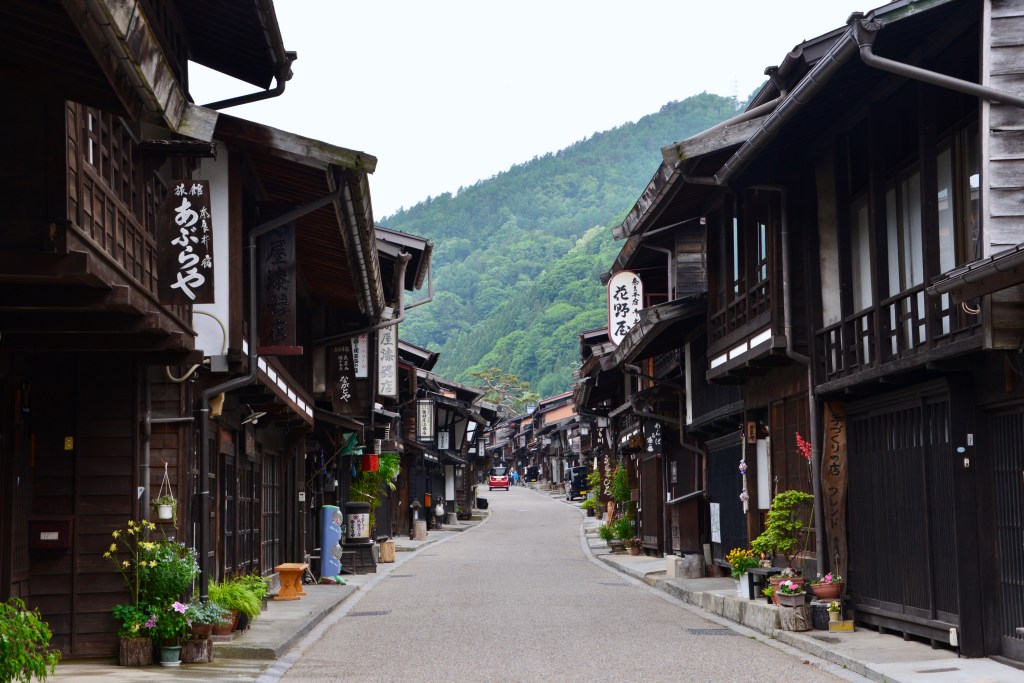
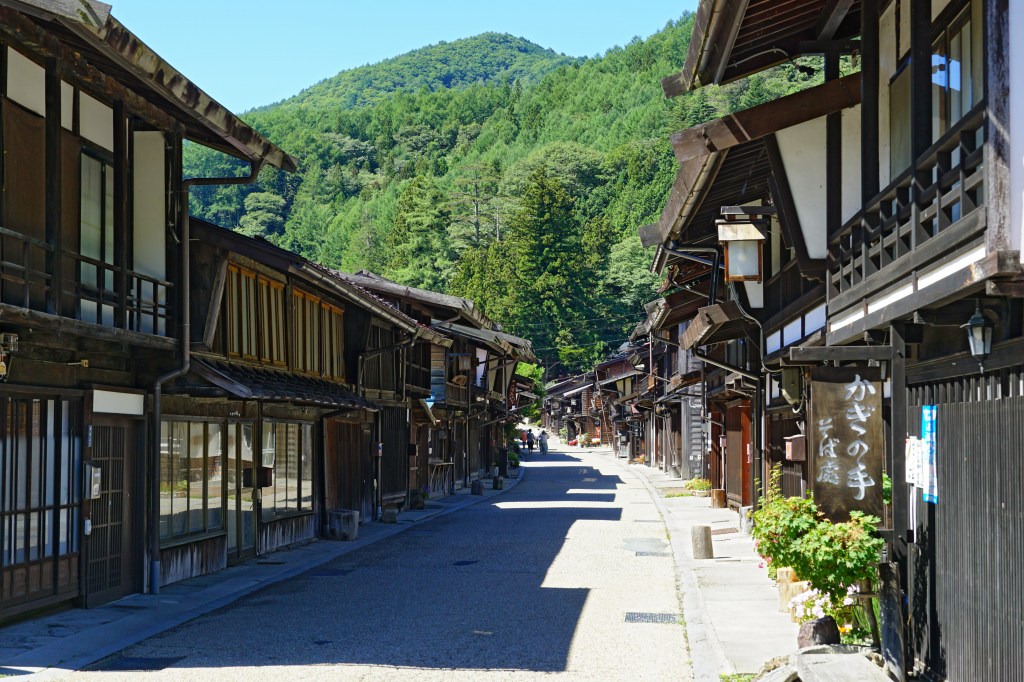
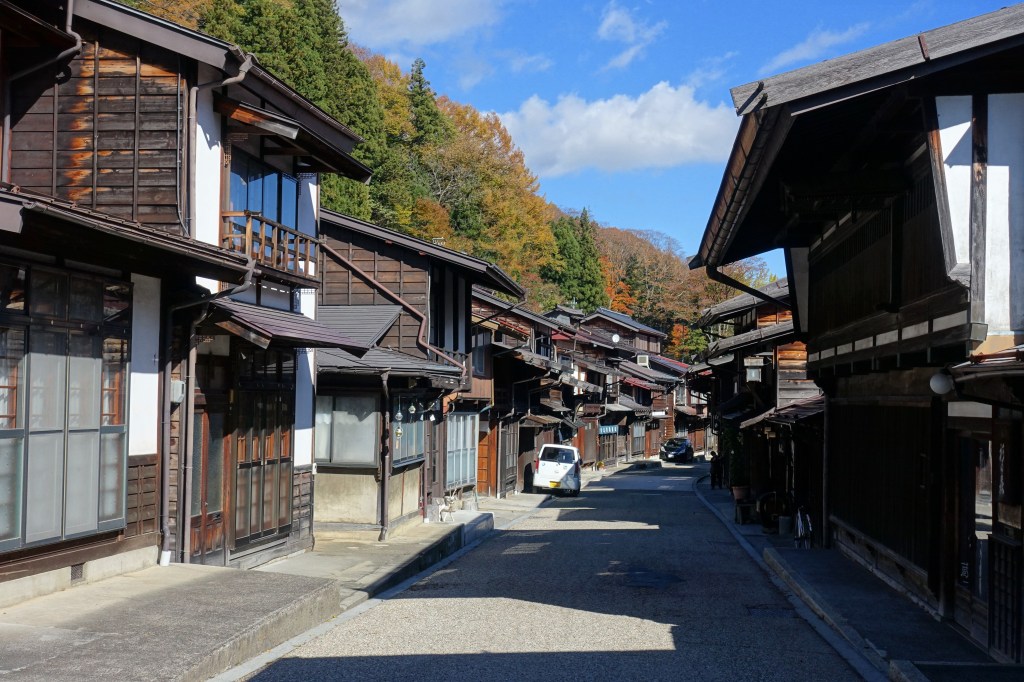
The old Nakasendo runs through the town for about a kilometre, from the lower town at the station end to the upper town at the Torii Pass end, with the middle section around the water place and the tourist information office at the centre. Walk it in one direction and then the other: the light is different, and the classic photograph is taken from the lower town looking up towards the middle, which is why so many posters show the same view. The street is open to walkers only, and cars are not allowed except for residents.
Dashibari-zukuri and the lattices
The architecture is the thing to look at closely. The upper floors project out over the street on wooden brackets, a form called dashibari-zukuri, and the ground floors are closed with fine vertical lattices called senbon-goshi. The dark timber, the deep eaves and the low second floors were designed for snow and for a road that was the town’s front door. Look at the joins and the wear on the sills: the preservation district protects the appearance, not a museum finish.
Kiso Ohashi bridge
The Kiso Ohashi at the north end of the town is a wooden arch bridge built from hinoki cypress more than 300 years old, and it is one of the largest wooden bridges in Japan without piers. It crosses to the road and the free car parks, so most visitors cross it without thinking, but it is worth a stop: the joinery in the arch is visible from below, and the bridge is lit after dark. The 20 and 21 steps at the two ends are a local detail, tied to the passage from the twentieth to the twenty-first century.
The water place and the side lanes
The town’s water place, a stone trough fed by the mountain streams, is the small focal point of the middle section and the place the classic view is taken from. The side lanes behind the main street are quieter and just as old, with workshops, small gardens and the backs of the houses. Walk one of them: the preservation district is not only the front facade, and the lanes show how the town worked behind the shopfronts.
Torii Pass
The old road climbs from the south end of Narai over the Torii Pass towards Yabuhara, about six kilometres and roughly an hour and ten minutes on foot at a walking pace. The route is the original Nakasendo, paved with stone in places and lined with forest, and it is the reason the post town existed: travellers needed a bed before the climb or after it. Walk part of it even if you do not go over, and check the weather and your footwear before committing to the full crossing.
The cedar avenue and the 200 Jizo
Behind the Hachiman shrine at the north end of the town, a short path leads through a stand of old cedars to a group of stone images known as the Nihyaku Jizo, the two hundred Jizo. The statues were gathered here when the railway and the modern road displaced small roadside shrines and images, and the avenue of trees is the reason the path feels older than its history. It is a five-minute detour and one of the quietest places in the town.
Kiso lacquerware in Hirasawa
One stop down the line, Kiso Hirasawa is the lacquerware town of the valley, and the craft is the other traditional industry of the area besides the post-town trade. The workshops and shops sell bowls, trays and chopsticks, and some offer painting or finishing experiences that need to be booked ahead. It is a half-day add-on rather than a rival to Narai, and the combination explains what the valley did for a living when the road stopped being the main route.
The town in the evening and in winter
Narai is a day-trip destination, and that is exactly why staying late or overnight changes it. After the last tour groups leave, the street empties, the shops close and the bridge lights come on, and the town returns to the people who live there. In winter the snow sits on the dark roofs and the street narrows between the walls, and some businesses close for the season, so check before planning a winter trip around a particular shop.
Food and drink
- The food is Kiso valley food: soba, oyaki, gohei-mochi and simple set meals in the shops along the street. The soba is the local staple, and the buckwheat is grown in the surrounding valleys rather than shipped in.
- Shops keep old hours. Many open around 9:00 or 10:00 and close in the late afternoon, some take a weekday off, and the choice narrows sharply after 16:00. Plan lunch in the town rather than arriving at three and hoping.
- The cafes in the old houses are the unexpected pleasure: coffee and cake in a building with the same beams and lattices as the street outside. They are small, they fill, and a few take reservations.
- Buy the local preserves, honey, miso and pickles from the shops rather than the station, and the lacquerware from Hirasawa if you want something that lasts. The souvenir shops at the station are convenient, not better.
- There is no evening restaurant scene. If you stay overnight, the inns serve dinner, and that is the meal to plan around; the town does not have a strip of bars to fall back on.
Getting there and around
- By train, take the JR Chuo line to Narai station, which is about six minutes’ walk from the old route. From Matsumoto the ride is around 50 minutes, and from Nagoya it is roughly two hours with a change at Shiojiri or Kiso-Fukushima, depending on the service.
- By car, leave the Nagano expressway at Shiojiri and drive about 35 minutes, or leave the Chuo expressway at Ina and drive about 40 minutes. The old route is closed to cars except for residents, so park at one of the car parks around the edge of the town and walk in.
- There are free car parks at the Kiso Ohashi bridge and the roadside station on the north side, and paid car parks at the station and at the Gonbei car park on the south side, at 500 yen a time for a normal car. The free ones fill first on holidays, and the paid ones are closer to the middle of the town.
- On busy days the city runs a free shuttle bus linking the car parks and the surrounding area, but it operates on a limited number of days a year rather than every weekend, so check the city’s schedule before relying on it.
- The station has a small tourist information desk with maps and luggage storage, and the town’s main information office is in the middle of the street. Opening hours are limited and the station desk closes in the afternoon, so arrive early enough to use it.
Where to stay
- The accommodation is small: a handful of inns and guesthouses in the old houses, some with meals and some without. The number of rooms is limited, and the town books out for autumn weekends and the festival.
- Staying in the post town is the way to see it without the day-trippers, and the night walk along the empty street is the reason to do it. It is quiet rather than lively, and the inns are traditional rather than hotel-like.
- The alternative is to stay in Matsumoto or Shiojiri and come as a day trip. Matsumoto has the castle and the widest choice of hotels, and the train ride up the valley is part of the visit.
- Kiso-Fukushima, further up the line, has a larger onsen hotel and is a practical base for the whole valley. It also has the barrier station museum, which explains the road and the inspection system that the post towns served.
Best time to visit
- Spring comes late in the valley. The cherries open in the second half of April, the fresh green follows in May, and the town is at its busiest in the Golden Week holidays, when the car parks fill and the shuttle runs.
- Summer is green and warm, with the river low and the pass dry. The street is shaded for much of the day, but the walk over the Torii Pass is hot work, and the afternoon thunderstorms are real.
- Autumn is the strongest season: the maples colour from late October into mid November, the air is clear, and the dark timber and the red leaves are the combination the town is known for. Weekends in that window are crowded, and the inns are full.
- Winter is quiet and cold, with snow on the roofs and some businesses closed. The street is at its most photogenic and its least convenient: check the opening hours, wear boots, and expect the pass to be impassable without proper gear.
Practical tips
- Come early. The town is a day-trip destination and the middle of the day is the busiest, so the first train from Matsumoto gives you an hour of quiet before the coaches arrive.
- Park at the free Kiso Ohashi car park and walk across the bridge into the town, rather than driving to the station car park. It sets up the approach the way the old road intended, and it saves the 500 yen.
- Use the luggage storage at the station or the information office if you are walking the Nakasendo with a bag. The charge was raised in 2026, so confirm the current price rather than assuming the old one.
- Do not drive into the old street. It is a preservation district and resident traffic only, and the lanes are narrow enough that a wrong turn becomes a problem.
- Allow three to four hours for the town with lunch, and a full half day if you walk part of the Torii Pass. The town is one kilometre, but the side lanes, the bridge and the shops add up.
- Check the day of the week for the shops you want. Some close on weekdays, the cafes are small, and the town does not have the all-day options of a city.
- Carry cash. The small shops and some of the cafes may not take cards, and the nearest ATM is not on the old street.
Suggested day-trip outline
- The day trip: the morning train to Narai, walk the street from the station end to the water place, lunch in the town, the side lanes and the bridge in the afternoon, and the train back before the shops close.
- The Nakasendo walk: Narai to Yabuhara over the Torii Pass, about six kilometres and two to three hours with stops, then the train back from Yabuhara. Start early, carry water and check the weather at the pass.
- The valley day: Narai in the morning, Kiso Hirasawa for the lacquerware after lunch, and Kiso-Fukushima for the barrier station if there is time. The trains are infrequent, so build the day around the timetable.
- The overnight version: the afternoon train, the street in the evening light, dinner at the inn, the bridge and the empty street at night, and the pass or the side lanes the next morning before the day-trippers arrive.
- The wider Kiso trip: Narai with Magome and Tsumago, which is the classic three-post-town route and needs two days and a car or careful bus planning. Narai is the longest and the quietest of the three.
Before you go
Timetables, fares, admission fees, and seasonal access rules can change. Check the official tourism and transport sites linked below for the latest information before you travel.
Explore More of Japan
Published guides that pair with this one:
- Magome and Tsumago Travel Guide: A Nakasendo Walk between Post Towns
- Takayama Travel Guide: Hida Old Town and Alps Access
- Matsumoto Castle Travel Guide: Japan’s Original Black Keep
- Kamikochi Travel Guide: Alpine Valley Walks in the Japan Alps
- Shirakawa-go Travel Guide: UNESCO Gassho Village, Access, and Day-Trip Tips
- Gujo Hachiman Travel Guide: Waterways, a Summer Dance, and a 1933 Castle
Browse every Chubu guide on this site for the rest of the region.
Sources
- naraijuku.com — Access (checked 2026-11-04)
- go-nagano.net (checked 2026-11-04)
- city.shiojiri.lg.jp (checked 2026-11-04)
- city.shiojiri.lg.jp (checked 2026-11-04)
- tokimeguri.jp (checked 2026-11-04)


Leave a Reply