A practical English guide to Hiroshima Castle: the reconstructed keep, the moat and grounds, the wartime history and the walk from the peace park.
Operational details such as opening hours, admission fees, and train times can change. Prefer official pages and reconfirm before you travel (sources checked on 05 November 2026).
Why visit
- Hiroshima Castle is the one major sight in the city that is not about the bomb, and that is exactly why it is worth an afternoon. It is a flatland castle built on an island in the delta, ringed by moats and stone walls, with a five-storey keep that was reconstructed in concrete in 1958 after the atomic bomb destroyed the original. The interior is a museum of the castle town and the Asano domain, and the top floor looks straight down the moat and out over the city to the hills.
- The first castle here was begun in 1589 by Mori Terumoto, who ruled most of western Honshu from this spot and called it the Carp Castle. After Sekigahara in 1600 the Mori were moved to Choshu and Fukushima Masanori took the domain, and in 1619 the Asano clan arrived and stayed until the end of the feudal period. Almost everything you see above ground is therefore a reconstruction, but the moats, the stone walls and the layout are the originals, and they are the best surviving example of Edo-period castle engineering in the city.
- It is also the easiest major sight to combine with the peace memorial. The two are about fifteen minutes apart on foot, across the river and up the broad avenue, so a single morning can hold the hypocentre, the museum and the castle, which gives a fuller picture of the city than either alone. The castle grounds are free, leafy and full of people walking dogs and eating lunch, which is a useful corrective to the solemnity of the peace park.
- For travellers based in Hiroshima for a night or two, the castle is the thing to do with the spare hours after the peace park, and it pairs well with a walk through the surrounding civic district and a bowl of okonomiyaki afterwards. It is not a full day out, and it does not pretend to be: an hour inside and an hour in the grounds is the right measure.
Top places and highlights
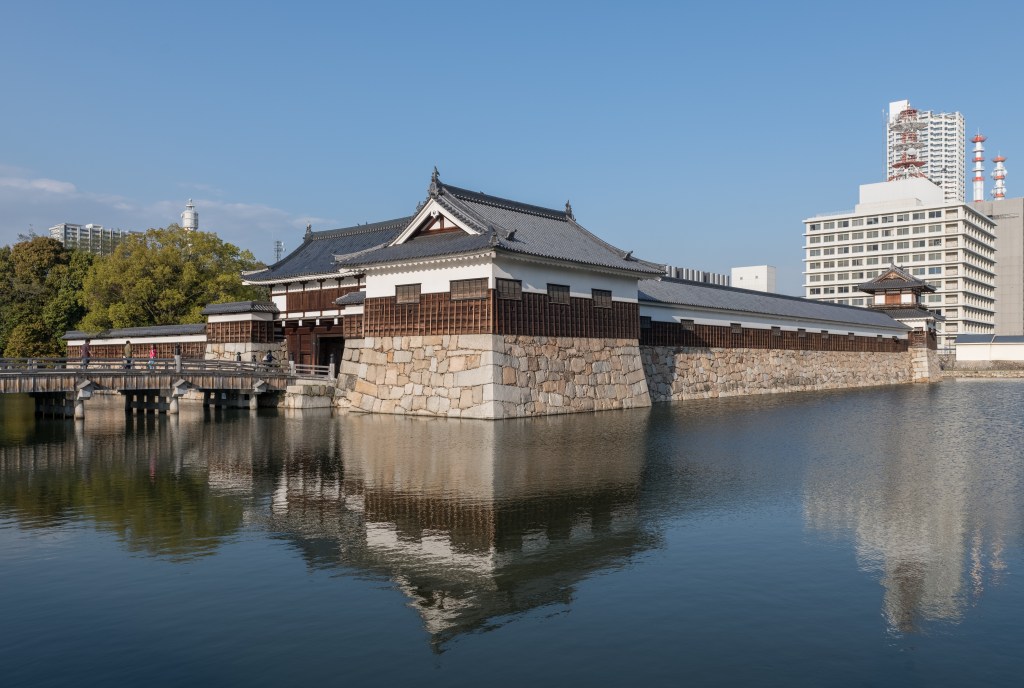
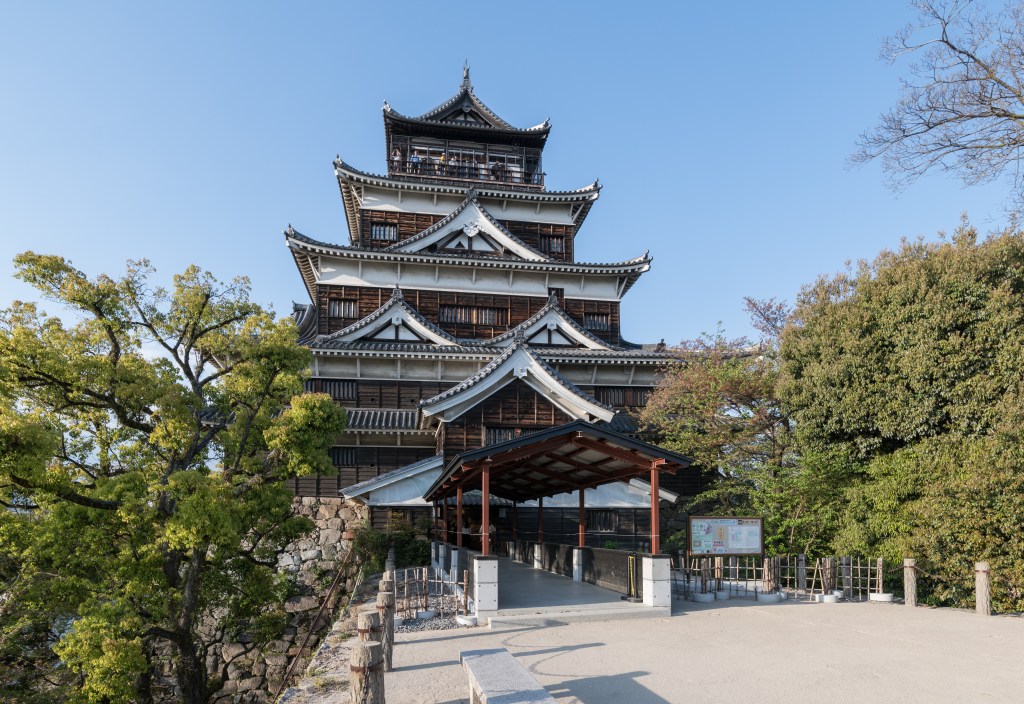
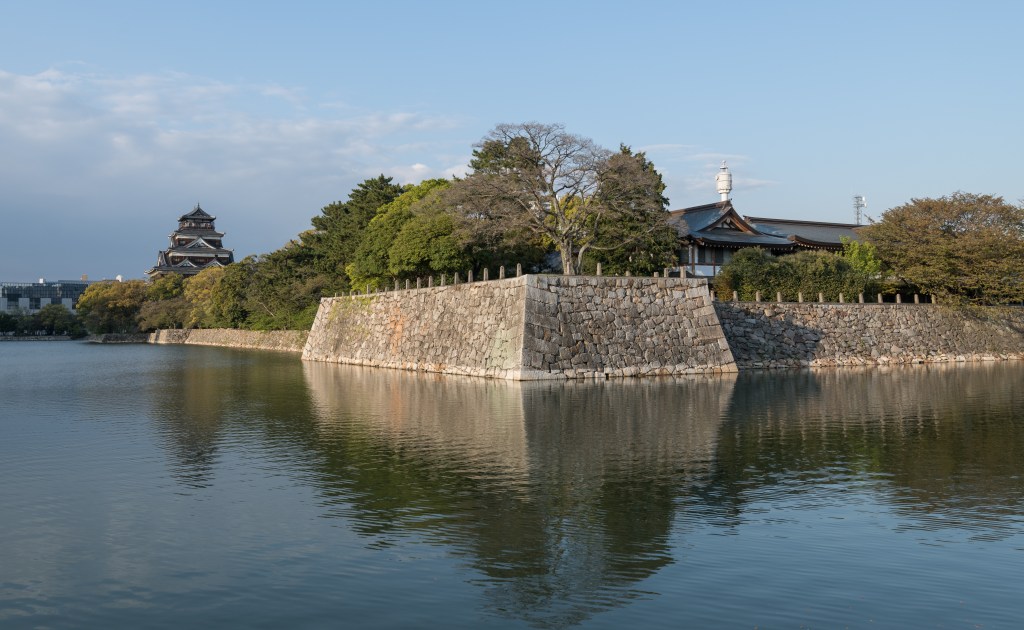
The reconstructed keep
The keep is a concrete reconstruction from 1958, built on the original stone base after the atomic bomb flattened the wooden original, and it makes no attempt to hide that: the exterior follows the Edo-period design with white plaster, dark wooden trim and five roofs, while the inside is a modern museum with lifts and air conditioning. The shape is the point, rising above the moat with the curved gables and the fish-shaped ornaments on the ridge. From the outside, at the end of the bridge with the water in front, it is the image everyone photographs. The base itself, the great sloping stone platform, survived 1945 and is the oldest part of the structure you are looking at.
The museum inside the keep
The floors inside trace the castle and the city from the Mori to the Asano, with armour, swords, scrolls, a scale model of the castle town and a room on daily life in the Edo period. The displays are in Japanese with limited English, but the objects carry the story: the matchlock guns, the palanquin, the lacquered saddles, the maps showing the delta and the canals that made Hiroshima a port. There is a section on the castle as a military installation in the Meiji and Showa periods, and a short treatment of what the bomb did to the building. It takes about forty minutes if you read, and the stairs between floors are steep.
The moat and the stone walls
The best thing about the castle is the water. The moat wraps the honmaru on three sides, green and still, with carp moving under the surface and the stone walls rising straight out of it in courses of cut blocks. The walls are original in large part, and the way the corners curve upward and the blocks fit without mortar is the technical achievement of the place. Walk the outer path right around the island, cross the bridges, and look at the walls from the water level rather than from the keep, where the scale is clearest. In cherry season the trees along the moat hang over the water, and in the evening the reflection of the keep is the photograph to take.
The castle grounds and Gokoku Shrine
The honmaru and ninomaru together make a large park of lawns, pines, camphor trees and gravel paths, free to enter and open from early morning. In one corner stands Hiroshima Gokoku Shrine, a Shinto shrine for the war dead of the prefecture, rebuilt after 1945, with a quiet approach and a small shop selling amulets. The juxtaposition is part of the place: a feudal castle, a modern shrine, a peace city, all inside the same moat. There are benches, vending machines and public toilets, and on weekends families and students fill the lawns. It is a good place to sit for twenty minutes between the peace park and the station.
The walk from the peace park
The route from the peace memorial park to the castle crosses the Motoyasu river, passes the A-Bomb Dome on the far bank, and then runs up a wide avenue of offices and shops to the outer moat. It takes about fifteen minutes at an easy pace and it is the best way to see how the city knits its history together: the ruin at one end, the reconstructed castle at the other, and ordinary Hiroshima in between. Go in the late afternoon, when the light comes across the river and the walk is in shade, and stop at the bridge for the view back to the dome.
The view from the top floor
The top floor of the keep is an open gallery with windows on all four sides, and the view is the reward for the climb. To the west the moat and the green island of the castle grounds; beyond it the dense low city and the rivers; to the north the hills that ring the basin; and on a clear day the Seto Inland Sea is a pale line in the south. Because the keep is low by modern standards, the city reads as a whole rather than as rooftops, and you can trace the delta channels that gave Hiroshima its shape. There is a small cafe and a few benches, and it is a good place to wait out a shower.
The surrounding civic district
Outside the moat, the streets around the castle hold a cluster of museums and public buildings that are easy to add on: the Hiroshima Museum of Art with its nineteenth-century European collection, the prefectural art museum, the children’s museum and the central library, all within a ten-minute walk. The wide avenues and the tram lines here are the product of the post-war reconstruction plan, and the contrast with the narrow lanes of the old merchant districts further south is sharp. If you have a rainy afternoon, this is the part of the city where you can move between indoor sights without getting wet twice.
Food and drink
- Okonomiyaki is the local dish and Hiroshima’s version is layered rather than mixed: batter, a heap of cabbage, pork, noodles, an egg and a thick sweet sauce, cooked on a hot plate in front of you. The best places are counters in the Okonomimura building and the small shops around the peace park, and the queue is part of it.
- Oysters from the Seto Inland Sea are on menus from autumn through spring, grilled, fried or in a hot pot. Hiroshima produces a large share of Japan’s oysters, and a plate of grilled ones with a squeeze of lemon is the simplest way to eat them.
- Anago, sea eel, is another Hiroshima speciality, grilled with a sweet glaze and served on rice, lighter and softer than the eel of Narita or Hamamatsu. Look for it in the restaurants around the station and in the covered shopping arcades.
- Hiroshima is also sake country: the Saijo district east of the city has a cluster of breweries that open their doors in early October for the sake festival, and the bars around Kamiyacho carry the local labels. A tasting set is the easy way in.
- For something quick, the covered arcades around Hondori and Kamiyacho have noodles, curry, coffee and bakeries, and they are the practical choice when you are moving between the peace park and the castle. Momiji manju, the maple-leaf cake, is the souvenir to buy, and it comes filled with red bean, custard or chocolate.
Getting there and around
- Hiroshima is on the Sanyo shinkansen, about ninety minutes from Osaka and four hours from Tokyo, with the station on the south side of the city. From the station, the castle is a twenty-five minute walk north, or five minutes by tram to the Kamiyacho-machi stop followed by a ten-minute walk.
- The trams are the easiest way around the centre: several lines converge at Kamiyacho, from where the peace park, the castle and the shopping arcades are all within a short walk. A one-day tram pass is sold at the station and at hotels, and the flat fare is paid on boarding or by IC card.
- From Hiroshima airport, the limousine bus runs to the station in about forty-five minutes, and the train connection from the airport is slower. From the station, taxis are plentiful and cheap for the short hop to the castle.
- If you are coming from Miyajima, the ferry back to Miyajimaguchi and the JR line to Hiroshima take about thirty minutes in total, which makes the castle easy to do on the same day as the island.
- Driving is not necessary for the castle itself, and parking around the moat is limited and expensive. If you have a car for the wider region, leave it at the hotel and use the trams for the centre.
Where to stay
- The area between the station and the peace park has the widest range: business hotels, larger city hotels and a few hostels, all within walking distance of the trams. It is the practical base for a two-night stay covering the peace park, Miyajima and the castle.
- Around the peace park itself there are hotels with river views and a quieter atmosphere in the evening, which suits travellers who want the memorial at opening time. The castle is then a fifteen-minute walk away.
- The Kamiyacho and Hondori area is the nightlife and restaurant centre, with bars, okonomiyaki counters and hotels of every price within a few minutes. It is noisier, and convenient if eating out is the point of the evening.
- Miyajimaguchi, on the mainland opposite the island, has a handful of hotels and ryokan and is a good base if you want to see Miyajima at dawn before the day trippers. Hiroshima station is thirty minutes away by train.
Best time to visit
- Cherry blossom in early April is the castle’s best fortnight: the trees along the moat and in the grounds come out together, and the park fills with picnics. The keep is busy then, and the light in the late afternoon is the best of the year.
- Summer is hot and humid, with temperatures in the mid thirties and high humidity, and the walk between the peace park and the castle should be done in the morning. The city’s peace memorial ceremonies on the sixth of August bring crowds and a particular atmosphere.
- Autumn, from late October through November, is the most comfortable season: dry, clear and mild, with colour in the castle grounds and the hills. It is also the busiest for domestic tourists, so book accommodation early.
- Winter is quiet and cold but rarely snowy, and the castle grounds are at their emptiest. The keep is unheated in the stairwells, and the moat on a still morning is worth the cold.
- The rainy season runs from early June to mid-July, with heavy showers and high humidity. The castle museum is a good wet-weather stop, and the covered arcades keep the shopping dry.
Practical tips
- Do the peace park first and the castle second: the museum there is emotionally heavy, and the castle grounds are a good place to come back to the ordinary world afterwards.
- Wear shoes you can slip off if you plan to enter the keep, and note that the stairs inside are steep and narrow with no lift to the top. The grounds themselves are flat and easy.
- Check the closing days before you go, since the keep shuts for a few days around the New Year and occasionally for exhibition changes. The grounds stay open and free.
- Carry water in summer. The walk between the sights is longer than it looks on the map, and the shade is patchy along the main avenue.
- Allow an hour for the keep and the museum and another hour for the moat and the grounds. Add the peace park and you have a full day, so do not try to fit Miyajima in as well.
- The trams are frequent but crowded at rush hour, and the platforms are narrow. If you are carrying luggage, take a taxi from the station rather than the tram.
Suggested day-trip outline
- Morning: the peace memorial park and the museum at opening time, then the A-Bomb Dome and the walk north along the river to the castle.
- Late morning: the keep and its museum, then the top floor for the view. Come down and walk the moat path right around the island.
- Lunch: okonomiyaki at a counter near the peace park or in Okonomimura, then a slow walk through the Hondori arcade.
- Afternoon: the castle grounds and Gokoku Shrine, and one of the museums in the civic district if it is raining or hot.
- Evening: sake or a bar in Kamiyacho, or the tram back to the station for a train to Miyajima for the night. The castle is lit after dark, and the moat reflection is worth a last look.
Before you go
Timetables, fares, admission fees, and seasonal access rules can change. Check the official tourism and transport sites linked below for the latest information before you travel.
Explore More of Japan
Published guides that pair with this one:
- Yamaguchi Travel Guide: Ruriko-ji Pagoda and the Western Capital
- Tomonoura Travel Guide: A Tide-Waiting Port in Fukuyama
- Miyajima Travel Guide: Itsukushima Shrine, the Floating Torii, and a Hiroshima Day Trip
- Hagi Travel Guide: A Castle Town That Shaped Modern Japan
- Iwami Ginzan Travel Guide: UNESCO Silver Mine in Shimane
- Kurashiki Travel Guide: Bikan Canal District
Browse every Chugoku guide on this site for the rest of the region.
Sources
- hiroshima-navi.or.jp (checked 2026-11-05)
- city.hiroshima.lg.jp (checked 2026-11-05)
- pref.hiroshima.lg.jp (checked 2026-11-05)


Leave a Reply