A practical English guide to Yamaguchi city: the Ruriko-ji five-storey pagoda, Kozan park, the Meiji Restoration temples, Ichinosaka river and Yuda onsen.
Operational details such as opening hours, admission fees, and train times can change. Prefer official pages and reconfirm before you travel (sources checked on 05 November 2026).
Why visit
- Yamaguchi calls itself the western capital, and for about a century it had a fair claim: from the fourteenth century the Ouchi lords made it a centre of trade with China and Korea, brought in Zen Buddhism, painting, poetry and pottery, and built a city laid out on a grid like Kyoto, with a pagoda to match. The Ruriko-ji pagoda is the last great building of that moment, and it is a national treasure and one of the three finest pagodas in Japan.
- Then, four hundred years later, Yamaguchi was the intellectual capital of the Meiji Restoration. The domain school here, and the temples around it, produced the men who overthrew the shogunate, and several of the buildings where they argued and hid are still standing, some with the sword cuts in the pillars from the faction fights of the 1860s.
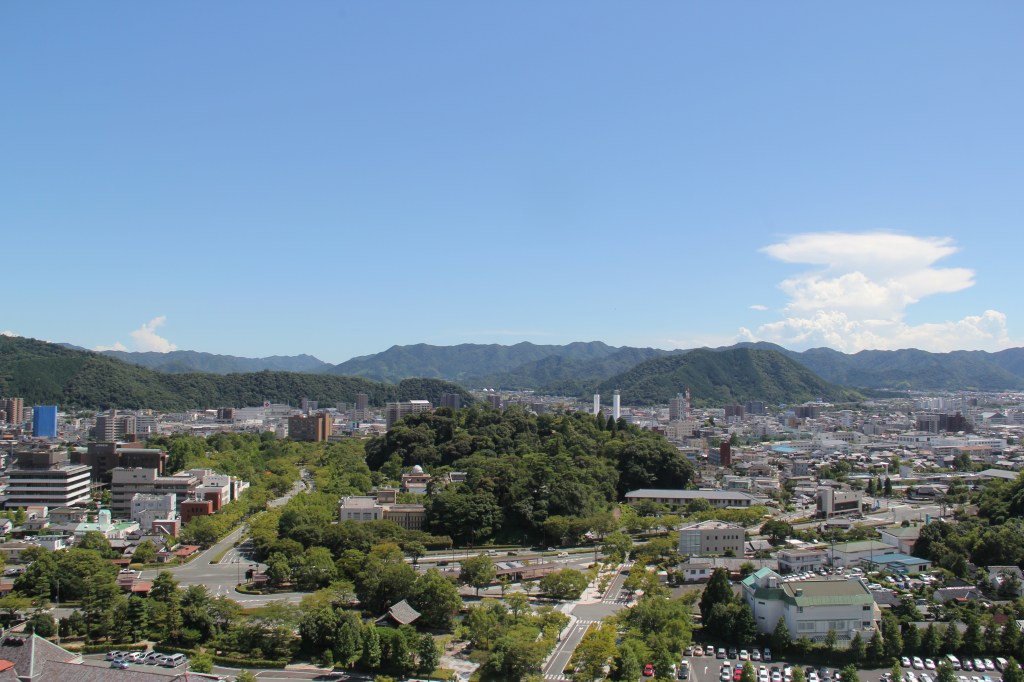
- The city is small and flat and quiet, with a river running through the middle that is famous for fireflies in early summer and cherry in spring, and a little castle town grid that survived the war. It is a two-hour stop on the shinkansen from Hiroshima, and almost no foreign visitors get off.
- Yuda onsen, ten minutes from the station, has hotels with natural hot water and a street of footbaths, and it makes the city a comfortable night rather than a rushed afternoon.
Top places and highlights
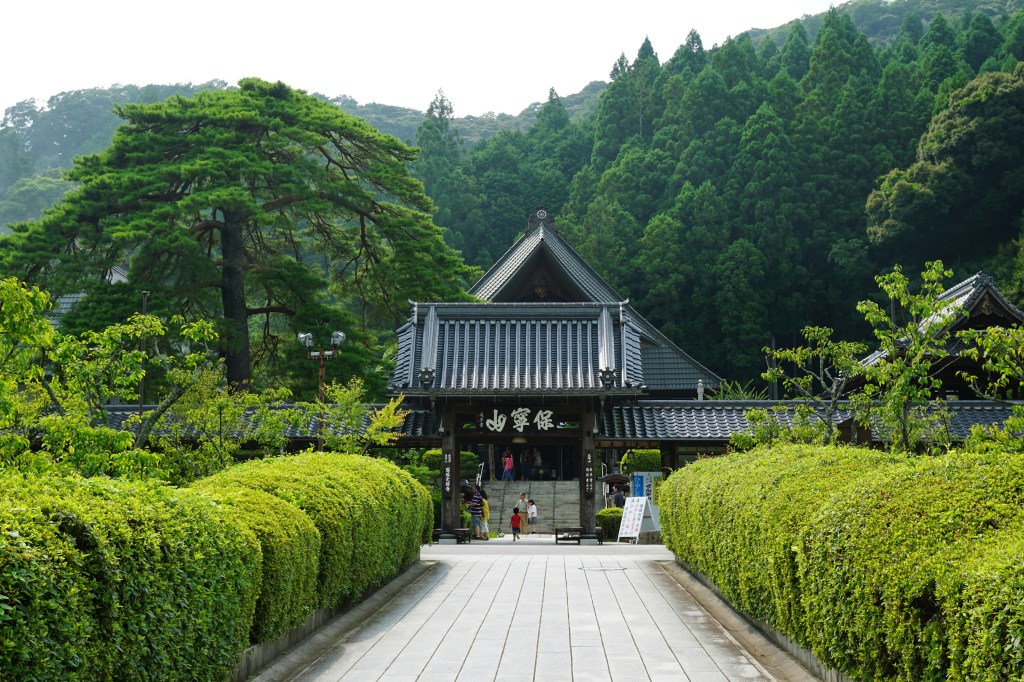
The Ruriko-ji pagoda
The five-storey pagoda of Ruriko-ji was built in 1442 by the Ouchi lord Morimi for his brother, and it has survived fire, war and the general destruction of the city, which makes it one of the oldest and best proportioned pagodas in the country. It is 31 metres tall, with a slender profile and a deep, dark roof line, and it stands on a small hill in Kozan park with the hall of Ruriko-ji beside it and the tombs of the Mori lords further up. It is a national treasure, and unlike many such buildings it is not fenced off: you can walk right up to the base and around it. It is free and open at all hours, and it is at its best in the late afternoon light or when the cherry is out in early April.
Kozan park and the Mori tombs
Kozan park is the hill behind the pagoda, and the paths up through it lead to the tombs of the Mori lords, a long stone avenue under trees that is a designated historic site, and to the tea houses and small halls that the domain built at the end of the Edo period. The Chinryutei tea house is the one to look for: it is open to walk into, free, and it was where the leaders of the restoration met in secret to plan the overthrow of the shogunate. The park also has the Unkoku-an, the studio of the painter Sesshu, and a small museum. It takes an hour to walk the whole hill, and it is the best place in the city to understand how small and how green Yamaguchi is.
Toshun-ji and the sword-cut pillars
Toshun-ji is a Zen temple a few minutes from the pagoda, and its gate is a national important cultural property moved from an earlier temple on the site. The interesting thing is inside: in 1864, after the shogunate punished the domain for its attack on Kyoto, the men who wanted to keep fighting gathered in the main hall, and when their leaders decided to submit, they cut at the pillars with their swords in frustration. The cuts are still there, dozens of them, at chest height on the square pillars of the hall. The temple is free, open from morning to late afternoon, and has a small museum of restoration material. It is also home to a resident dog who has become a local celebrity, which the temple takes in its stride.
The Ichinosaka river
A small canal runs through the centre of the old city, lined with stone walls and willows, and it is the axis of the historic district: the Joseon mission lodgings, the old merchant houses, the temple of Ryufuku-ji and the Tenjobo site are all within a few minutes of it. In spring the cherry along the banks is one of the best displays in the prefecture, and in early June the fireflies come out at dusk in numbers that draw visitors from the whole region. Walk it from the prefectural office down towards the Yabase area, and stop at the Nakahara Chuuya memorial hall, devoted to the poet who was born here, if you have an hour.
Yuda onsen
Yuda is the onsen district, ten minutes by bus or twenty on foot from the city centre, with hotels, a public bath, and several free footbaths along the street, including one with a large white fox statue that is the mascot of the place. The water is alkaline and comes out warm, and the story is that a wounded white fox bathed here and recovered, which is why the fox is everywhere. There are dozens of hotels from cheap business ones to ryokan with dinner, and the street has cafes and a couple of good restaurants. It is a working onsen for Japanese travellers rather than a resort, and a night here is inexpensive.
The Xavier memorial church
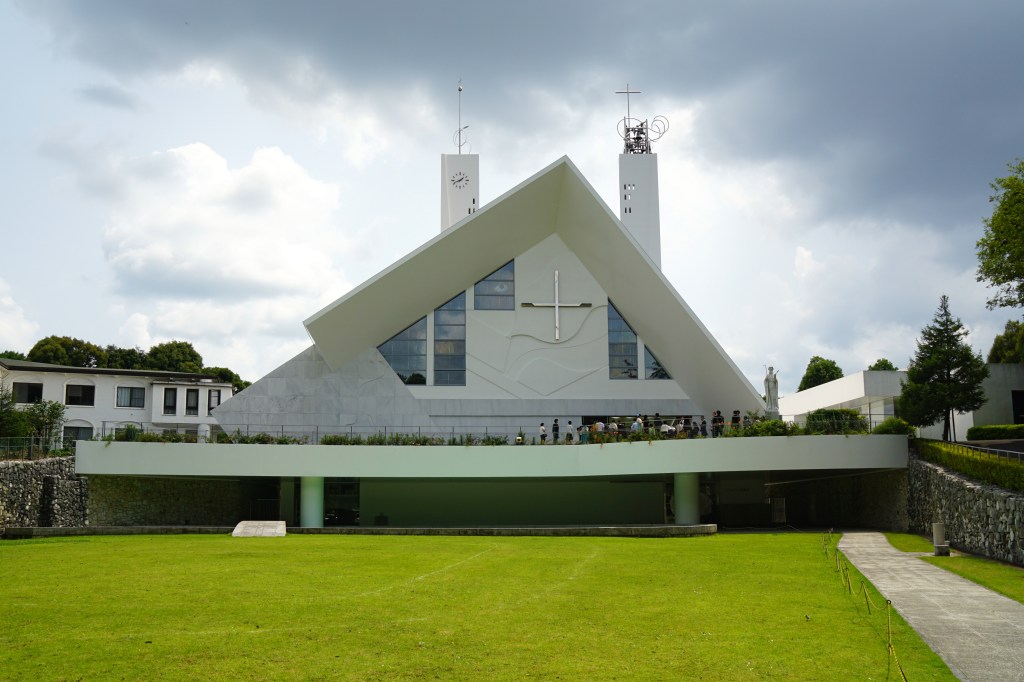
Francis Xavier came to Yamaguchi in 1551 and was allowed to preach by the Ouchi lord, which makes this one of the earliest places in Japan with a Christian community, and the memorial church on the hill above the centre commemorates it. The present building is a 1998 reconstruction in a striking modern style, with a bell that rings every fifteen minutes, and it is open to visitors during the day. The view from the terrace takes in the city and the hills, and it is a ten-minute walk from the Ichinosaka river. It is free, though donations are welcome, and it is a good place to sit for twenty minutes.
Food and drink
- Yamaguchi is known for its seafood from the Seto Inland Sea, and fugu from the Shimonoseki side appears on winter menus.
- Kawara soba, noodles cooked on a roof tile with egg and beef, is the local dish of the neighbouring region and easy to find in the city.
- Uiro, a steamed sweet, and the local sake from the breweries around Yuda are the things to buy.
- The restaurants around Yuda onsen serve set meals and kaiseki in the ryokan, and the streets near the station have ramen and izakaya.
- The city is not a food destination, but the local soba, the fish and the sake are good and the prices are low.
Getting there and around
- The shinkansen stops at Shin-Yamaguchi, from where the Yamaguchi line runs to Yamaguchi station in about twenty minutes, or a bus runs to the city centre in about thirty-five to forty minutes for 530 yen.
- Yamaguchi station is a twenty-five minute walk or a short bus ride from the pagoda, and the community bus to the Kozan park pagoda stop takes about thirteen minutes for 200 yen, once an hour.
- Yuda onsen is on the Yamaguchi line one stop from Yamaguchi station, and on the bus route from Shin-Yamaguchi, which passes through it before the city centre.
- From Hiroshima, the shinkansen to Shin-Yamaguchi takes about forty minutes, and the whole trip to the pagoda about an hour and a half.
- By car, the Yamaguchi interchange on the Chugoku expressway is fifteen minutes from the centre, and there is a large free car park at Kozan park.
- The city centre is flat and walkable, with the pagoda, the temples and the river within twenty minutes of each other, and bicycles can be rented near the station.
Where to stay
- Yuda onsen has the widest choice, from business hotels to ryokan with dinner and a bath, and is the most comfortable base.
- The city centre near the station and the river has a few hotels, which suits anyone arriving late and leaving early.
- Ryokan in Yuda usually include dinner and breakfast, and the kaiseki is better value than in Kyoto.
- There is limited accommodation, and the town fills during the cherry season and the summer festivals, so book ahead.
Best time to visit
- Early April is the cherry season along the Ichinosaka river and in Kozan park, and the city is at its most beautiful.
- Early June brings the fireflies along the river at dusk, which is a local event worth planning around.
- Summer is hot and humid, with festivals and the Yuda onsen streets busy in the evening.
- Autumn is clear and comfortable, with colour in Kozan park in November, and is the best all-round season.
- Winter is cold and quiet, with few visitors, and the temples in the snow are worth the discomfort.
Practical tips
- Come on the shinkansen to Shin-Yamaguchi and take the local line to Yamaguchi rather than the bus; it is faster and cheaper.
- The community bus to the pagoda runs about once an hour, so check the time or walk the twenty-five minutes from the station.
- The pagoda is free and unfenced, and early morning is the quietest time.
- Look for the sword cuts on the pillars at Toshun-ji; they are easy to miss and they are the best historical detail in the city.
- Walk the Ichinosaka river from the prefectural office south, and stop at the tea house in Kozan park, which is free and open.
- Stay in Yuda onsen rather than the city centre if you want a bath and dinner, and use the footbaths along the street.
- The city is quiet in the evening; eat early or eat at the hotel.
Suggested day-trip outline
- Morning: train from Shin-Yamaguchi to Yamaguchi, walk or bus to Kozan park, the pagoda and the Mori tombs.
- Late morning: Toshun-ji and its sword-cut pillars, then down to the Ichinosaka river.
- Lunch: soba or kawara soba in the centre.
- Afternoon: the river walk, the Nakahara Chuuya museum and the Xavier church, then the bus to Yuda onsen.
- Evening: a bath and dinner at a Yuda ryokan, and a footbath on the street before bed.
Before you go
Timetables, fares, admission fees, and seasonal access rules can change. Check the official tourism and transport sites linked below for the latest information before you travel.
Explore More of Japan
Published guides that pair with this one:
- Hagi Travel Guide: A Castle Town That Shaped Modern Japan
- Iwami Ginzan Travel Guide: UNESCO Silver Mine in Shimane
- Tsuwano Travel Guide: The Little Kyoto of San’in
- Hiroshima Peace Memorial Travel Guide: The Park, the Dome, and the Museum
- Mount Daisen Guide: Tottori’s Sacred Mountain
- Shimonoseki Travel Guide: Fugu, the Kanmon Strait and the Edge of Honshu
- Akiyoshidai and Akiyoshido Travel Guide: Karst Plateau and Cave
- Kintaikyo Bridge Travel Guide: Iwakuni’s Five Arches
- Mitokusan Sanbutsu-ji and Misasa Onsen Travel Guide
- Adachi Museum of Art Travel Guide: Highlights, Access, and Planning
- Hiroshima City Museum of Contemporary Art Travel Guide: Highlights, Access, and Planning
- Sakaiminato Guide: Tottori’s Yokai Port Town
- Uradome Coast Guide: Tottori’s Rocky Ria Shoreline
- Bitchu-Matsuyama Castle Travel Guide: The Mountain Keep above Takahashi
Browse every Chugoku guide on this site for the rest of the region.
Sources
- yamaguchi-city.jp (checked 2026-11-05)
- yamaguchi-city.jp (checked 2026-11-05)
- yamaguchi-city.jp (checked 2026-11-05)


Leave a Reply