A practical English guide to Narita: the Naritasan temple, the Omotesando approach, grilled eel, the old merchant buildings and the ten-minute walk from the station.
Operational details such as opening hours, admission fees, and train times can change. Prefer official pages and reconfirm before you travel (sources checked on 05 November 2026).
Why visit
- For most travellers Narita means an airport and nothing else. The town itself, ten minutes by train from the terminals, has a thousand-year-old temple at the end of a street of eel restaurants and rice-cracker shops, and it is the single best use of a long layover in Japan.
- Naritasan Shinshoji was founded in 940, and the statue at its centre is said to have been carved by Kobo Daishi, which makes it one of the great pilgrimage sites of the Kanto plain. It is not a museum piece: the halls are busy with worshippers from early morning, the fire ritual in the Great Hall of Prayer is held several times a day, and the grounds are free to walk.
- The Omotesando is the approach, about eight hundred metres of shops and restaurants between the station and the temple gate, and it is one of the few genuinely intact approach streets near Tokyo. The buildings are low and dark-timbered, the specialities are grilled eel and rice crackers, and the whole thing takes on a particular colour in the late afternoon when the lanterns come on.
- Because it is so close to the airport, Narita works as either a few hours between flights or a quiet overnight before an early departure. Leave the suitcase in a locker, walk the approach, see the temple, eat eel, and be back at the terminal with time to spare. Few airports anywhere have a town this good on the doorstep.
Top places and highlights
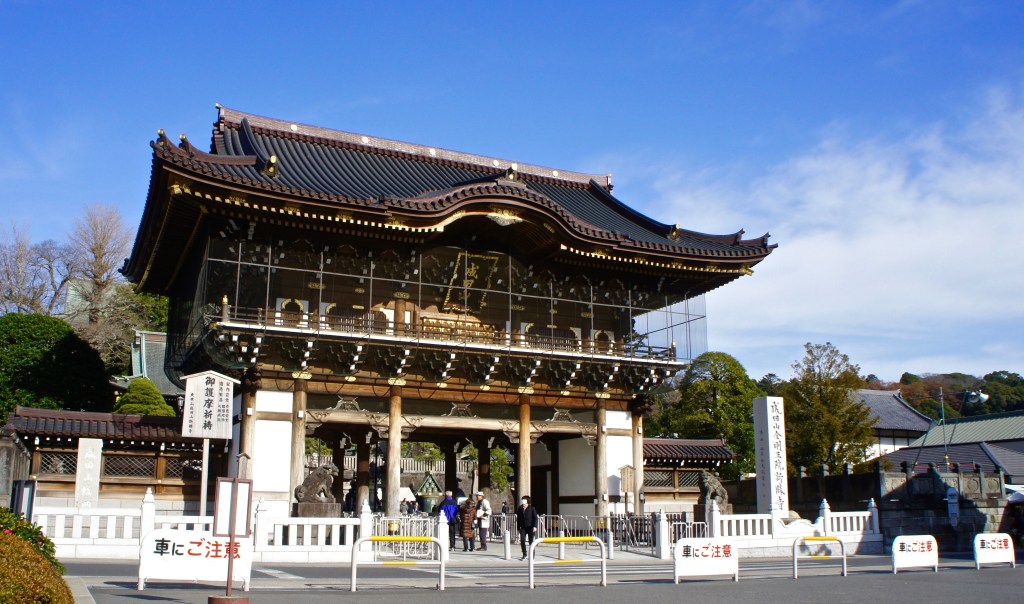
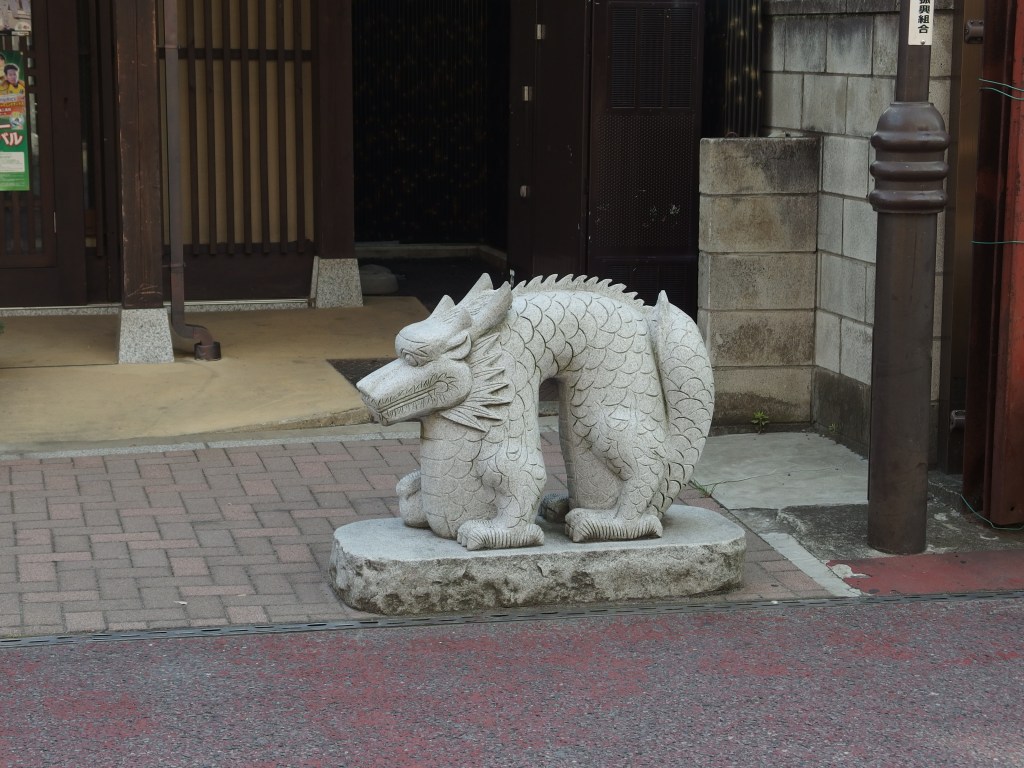
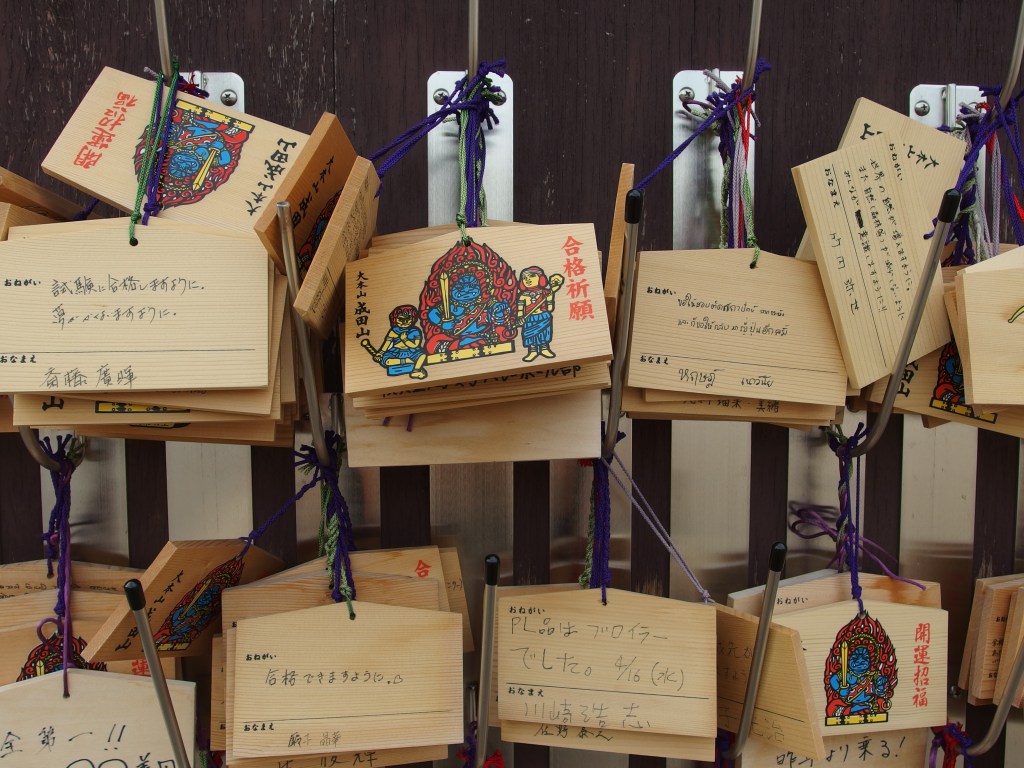
The Great Hall of Prayer
The Daihondo, the Great Hall of Prayer, is the newest of the large buildings and the one where the temple is most alive. It is a broad hall of pale wood and dark beams with a high ceiling, and the main image is behind a curtain at the centre. The goma ritual is held here several times a day: a priest sits before a fire altar, feeds cedar sticks into the flames while chanting, and the smoke carries the petitions of the people in the hall. Visitors may sit at the back and watch, and it is worth timing your visit around one of the ceremonies. Shoes off, quiet, no flash photography, and the wooden floor is cold in winter.
The Omotesando approach
The approach runs from the station square to the temple gate, lined with two-storey wooden buildings, many of them restaurants and shops that have been in the same family for generations. The specialities are unagi, grilled eel, and kakimochi, thick rice crackers sold in bags and boxes, along with pickles, soy sauce and sweets. It is busy in the middle of the day and quiet in the early morning, when the shopkeepers are hosing down the pavement and the smell of charcoal is starting. Walk the whole length rather than cutting through the side streets, and look at the carved signs and the old shopfronts above the awnings, which are easy to miss at eye level.
The Great Pagoda of Peace
The tall red pagoda on the hillside behind the main hall was built in 1984, and although it is modern it is the most photogenic thing in the precinct: a five-storey tower of vermilion and white above the trees, with a golden finial, reached by a flight of stone steps. You can go inside, where the walls are covered with thousands of small images and the windows give a view back over the roofs of the temple and the town. The climb is short but steep, and the platform at the base is a good place to sit. In cherry season the trees around it are in flower and the whole slope is pink and red.
The Shaka Hall and the old temple buildings
The Shaka Hall, the large hall to the left of the main axis, is the oldest of the big buildings, dating from the 1850s, and it is the one that shows how the temple looked before concrete and paint. The wood is dark with age, the carving under the eaves is dense and figurative, and the interior is dim and smells of incense. Around it are smaller halls, a bell tower, a five-storey pagoda of older date and rows of stone lanterns and votive tablets, some of them put up by sumo wrestlers and actors. Take the side paths rather than the central route, and you will mostly have them to yourself.
Naritasan Park
Behind the halls, the temple grounds run into a landscape park of about sixteen hectares: three ponds, a stream, bridges, a waterfall, and around a thousand cherry trees, which make early April the busiest fortnight of the year. The paths climb a low hill and loop through the trees, and in the middle of the park there is a small museum of calligraphy and a tea house. It is a good place to sit after the crowds of the approach, and it is large enough that you can find an empty bench even on a festival day. Autumn colour here runs from late November, and the park is free.
Eel on the approach
Narita’s unagi restaurants are the reason many Japanese visitors come at all, and the queues outside the famous ones are part of the experience. The eel is split, steamed and then grilled over charcoal with a sweet soy glaze, and served in a lacquered box on rice. It is expensive, it is rich, and it is the local thing to eat. The best-known shops are on the Omotesando and have been there for centuries, with prices to match; simpler bowls are available further along the street and around the station. Go early for lunch or late for dinner to avoid the worst of the queue, and expect to wait on weekends and holidays.
The old town lanes
Away from the Omotesando, Narita keeps a quiet grid of lanes with merchant houses, storehouses and a few temples, and it is worth half an hour to walk them. The Narita City Museum of History and Folklore, in a former merchant house, explains the town’s role as a post station and pilgrimage stop, with tools, documents and household goods. Further out, the Chiba Prefectural Boso-no-Mura open-air museum reconstructs farmhouses, a merchant street and a samurai residence from the nineteenth century, and is reached by a short bus ride. Both are cheap, both are quiet, and either makes a good second stop if you have more than a few hours.
Food and drink
- Unagi is the local dish and the reason for the queues: grilled eel glazed with soy and mirin, served over rice in a lacquered box, often with a clear soup and pickles. The traditional shops on the Omotesando smoke it over charcoal, and the smell reaches the street. Expect to pay a proper price for a proper bowl.
- Kakimochi, thick rice crackers brushed with soy and grilled, are sold all along the approach in bags and tins, in flavours from plain soy to black pepper and sesame. They make the obvious souvenir and they keep for weeks.
- Chiba is a peanut-growing prefecture, and the shops around the station sell roasted peanuts, peanut sweets and peanut miso. It sounds like a joke and it is not: the peanuts here are large, sweet and worth carrying home.
- The town has a long sake history, and a couple of breweries in the older streets sell bottles and tasting sets. Look for the cedar ball hanging outside the brewery door, which signals that a new brew is ready.
- Beyond eel, the approach has soba, tempura, dumplings and a few cafes in converted machiya, and there is a cluster of reasonably priced places around the station for travellers on a layover. If you have an early flight, the station area is easier than the approach, which mostly closes down in the evening.
Getting there and around
- From Narita Airport, both Keisei and JR run to Narita town in about ten minutes. Keisei Narita station is the closer of the two to the Omotesando, and JR Narita station is a few minutes further on the other side of the town centre. Trains are frequent and the fare is small.
- Note that the Keisei Skyliner does not stop at Narita town: it runs non-stop between Ueno and the airport terminals. From Ueno, take a regular Keisei limited express or rapid service to Keisei Narita instead, which takes around seventy minutes.
- From central Tokyo, the JR Sobu rapid line runs from Tokyo station to JR Narita in roughly seventy-five minutes, and the Narita line connects from Chiba and from the north. The Japan Rail Pass covers the JR route but not the Keisei line.
- Narita Express trains serve the airport terminals rather than the town, so if you are arriving on one, change at the terminal to a local train for the two stops into Narita.
- The walk from either station to the temple gate is about ten to fifteen minutes along the Omotesando, flat and signposted. Buses run along the approach but the walk is the point, and it is short enough to do with a small bag.
- Coin lockers at both stations take the usual sizes, and the larger ones fill on festival days. If you are between flights, leave the suitcase at the airport and travel light into town.
Where to stay
- Hotels around JR and Keisei Narita stations are the practical choice for an early flight: business hotels, a few larger ones, and a handful of family-run places, all within a ten-minute walk of the trains and the approach.
- There are also airport hotels at the terminals and along the free shuttle routes, which suit a late arrival or a very early departure better than the town. They are more expensive and less interesting, and you lose the evening walk on the Omotesando.
- A small number of guesthouses and converted houses in the old streets offer rooms in a quieter setting, often with shared bathrooms and a communal kitchen. They book out early in cherry season and around Setsubun.
- Many visitors see Narita as a day trip from Tokyo, which works well: the last trains back run until late evening, and the trip is under ninety minutes. The trade-off is that you cannot be on the approach at dawn, which is the best hour of the day.
Best time to visit
- The Setsubun festival on the third of February is the temple’s biggest event, when thousands crowd the courtyard for the bean throwing and the parade of sumo wrestlers and invited guests. It is spectacular and extremely crowded, and accommodation in the town is booked out well ahead.
- Cherry blossom comes to Naritasan Park in the first days of April in a normal year, and the combination of the pink trees, the red pagoda and the temple roofs is the image most people carry away. The approach is at its busiest then.
- The New Year period brings one of the largest first-visit crowds in the Kanto region, with the approach lined with stalls and the temple open through the night. It is memorable if you can handle the numbers, and difficult if you cannot.
- Autumn colour in the park runs from late November into early December, and the maples around the ponds are the draw. The weather is cool and dry, and the light on the old halls is at its best.
- Summer is hot, humid and quiet, with hydrangeas in June and the sound of cicadas over the park. There are fewer queues at the eel restaurants, which is its own reason to come.
Practical tips
- Go early. The approach is empty before eight in the morning, the temple grounds are at their most peaceful, and you can eat lunch without queueing when the shops open.
- Allow at least three hours for the town if you are on a layover: fifteen minutes each way on the train, an hour on the approach and in the main halls, an hour for the park and the pagoda, and time for eel. Four to five hours is comfortable.
- Keep an eye on the clock for the return to the airport. Immigration and security can take an hour at busy times, and the trains, while frequent, are not so frequent that you can miss one without stress.
- The temple grounds are free and open from early morning until late afternoon, with the halls closing earlier than the gates. The fire ritual is the thing to plan around, so check the times when you arrive.
- Carry cash. Many of the smaller shops and restaurants on the approach do not take cards, and the temple’s amulet counters are cash only.
- The approach is a working street with vehicles and bicycles, and the pavements are narrow. Keep left, watch for the delivery carts, and do not stop in the middle of the road to photograph the gate.
Suggested day-trip outline
- Morning, three hours: train from the airport or Tokyo to Narita, locker or bag drop at the station, walk the Omotesando to the temple gate, and see the Great Hall of Prayer and the Shaka Hall before the crowds.
- Midday: the Great Pagoda of Peace and a loop of Naritasan Park, then back down the approach for eel or soba, accepting the queue as part of the visit.
- Afternoon, longer stay: the Narita City Museum of History and Folklore and the old town lanes, or a bus to Boso-no-Mura for the reconstructed merchant street and farmhouses.
- Layover version: two and a half to three hours in town, temple and approach only, with a rice-cracker shop and a quick bowl near the station rather than a full eel lunch.
- Overnight version: arrive in the evening for the lantern-lit approach and dinner, sleep near the station, and walk the temple grounds at dawn before the first train to the airport.
Before you go
Timetables, fares, admission fees, and seasonal access rules can change. Check the official tourism and transport sites linked below for the latest information before you travel.
Explore More of Japan
Published guides that pair with this one:
- Mount Tsukuba Travel Guide: The Twin Peaks North of Tokyo
- Ushiku Daibutsu Travel Guide: Ibaraki’s Giant Buddha
- Yanaka, Nezu and Sendagi Travel Guide: Old Tokyo on Foot
- Okutama Travel Guide: Nippara Cave, Hatonosu Gorge and Lake Okutama
- Izu Oshima Travel Guide: Mount Mihara, the Black Desert and Habu Port
- Tomioka Silk Mill Travel Guide: Japan’s First Modern Silk Factory
Browse every Kanto guide on this site for the rest of the region.
Sources
- naritasan.or.jp — Access (checked 2026-11-05)
- nrtk.jp (checked 2026-11-05)
- narita-entexit.com (checked 2026-11-05)


Leave a Reply