A practical English guide to Hirome market in Kochi: the stalls, the bonito, the sake and how to eat there.
Operational details such as opening hours, admission fees, and train times can change. Prefer official pages and reconfirm before you travel (sources checked on 05 November 2026).
Why visit
- Hirome Ichiba is a covered food hall in the centre of Kochi, five minutes from the castle and a short tram ride from the station, and it is the most sociable place to eat in Shikoku. Dozens of stalls sell the food of Tosa under one roof, and the tables in the middle belong to everyone: you buy a plate here, a drink there, sit down wherever there is space, and eat with strangers.
- The signature dish is katsuo no tataki, bonito seared over a straw fire and served with salt or a vinegar and garlic dressing, and the smell of the smoke is part of the experience. Around it are gyoza, fried fish, sushi, ramen and sweets, along with a serious selection of Tosa sake, which is served in generous measures and at low prices.
- The hall is not a tourist attraction in the usual sense. It is where office workers eat lunch, where students meet in the evening, and where the local baseball crowd gathers after a game at the nearby stadium. That mix is what makes it worth a visit, and it is why the good stalls have queues at peak times rather than all day.
- Kochi itself is a small, relaxed city with a castle, a market and a coastline, and Hirome is the natural centre of an evening. It also works as a quick, cheap lunch before a train along the coast, which is useful in a region where restaurants close early.
Top places and highlights
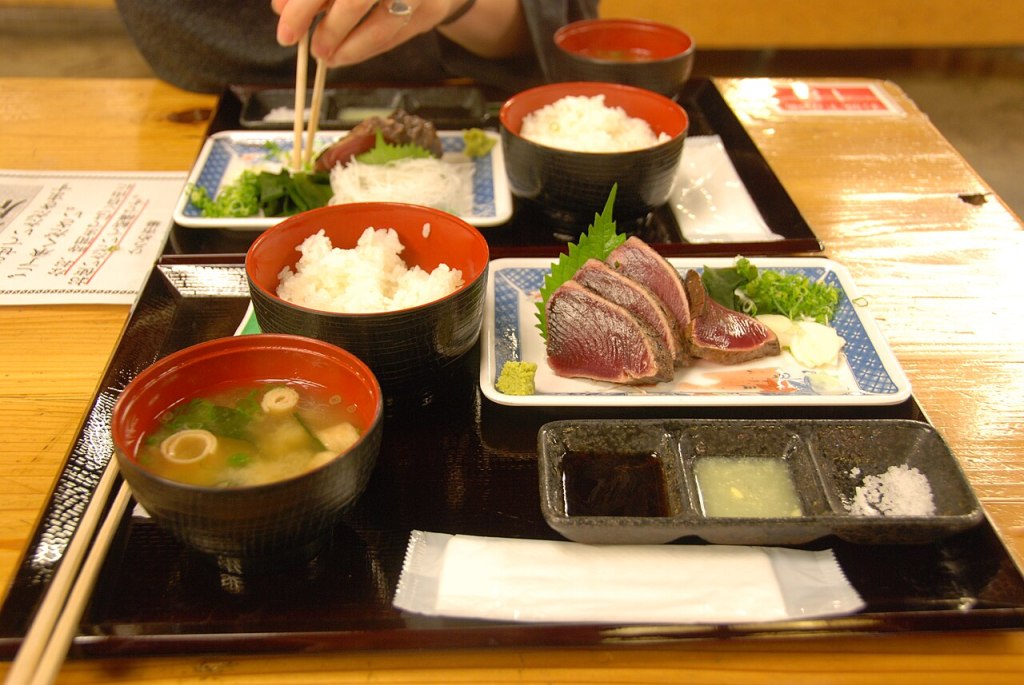
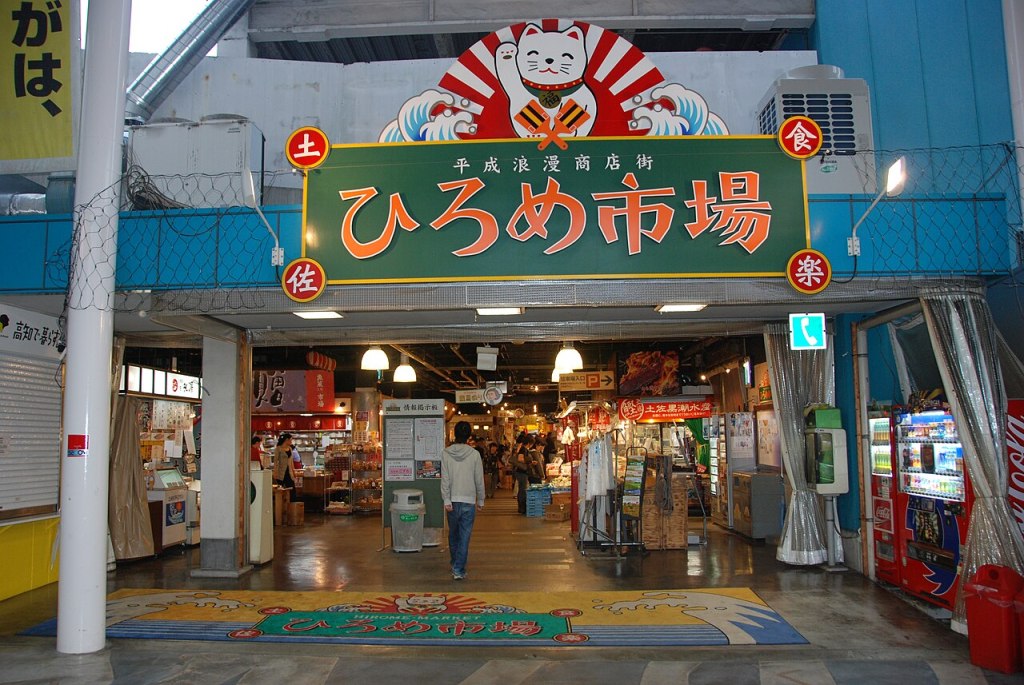
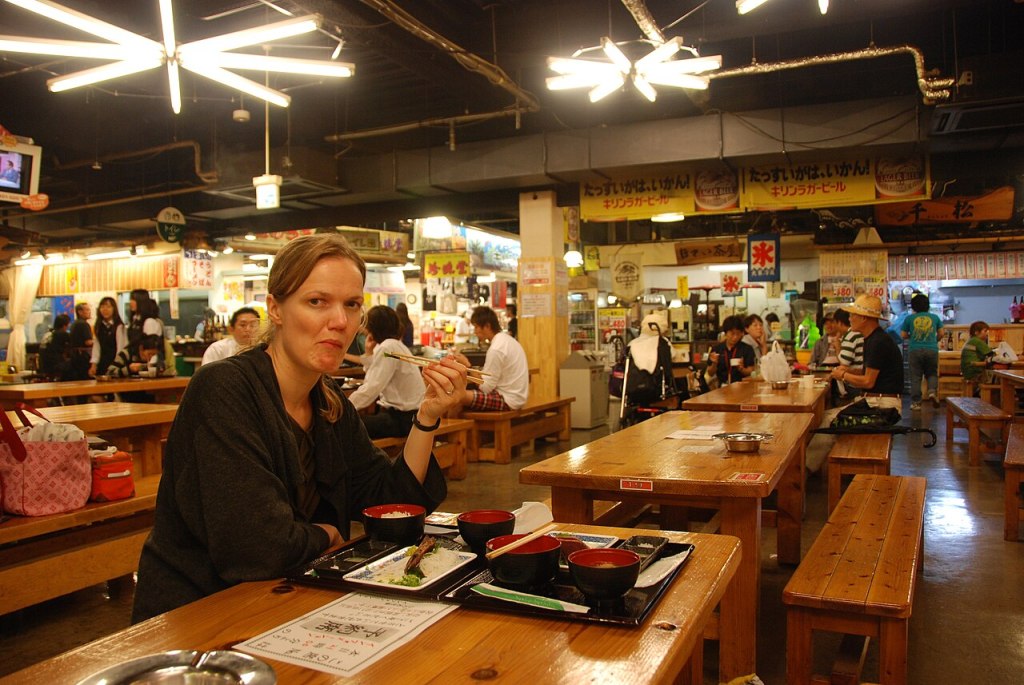
Katsuo no tataki
The bonito is seared hard over a straw fire and left raw in the middle, then sliced thick and served with coarse salt, garlic, or a dressing of vinegar, soy and myoga. The smoke is what you notice first, and several stalls cook it in front of you. It is the definitive dish of Kochi, and the market is a good place to try it for the first time, since the price is low and the portions are generous. Order it with a cold local sake and eat it immediately.
The shared tables
The centre of the hall is a sea of long tables with benches, and nobody owns a seat. You find a space, put your tray down, and the people next to you may be a family, a group of office workers or a pair of travellers. Conversation starts easily here, and the custom of sharing a table with strangers is the point of the place. It is also the practical reason the hall works: with dozens of stalls and one seating area, everyone eats together.
The Tosa sake
Kochi drinks dry sake, and the market has stalls selling the local labels by the cup or the small bottle, with staff happy to explain the difference between the breweries. The sake here is often served chilled and in a generous pour, and the prices are among the lowest in Japan for the quality. If you do not know what to order, ask for a tasting or point at what the next table is drinking.
The stalls beyond bonito
The hall is bigger than the bonito stalls that dominate the entrance. Further in there is gyoza, fried chicken, sashimi, sushi, ramen, curry, and a stall or two selling the sweets of the region. Some are chains and some are family businesses that have been here since the market opened, and the range means a group can eat entirely different meals at one table. Walk the whole hall before you order.
The market’s own life
Hirome opens in the morning and runs through the day, but it changes character hour by hour: quiet coffee and breakfast early, office lunches at noon, families in the afternoon and a louder, drinkier crowd in the evening. Coming twice, at lunch and after dark, shows two different places. On the day of a home baseball game the whole hall turns yellow with the local team’s colours.
Kochi castle next door
The castle is a short walk up the hill from the market, one of the few in Japan with its original keep intact, and the view from the top takes in the city, the river and the mountains behind it. The climb through the grounds takes twenty minutes, and the combination of the castle and a meal at Hirome is the standard half-day in Kochi. Go up before eating, then walk down for lunch.
The Sunday market
On Sundays a street market runs along the road below the castle, with hundreds of stalls selling vegetables, plants, knives, tofu and prepared food, and it has been running for centuries. It is a fifteen-minute walk from Hirome, and the two together make Sunday the best day to be in Kochi. Arrive in the morning, before the best produce goes.
Food and drink
- Katsuo no tataki, the seared bonito, is the dish to order, with salt or a vinegar dressing and a little garlic.
- Tosa sake is dry and clean, and the market stalls sell it by the cup at low prices.
- Gyoza, fried chicken and ramen are the reliable non-fish options, and the queues show which stalls are best.
- The region’s tomatoes, ginger and yuzu appear in the stalls, and the local ice cream and sweets are worth leaving room for.
- For breakfast, a coffee and a pastry from one of the early stalls is enough before the castle climb.
Getting there and around
- The market is about a fifteen-minute walk from JR Kochi station, or a short tram ride to the stop below the castle.
- The tram network runs along the main streets, and the castle, the market and the shopping arcade are within a few minutes of each other.
- From the airport a bus reaches the station in about thirty minutes, and the market is a short walk or tram ride beyond.
- By car, the expressway exits are on the edge of the city, and parking in the centre is limited, so the tram is easier.
- The market is covered, which makes it a practical stop in the rainy season and in the heat of summer.
Where to stay
- Hotels cluster around Kochi station and the arcade, from business hotels to a few larger places, all within walking distance of the market.
- The castle area has a handful of older hotels with views over the city, a short walk from the food hall.
- Guesthouses in the backstreets around the arcade suit travellers on a budget and are often run by people who know the local food.
- The coast west of the city has small inns and minshuku, useful if you are continuing along the Tosa coast by car.
Best time to visit
- Spring is mild and the castle cherries are a local event, with the market busy at lunch.
- Summer is hot and humid, and the market’s covered hall is a relief; the Yosakoi festival in August fills the city.
- Autumn is the best time for the coast and the market, with clear weather and good fish after the summer.
- Winter is mild by national standards, quiet, and a good time to eat without waiting for a table.
Practical tips
- Go at lunch or early evening; the hall is calmest at those times and the stalls are fully stocked.
- Buy your food first, then find a seat, and do not leave a bag on a table to claim it during busy periods.
- Some stalls are cash only, so carry notes and coins even though the hall has card readers at the entrance.
- Clear your tray when you finish; there are return stations around the hall.
- Order the bonito at a stall with a queue and a straw fire; that is where the locals eat it.
- Combine the castle, the market and the Sunday market in one morning if your timing allows.
Suggested day-trip outline
- Morning: climb to Kochi castle and walk the grounds.
- Late morning: the Sunday market if it is Sunday, otherwise the arcade and the shops.
- Lunch: katsuo no tataki and a cold sake at Hirome.
- Afternoon: the museum of literature or the riverside, then coffee in the arcade.
- Evening: a second round at the market, when the stalls are busiest and the tables loudest.
- Next day: the train along the coast, or a car west towards the Shimanto river.
Before you go
Timetables, fares, admission fees, and seasonal access rules can change. Check the official tourism and transport sites linked below for the latest information before you travel.
Explore More of Japan
Published guides that pair with this one:
- Megijima and Ogijima Travel Guide: The Art Islands near Takamatsu
- Kochi Yosakoi Travel Guide: The August Dance Festival
- Zentsuji Travel Guide: Kukais Birthplace and Temple 75
- Sadamisaki Travel Guide: Japans Narrowest Peninsula
- Dogo Onsen Travel Guide: Historic Hot Springs in Matsuyama
Browse every Shikoku guide on this site for the rest of the region.
Sources
- hirome.co.jp (checked 2026-11-05)
- visitkochijapan.com (checked 2026-11-05)


Leave a Reply