A practical English guide to Sanuki udon in Kagawa: how the noodles are made, how to order at a self-service shop, the styles and the towns to eat them in.
Operational details such as opening hours, admission fees, and train times can change. Prefer official pages and reconfirm before you travel (sources checked on 05 November 2026).
Why visit
- Kagawa is the smallest prefecture in Japan and it eats more udon per person than anywhere else in the country, by a margin that is not close. Sanuki udon, the local style, is a thick white wheat noodle with a firm, springy bite, served in a clear broth of sardine and kelp, and it is the reason a surprising number of people plan a trip to Shikoku around lunch.
- The pleasure is not a single famous restaurant. It is the density: within a few kilometres of Takamatsu station there are hundreds of shops, from family operations with a single pot to self-service canteens where you carry your tray along a counter, and the price of a bowl is low enough that people eat it twice a day without thinking about it. This is everyday food in the place that makes it best, and that is a different experience from eating it in a city restaurant in Tokyo.
- The craft is worth understanding before you eat. The dough is made with flour, salt and water, kneaded by foot in the traditional method, rested, rolled and cut, and the texture depends on the flour, the salt level and how long the dough rests. Shops take pride in details that are invisible in the bowl: the blend of flours, the ageing of the broth, the temperature at which the noodles are chilled. A visit to one of the shops that lets you watch, or a short udon-making class, turns a cheap lunch into something you remember.
- Sanuki udon also happens to be the most practical food for a traveller in Shikoku. It is quick, it is everywhere, it is open from breakfast, and it fits around trains and temples. If you are doing the pilgrimage route or the islands, udon is the thread that runs through the day, and eating it in Kagawa is the point of origin.
Top places and highlights
A self-service udon canteen
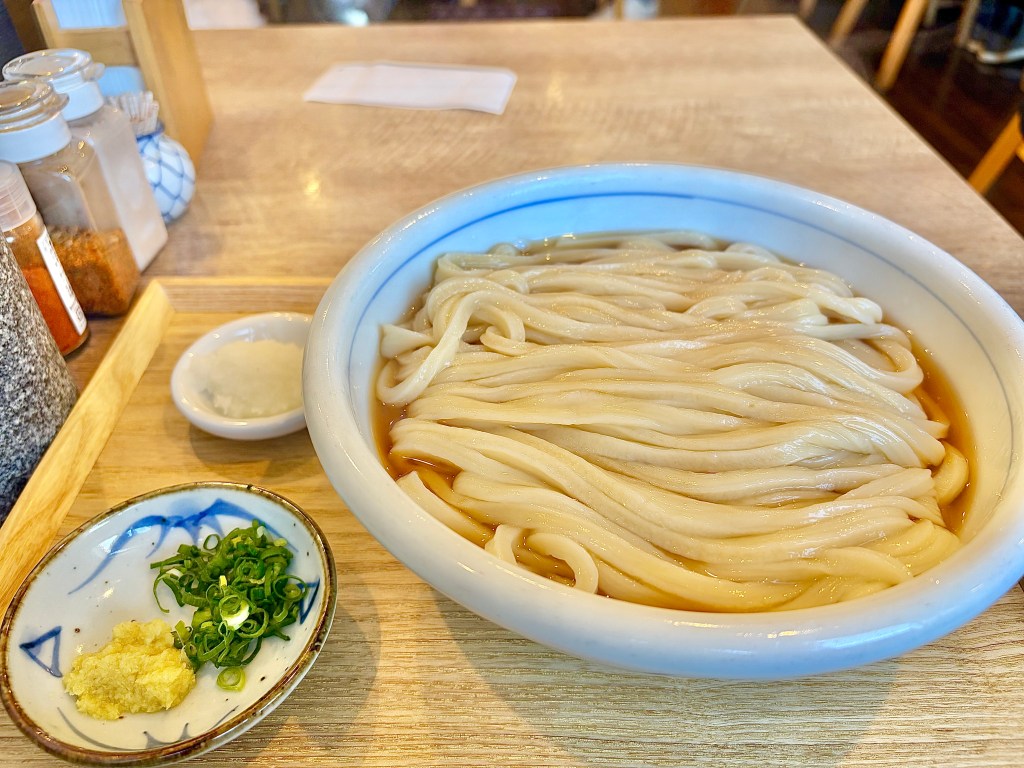
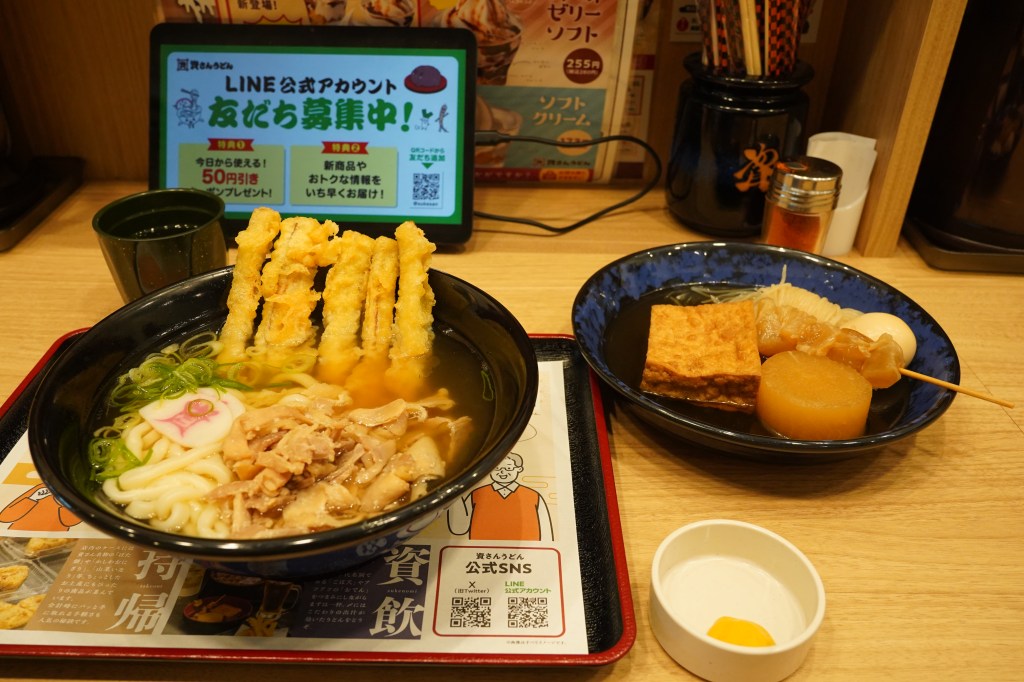
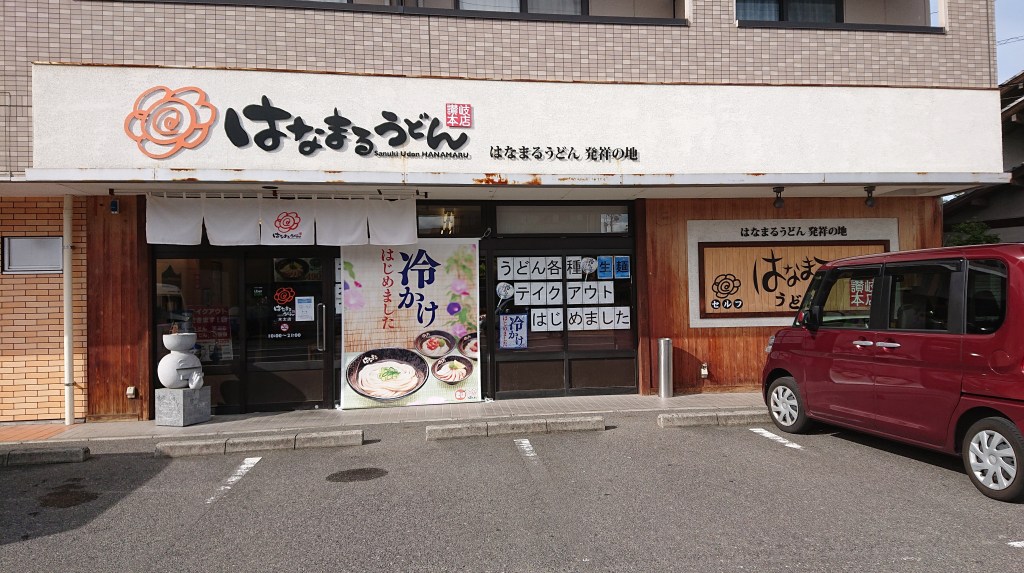
The self-service shop is the classic Sanuki format and the one to try first. You take a tray, tell the staff hot or cold, watch them lift the noodles from the pot, hand over your bowl, then add tempura, tofu, spring onion and ginger from the counter, and pay at the end. The broth comes from a tap or a ladle, and the whole thing takes five minutes. The shops are bright, functional and often full of workers at lunch. Do not overthink the ordering: point at what looks good, and remember that cold noodles with hot broth poured over them, bukkake, is the style that best shows the texture.
The noodle itself
Sanuki udon is square-cut, thick and slightly translucent, and the texture is the entire point: it should resist the tooth and then spring back, a quality the Japanese call koshi. That comes from the flour, the low water content, the salt, the resting and the way the dough is folded and cut. Eat a bowl of kake, hot noodles in hot broth, to taste the wheat, and then a bowl of zaru, cold noodles with a dipping sauce, to feel the difference the temperature makes. Once you have had both, the versions sold elsewhere will seem soft and dull.
The broth
The soup looks thin and pale and tastes of the sea. It is built on iriko, dried sardines, and kombu, with a light soy and a little sugar, and it is deliberately restrained so that it does not compete with the noodles. Each shop has its own balance: some are sweeter, some more smoky, some almost transparent. In the self-service shops you pour it yourself, which means you can start with a little and add more. Ask for susuru, slurping, to be polite and to cool the noodles on the way in. It is also acceptable to drink the broth from the bowl at the end.
Kamatama and the hot styles
Kamatama is the dish to order when you want something richer: hot noodles straight from the pot, a raw egg stirred through, a splash of soy and a scatter of spring onion, with the heat of the noodles cooking the egg into a coating. It is simple, cheap and very good, and it is a good test of a shop because there is nowhere to hide. Ontama adds a soft-boiled egg instead, and the hot kake with a piece of fried tofu is the everyday version that locals order most often. If you are unsure what to choose on a first visit, kamatama is the answer.
The shops around Takamatsu
Takamatsu is the capital and the centre of the udon map, with shops in the covered arcades, along the back streets and out in the suburbs where you need a car or a bicycle. The city is flat and small, and a rented bicycle is a good way to link three or four shops in an afternoon. There is no need to chase a ranking list: the shops used by the people who work nearby are usually the right ones, and the ones with a queue of locals at eleven in the morning are worth joining. Some shops close when the noodles run out.
Marugame and the west
Marugame, on the coast west of Takamatsu, is the other udon town, and it has a long history as a castle town and a port for the pilgrimage. The shops here are large, some of them with queues that stretch down the street at lunch, and the style is generous: thick noodles, big bowls, tempura on the side. The castle walls above the town and the harbour are worth an hour between meals. From Marugame the train continues west to Sakaide and on to Matsuyama, which makes the town a natural lunch stop on the way across the island.
Making udon yourself
Several shops and community centres in Kagawa run short udon-making sessions, usually an hour or so, where you knead the dough, roll it, cut it and then eat what you made. The traditional kneading is done by treading the dough in a bag with your feet, which sounds odd and is genuinely hard work, and the instructors are patient with people who have never cooked anything. It is a good rainy-day activity and a better souvenir than a packet of noodles. Book ahead, since sessions run on fixed days and fill up with school groups.
Food and drink
- Beyond udon, Kagawa is known for its small production of olives, grown on the islands and used for oil, cosmetics and a startling range of snacks. Olive-fed beef and pork appear on menus in Takamatsu, and the oil is a good souvenir.
- The Seto Inland Sea supplies the prefecture with fish: sea bream, octopus, squid and small sardines, and the fish markets and the restaurants around Takamatsu port serve them simply. A sashimi set at lunch is often better value than dinner.
- Kagawa produces sanuki wasanbon, a fine-grained traditional sugar used in sweets, and the old confectioners in the prefecture still sell it in small bags. It is subtle, expensive and very local.
- The islands of the Seto Inland Sea have their own food culture, with lemons, olives and seafood, and the ferries from Takamatsu make a lunch on Naoshima or Shodoshima easy. Check ferry times rather than assuming a late return.
- For dinner, Takamatsu has an izakaya district around the Kawaramachi and Hyogomachi arcades, with local sake and fish. The city is quiet on weeknights, and many restaurants close early by Tokyo standards.
Getting there and around
- Takamatsu is on the JR Yosan line, with direct trains from Okayama across the Seto Ohashi bridge in about an hour, and connections from Matsuyama in about two and a half hours. The shinkansen stops at Okayama, not at Takamatsu.
- Takamatsu airport has flights from Tokyo and a few other cities, and the limousine bus runs to Takamatsu station in about forty minutes. From the station, the arcades and the central udon shops are within a fifteen-minute walk.
- The Kotoden railway runs from Takamatsu-Chikko to Kotohira and serves the suburbs and the temple town, which is useful for combining udon with Kotohira-gu. The trains are small, frequent and cheap.
- A rental bicycle is the best way to reach the outlying shops in Takamatsu, since the city is flat and the distances are short. Ask at the station or at a cycle shop near the arcades.
- For Marugame and the western shops, use the JR Yosan line, which runs along the coast with stations close to the main udon streets. A car is better for the farm shops and the mountain ones.
Where to stay
- Takamatsu has the widest range of accommodation: business hotels around the station, a few larger city hotels, and guesthouses in the older streets. It is the practical base for udon, Kotohira and the islands.
- The arcade district around Kawaramachi has small hotels and hostels within walking distance of restaurants and bars, which is convenient if you want to eat late and not worry about the last train.
- Kotohira, at the foot of Kotohira-gu, has ryokan and guesthouses for people doing the pilgrimage, and it is a quieter base with mountain air. Udon shops are fewer, but the ones that exist are good.
- The Seto islands have a growing number of small guesthouses and art-related lodgings, mostly on Naoshima and Teshima. They book out far in advance and are expensive in exhibition years, so plan early.
Best time to visit
- Spring, from late March to May, is the best season for walking and cycling between shops: mild, dry, and with cherry blossom along the rivers and the castle parks. It is also busy with domestic tourists around the holidays.
- Summer in Kagawa is hot and humid, with temperatures in the mid thirties. Cold udon, zaru and bukkake, is at its most welcome then, and the islands have swimming beaches. Carry water and avoid the middle of the day.
- Autumn, from October to November, brings clear, dry weather and the best light for the Seto Inland Sea. It is the season for the islands and for walking the pilgrimage route, and udon tastes just as good.
- Winter is mild compared with the mountains, with occasional snow and cold rain. The udon shops are warm and busy, and the crowds are gone from the islands. Hot kake and kamatama are the order of the day.
- The rainy season runs from early June to mid-July. It is not a bad time to visit if you plan around indoor sights and short walks, and the shops are quiet.
Practical tips
- Eat udon early. Many of the best shops open at breakfast and close in the early afternoon, and some sell out by one o’clock.
- Carry cash, since small shops often do not take cards, and the amounts are small. A bowl costs less than a coffee in central Tokyo.
- Order cold noodles at least once. The texture is what Sanuki udon is about, and hot broth softens it.
- Do not queue for an hour at a famous shop when there is another good one on the next block. The quality across Kagawa is high and the difference between the top and the middle is smaller than the queue suggests.
- Watch how the locals order. In a self-service shop you pay at the end, and in a full-service shop you order and pay first at many counters.
- If you are doing the pilgrimage or the islands, plan udon around the transport timetable rather than the other way around, since rural trains in Shikoku are infrequent.
Suggested day-trip outline
- Breakfast: a self-service shop near Takamatsu station for kake or bukkake, before the office crowd arrives.
- Mid-morning: walk or cycle the arcades and the back streets, with a second stop for kamatama at a shop that looked busy with locals.
- Lunch: train west to Marugame for the large shops and a walk along the harbour and the castle walls.
- Afternoon: return to Takamatsu, visit Ritsurin garden or the port area, and take the ferry to one of the Seto islands if the timetable allows.
- Evening: an izakaya in the Kawaramachi arcade with local fish and sake, and a final bowl of hot udon if the shop is still open.
- With a second day: the Kotoden to Kotohira for the shrine and the old town, with udon at the foot of the steps before the climb.
Before you go
Timetables, fares, admission fees, and seasonal access rules can change. Check the official tourism and transport sites linked below for the latest information before you travel.
Explore More of Japan
Published guides that pair with this one:
- Shimanami Kaido Guide: Cycling Across the Islands
- Dogo Onsen Travel Guide: Historic Hot Springs in Matsuyama
- Takamatsu Travel Guide: Ritsurin Garden, Udon, and Seto Sea Gateways
- Kotohira Travel Guide: Konpira Shrine Stairs and Shikoku Pilgrim Town
- Marugame Castle Travel Guide: An Original Keep on a High Stone Wall
- Matsuyama Castle Travel Guide: The 1854 Keep above the City
Browse every Shikoku guide on this site for the rest of the region.
Sources
- my-kagawa.jp (checked 2026-11-05)
- pref.kagawa.lg.jp (checked 2026-11-05)


Leave a Reply