A practical English guide to the Saga International Balloon Fiesta: when it runs, where to watch, how to get there and what the morning launches involve.
Operational details such as opening hours, admission fees, and train times can change. Prefer official pages and reconfirm before you travel (sources checked on 05 November 2026).
Why visit
- For about a week each autumn, the flat river plain outside Saga city fills with hot air balloons, and for a few hours after sunrise the sky above the rice fields is crowded with them. The Saga International Balloon Fiesta is one of the largest balloon events in Asia, with well over a hundred balloons entered, and it is free to watch from the riverbank.
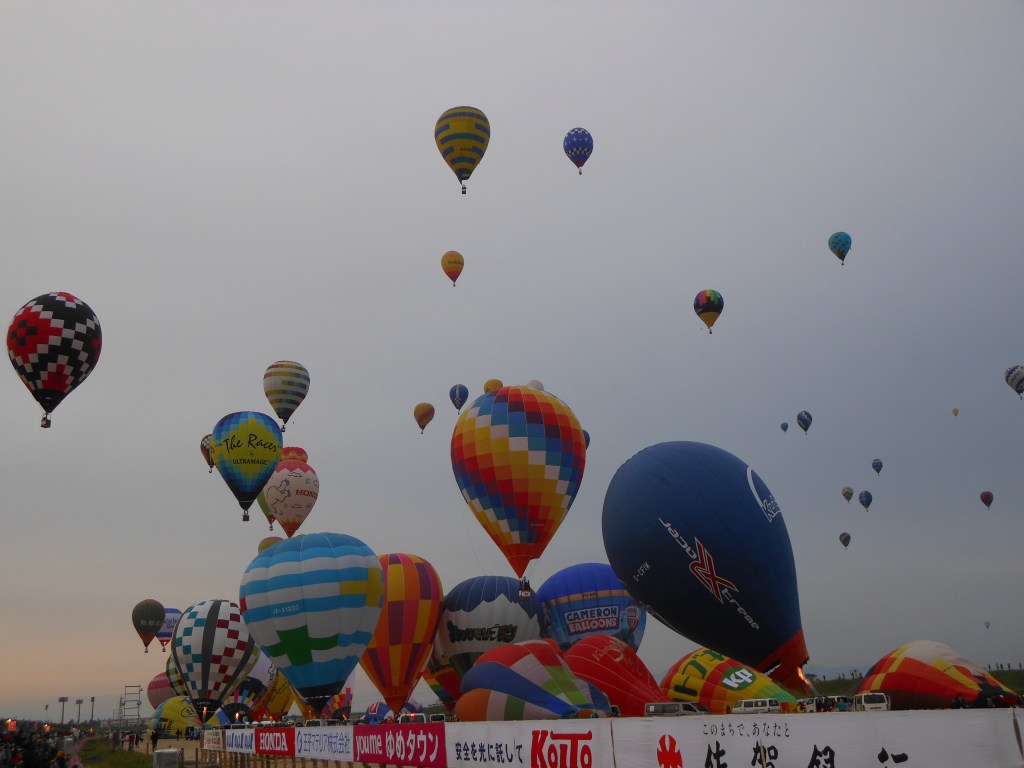
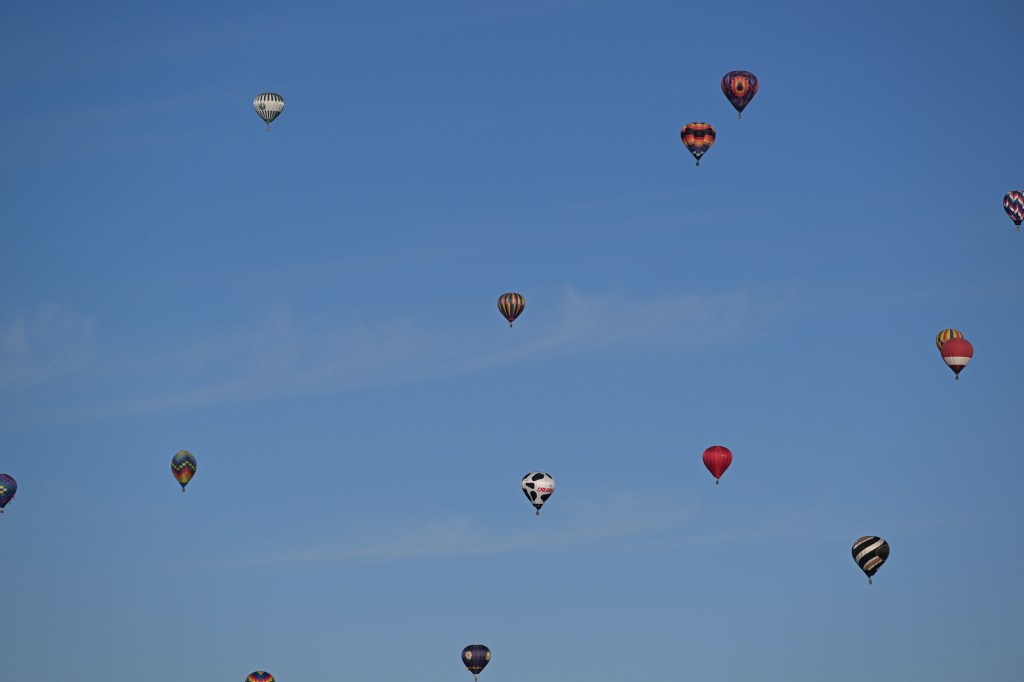
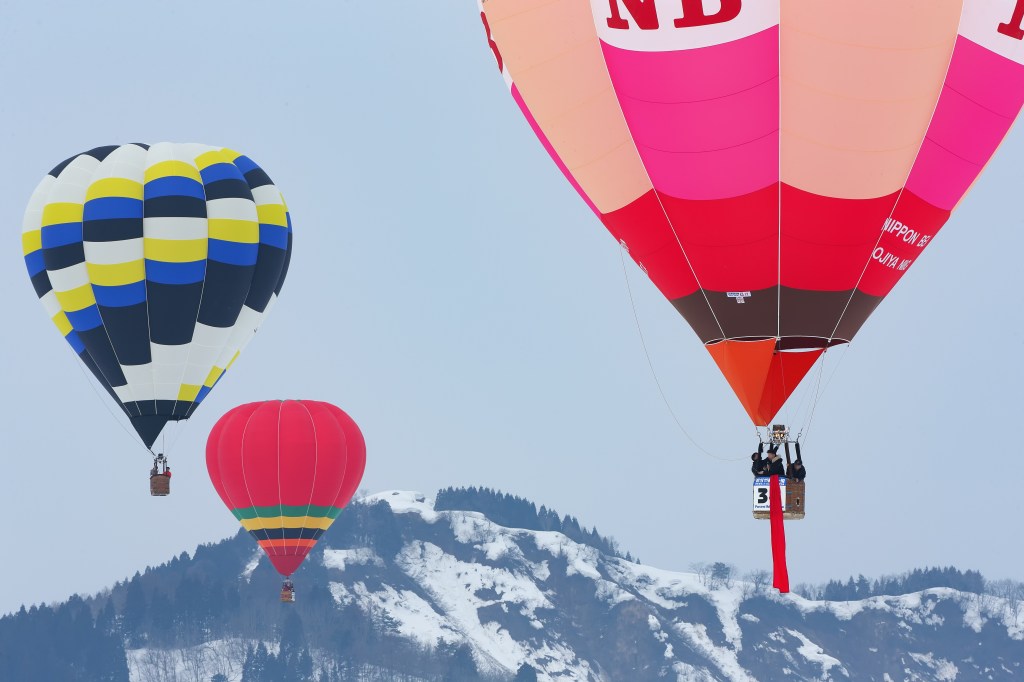
- What makes it different from a festival in a stadium is the setting. The launch field is a working riverside meadow, the spectators stand on the grass and the embankment, and the balloons take off in waves as the wind allows. In the clear air of an autumn morning the colours are extraordinary, and when the wind is right the balloons drift low over the fields and the river before climbing away.
- The other spectacle is the shaped balloons. Alongside the competition balloons there are character and novelty shapes, animals and figures inflated at ground level in the mornings, which is the part children remember. In the evenings on certain nights, a line of balloons is tethered and lit from inside while the burners fire in sequence, a slow mechanical display that is quieter and stranger than fireworks.
- The fiesta is also a very practical event: it is in a small city with a station, the viewing area is flat and open, and there is no ticket barrier between you and the sky. Come for one morning and you will want a second, because the weather decides everything and a single morning can be cancelled by a breeze. That unpredictability is part of the experience, and it is why the locals turn out day after day.
Top places and highlights
The dawn launch
The main launch happens early, around sunrise, when the air is calmest. Crews spread the envelopes on the grass, inflate them with cold air from fans, then fire the burners to heat the air and lift them upright, and the field fills with the roar of the flames and the shapes standing up one after another. The first balloons are away within minutes and the rest follow in a loose stream. Arrive well before the announced time, since the best light and the inflating are the part to see, and the launch can be moved earlier or cancelled if the wind picks up.
The shaped balloons
Not every balloon is a competition sphere. The novelty shapes are inflated at ground level in the morning, often on a separate part of the field, and they are the closest thing to a parade in the event: animals, characters and objects, each with a crew of a dozen people holding ropes. They rarely fly far, and sometimes they do not fly at all, but the inflation itself is the show. It is worth walking the field rather than staying at one spot, because the shapes are spread out and each one takes several minutes to stand up.
The riverside viewing
The field sits on the bank of the Kase river, and the best viewing is not inside the enclosure but on the embankment and the open ground around it, where you can see both the inflation and the flight path. Bring a mat or a folding chair, and expect the grass to be wet with dew until the sun is up. The river gives the balloons something to reflect in when they cross low, and the bridges make good vantage points for the classic shot of a balloon against the water. Toilets and food stalls are set up around the site during the event.
The evening balloon glow
On selected evenings, a row of balloons is tethered in the dark and the burners are fired in sequence, lighting the envelopes from inside and making them glow like lanterns. It is a slow, rhythmic display rather than a dramatic one, and the crowd goes quiet for it. The glow nights depend on the schedule and the wind, and they are cancelled more readily than the morning launches. If you are staying overnight in Saga, plan at least one evening around it and check on the day whether it is going ahead.
The competition flying
The fiesta is a competition as well as a show, and the pilots are flying tasks rather than simply going up: steering to a target marker on the ground, dropping a marker from height, racing over a course. Watching the scoreboard and the chase vehicles gives the event a second layer, and the commentary explains what the balloons are trying to do. It is the reason the field is full of serious crews with trailers and radios, and it is why the flying continues through the morning rather than stopping after the first wave.
Saga city itself
Saga is a small, quiet city with a castle ruin, a reconstructed honmaru palace and a moat park, and it is worth half a day outside the fiesta. The prefectural museum covers the history of the region, including the porcelain towns of Arita and Karatsu, and the local food includes Saga beef, squid and the sweet bean paste cakes sold around the station. The city is flat and easy to walk, and the fiesta site is a short train or bus ride from the centre.
The balloon museum and the off-season
Saga has a small museum devoted to balloons, with envelopes, baskets, burners and displays on the history of ballooning in Japan, and it is the place to go if you are in the city outside the fiesta week. It explains the physics and the weather rules that govern flying, which makes the event itself easier to read. Opening days are limited, so check before you build a day around it.
Food and drink
- Saga beef is the local luxury, marbled and sweet, served as steak, in croquettes or on rice bowls. It is not cheap, but a lunch set is the affordable way to try it.
- Squid is landed on the Saga coast and served transparently fresh as sashimi, often still moving, with ginger and soy. The port towns west of the city are the place for it.
- Saga’s other famous food is the sweet bean paste cake sold near the station and around the castle, a soft bun filled with red bean. It is the standard souvenir and it is best eaten warm.
- Arita and Karatsu, both within an hour of Saga city, are porcelain towns with their own food culture and plenty of cafes serving lunch on local ceramics. A day trip there pairs well with a rainy fiesta morning.
- Around the fiesta site, food stalls sell grilled squid, noodles, fried chicken and hot drinks, and the queues are long at peak times. Bring cash and expect to eat standing up.
Getting there and around
- Saga is on the JR Nagasaki main line, about forty minutes from Hakata in Fukuoka and an hour from Nagasaki. The fiesta site is a short train ride from Saga station, with extra services and a temporary stop during the event.
- From the station, the field is a twenty to thirty-minute walk across the plain, signposted during the fiesta. Shuttle buses also run from the station and from the car parks, and they fill early in the morning.
- The first trains from Fukuoka arrive close to the launch time, so if you are coming from Hakata for a single morning, check the timetable carefully and consider staying in Saga the night before.
- Driving is possible, with temporary car parks around the site, but the roads in are slow before dawn and the car parks fill. Arrive very early or use the train.
- Fukuoka airport is the nearest major airport, with a bus or train connection to Hakata and then the JR line to Saga. Saga airport handles a limited number of domestic flights.
Where to stay
- Hotels in Saga city around the station are the practical choice: business hotels and a few larger ones, all within walking distance of the trains and the shuttle buses. They fill up for the fiesta week, so book months ahead.
- Fukuoka is an easy alternative base, with far more hotels and restaurants, forty minutes away by train. The trade-off is the early start, since the launch happens around sunrise.
- A few ryokan and hot spring inns are within reach in the surrounding countryside and towards Ureshino, which suits travellers who want the fiesta as part of a slower trip. A car is needed for most of them.
- Camping and parking-area overnight stays are organised around the event in some years, which is the cheapest option if you have a van or a tent. Check the current arrangements rather than assuming they exist.
Best time to visit
- The fiesta is held in late October and early November, and the autumn weather in Saga is usually clear, dry and mild. Mornings are cool enough for a jacket and warm by mid-morning.
- Early November is also the start of the autumn colour in Kyushu, and the castle park and the temples around Saga are at their best around the same weeks. It is a good time to combine the fiesta with a wider trip.
- Summer in Saga is hot and humid, with temperatures in the mid thirties, and there is no fiesta then. The city is quiet and the food is the reason to come.
- Spring brings cherry blossom in late March and early April, and the castle park is the local spot for it. The weather is changeable, with warm days and cool evenings.
- Winter is cold and grey but rarely snowy, and the balloon museum and the porcelain towns are good indoor destinations. The rainy season runs from early June to mid-July.
Practical tips
- Plan for at least two mornings. Launches are cancelled for wind, rain or low cloud, and a single morning has a real chance of being called off.
- Arrive an hour before the announced launch. The inflation is the best part and the light is best before the sun is fully up.
- Bring a mat, warm layers and a windproof jacket. The field is open and exposed, and the temperature before sunrise is much lower than the afternoon.
- Check the schedule for the day at your hotel or online before leaving, and be ready to change plans. Do not buy a non-refundable early train ticket for a single morning.
- Use the trains and shuttles rather than driving, and expect crowds on the first and last days of the event. Midweek mornings are calmer.
- Carry cash for the stalls and keep your belongings close in the crowd. Photography is welcome, but do not walk into the launch area while crews are working.
Suggested day-trip outline
- Day one, early morning: train or shuttle to the field before sunrise, watch the inflation and the launch, then walk the riverbank for the low passes.
- Late morning: breakfast at a stall or back in the city, then the castle park and the honmaru palace.
- Afternoon: the prefectural museum or the balloon museum, and a walk through the arcades around the station.
- Evening: Saga beef or squid for dinner, and the balloon glow if it is scheduled and the wind allows.
- Day two, early morning: a second launch attempt, since the weather often differs from the day before.
- Afternoon: a train to Arita or Karatsu for the porcelain towns, returning to Saga or continuing to Nagasaki.
Before you go
Timetables, fares, admission fees, and seasonal access rules can change. Check the official tourism and transport sites linked below for the latest information before you travel.
Explore More of Japan
Published guides that pair with this one:
- Kumamoto Castle Travel Guide: Kato’s Walls and a Rebuilt Keep
- Beppu Travel Guide: The Steam City and the Hell Springs
- Arita Travel Guide: Saga’s Porcelain Town
- Karatsu Travel Guide: Pottery, a Castle, and the Saga Coast
- Yoshinogari Historical Park Travel Guide: Japan’s Yayoi Settlement
- Yanagawa Travel Guide: Canals, Boat Rides and Eel
Browse every Kyushu guide on this site for the rest of the region.
Sources
- sagabai.com (checked 2026-11-05)
- city.saga.lg.jp (checked 2026-11-05)


Leave a Reply