Planning a trip? Hotels near Kirishima Onsen · Tickets and tours (affiliate links)
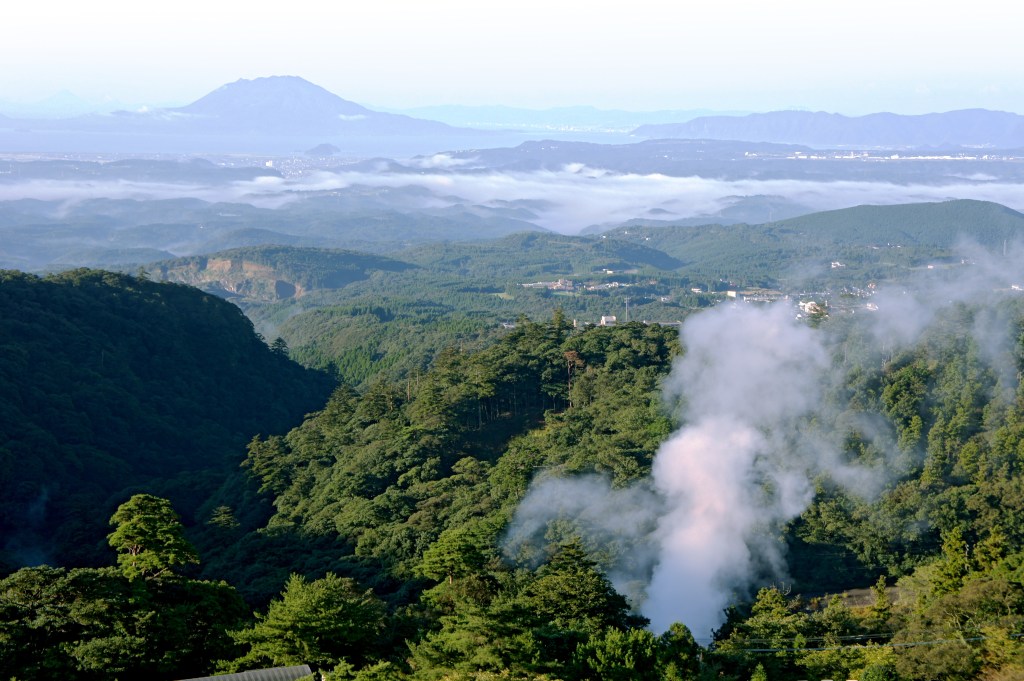
Kirishima Onsen is a string of hot-spring hamlets on the western flank of the Kirishima mountains, in Kagoshima prefecture. Steam rises from drains, the water smells of sulfur, and on a clear day Sakurajima floats across the bay. It is a working onsen town rather than a resort, and that is exactly why people come back.
The mountains above it are active volcanoes. Shinmoe-dake, the most restless of them, has been at alert level 2 since October 2025, which closes the crater area but leaves the main hikes and the shrine open. This guide explains what is currently accessible, how to reach the onsen by bus or car, what the water does, and how to spend two days between baths, shrine visits and volcanic ridges.
Why Kirishima Onsen
Because it combines three things that rarely sit together: serious hot springs, a major shrine, and high mountain walking. You can soak before breakfast, visit a National Treasure before lunch, and stand on a 1,574-metre summit in the afternoon. The whole circuit is within half an hour by car.
It is also convenient. Kagoshima Airport is 30 minutes away, and Kagoshima city is about an hour by car. That makes Kirishima an easy first or last stop on a Kyushu trip, and a good base for people who want mountains without committing to a full trek.
The shape of the onsen
Kirishima Onsenkyo is not one village but a group of them, scattered along the slopes south-west of the mountains. Maruo is the centre, with the market, the tourist information desk, most of the shops and several large hotels. Hayashida is quieter and higher, with views towards Sakurajima. Shinmoe, Ioyadani and Yunotani are smaller, each with a handful of ryokan and a different character.
Buses stop along the main road, but the hamlets are spread out, so a car is the practical way to move between them. In Maruo itself you can walk to the market, the falls and the foot bath, and several hotels are within a few minutes of the bus stop.
A short history
Kirishima Jingu, the shrine that anchors the area, is said to have been founded in the sixth century by the monk Keiin, who built a sanctuary on the slope between Takachiho-no-mine and O-hachi. Eruptions destroyed it repeatedly, and it moved several times before the Shimazu clan re-established it at its present site in 1484.
The buildings standing today were donated in 1715 by Shimazu Yoshitaka, the lord of Satsuma. The main hall, offering hall and worship hall were designated a National Treasure in February 2022, and the covered corridor and envoy hall are Important Cultural Properties. The shrine is dedicated to Ninigi-no-Mikoto, the deity of the descent from heaven in Japanese myth, and the mountain behind it is the setting of that story.
Getting there
From Kagoshima Airport, the airport bus to Kirishima Onsen takes about 30 minutes to Maruo, with departures through the day at roughly 9:30, 12:30, 14:30 and 17:20. From Kirishima-Jingu Station on the JR Nippo line, a local bus reaches Maruo in about 30 minutes, and the same bus continues to the shrine.
From Kagoshima-Chuo Station, take the limited express Kirishima to Kirishima-Jingu (about 50 minutes) and change to the bus, or drive via the expressway in about an hour. From Miyazaki, the drive over the mountains takes about two hours, and the Ebino plateau is the natural stop on the way.
There is also a direct bus from Kagoshima Airport to Kirishima Jingu, which is useful if you want to see the shrine before checking in. Buses are infrequent in the evening, so plan the last connection before dinner.
Getting around
A car turns Kirishima into a proper base. The shrine, the trailheads, the market and the different onsen hamlets are all connected by mountain roads that are slow but scenic, and parking is generally free at the trailheads.
Without a car, stay in Maruo and use the buses for the shrine and the airport. The Takachiho-gawara trailhead is reachable by bus in season, but services are limited, and a taxi from Maruo is the simpler option for an early start. Rental cars are available at the airport.
The water
Kirishima is a sulfur country. The springs range from clear and faintly egg-scented to milky white and strongly acidic, and different ryokan pipe different sources. Many baths are outdoor, set among rocks and trees, and the contrast between hot water and cold mountain air is the whole point.
Some inns open their baths to day visitors for a fee, usually in the afternoon, and the larger hotels are the most likely to accept walk-ins. Bring a small towel, wash before entering, and keep hair out of the water. Tattoos are still refused at some traditional baths; ask before paying, or book a private bath.
The foot bath at Kirishima Onsen Market is the easiest introduction: it costs 100 yen for adults and 50 yen for children, includes a towel, and is open from 9:00 to 17:00. The water is a sodium chloride spring at around 40 to 45 degrees, and the market sells hot-spring eggs steamed for an hour.
Day baths and private baths
Not every ryokan accepts day guests, but enough do that you can bath-hop without sleeping in the village. The larger hotels around Maruo are the most flexible, usually from late morning until mid-afternoon, and charge 500 to 1,000 yen. Private baths, called kashikiri, can be reserved for 45 to 60 minutes and are the easiest option for families or anyone with tattoos.
Bring your own towel if you can, and leave valuables at the inn. The etiquette is simple: wash thoroughly at the shower stations before entering, keep your hair out of the water, and do not put towels in the bath. The water is hot, so start with a short soak and cool down outside.
Kirishima Jingu and Takachiho-gawara
The shrine sits in a cedar grove a short bus ride from Maruo. The approach passes through a torii and up a slope, with the worship hall, offering hall and main hall stacked on a stone terrace, their roofs overlapping. The carvings and colour are unusually rich for a mountain shrine, and the atmosphere is calm even when tour groups arrive.
Further up the road, Takachiho-gawara is the old shrine site, used until 1234, and the trailhead for Takachiho-no-mine. It has a small visitor centre, parking, and a view across the mountains. Even if you do not climb, the ten-minute walk to the old site is worth it.
Hiking in 2026
The volcanic status changes the mountain plan, so check the Japan Meteorological Agency and Kagoshima prefecture pages on the day. As of late October 2026, Shinmoe-dake is at alert level 2, with a 2 km exclusion zone around the crater: the crater area and some trails are closed, but the shrine, the onsen and the main southern hikes are open.
Takachiho-no-mine, 1,574 metres, is the classic climb. From Takachiho-gawara it is about 2 hours up and 1.5 hours down, 2.65 km each way, past the old shrine site and up red volcanic gravel to the ridge. The final section crosses a narrow saddle, and the summit has the legendary spear, Ama-no-Sakaho-oko. The crater of O-hachi is closed, and the gravel is slippery in rain; strong wind and fog are common.
Koreanogamine, the highest peak at 1,700 metres, is usually climbed from the Ebino plateau side, where three routes are open; allow 90 minutes to the summit from the trailhead. The traverse across the range is currently not possible because of the Shinmoe restrictions, and Iwoyama remains closed. Ask at the Ebino Eco-Museum Center or the Takachiho-gawara visitor centre before setting out.
Maruo Falls and the market
Maruo Falls is a 23-metre, 16-metre-wide curtain of hot-spring water, five minutes on foot from the market. The water is pale and sulfurous, steam rises from the pool in cold weather, and the whole thing takes fifteen minutes to see, which makes it a good pre-dinner walk.
The market itself is the social centre of the onsen: a tourist desk, souvenir shops, a food counter and the foot bath. It opens at 8:30 and closes at 18:00, and the steamed eggs and sweet potatoes sell out earlier in the afternoon. The eggs are 100 yen each and take an hour in the steam, which is why they taste faintly sweet and smell of sulfur.
Where to stay
This is ryokan country. The larger hotels in Maruo have big baths, kaiseki dinners and shuttle service from the bus stop; the smaller inns in Hayashida and the other hamlets offer two or three baths and a quieter night. Rates include dinner and breakfast at most places, and the meal is part of the experience: Kagoshima pork, local vegetables, river fish and sweet potato shochu.
Book ahead for weekends, autumn and New Year, when Kagoshima residents come up for a night. Rooms with a private open-air bath are the most expensive and the first to go. If you are travelling on a budget, the business hotels near the airport are cheaper but lose the point of being here.
Food and drink
Kagoshima is pork country, and Kirishima’s ryokan serve it as shabu-shabu, tonkatsu and braised belly. Local chicken is eaten sashimi-style in Kagoshima, though not every visitor wants that; the grilled version is easier. Sweet potato shochu, served with hot water or on the rocks, is the drink to try, and the prefecture makes hundreds of labels.
For lunch, the market and the shops in Maruo do simple set meals and noodles, and the hotels along the road serve coffee. There is not much nightlife: dinner at the inn, a bath, and an early night is the rhythm here.
Two days in Kirishima
Day 1: shrine and steam
Arrive at Kagoshima Airport in the morning, take the bus to Maruo and drop your bags. Visit Kirishima Jingu in the early afternoon, then walk to Maruo Falls and soak your feet at the market. Check in, take the bath before dinner, and eat at the ryokan.
Day 2: the mountain
Start early for Takachiho-gawara and climb Takachiho-no-mine if the weather is clear and the trails are open. Descend for lunch, then drive or take a bus to Hayashida for a second bath with a view of Sakurajima. If the mountain is closed or the cloud is down, substitute the Ebino plateau and the Koreanogamine trailhead, or spend the morning at the shrine and the afternoon in the baths.
With a third day, drive down to Kagoshima city for the ferry to Sakurajima, or continue north to Ebino and Miyazaki.
Seasons
Spring brings new green and cherry blossom around the shrine, and the onsen is busy in Golden Week. Summer is green and wet, with the rainy season in June and July and afternoon thunderstorms; the mountain trails are at their best early in the day. Autumn is the finest season, with clear air, colour on the slopes and views to Sakurajima. Winter is cold and quiet, with steam pouring off the baths and occasional snow on the peaks.
The mountain weather is changeable in every season. Carry a shell, and do not start a climb in the afternoon. Autumn colour usually arrives in early to mid-November, later than in the cities, and the maples around the shrine turn at about the same time as the slopes above.
Day trips
Kagoshima city and Sakurajima are an hour away, and the ferry to the volcano is a day in itself; see our Sakurajima guide. Ibusuki, with its sand baths, is about an hour and a half south, covered in our Ibusuki guide. Ebino plateau is 40 minutes north and has its own walks and crater lakes.
Further afield, Miyazaki and Takachiho Gorge are a two-hour drive, and Yakushima is a ferry and a day away. For other Kyushu hot springs, Unzen and Kurokawa make good comparisons.
The Ebino plateau deserves its own half day. The drive from Maruo takes about 40 minutes, the air is cooler, and the walking routes around the crater lakes are gentler than Takachiho-no-mine. The Eco-Museum Center has maps and current trail information, and the Koreanogamine trailhead is a short drive further on.
With children
Kirishima works well for families as long as you keep the plans small. The market, the foot bath and Maruo Falls are all easy, the shrine has space to run, and the hotels usually have family rooms and simple meals. The mountain is a serious half-day climb, not a stroll, so save Takachiho-no-mine for older children and choose the Ebino plateau or the lower forest walks instead. Car seats are worth arranging with the rental company in advance.
Budget
Kirishima is not cheap, because the accommodation is mostly ryokan with two meals included. Expect 15,000 to 30,000 yen per person per night in the mid-range, and more for a room with a private bath. Day-use bathing is the budget option at 500 to 1,000 yen, and the foot bath is 100 yen.
Transport is modest: the airport bus is a few hundred yen, and the train from Kagoshima is around 1,000 yen. A rental car for a day costs about 5,000 to 7,000 yen and is worth it if you want the trailheads and the quieter hamlets.
Practical tips and etiquette
- Check the volcanic alert level and trail closures on the day; conditions change.
- Do not enter closed areas, and never approach the Shinmoe crater.
- Wash before entering a bath, and keep the changing room dry.
- Bring a small towel; many day baths do not provide one.
- Ask about tattoos before paying at a traditional bath.
- Carry cash for small inns, buses and the market.
- Volcanic gravel is slippery; wear shoes with grip.
- Start hikes early, and turn back if the cloud closes in.
- Buses are infrequent in the evening; confirm the last departure.
- Do not fly drones in the national park without permission.
Book a stay or a ticket around Kirishima Onsen
Klook lists hotels, rail passes, and attraction tickets for this area. Search results and prices change by date, so check the dates you want before you rely on a price.
Compare hotels in Kirishima Onsen ↗
See tickets and tours in Kirishima Onsen ↗
Affiliate disclosure: these are affiliate links. We may earn a commission if you book through them, at no extra cost to you. Listing a seller is not a partnership with the places named above.
Before you go
Kirishima rewards a night rather than a stopover. Book a ryokan with dinner, arrive early enough to see the shrine in daylight, and keep the second morning free for the mountain or the baths, depending on the weather. Check the volcanic status the day before you travel and again on the morning, because the difference between a closed trail and an open one is often a single alert level. Bring cash, a towel and shoes that can handle gravel, and leave space in the plan for a second bath; that is what the town is for.
Sources
- Kirishima City: Kirishima Jingu buildings and designation (checked 2026-10-26)
- Kirishima City: mountain trail status and closures (checked 2026-10-26)
- Kagoshima Prefecture: Shinmoe-dake alert level and restrictions (checked 2026-10-26)
- Kirishima City: Kirishima Jingu access bus timetable 2026 (checked 2026-10-26)
- Kirishima Onsen Market: shops, foot bath and hours (checked 2026-10-26)
Explore More of Japan
- Sakurajima Travel Guide — the volcano across the bay
- Ibusuki Guide — sand baths in the south
- Unzen Onsen Guide — hot springs on an active volcano
- Kurokawa Onsen Travel Guide — a small hot-spring village
- Takachiho Gorge Travel Guide — boats and emerald cliffs
- Aso Travel Guide — caldera and highlands


Leave a Reply