Plan a visit to Lake Shikotsu in Hokkaido with the main viewpoints, access from Sapporo and Chitose, and seasonal advice.
Operational details such as opening hours, admission fees, and train times can change. Prefer official pages and reconfirm before you travel (sources checked on 03 November 2026).
Why visit
- Lake Shikotsu is a caldera lake about 40 minutes by road from Chitose and roughly 70 minutes from central Sapporo, and it is the closest thing Hokkaido has to a volcanic landscape you can reach on a day trip. The lake sits inside Shikotsu-Toya National Park, was formed by volcanic activity around 40,000 years ago, and measures about 40.3 kilometres around with a maximum depth of roughly 360 metres, which makes it the second deepest lake in Japan after Tazawa. Those numbers explain what you see: the water is deep enough and cold enough that it holds a colour unlike any shallow lake in the country.
- That colour is the reason people come. The lake is widely referred to as Shikotsu blue, and the description is not marketing: the water has been rated first in Japan for quality in the environment ministry’s public water area surveys for eleven consecutive years, which is a published record rather than a claim by the tourist board. Standing on the shore at the Chitose end, the water goes from transparent at your feet to a hard blue a few metres out, and the effect is strongest in the morning when the wind has not yet roughened the surface.
- The setting is volcanic on every side. Eniwa-dake and Tarumae-san rise from the lakeshore, and Tarumae in particular is an active volcano whose last major activity is within living memory, which is why the visitor centre devotes itself to the mechanics of the caldera rather than to scenery alone. This is a landscape you can read: the shape of the lake is the shape of the collapse, and the mountains on the rim are the vents that came after.
- The lake is also one of the few places near Sapporo where you can be on the water rather than beside it. The underwater sightseeing boat runs from late April to early November and has a viewing window about two metres below the surface, so you look out at the lake bed rather than across the lake: columnar joints in the rock, and the hime-masu, the small landlocked salmon that the lake is known for. It is a modest, short excursion rather than a spectacle, and it depends entirely on the weather, which is the one thing to plan around.
- The practical advantage is the access. The Chuo bus runs from Chitose Station to the lake in about 44 minutes, from Minami-Chitose in about 50, and from New Chitose Airport in about 55, which means the lake can be visited on the way to or from a flight without a car. Sapporo is about 70 minutes by road on Route 453. That combination of genuine volcanic scenery and an airport bus makes Shikotsu unusually efficient for a national park lake, and it is why it works as a half-day rather than a fully dedicated trip.
Top places and highlights
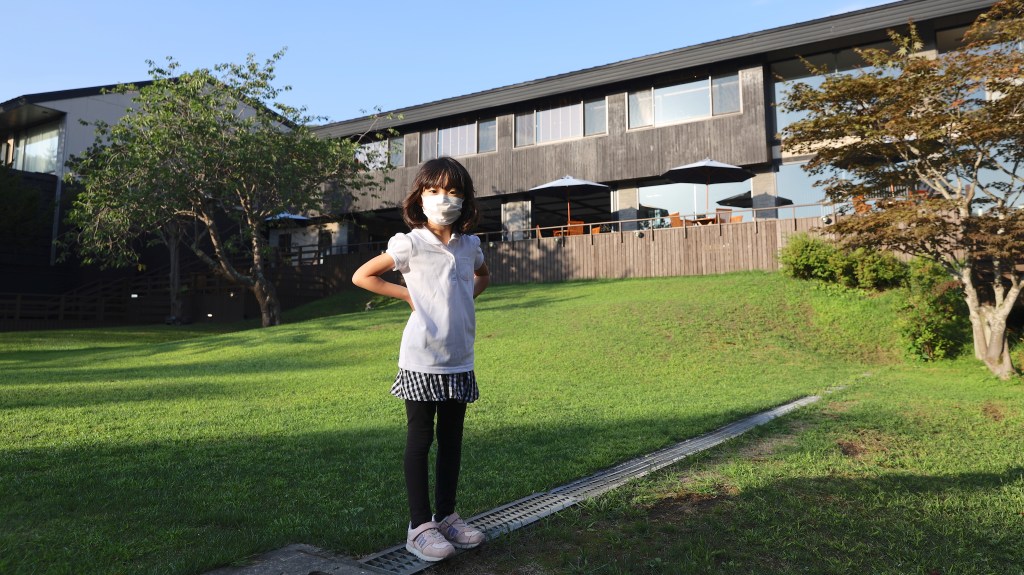
The lake itself and Shikotsu blue
The main sight is the water, and the best place to look at it is the shore around the onsen town at the Chitose end, where the promenade and the waterside plaza put you at the edge. The blue is a function of depth and clarity: a lake 360 metres deep with very little suspended sediment absorbs light differently from a shallow one, and the result reads as a flat, saturated colour rather than a gradient. Early morning is the time to see it before the wind picks up, and the difference between a still morning and an afternoon of whitecaps is the difference between the photograph everyone wants and an ordinary lake.
The Yamazumi railway bridge
The Yamazumi bridge is the remains of a forestry railway that once carried timber for the paper industry, and it now forms part of the lakeside walking route rather than being a display object. From the bridge you look down onto the Chitose River as it leaves the lake, and the water below is clear enough that the riverbed is visible, which is the same clarity that gives the lake its colour. It is a five-minute stop that turns into a longer one, and it is the most photographed structure at Shikotsu after the lake itself.
The Shikotsu Lake Visitor Centre
The visitor centre is free, sits in the middle of the onsen town a short walk from the bus stop, and is the right first stop rather than an optional one. It explains how the caldera formed, what lives in and around the lake, and what is under the surface, using exhibits designed to be understood quickly. The building itself is built with local natural materials and runs on solar and geothermal energy, which fits the subject. It is open 9:00 to 17:30 from April to November and 9:30 to 16:30 from December to March, and it closes on Tuesdays in winter.
The underwater sightseeing boat
The underwater sightseeing boat is the excursion that makes Shikotsu different from a lake you merely look at. It runs from late April to early November, has a window below the waterline, and shows you the lake bed, including columnar joints in the rock and the hime-masu that swim there. Other options at the same pier include a faster boat and pedal boats. The operating season and the daily service both depend on weather and conditions, so treat a sailing as something to check on the day rather than something to build an itinerary around.
The onsen town and the hot spring water
Shikotsu Onsen is a small cluster of inns and day-bathing facilities at the Chitose end of the lake, and it is the reason the lake is a stay rather than only a stop. The springs are simple and the town is compact enough to walk in ten minutes, with the lake on one side and the forest on the other. Day bathing is available at several of the inns, which makes a soak possible without booking a room, and it is the sensible way to end a cold-weather visit.
Tarumae-san and Eniwa-dake from the shore
The two volcanoes on the rim are visible from the lakeside promenade, and they are the reason the lake reads as a volcanic landscape rather than a mountain lake. Tarumae-san is the active one, with a lava dome and a history of eruption within the last century, and Eniwa-dake is the older, more eroded shape on the other side. The lake does not have a single viewpoint that takes them both in perfectly, so the useful approach is to walk the shore rather than look for one spot, and the light is best early when the peaks are not yet hazy.
The autumn colour and the season change
Shikotsu is one of the earlier places in Hokkaido to turn, because it sits inland and at altitude, and the maples and birches along the shore and the road in from Sapporo are the reason many Japanese visitors time a trip for October. The lake’s colour changes with the season too: the blue is hardest and clearest in the cold months and softer in summer light. The trade is that autumn is also the busiest period, and the boat and the car parks fill in the first half of October.
Food and drink
- The local dish is hime-masu, the small landlocked salmon that lives in the lake, usually served grilled with salt or as part of a set meal at the inns and restaurants in the onsen town. It is a modest fish rather than a luxury one, and the appeal is that it comes from the water you are looking at. The restaurants in the town are few and mostly attached to accommodation, so lunch options thin out outside the main season.
- The parking area and the onsen town have a small number of casual places for soba, ramen and soft-serve ice cream, and they keep seasonal hours that shorten in winter. The realistic advice is to eat before you arrive or accept a limited choice at the lake, especially outside the April to November window when the boat and the day-trippers are running.
- Chitose is the practical place for a proper meal, and it is on the way in and out if you are using the bus. The city has a wide range of restaurants around the station and, less obviously, around the airport, which has a food floor that is genuinely good rather than an airport concession. Combining a meal at Chitose with the lake is the efficient pattern for anyone coming from Sapporo or the airport.
- Sapporo, at about 70 minutes by road, is where the serious eating is, and the lake is a morning or an afternoon rather than a full day of meals. If you are staying at the lake, eating at your inn is effectively the only evening option, since the town has almost nothing open after dinner service.
Getting there and around
- By public transport, the Chuo bus runs from Chitose Station to the lake in about 44 minutes, from Minami-Chitose in about 50 minutes and from New Chitose Airport in about 55 minutes, all terminating at the Shikotsu bus stop at the onsen town. From the airport the bus leaves from the domestic terminal, and there is no direct regular bus from Sapporo or Tomakomai, so the route from Sapporo is by train to Chitose or Minami-Chitose and then the bus.
- The number of buses per day is limited, so the timetable is the constraint rather than the distance. Anyone planning a day trip should choose the return bus before leaving, because missing the last one means a taxi or a night at the lake. From the airport the bus is the simplest way to see the lake on a long layover, and it is one of the few national park sights in Hokkaido reachable without a car.
- By car from Sapporo, take Route 453 for about 70 minutes and about 50 kilometres. From Chitose the drive is about 30 minutes and 25 kilometres on Prefectural Route 16, from New Chitose Airport about 40 minutes and 30 kilometres on Route 36 and Route 16, and from Tomakomai about 30 minutes and 25 kilometres on Route 276. The road in from Sapporo over the pass is scenic and slow in winter.
- Parking at the lake is paid and charges vary by season, with the revenue going to the maintenance of the park facilities. The car park is large, with space for hundreds of vehicles, but it fills in the autumn colour season and on summer weekends, when the road along the shore becomes congested. The charge applies once per day.
- Winter access is the one thing that genuinely changes the trip. The road from Sapporo over Route 453 is a mountain pass and needs winter tyres, the bus service is reduced, and the boat does not run. The visitor centre shortens its hours and closes on Tuesdays from December to March. In exchange the lake is quiet and the blue is at its hardest, which is why photographers go in February rather than August.
Where to stay
- Staying at Shikotsu Onsen is the reason to make this an overnight rather than a stop. The inns are at the lakeside, several have day-bathing as well as rooms, and the appeal is the evening and early morning when the day visitors have gone and the lake is still. The trade is that the town is small, the dining is inside the inns, and there is nothing else to do after dark.
- Chitose is the practical alternative, with business hotels near the station, a wide choice of restaurants and the airport ten minutes away by train. Staying here suits an itinerary built around a flight, and the lake becomes a half-day before departure. It is not atmospheric, but it is efficient.
- Sapporo works for anyone using the city as a base, with the lake about 70 minutes by road. The cost is the drive, and the benefit is everything else the city offers. For a first trip to Hokkaido this is the sensible base, and Shikotsu is a day out rather than a move.
Best time to visit
- Autumn is the busiest and the most photographed season, with the colour arriving earlier than in Sapporo because of the altitude, and the boat still running until early November. The road in and the shore both fill, and the car park, which charges by the day, is the bottleneck. Going early in the morning is the way to see it without a crowd.
- Winter is the season for the water itself. The lake does not freeze over in the way shallower lakes do, and the contrast of hard blue water against snow on the rim is the image that makes Shikotsu’s reputation. The trade is that the boat does not run, the visitor centre has shorter hours and closes on Tuesdays, the pass road needs winter tyres, and the number of buses drops.
- Summer is the most comfortable season for walking and for the boat, with long daylight and everything open, and it is also when the lake is at its most crowded with families and campers. The blue is softer in high summer light, so anyone chasing the colour should arrive before mid-morning rather than at noon.
- Spring arrives late at this altitude, and the season between the snow and the green is short. The boat season starts in late April, which is the signal that the lake is open for business, and May is quiet compared with the autumn peak. It is the best compromise for anyone who wants the boat, the visitor centre and the walking without the October crowd.
Practical tips
- Check the bus timetable before you commit. The Chuo bus from Chitose, Minami-Chitose and New Chitose Airport is the only public transport, it is infrequent, and there is no regular service from Sapporo. Decide your return bus first and build the visit around it, because the alternative is a taxi or an unplanned night.
- Go early if you want the colour. Shikotsu blue is at its best on a still morning before the wind gets up, and the lakeside promenade is the place to see it. Midday in summer, the water is still blue but the surface breaks up and the photographs stop looking like the ones that made you want to come.
- Treat the boat as weather-dependent. The underwater sightseeing boat runs from late April to early November and is cancelled in strong wind or rough water, and the season itself can shift. Ask at the pier or the visitor centre on arrival rather than assuming a sailing, and have the lakeside walk ready as the fallback.
- Start at the visitor centre. It is free, a short walk from the bus stop, and it explains the caldera and the lake bed in a way that makes the shore and the boat mean more. It is also the place to check current conditions, and it is open 9:00 to 17:30 from April to November and 9:30 to 16:30 in winter.
- Budget for parking if you drive. The car park is paid, the charge is per day and varies by season, and the money goes to maintaining the park. In the October colour season the car park and the shore road fill, so arriving before mid-morning is the practical advice rather than a preference.
- Expect a small town with limited food. There are only a handful of restaurants and they are mostly attached to the inns, with hours that shorten outside the main season. Eat at Chitose or Sapporo if you want a choice, and if you are staying overnight, plan on eating at your inn.
- Take winter seriously on the pass. The Route 453 approach from Sapporo is a mountain road, the bus service is reduced in winter, and the visitor centre closes on Tuesdays from December to March. The reward is the clearest water of the year, but the trip needs winter tyres and a check of the road conditions before setting out.
Suggested day-trip outline
- Take the morning bus from Chitose Station or New Chitose Airport, about 45 to 55 minutes, and arrive at the lake before mid-morning while the water is still. The bus stops at the onsen town, and the shore is a short walk from there.
- Walk to the waterside and the promenade first, before anything opens, because the colour of the lake is the reason you came. Continue along the shore to the Yamazumi bridge, which crosses the Chitose River as it leaves the lake, and look down at the clarity of the water there.
- Visit the Shikotsu Lake Visitor Centre for the caldera and the lake bed, then check the boat. If the sailing is running, take the underwater boat for the view of the lake from below, and if it is cancelled, use the time for the lakeside walk towards the view of Tarumae-san.
- Eat at the onsen town if the season is open, or return to Chitose for a proper meal. If you are staying overnight, use the afternoon for a day-bathing soak at one of the inns and be on the shore again for the late light, which is when the lake is at its quietest.
- Leave on the bus you identified in the morning, or drive back over Route 453 to Sapporo. If you are on a layover, the airport bus puts you back at New Chitose in under an hour, which is the reason this lake is one of the few national park sights that fits between flights.
Before you go
Timetables, fares, admission fees, and seasonal access rules can change. Check the official tourism and transport sites linked below for the latest information before you travel.
Explore More of Japan
Published guides that pair with this one:
- Sapporo Travel Guide: Food, Parks, and a Hokkaido Base
- Otaru Travel Guide: Canal Warehouses, Seafood, and a Day Trip from Sapporo
- Noboribetsu Onsen Travel Guide: Hell Valley and Hokkaido Hot Springs
- Lake Toya Travel Guide: A Caldera Lake and Volcanic Shore in Hokkaido
- Nikka Whisky Yoichi Distillery Travel Guide: Highlights, Access, and Planning
Browse every Hokkaido guide on this site for the rest of the region.
Sources
- visit-hokkaido.jp (checked 2026-11-03)
- shikotsukovc.sakura.ne.jp — Access (checked 2026-11-03)
- en.wikipedia.org (checked 2026-11-03)


Leave a Reply