Plan a visit to the Nagasaki Atomic Bomb Museum with what to see, how to reach it, and notes for a considered visit.
Operational details such as opening hours, admission fees, and train times can change. Prefer official pages and reconfirm before you travel (sources checked on 03 November 2026).
Why visit
- The Nagasaki Atomic Bomb Museum is the city’s official record of 9 August 1945, when the second atomic bomb was dropped over the Urakami district at 11:02 in the morning. It is a city-run museum rather than a private attraction, it sits directly beside the Peace Park and the National Peace Memorial Hall for the Atomic Bomb Victims, and its purpose is documentation rather than entertainment. That distinction matters for planning: this is a place you give time and attention to, not a stop between other stops.
- The permanent exhibition is built as a narrative in four parts. Section A covers Nagasaki before the bombing, including the streets and the ordinary life of the city. Section B reconstructs the destruction immediately after the detonation, with large-scale damaged objects and a reproduction of the scorched side wall of Urakami Cathedral. Section C deals with war and nuclear weapons and asks what peace requires. Section D holds a video room, a question and answer corner and a search system. The sequence is deliberate, and walking it in order is the difference between seeing objects and understanding a city.
- The museum is unusually accessible for non-Japanese visitors. The main exhibits carry captions in Japanese, English, Chinese and Korean, and QR codes posted in the galleries open explanations in eleven languages including Spanish, Portuguese, Dutch, German, French, Russian and Arabic. An audio guide covering twelve languages is lent at the ticket counter on the second basement floor for a small fee. That level of provision is not universal in Japanese museums on this subject, and it means a visitor with no Japanese can follow the whole exhibition rather than guessing from photographs.
- The admission price is almost nominal: 200 yen for adults and free for high school students and younger, with the group rate abolished from 1 April 2026 so that everyone pays the same. That is not the reason to come, but it does remove a decision. The museum also runs free guided explanations by peace guides, volunteers who are on site from 10:00 to 16:00 and can be requested at the entrance reception, which is the single best way to understand the exhibition if you have the time and the language.
- Timing is the one thing to check carefully, and it is unusual. The permanent exhibition is being updated in stages, and the museum states that part of the permanent gallery is closed from September 2026 until the work is due to finish in March 2027. Anyone visiting in that window should check the museum’s own notice rather than assuming the full exhibition is on view. The museum is otherwise open every day of the year except 29 to 31 December.
Top places and highlights
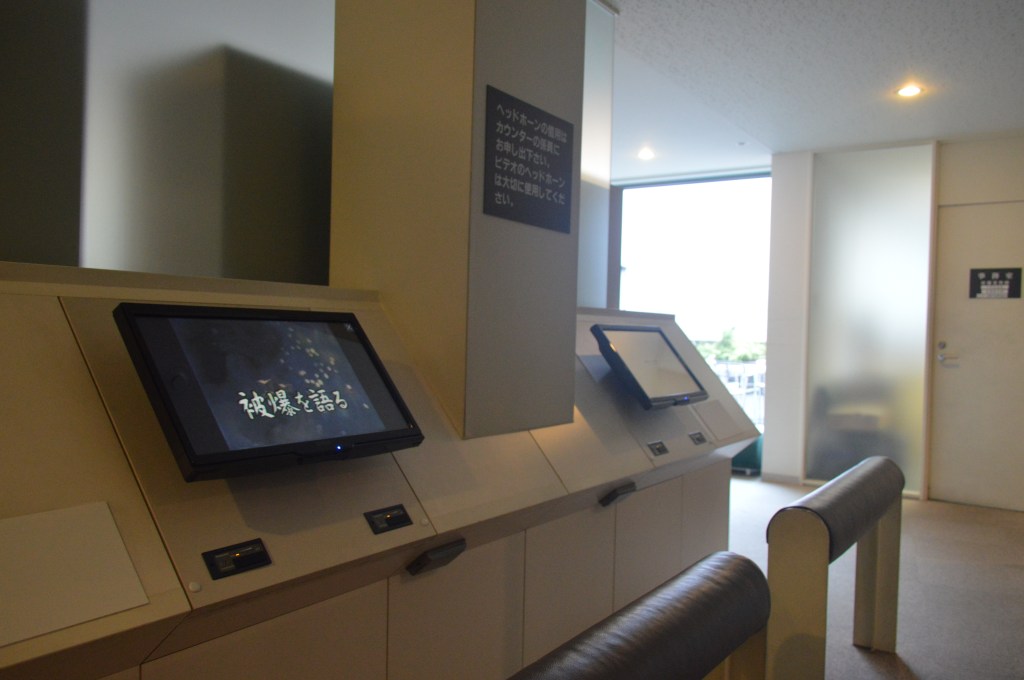
Section A: Nagasaki before 9 August
The exhibition begins with the city as it was, not with the bomb. Photographs and objects show the streets of Urakami and central Nagasaki, the daily life of the people who lived there, and the landscape before it was changed, and the section exists to make the next one legible. It is easy to walk through quickly on the way to the more dramatic material, and it is worth slowing down, because the rest of the museum depends on you knowing what was there. This is where the museum establishes that it is recording a city rather than an event.
Section B: the damage, and the Urakami Cathedral wall
The second section reconstructs the destruction immediately after the detonation, and its centrepiece is a large reproduction of the scorched side wall of Urakami Cathedral, the brick cathedral in the Urakami district that was destroyed in the blast. Around it are damaged objects at full scale, including items recovered from the ruins, and the effect is deliberately physical rather than illustrative. The museum’s own description is that it recreates the state of the city immediately after the bombing. This is the part that most visitors remember, and it is also the part that requires the most quiet.
Section C: war, nuclear weapons and peace
The third section steps back from Nagasaki to the wider history: the development of nuclear weapons, the conduct of the war, and the question of what a world without them would require. It is the section that connects the local record to a general argument, and it is where the museum states its purpose, which is to work toward the abolition of nuclear weapons. It is also the part most likely to prompt discussion with children, and the museum provides space for that rather than avoiding it.
Section D: the video room and the Q and A corner
The fourth section is the research and reflection area: a video room showing documentary films, a question and answer corner, and a search system for the museum’s records. It is the part that rewards a longer visit, because the films carry testimony that the objects cannot, and the search system lets you look up names and places rather than only viewing a fixed display. For anyone who wants to go beyond a single pass through the galleries, this is where the time goes.
The peace guides
The museum has peace guides stationed on site from 10:00 to 16:00, and they provide free explanations of the museum and of the National Peace Memorial Hall next door, which is free to enter. You request one at the entrance reception, with no advance booking for individuals, and the guide walks with you rather than lecturing at a fixed time. This is the single highest-value addition to a visit, because it turns the captions into a narrative and lets you ask questions. Groups and school visits can book in advance through the peace foundation.
The Peace Park and the memorial hall next door
The museum sits directly above the Peace Park, and the National Peace Memorial Hall for the Atomic Bomb Victims is adjacent and free. The hall is a separate institution with its own architecture and its own register of victims, and it is open 8:30 to 17:30, extended to 18:30 from May to August, and closed 29 to 31 December. The three together, the museum, the hall and the park with the hypocenter marker and the statue, form a single area that takes half a day rather than an hour, and they should be planned as one visit.
The library and the Peace Cafe
The first floor holds a library and a children’s book corner with a video corner, and the basement holds a museum shop and a cafe called Peace Cafe. These are not minor facilities: the library is where you can read further if the exhibition has raised questions, and the cafe is the only place to sit down inside the building. The museum prohibits eating and drinking in the galleries but allows water in the basement rest area and at the first floor vending machine corner, so the cafe is the place for an actual break.
Food and drink
- Peace Cafe is on the basement floor of the museum, and it serves drinks, light meals and sweets. It is the practical stop inside the building, since food and drink are prohibited in the galleries apart from water at the basement rest area and the first floor vending machines, and it is where most visitors sit after finishing the exhibition. It is a cafe rather than a restaurant, so plan a proper meal elsewhere.
- The museum area itself has few restaurants, because it is a memorial district rather than a commercial one. The nearest concentration is around Hamaguchi-machi and the Urakami side of the city, a five-minute walk from the museum, where there are local places serving the standard Nagasaki dishes, including chanpon and sara udon. These are ordinary neighbourhood restaurants rather than destinations, which suits the area.
- Nagasaki Station and the centre around it, about fifteen minutes away by tram, have the widest choice, from department store dining floors to the shinchi Chinese restaurants the city is known for. If you want a proper meal before or after the museum, eating in the centre and taking the tram out is the sensible order, and it avoids relying on the thin choice near the park.
- Nagasaki’s food identity is built on chanpon, sara udon and the Chinese and European influences of its trading history, and none of that is inside the museum. The efficient plan is a bowl of chanpon near the station before the tram out, then the museum and the park in the afternoon, then dinner in the centre, which keeps the visit itself uninterrupted.
Getting there and around
- The simplest route is the tram. From Nagasaki Station take the line bound for Akasako and get off at the Genbaku Shiryokan stop, which is about twelve minutes, then walk about five minutes. The tram is the city’s main transport and the stop is named after the museum, so it is difficult to miss.
- By bus, take a service towards Nameshi, Togitsu, Nagayo or Menoto and get off at the Hamaguchi-machi stop, about five minutes on foot from the museum. This is the route to use if you are coming from a part of the city without tram access, and it puts you on the same street as the park.
- From Nagasaki Airport, the limousine bus to Nagasaki Station stops at Peace Park, about forty minutes, and the museum is five minutes on foot from that stop. The airport liner on the Sumiyoshi and Michino-o route also stops at Peace Park, taking about an hour. This makes the museum reachable on arrival or departure without going into the centre first.
- By car, leave the Nagasaki Expressway at the Nagasaki Tarami interchange, take the Nagasaki bypass and exit at the Kawahira interchange towards the Peace Park and Showa-machi, then about five minutes towards the city centre. The museum has a paid car park with 64 spaces for standard cars, two accessible spaces and 12 bus spaces, charged at 200 yen for the first hour and 200 yen for each 30 minutes after that, with standard cars able to exit at any hour.
- The one transport detail worth knowing is that a sightseeing loop bus runs between the museum and Glover Garden on weekends and holidays, roughly every 30 minutes and about 25 minutes end to end, with two routes that differ in each direction. It is a convenient way to link the museum area with the southern sightseeing district without returning to the station, and it does not run on weekdays.
Where to stay
- Nagasaki Station is the most practical base, with the tram to the museum, the airport bus, and the widest choice of hotels and restaurants. It is the standard base for a first visit and puts the museum about fifteen minutes away.
- The Peace Park and Urakami area has fewer hotels but the advantage of being able to walk to the museum, the memorial hall and the park in the morning before the day visitors arrive. It suits anyone whose main reason for coming to Nagasaki is this subject, and it is quieter in the evening with limited dining.
- The centre around Shianbashi and the shopping arcades is the best base for eating and for the Glover Garden and Dejima side of the city, with the museum a tram ride away. For a two-night stay this is the more enjoyable base, and the museum becomes a morning rather than the anchor of the trip.
Best time to visit
- August is the month the city commemorates, and 9 August in particular brings ceremonies to the Peace Park and a much heavier flow of visitors. The museum waives the admission fee for individuals on 9 August, and it extends its hours from 7 to 9 August to 20:00 with last entry at 19:30. It is the most significant time to be here and the most crowded, so arrive early.
- May to August is the long-hours season, with the museum open until 18:30 rather than 17:30, which makes a late afternoon visit possible. The trade is heat and humidity in Nagasaki, and the walk between the museum, the park and the memorial hall is exposed, so the morning remains the better half of the day.
- Spring and autumn are the most comfortable seasons for the walk through the park and for the short climb between the museum and the hypocenter marker. They are also the school excursion seasons, in May and June and again from September to November, when the museum is busy around midday and after 16:00, and the museum itself advises allowing extra time.
- Winter is the quietest season and the museum is open throughout except for 29 to 31 December, with the shorter 17:30 closing. The light is low and the park is bare, which many visitors find suits the subject. Note that the library and hall keep different hours from the museum and close from 29 December to 3 January.
Practical tips
- Check the permanent exhibition notice before you go. The museum states that part of the permanent gallery is closed while the exhibition is updated, with the work scheduled to finish in March 2027. Anyone visiting between September 2026 and then should look at the museum’s own notice rather than assuming the full four-section exhibition is on view.
- Take a peace guide if you can. They are on site from 10:00 to 16:00, they are free, and you request one at the entrance reception rather than booking ahead. A guided walk through the galleries is the difference between reading captions and understanding the sequence, and the guides also cover the memorial hall next door.
- Use the multilingual support rather than skipping the text. Main exhibits have Japanese, English, Chinese and Korean captions, QR codes open eleven languages on your phone, and an audio guide in twelve languages is available at the second basement ticket counter for 160 yen. This is one of the better-equipped museums in Japan for non-Japanese visitors.
- Know the admission rule. Adults 15 and over pay 200 yen, high school students and younger enter free with student ID shown at the permanent exhibition reception, and the group discount was abolished from 1 April 2026. Admission is free for individuals on 9 August. Payment is accepted in cash, by credit card, electronic money and QR code.
- Plan for half a day, not an hour. The museum, the Peace Park with its statue and hypocenter marker, and the National Peace Memorial Hall are adjacent, and the hall is free. Walking all three properly takes three to four hours, and the effect is cumulative rather than something to rush between other sights.
- Respect the photography rules. Photography and video are allowed in the galleries, but close-up photography of individual materials requires permission from the administration office, and flash, tripods and selfie sticks are prohibited. Two specific works, the painting near the ticket machines on the second basement floor and the photograph at the route exit on the first basement floor, may not be photographed at all.
- Leave the food in your bag. Eating and drinking are prohibited in the building apart from water in the basement rest area and the first floor vending machine corner, and assistance dogs are allowed while other pets are not. The Peace Cafe is the place to sit down, and it is on the basement floor.
Suggested day-trip outline
- Take the tram from Nagasaki Station towards Akasako and get off at the Genbaku Shiryokan stop, arriving at the museum around opening at 8:30. Starting early matters here: the galleries are quietest in the first hour, and the subject is easier to absorb without a crowd.
- Begin with Section A on Nagasaki before the bombing, then move through Section B and the reconstruction of the Urakami Cathedral wall, then Section C on nuclear weapons and peace. Ask for a peace guide at the entrance reception if one is available, since they are on site from 10:00 and will walk the sequence with you.
- Take a break at the Peace Cafe or in the basement rest area rather than pushing straight through. The museum is emotionally demanding, and the video room and the Q and A corner in Section D are better approached after a pause than immediately after the reconstruction of the destruction.
- Walk up to the Peace Park, see the statue and the hypocenter marker, and then enter the National Peace Memorial Hall next door, which is free and open until 17:30, or 18:30 from May to August. The hall is a different kind of space from the museum and is best visited after it rather than before.
- Return by tram to the centre for a late lunch or early dinner, or use the weekend sightseeing loop bus to continue to Glover Garden. If you are leaving from the airport, the limousine bus from the Peace Park stop is five minutes’ walk from the museum and takes about forty minutes to the terminal.
Before you go
Timetables, fares, admission fees, and seasonal access rules can change. Check the official tourism and transport sites linked below for the latest information before you travel.
Explore More of Japan
Published guides that pair with this one:
- Nagasaki Travel Guide: Harbor History, Hills, and Kyushu Flavors
- Nagasaki Bio Park Travel Guide: Highlights, Access, and Planning
- Dazaifu Travel Guide: Tenmangu Shrine and Kyushu’s Old Capital
- Unzen Onsen Guide: Hot Springs on an Active Volcano
- Kujukushima and Sasebo Guide: Islands, Cruises and the Naval Port
- Shimabara Castle Travel Guide: A Reconstructed Keep in Nagasaki
- Hiroshima Peace Memorial Travel Guide: The Park, the Dome, and the Museum
- Ureshino Onsen Guide: Saga’s Tea Town and Hot Spring Water
- Amakusa Islands Guide: Kumamoto’s Church Coast
Browse every Kyushu guide on this site for the rest of the region.
Sources
- nabmuseum.jp (checked 2026-11-03)
- nabmuseum.jp — Access (checked 2026-11-03)
- nabmuseum.jp (checked 2026-11-03)
- nagasakipeace.jp (checked 2026-11-03)
- at-nagasaki.jp (checked 2026-11-03)


Leave a Reply