Plan a visit to Yakage-juku in Okayama, a preserved Edo-period post town with honjin, sake and a single main street.
Operational details such as opening hours, admission fees, and train times can change. Prefer official pages and reconfirm before you travel (sources checked on 04 November 2026).
Why visit
- Yakage is the 18th post town of the old Sanyodo, the road that ran from Kyoto west to the strait at Shimonoseki, and it is the best surviving example of what a daimyo’s stopping place actually looked like. The honjin, the official inn for lords and court nobles, stands with its gate, its guest rooms and its storehouses on a plot of about 1,000 tsubo, and the family that ran it for the whole of the Edo period left its buildings and its paperwork behind.
- What makes Yakage unusual is the pair. The honjin and the waki-honjin, the overflow inn kept ready for a lord’s retinue, both survive and both are nationally designated Important Cultural Properties, and Yakage is the only place in Japan where that is true. For anyone interested in how the Tokaido and Sanyodo system worked, the town is the clearest surviving demonstration, and it is a 20-minute drive from the Sanyo Expressway rather than a pilgrimage.
- The honjin is not a museum reconstruction. The main buildings were rebuilt in the late Edo period, in the Tenpo to Ansei years, and the back gate and the sake storehouses are older still, from the middle of the Edo period, and the compound includes the family’s living quarters and the brewery that paid for the position. The scale is domestic rather than palatial, which is what makes it legible: this is a merchant house that held a monopoly on hosting the most powerful travellers in the country.
- The human stories are unusually specific. Tenshin-in Atsuhime, the woman who would become the wife of the 13th shogun Iesada, stayed here on her way from Satsuma to Edo, and the record survives in the family’s documents. Elephants sent from Nagasaki to be presented to the shogun are recorded as stopping in the town. The honjin was not a background building: it was where the news and the animals and the politics of the road passed through.
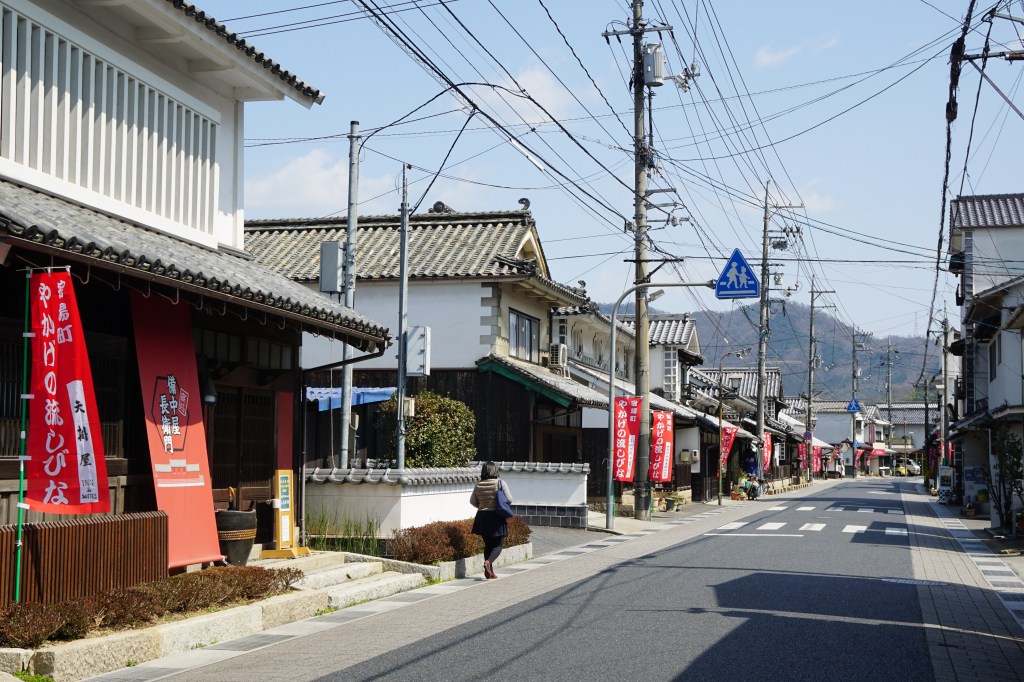
- The street around it is the second reason to come. Yakage is a preserved post town rather than a theme, with the lattice fronts, the white walls and the deep eaves running along the old road, and the visitor centre in the former wholesale agent’s building at the centre. The town is small, the walk is flat, and the whole thing can be seen in half a day without a car if you arrive on the Ibara Railway.
- The timing is worth planning for. The post town festival on the second Sunday of November fills the street with a procession of daimyo, samurai and princesses in period costume, and it is the one day the road looks as it did. The rest of the year the town is quiet and the guides at the honjin are volunteers who live there, which is the better way to hear about it.
Top places and highlights
The honjin of the Ishii family
The honjin is the official inn of the post town, run by the Ishii family for the whole of the Edo period, and the compound covers about 1,000 tsubo with the guest rooms, the formal entrance, the gate used by visiting lords, the family house and the sake storehouses. The main buildings date from the late Edo period and the back gate and some storehouses from the middle of the period, and the whole is an Important Cultural Property. Admission is 500 yen for adults and 300 for school children.
The waki-honjin
The secondary inn was kept ready for the retinue of a lord who filled the honjin, and it survives alongside it, which is the only case in Japan where both are designated Important Cultural Properties. It is open on Saturdays and Sundays from 10:00 to 15:00 for 300 yen, and it is smaller and more domestic than the honjin. The pair together is the reason the town matters.
Atsuhime and the elephants
The Ishii family’s documents record Tenshin-in Atsuhime, later the wife of the 13th shogun, staying at the honjin on her way from Satsuma to Edo, and they also record elephants sent from Nagasaki to be shown to the shogun stopping in the town on the road. It is the kind of detail that makes a preserved building into a story, and the documents are part of what the family left.
The honjin street
The old Sanyodo runs through the town as a single street of machiya and storehouses, with lattice fronts and white plaster walls, and the honjin, the waki-honjin and the visitor centre are on it. The walk from the station to the honjin takes ten minutes and the whole street is about a kilometre. Volunteer guides based at the honjin walk visitors through it for a fee, and the town’s own visitor centre is in the former wholesale building.
The local museum and its tower
The Yakage museum is a townhouse-style building with a 16-metre tower modelled on an Edo-period fire watchtower, and the top floor looks out over the old street. It holds the work of the calligrapher Tanaka Kaido and the painter Sato Kazuaki, both from the town, and local material on the post station. Admission is 200 yen for adults, 100 for junior high and high school students and 50 for primary school children.
The garden at Daitsu-ji
The Soto temple five minutes from the station has a late-Edo pond garden called Sekiju-en, with a borrowed view of Mt Takamine and a spread of stone groups that gives it an unusual energy for a temple garden. It is open from 9:00 to 17:00 from March to October and 10:00 to 16:00 from November to February, closed on Mondays unless the Monday is a holiday, and admission is 300 yen.
The post town festival
On the second Sunday of November the town holds its shukuba festival, with a procession of a daimyo, his retainers and a princess in period dress along the old road, and the street fills with stalls and spectators. It is the one day of the year the post town looks like a post town, and it is also the busiest. The date is fixed by the town and published in its events calendar.
Food and drink
- Yakage was a sake town before it was anything else, and the Ishii family’s brewery was part of the honjin compound, which is why the storehouses are still standing. The local sake is the thing to buy, and the shops on the street sell it along with the town’s pickles and sweets.
- The food of the town is the plain cooking of the interior of Okayama: the rice, the vegetables, the local chicken and the noodles. The restaurants along the old road are small and serve set meals at lunch, and there are few of them, so the middle of the day is the time to eat.
- Okayama’s fruit is the regional speciality, the peaches and the grapes in summer, and the town’s shops sell the preserves and the juices. The barazushi and the local sushi style are the other things to try in the prefecture.
- The town has a cafe or two in the old houses on the street, and they are the reason to sit down rather than pass through. The visitor centre serves light meals and the local sweets, and it is the reliable stop when the restaurants are closed.
Getting there and around
- By train, the Ibara Railway runs from Kurashiki to Yakage and the station is a 10-minute walk from the honjin. The line is a local railway rather than a JR route, and the connection at Kurashiki from the Sanyo main line is straightforward.
- By car, the Sanyo Expressway has the Kamogata interchange about 20 minutes away, and the honjin has parking for 20 cars and 2 buses. The town is about 40 minutes from Kurashiki and an hour from Okayama city.
- The honjin is open from 9:00 to 17:00 from March to October and 9:00 to 16:00 from November to February, with last entry 30 minutes before closing, and it is closed on Mondays, or the following day when Monday is a holiday, and over the New Year. The waki-honjin is open only at weekends from 10:00 to 15:00.
- The museum is open from 9:00 to 17:00 and closed on Mondays on the same terms, and the temple garden keeps seasonal hours. The three are within a short walk of each other, and the honjin is the fixed point.
- The town is compact and flat, and everything worth seeing is on or near the old road between the station and the honjin. A car is only needed for the temple and the surrounding countryside, and the walk from the station is the better arrival.
Where to stay
- Yakage has a small number of inns and guesthouses in the old houses of the post town, and they are the reason to stay rather than pass through. The choice is limited and the atmosphere is the point.
- Kurashiki, 40 minutes away, has the famous canal quarter and a much wider choice of hotels, and Yakage becomes a half-day trip from it. Okayama city is an hour and has the castle and the garden.
- The town fills for the festival on the second Sunday of November, and the inns should be booked well ahead for that weekend. The rest of the year the accommodation is quiet and inexpensive.
Best time to visit
- Spring is the best season for walking the old road, with the street at its most comfortable and the temple garden at its greenest. The cherries and the new growth on the hills behind the town are the local colour.
- Summer is hot in the interior of Okayama, and the town is best seen in the morning and the evening. The old houses are cool inside and the honjin is a good place to be in the heat of the day.
- Autumn is the season of the festival, on the second Sunday of November, and the street is at its best with the procession and the clear air. It is the busiest weekend of the year and the one to plan around.
- Winter is quiet and cold, with the honjin on its shorter hours and the street empty, and the buildings are at their most legible without the visitors. The museum and the honjin are open through the winter apart from the New Year.
Practical tips
- Go at the weekend to see both inns. The honjin is open every day except Monday, but the waki-honjin opens only on Saturdays and Sundays from 10:00 to 15:00, and the pair together is what makes Yakage unique. A weekday visit misses half of the reason to come.
- Book the volunteer guide at the honjin. The guides are residents who know the building and the documents, and the tour takes about 90 minutes for the honjin and the street. The fee is 2,000 yen for up to 20 people, and it needs booking about ten days ahead.
- Note the seasonal closing times. The honjin closes at 16:00 from November to February rather than 17:00, and the last entry is 30 minutes before. Arriving at four in the winter means arriving after the gate has shut.
- Park at the honjin rather than in the street. There are 20 spaces and 2 bus spaces at the site, and the old road is narrow with no verge. The station is a 10-minute walk away, so the train is the easier arrival.
- Try the sake. The town’s identity came from the brewery in the honjin compound, and the shops on the street sell the local bottles. It is the one purchase that connects the buildings to the economy that supported them.
- Plan the festival weekend if you want the costumes. The second Sunday of November is the procession, and the town is full. If you want the quiet version, go on any other weekend when the waki-honjin is open and the street is empty.
- Combine the town with Kurashiki. The two are 40 minutes apart, one a merchant canal town and the other a post town, and seen together they explain the Sanyodo better than either alone. Kurashiki has the hotels and Yakage has the silence.
Suggested day-trip outline
- Take the Ibara Railway from Kurashiki to Yakage and walk ten minutes into the old town, or drive in from the Kamogata interchange and park at the honjin. Start at the visitor centre for the map and the town’s history, then walk the street towards the honjin.
- Spend an hour in the honjin with the volunteer guide if you have booked one, looking at the guest rooms, the formal gate and the storehouses, and reading the documents about Atsuhime and the elephants. Cross to the waki-honjin if it is a weekend, and see the smaller inn that completes the pair.
- Walk to the museum and go up the 16-metre tower for the view over the street, then take the five-minute walk to the garden at Daitsu-ji if the season and the hours allow. Eat lunch on the old road, since the restaurants close early.
- Stay the night in one of the town’s inns, or return to Kurashiki in the late afternoon. In the second week of November, stay for the procession on the Sunday and see the street as it was designed to be seen.
- The next morning, drive the short distance to the countryside around the town, or take the train west towards Ibara and the connections to Fukuyama. Yakage is a stop on the Sanyodo and it works best as one, between the canal town and the castle towns of the interior.
Before you go
Timetables, fares, admission fees, and seasonal access rules can change. Check the official tourism and transport sites linked below for the latest information before you travel.
Explore More of Japan
Published guides that pair with this one:
- Kurashiki Travel Guide: Bikan Canal District
- Okayama Korakuen Travel Guide: A Garden Beside the Castle
- Shukkeien Garden Travel Guide: Hiroshima’s Daimyo Landscape
- Bitchu-Matsuyama Castle Travel Guide: The Mountain Keep above Takahashi
- Hamada Travel Guide: Shimane’s Sea of Japan Coast
- Oki Islands Travel Guide: Shimane’s UNESCO Island Group
- Kurayoshi Travel Guide: Tottori’s White-Walled Storehouse Town
- Sandankyo Gorge Travel Guide: Trails, Boats, and Access from Hiroshima
Browse every Chugoku guide on this site for the rest of the region.
Sources
- town.yakage.okayama.jp (checked 2026-11-04)
- okayama-kanko.jp (checked 2026-11-04)
- okayama-kanko.jp (checked 2026-11-04)
- plus.harenet.ne.jp (checked 2026-11-04)
- japan47go.travel (checked 2026-11-04)


Leave a Reply