Plan a trip to the Oki Islands in Shimane, a UNESCO Geopark with sea cliffs, cattle grazing and ferry access from the mainland.
Operational details such as opening hours, admission fees, and train times can change. Prefer official pages and reconfirm before you travel (sources checked on 04 November 2026).
Why visit
- The Oki Islands are four inhabited islands and a scatter of small ones, 40 to 80 kilometres north of the Shimane peninsula in the Sea of Japan, and they are the least Japanese-feeling place in Japan that is still Japan. The official geopark is 673 square kilometres and more than half of it is sea, and that proportion is the point: what you come for is the water, the cliffs and the island life around them rather than a list of buildings.
- They are a UNESCO Global Geopark, recognised on 9 September 2013 and folded into the UNESCO programme in 2015 when the global network became official. That status is not about scenery alone: the islands record the formation of the Sea of Japan, the volcanic layers that built the cliffs, and the way people have lived on a small, isolated landmass for thousands of years. The obsidian quarried here in prehistory travelled to the mainland, which is an unusually concrete piece of archaeology for a place this remote.
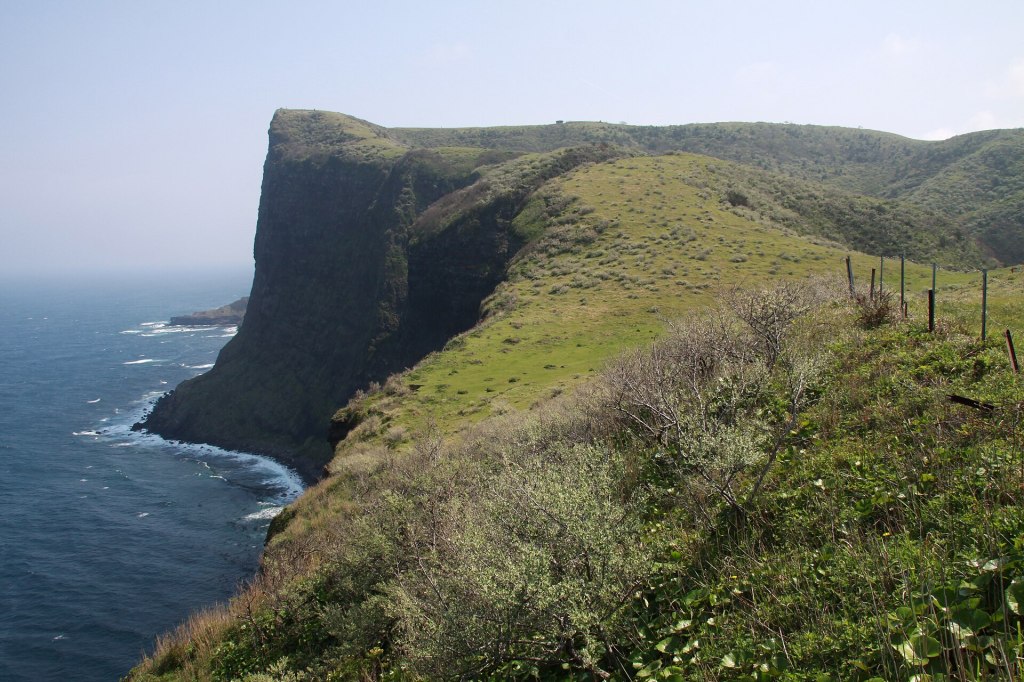
- The Kuniga Coast on Nishinoshima is the landscape people come for. A 10-kilometre stretch of cliffs on the north-west of the island, produced by volcanic activity about six million years ago and cut by the Sea of Japan since, with the Matengai precipice standing 257 metres above the water and the Tsutenkyo arch standing out into the sea. The layers of basalt lava show as stripes on the cliff face, the way a geologist’s diagram would if it were drawn 257 metres tall.
- The walking is the other half. The trail from Tsutenkyo to Matengai is 2.3 kilometres one way and takes about two hours return, and it is listed among the hundred walking paths worth doing once in a lifetime. It crosses grassland on top of the cliffs where cattle graze, with the sea on one side and the island’s interior on the other, and the scale of the drop is something a photograph does not carry.
- The history is stranger than the scenery. Oki was a place of exile, and two retired emperors were sent here: Go-Toba after the Jokyu war in 1221, and Go-Daigo in 1332 before he escaped and restored his rule. The islands also kept a shrine tradition and a bullfighting tradition of their own, and the Oki-Dozen kagura is a dance of the island shrines rather than a mainland import. The isolation produced a culture that is recognisably different.
- The practical case is that Oki is a real journey and it rewards one. The ferry from Shichirui takes about two and a half hours and costs 3,870 yen in second class, the fast ferry takes just over an hour and costs 7,360, and there are flights from Izumo in 30 minutes and Itami in 50. It is not a day trip from Matsue, and that is exactly why the islands are quiet.
Top places and highlights
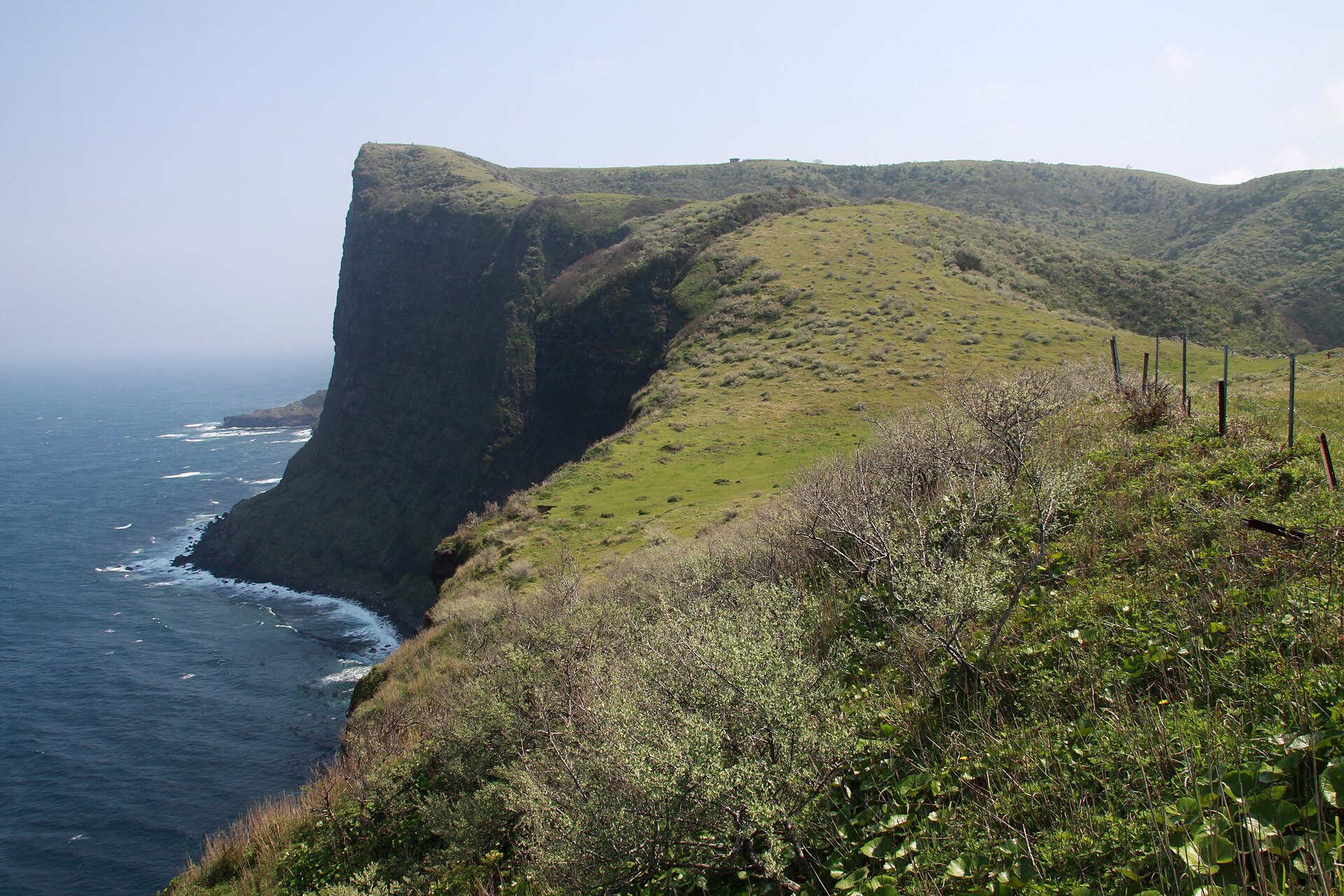
The Kuniga Coast
The coast runs for about 10 kilometres along the north-west of Nishinoshima, with cliffs, sea caves and rock arches cut into basalt that erupted between roughly 6.3 and 5.3 million years ago. The Matengai cliff is 257 metres high and shows the lava layers in stripes, and the Tsutenkyo arch is what remains of a cave whose roof and back collapsed. A sightseeing boat runs along the coast, and the view from the water is the one that shows the scale.
The Matengai and Tsutenkyo walk
The trail between the arch and the cliff is 2.3 kilometres each way and takes about two hours return, and it is on the list of hundred paths worth walking once in a lifetime. The top of the cliff is grassland where cattle and horses graze, and the contrast between the animals and the 257-metre drop is the image of the island. There is a free car park for 30 cars at the coast, and the bus from Beppu port takes about 20 minutes.
Dogo, the main island
Okinoshima town on Dogo is the largest settlement in the group, with about 13,600 people, and it holds most of the accommodation, the port and the airport. The attractions are spread and small: the four ancient cedars, the Dangyo falls in the interior, the old Nishi-machi streets around Saigo port, and the Dogo Onsen. It is the base from which the other islands are reached by ferry.
The Rosoku-jima cruise
The candle island is a rock with a hole through it, and the sightseeing boat times its sailing so that the setting sun lines up with the hole and the rock looks like a lit candle. It is the classic Oki photograph and it depends on the weather and the season, so the operator’s schedule is the thing to check. It leaves from the Saigo area and is the most popular short excursion on Dogo.
The exile sites
Oki was a penal destination for the court, and Emperor Go-Toba was exiled here in 1221 after the Jokyu war, with a residence site in the Saigo area, and Emperor Go-Daigo was sent to Nishinoshima in 1332 before escaping to restore his rule. The sites are modest and unmarked in the way of Japanese history, and the interest is in standing where the politics of the court ended up. The local museums explain the sequence.
Oki bullfighting
The island’s bullfighting is a ceremony rather than a contest: two bulls are led into a ring and pushed against each other until one turns away, and the animals are not injured and are treated as village champions. It has been held for around 800 years and the bouts are part of the island’s festival calendar rather than a tourist show. The dates are limited and the venue is on Dogo, and it is worth planning a trip around.
The island food
Oki is known for its beef and its seafood, and for a local soba that is served in a way you will not find on the mainland. The fishing grounds around the islands produce abalone, turban shell and the rock oysters of the Sea of Japan, and the island sake is made in small quantities. Eating here is a matter of what the boats brought in, and the inns serve it as part of the stay.
Food and drink
- Oki beef is the local luxury, raised on the islands and served in the inns and the restaurants of Saigo. It is not cheap and it is the thing to order once, grilled simply, and it is a different animal from the mainland wagyu in the way it is fed and finished.
- The sea is the everyday food: abalone, turban shell, squid, and the rock oysters that the islands are known for, along with the dried fish and the salted produce that a place this isolated has always relied on. The fishing ports of Dogo and Nishinoshima have small canteens and the inns serve the catch.
- Oki soba is the local noodle and it is served in a style of its own, with the noodles and the toppings arranged differently from the mainland versions. It is the cheap meal of the islands and the one to try at a plain shop in Saigo rather than at a hotel.
- The island’s sake is brewed in small quantities and rarely leaves, and the local citrus and the salt are the take-home items. The shops around Saigo port and the ferry terminal stock them, and the market is the place to buy before the boat.
Getting there and around
- By ferry, the main route is from Shichirui in Matsue, with the ferry Oki leaving at 9:00 and reaching Saigo at 11:25, about two and a half hours, for 3,870 yen in second class. Second class needs no reservation, and cars can be loaded on the ferry only, with a vehicle under three metres costing 14,990 yen one way from the mainland as of the November 2026 revision.
- By fast ferry, the Rainbow Jet leaves Shichirui at 15:45 and reaches Saigo at 16:54, about an hour and nine minutes, for 7,360 yen. It is reservation only, and luggage is limited to two pieces per person of 10 kilograms and one metre in total dimensions, so a cool box or a golf bag has to go by ferry.
- By ferry from Sakaiminato in Tottori, the Shirashima leaves at 14:10 and reaches Saigo at 18:35 via Chibu and Nishinoshima, about four and a half hours for the same fare. It is the slower route and the one that serves the Dozen islands first.
- By air, Oki airport is on Dogo near Saigo, with flights from Izumo in about 30 minutes and from Itami in about 50. The airport is small and the flights are limited, and they are booked through JAL. Cars cannot be taken on the plane or the fast ferry, so a vehicle means the ferry.
- On the islands, a car is the practical way to reach the Kuniga Coast, the falls and the cedars, and rental cars should be booked ahead because the supply is small. The alternative is the local bus from Beppu port to Kuniga, about 20 minutes, and the guided geopark buses on Dogo.
Where to stay
- The accommodation is on Dogo mainly, in the inns and hotels around Saigo, including the Dogo Onsen establishments, and on Nishinoshima and Ama in smaller numbers. The inns serve dinner and breakfast and are the natural base for a walking trip.
- Staying on more than one island is the way to see the group, since the ferries between Dogo and Dozen take an hour or more and the connections are not frequent. A night on Nishinoshima puts the Kuniga Coast at the start of the day rather than the end.
- The islands fill in the summer holidays and around the bullfighting dates, and the number of rooms is small. Booking well ahead is not a formality here, and the ferry and the room should be booked together.
Best time to visit
- Summer is the season for the sea, with the swimming, the boat trips and the longest days, and it is the busiest time on the islands. The ferry fills, the inns fill and the weather is at its most reliable, though the heat is heavy.
- Spring and autumn are the best months for walking the Kuniga Coast, with mild air, dry weather and the grassland at its greenest, and the ferries are quiet. The autumn light on the cliffs is the best of the year.
- Winter is when the Sea of Japan shows what it is, with strong winds and rough crossings, and cancellations are common. The islands are at their emptiest and the sea at its wildest, and the trip needs slack in the schedule.
- The rainy season in June and the typhoon season from August to September are the periods to avoid for a walking trip, since the cliffs are exposed and the boats stop. The ferry status should be checked on the morning of travel in any season.
Practical tips
- Book the fast ferry and the room together. The Rainbow Jet is reservation only and it fills in summer, and the inns on the islands are few. The ferry’s second class needs no booking, but the crossing is two and a half hours and the seats are benches.
- Take the ferry if you want a car. The fast ferry and the aircraft do not carry vehicles, and the Kuniga Coast, the falls and the cedars are spread across the islands with sparse buses. A rented car on the island is the alternative, and it must be booked ahead.
- Allow two nights at least. The ferry from Shichirui lands at 11:25 at the earliest, the Dozen islands are another crossing away, and the Kuniga walk takes half a day. A single night means seeing the port and leaving, which is not the point of the trip.
- Check the ferry status on the morning of travel. The Sea of Japan closes the port in winter and in typhoons, and the company posts the day’s operation on its website. Building a spare day into the return is the difference between a delay and a disaster.
- Walk the Kuniga Coast from Tsutenkyo to Matengai rather than driving to the car park. The 2.3-kilometre trail is the reason the coast is on the hundred paths list, and the view of the cliff from the path is better than the view from the road. Wear shoes with grip and carry water, since there is nothing on the route.
- Keep to the paths on the cliff top. The grassland is grazed by cattle and horses, the edge is unfenced in places, and the wind comes up without warning. The drop is 257 metres and there is no barrier at the rim.
- Plan around a bullfight or a kagura if the dates allow. The bullfighting has about 800 years of history on the island and the Oki-Dozen kagura is performed at the shrines, and both are the culture that the isolation produced. The dates are published by the island tourist associations and they are not frequent.
Suggested day-trip outline
- Take the morning ferry from Shichirui and reach Saigo at 11:25, or fly into Oki airport in the morning. Leave the bags at the inn and walk the old Nishi-machi streets around the port, then take the Rosoku-jima cruise in the late afternoon if the sunset timing is right.
- Spend the second day on Dogo with a car: the four ancient cedars, the Dangyo falls in the interior and the coast road, with a stop at the exile sites of Emperor Go-Toba. Eat Oki beef in the evening at the inn, and take the ferry to Dozen the next morning.
- Cross to Nishinoshima and go straight to the Kuniga Coast, either by the 20-minute bus from Beppu port or by car, and walk the 2.3-kilometre trail between Tsutenkyo and Matengai. The cliff top, the cattle and the 257-metre drop are the image of the islands, and the walk takes about two hours return.
- Add the sightseeing boat along the Kuniga coast for the view from the water, and stay the night on Nishinoshima. The next day, take the inter-island boat to Ama or Chibu if the timetable allows, or return to Dogo for the ferry.
- Return on the ferry or the fast ferry with a spare half day in hand. In winter, check the crossing before leaving the inn, and in summer, book the return before the outward trip so the seats exist.
Before you go
Timetables, fares, admission fees, and seasonal access rules can change. Check the official tourism and transport sites linked below for the latest information before you travel.
Explore More of Japan
Published guides that pair with this one:
- Matsue Castle Travel Guide: A National Treasure Keep under Repair
- Izumo Taisha Travel Guide: The Grand Shrine and the Shimane Coast
- Hamada Travel Guide: Shimane’s Sea of Japan Coast
- Iwami Ginzan Travel Guide: UNESCO Silver Mine in Shimane
- Tottori Sand Dunes Travel Guide: Coastal Walks in Western Honshu
- Adachi Museum of Art Travel Guide: Highlights, Access, and Planning
- Tsuwano Travel Guide: The Little Kyoto of San’in
- Kurayoshi Travel Guide: Tottori’s White-Walled Storehouse Town
- Sandankyo Gorge Travel Guide: Trails, Boats, and Access from Hiroshima
- Shukkeien Garden Travel Guide: Hiroshima’s Daimyo Landscape
Browse every Chugoku guide on this site for the rest of the region.
Sources
- oki-geopark.jp (checked 2026-11-04)
- oki-geopark.jp (checked 2026-11-04)
- oki-kisen.co.jp (checked 2026-11-04)
- oki-kisen.co.jp (checked 2026-11-04)
- nkk-oki.com (checked 2026-11-04)
- kankou-shimane.com (checked 2026-11-04)
- e-oki.net (checked 2026-11-04)


Leave a Reply