Plan a visit to Kurayoshi in Tottori for its white-walled storehouses, the Taisho-era streetscape and the local sake, with access notes.
Operational details such as opening hours, admission fees, and train times can change. Prefer official pages and reconfirm before you travel (sources checked on 03 November 2026).
Why visit
- Kurayoshi’s Shirakabe Dozogun is the most complete streetscape of its kind in the San’in region: a stretch of the Tamagawa river lined with white-plastered storehouses and merchant houses roofed in red Sekishu tiles, designated a nationally important preservation district for groups of historic buildings. The look is distinctive and easy to misread. The upper half of each wall is white lime plaster, which is waterproofing, and the lower half is black charred cedar board, which is fire resistance and weather protection, and the combination of those two practical decisions is what gives the street its graphic black-and-white banding.
- The red tiles are the other half of the image. They are Sekishu tiles from the Iwami region of neighbouring Shimane, fired above 1,200 degrees, which makes them resistant to frost damage, and the deep red against white plaster is the colour that defines the San’in. The town’s own description is that the area has buildings from the Edo, Meiji, Taisho and Showa periods standing side by side, which is why the street reads as a record of four eras rather than a reconstruction of one.
- The history is deeper than the pretty street. The district grew as the castle town of Utsubuki Castle in the Muromachi period, then became a jinya town in the Edo period with samurai residences around the magistrate’s office, and the merchant houses came later. The river, the stone bridges and the grid of streets are the surviving structure of that sequence, and the tourist association can provide a guide who explains it for 3,300 yen an hour.
- The town has a second, newer identity that most visitors do not expect. The circular school building, one of the oldest surviving round schoolhouses in Japan, has been converted into the Kurayoshi Figure Museum, with around 2,000 figures from Japanese makers and a reconstruction of a classroom. It sits a short walk from the storehouses, and it is the reason a town of 45,000 people appears in pop-culture guides.
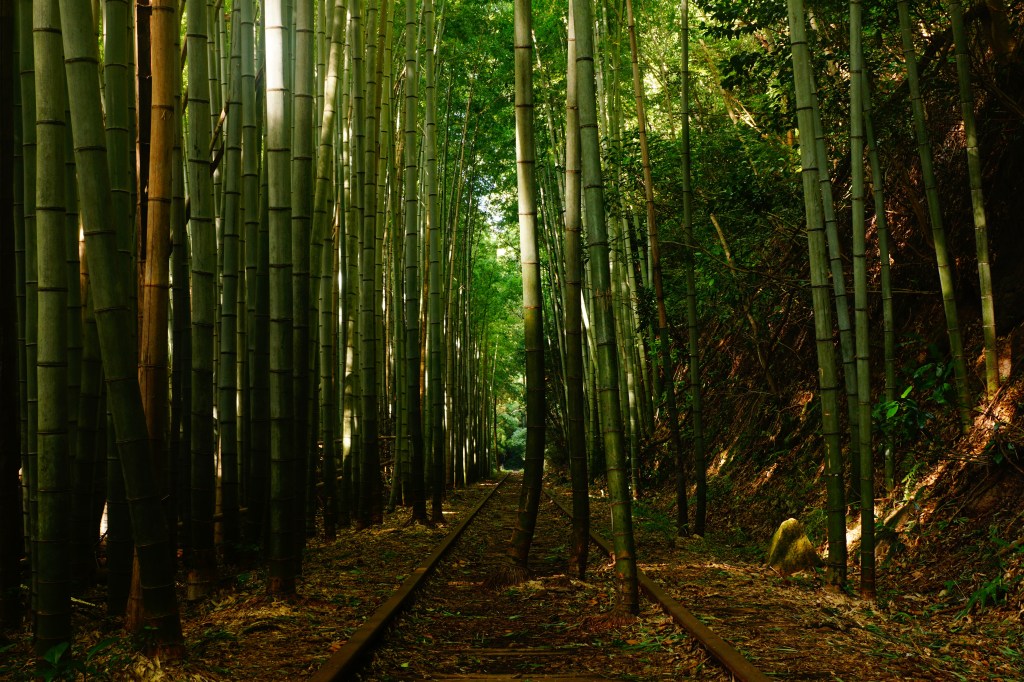
- The surroundings add a third layer: Utsubuki Park, one of Japan’s 100 best cherry sites and the country’s second-oldest urban park after Hibiya, the 204-metre Utsubuki-yama behind it with castle ruins and forest walks, the city hall designed by Tange Kenzo, and the abandoned Kurayoshi railway line whose bamboo-forest cutting is often described as the most beautiful disused track in Japan.
- The practical case is good. Kurayoshi is on the San’in Main Line with limited express connections from Osaka and Kyoto, the bus from the station to the storehouses takes 12 minutes, and there are large free car parks at the edge of the district. It is a walkable half day that can be combined with Tottori’s sand dunes, Misasa Onsen or the new Tottori Prefectural Museum of Art, which opened in the city.
Top places and highlights
The Shirakabe Dozogun street
The conservation district runs along the Tamagawa, with white-plastered storehouses and merchant houses roofed in red Sekishu tiles, low stone bridges over the river, and lanes of dark wooden facades behind. It is free and always open, and it is best walked without a destination: the main street and the riverside path give different views of the same buildings. The district is a nationally designated preservation area, which is why the street furniture and the rooflines are so consistent.
The storehouses turned into shops
Many of the kura and machiya have been converted into shops, cafes and workshops, and the conversions are the reason the district is alive rather than a preserved shell. Akagawara No.1 is a former soy sauce brewing storehouse turned souvenir and craft shop, and the tourist information centre is in Akagawara No.10, a former cider factory where the 53rd yokozuna Kotozakura once worked part-time. Both are free to enter.
The Kurayoshi Figure Museum
The circular school building, one of the oldest of its kind still standing in Japan, now holds around 2,000 figures from Japanese manufacturers, with a reconstructed classroom and the original spiral staircase at its centre. It is open 9:00 to 17:00, until 18:00 in summer, with last entry 30 minutes before, and admission is 1,200 yen for adults and 600 for school students, with a permanent-collection-only ticket at 1,000. It is a 10-minute walk from the storehouses and a complete change of register.
Utsubuki Park
The park opened in 1904 to commemorate the crown prince’s tour of the San’in, and it is the second-oldest urban park in Japan after Hibiya. It is one of the country’s 100 best cherry sites, with azaleas and camellias as well, and it has a small animal corner, the Kurayoshi Museum and a sumo ring. It is free, it is five minutes from the storehouses, and in spring it is the reason the town fills.
Utsubuki-yama and the castle ruins
The 204-metre hill behind the park is the town’s symbol, with the ruins of Utsubuki Castle built in the medieval period and a network of walking trails through old-growth forest. It is listed among Japan’s 100 best forest bathing sites, and the climb takes about 30 minutes to the top with views over the town and the storehouse roofs. It is the part of Kurayoshi that most day visitors skip.
The abandoned Kurayoshi line
The Kurayoshi line ran about 20 kilometres from Kurayoshi to Yamamori and closed at the end of March 1985 after 72 years. The trackbed is still walkable apart from the Yamamori tunnel, and the stretch from Taikyuji station through the bamboo forest towards the tunnel is the section that gets called the most beautiful disused railway in Japan. It is free, it is outside the town centre, and it needs a car or a taxi.
The sake street
The main street of the district has sake, beer and wine producers within walking distance of each other, which is unusual for a town this size, and the local rice and water are the reason. There is a tasting coupon sold by the tourist association, and the shops sell bottles to take away. It is the most sociable part of a visit and the one that needs a designated driver.
Food and drink
- Utsubuki Koen Dango is the town’s signature sweet, sold by Ishitani Seikado near the park and at a branch in the storehouse district, and it is a skewered dumpling rather than the round dango visitors expect. The main shop opens 8:00 to 17:30 and the Akagawara branch 10:00 to 16:00, closed Mondays unless the Monday is a holiday.
- The district’s cafes and restaurants are mostly conversions of kura and machiya, and they are the reason to eat inside the preservation area rather than on the road in. The local dishes are San’in fish, soba and the pickles of the region, and the portions are modest.
- The sake, beer and wine shops on the main street do tasting and sell by the bottle, and Kurayoshi’s water is one of the reasons the brewing is good. The tasting coupon sold at the tourist information centre is the cheapest way to try several.
- Tottori’s food identity is crab in winter, and the San’in coast is one of Japan’s great crab regions. Kurayoshi is inland, so the crab is brought in rather than landed here, and the places to eat it properly are on the coast at Tottori or Sakaiminato.
Getting there and around
- Take the JR San’in Main Line to Kurayoshi Station. Limited express Super Hakuto services run from Osaka and Kyoto, and from Tokyo the route is the Tokaido and Sanyo Shinkansen to Okayama and then the limited express Super Inaba and San’in line, which is a long day.
- From Kurayoshi Station bus terminal stop 2, the city bus reaches the Akagawara-Shirakabe Dozogun stop in about 12 minutes, or the Shiyakusho-Utsubuki Koen Iriguchi stop in about 17 minutes. Buses leave every 5 to 10 minutes except at certain times, which makes this one of the easier bus connections in the region.
- By car, leave the San’in Expressway at the Kurayoshi interchange, which puts the district about 10 minutes away. The Meiji-cho car park has 14 spaces and 3 bus spaces and is free, the Miyagawa-cho car park has 49 spaces and 4 bus spaces and is free, and the city hall’s second car park has 200 free spaces.
- The tourist information centre is inside Akagawara No.10 at 2568-1 Uomachi, open 9:00 to 17:00 and closed only on New Year’s Day, with coin lockers at 500 and 300 yen, free wheelchair and pushchair loans, and bicycle rental for exploring the wider town.
- The town is compact enough to walk once you are in the district: the storehouses, Utsubuki Park, the figure museum and the sake street are all within about 15 minutes on foot. A car is only needed for the abandoned railway, Misasa Onsen and the Tottori Prefectural Museum of Art.
Where to stay
- Kurayoshi has business hotels around the station and a few ryokan and guesthouses in and near the storehouse district, including a restored kominka guesthouse. Staying in the district is the way to see the street in the evening and morning without the day visitors.
- Misasa Onsen, about 10 minutes by car, is the ryokan destination of the area, with radioactive radon springs that have been famous for a century. It is the better choice for anyone wanting a traditional inn and a bath rather than a business hotel.
- Tottori city, about 50 minutes by car or an hour by train, is the larger base with the sand dunes and more hotels. Kurayoshi then becomes a half-day, which is how most people do it.
Best time to visit
- Spring is the town’s peak, with Utsubuki Park’s cherry and azaleas and the festival events that run from late March to late June. The park is one of the 100 best cherry sites in Japan, and the storehouse district is at its busiest in the first week of April.
- Summer is quiet and hot, with the river and the shade of the kura lanes making the walking bearable, and the figure museum and the shops as the indoor option. The green slo-mo mobility service runs mainly on weekends and holidays from March to November.
- Autumn is the best all-round season: the white walls and red tiles look their best in low sun, the town is quiet, and the sake shops are at their most inviting after the rice harvest. It is the season to combine the storehouses with the bamboo-lined abandoned railway.
- Winter is cold and often grey, with snow on the red tiles and very few visitors, and it is when the crab arrives on the San’in coast. Some shops in the district keep shorter hours, and the abandoned railway section near Sekigane closes its information centre from December to February.
Practical tips
- Take the bus rather than walking from the station. Kurayoshi Station is about four kilometres from the storehouses, and the bus from stop 2 takes 12 minutes and runs every 5 to 10 minutes for most of the day. Walking it takes the best part of an hour along an ordinary road.
- Use the free car parks and walk in. The Meiji-cho and Miyagawa-cho car parks are free and at the edge of the district, and the city hall’s second car park has 200 spaces. Driving into the lanes themselves is not the point, and the streets are narrow.
- Hire a guide if you want the architecture explained. The tourist association provides guides for 3,300 yen for up to an hour and 1,100 yen for each additional 30 minutes, for groups of up to 20, and booking is required. Without one, the white plaster and black cedar are attractive but illegible.
- Go to the figure museum even if figures are not your interest. The building is one of the oldest circular schoolhouses in Japan, and the conversion preserves the classroom and the spiral staircase. It is a 10-minute walk from the storehouses and it explains the town’s second identity.
- Climb Utsubuki-yama if you have an hour. The 204-metre hill has castle ruins, old-growth forest and a view over the storehouse roofs, and it is listed among Japan’s best forest bathing sites. The path starts from the park and takes about 30 minutes up.
- Check the day for the small shops. Many of the conversions in the district are run by individuals and close one or two days a week, and the Akagawara branch of the dango shop closes on Mondays unless it is a holiday. A Tuesday visit is quieter but has fewer doors open.
- Allow for the drive if you want the abandoned railway. The Taikyuji station site and the bamboo cutting are outside the town and need a car or taxi, and the information centre there opens only Friday to Sunday and holidays from 10:00 to 16:30, closing entirely from December to February.
Suggested day-trip outline
- Take the train to Kurayoshi and the bus from stop 2 to Akagawara-Shirakabe Dozogun, 12 minutes, or drive to the Miyagawa-cho car park. Start at the tourist information centre in Akagawara No.10 for a map, and book a guide there if you want one.
- Walk the storehouse street and the riverside path, then cross into the lanes behind the main road for the merchant houses and the smaller conversions. Take an hour for this rather than 20 minutes, because the district rewards the side streets more than the main frontage.
- Walk 10 minutes to the Kurayoshi Figure Museum for the circular school building and the collection, then continue to Utsubuki Park for the museum, the small animal corner and the cherry trees if it is spring. Climb Utsubuki-yama from the park if you have the energy and the light.
- Eat in one of the converted kura, buy Utsubuki Koen Dango and a bottle from the sake street, and finish with the tasting coupon if you are not driving. The district is small enough that the whole circuit is a half day at an easy pace.
- Add a second stop if you have a car: the bamboo-lined abandoned railway at Taikyuji, Misasa Onsen for a bath, or the Tottori Prefectural Museum of Art, which opened in the city and is about a kilometre from the storehouses. Return to the station by bus or drive on to Tottori and the sand dunes.
Before you go
Timetables, fares, admission fees, and seasonal access rules can change. Check the official tourism and transport sites linked below for the latest information before you travel.
Explore More of Japan
Published guides that pair with this one:
- Tottori Sand Dunes Travel Guide: Coastal Walks in Western Honshu
- Sakaiminato Guide: Tottori’s Yokai Port Town
- Kurashiki Travel Guide: Bikan Canal District
- Tsuwano Travel Guide: The Little Kyoto of San’in
- Iwami Ginzan Travel Guide: UNESCO Silver Mine in Shimane
- Mount Daisen Guide: Tottori’s Sacred Mountain
- Uradome Coast Guide: Tottori’s Rocky Ria Shoreline
- Sandankyo Gorge Travel Guide: Trails, Boats, and Access from Hiroshima
- Adachi Museum of Art Travel Guide: Highlights, Access, and Planning
- Hiroshima City Museum of Contemporary Art Travel Guide: Highlights, Access, and Planning
Browse every Chugoku guide on this site for the rest of the region.
Sources
- kurayoshi-kankou.jp (checked 2026-11-03)
- kurayoshi-kankou.jp — Visitor information (checked 2026-11-03)
- kurayoshi-kankou.jp (checked 2026-11-03)
- tottori-tour.jp (checked 2026-11-03)
- city.kurayoshi.lg.jp (checked 2026-11-03)


Leave a Reply