Plan a visit to Uwa in Seiyo, Ehime, for its Meiji-era school, the preserved merchant street and the mountain roads of western Shikoku.
Operational details such as opening hours, admission fees, and train times can change. Prefer official pages and reconfirm before you travel (sources checked on 04 November 2026).
Why visit
- Uwa is a small town in the interior of western Shikoku, in what is now Seiyo city, and it has one of the best-preserved Meiji streetscapes on the island. The old Unomachi quarter is a merchant town of white-walled storehouses and wooden machiya along a single street, and it is a designated preservation district rather than a reconstruction. You can walk it in an hour, and it is the reason to put this town on an itinerary between Uwajima and Matsuyama.
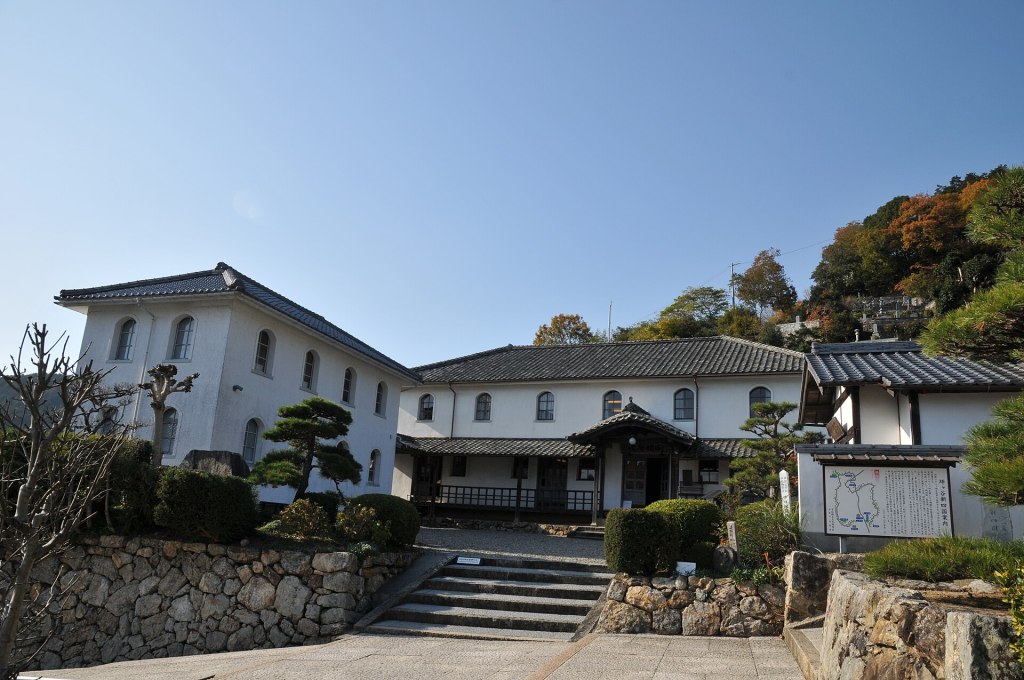
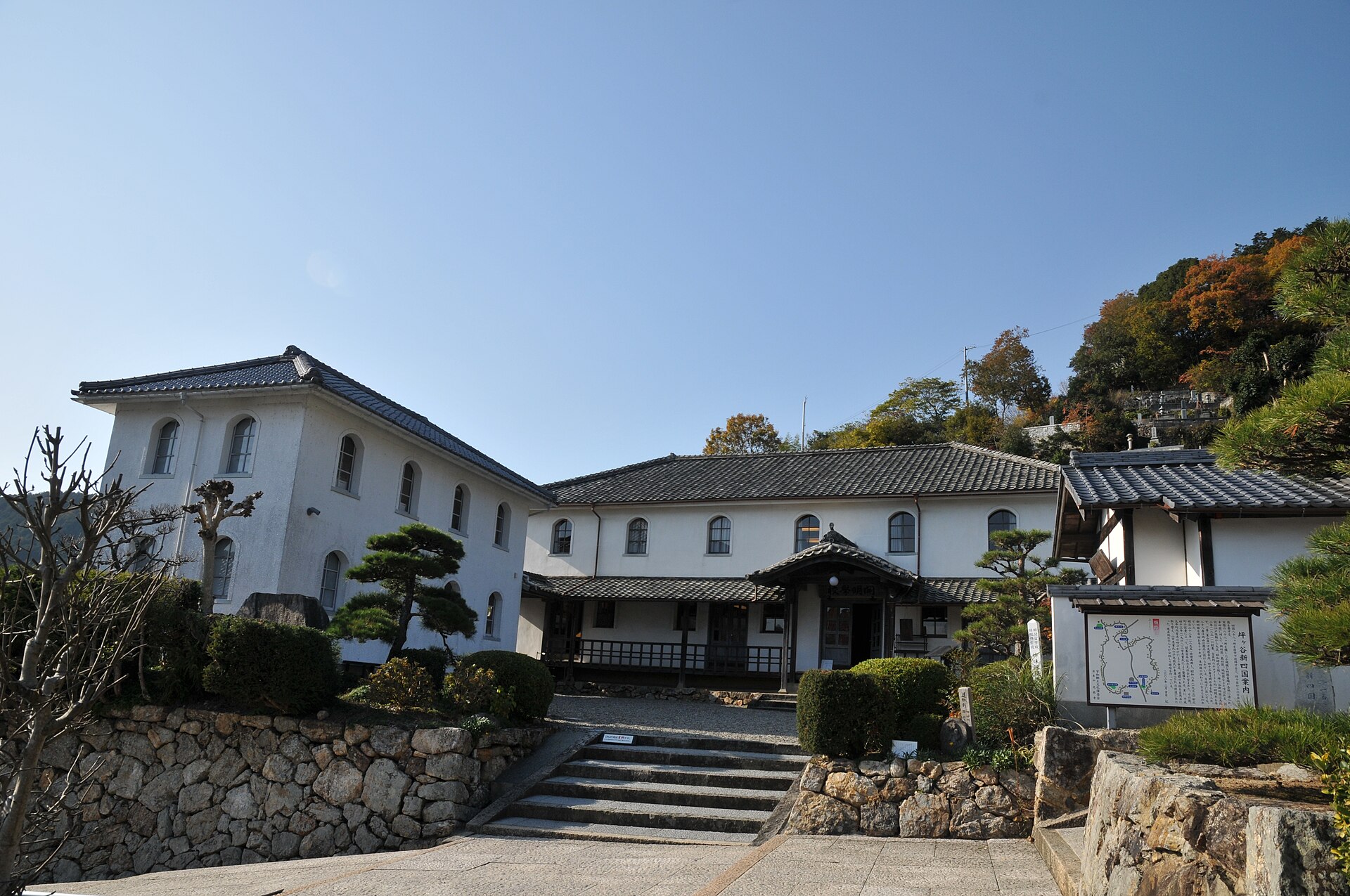
- The centrepiece is a school. Kaimei School was built in 1882 with money raised by the townspeople, in a hybrid style that puts arched Western windows into a Japanese timber building, with German glass in the frames. It is the oldest elementary school building in Shikoku and an Important Cultural Property, and it is now a museum of education with about 6,000 items, from the wall charts of the 1880s to the textbooks of the 1930s. The ambition of a small mountain town building this is the story.
- The museum still teaches. A teacher in hakama gives a Meiji-era lesson using the original wall charts, arithmetic, reading and singing, and it is a demonstration rather than a performance, booked at least a week ahead and capped at 40 people. It is the one place where the exhibits are handled rather than displayed, and it is why families and school groups come from the rest of the prefecture.
- The town also holds the smaller pieces of the same story: the Shingido, the private academy of 1869 that was the school’s predecessor, the Uwa Mingukan next door with its tools and household objects, and the merchant houses of the Unomachi street. The whole set is covered by one ticket of 700 yen, which is unusual value for a regional museum cluster, and the ticket office is in the Mingukan.
- The landscape around the town is the other reason to come, and it is the opposite of the street. Seiyo stretches from the sea at Meihama to the limestone plateau of the Shikoku Karst on the Kochi border, a range of 1,400 metres above a town at 100 metres, and the drive from one to the other is an hour. The karst is one of the three great karst landscapes of Japan, and it looks like nowhere else on the island.
- The practical case is that Uwa sits on the Yosan Line and the Matsuyama Expressway with its own interchange, five minutes from the IC and eight minutes on foot from Unomachi Station, and the town is small enough to see in a morning. It is not a destination in itself, and it is a very good stop between the castles and the coast, which is how most people should use it.
Top places and highlights
Kaimei School
Built in 1882 by public subscription, the school is a two-storey timber building with arched windows and imported glass, and it is the oldest elementary school building in Shikoku. It was designated an Important Cultural Property in 1997 and is a sister museum to the Kaichi School in Matsumoto. Admission is 700 yen for adults, 420 for high school and university students, and free for junior high and younger, and it includes the Mingukan next door.
The Meiji lesson
A teacher in hakama uses the school’s original wall charts to run a class in arithmetic, reading and singing as it would have been taught in the 1880s, and it costs 500 yen on top of admission. It runs for groups of up to 40 and must be booked at least a week in advance by phone or fax, and it is the reason the building is a museum rather than a monument. It is the best thing in the town for children.
The Unomachi street
The old merchant quarter runs from the station towards the school, with white-walled storehouses, lattice fronts and the deep eaves of the machiya, and it is a designated preservation district. It is a working street rather than a museum street, with shops and houses still in use, and the walk between the station and the school takes about ten minutes. A local guide can be booked for 3,000 yen for up to 15 people.
The Shingido and the Mingukan
The Shingido is the private academy founded in 1869 that was the school’s predecessor, and it stands on the same site, a small wooden building of the type that taught the children of the domain before the modern system arrived. The Uwa Mingukan across the street holds the tools, the farming equipment and the household objects of the town, and its ticket is the one that covers the whole cluster.
The Shikoku Karst
The limestone plateau runs for about 25 kilometres along the ridge on the Kochi border, between 1,000 and 1,485 metres, with white limestone outcrops, sinkholes and grazing cattle, and it is one of Japan’s three great karst landscapes. The Tenku no Michi road along the ridge is on the list of Japan’s hundred best roads, and the drive from Uwa takes about an hour and a half. The road is closed by snow in winter and open from April to the end of November.
The Odamiyama valley
The valley on the road up to the karst is a gorge of forest and river with a small onsen at the end, and it is the autumn colour route of the region. The drive through it is slow and narrow and it is the reason the karst trip is a day rather than an afternoon. In summer it is cool, and in November the maples along the water are the local event.
The food of the interior
Seiyo is farming country, and the town’s food is the produce of the interior: the rice, the vegetables, the mountain fish and the Uwa sake. The shops along the Unomachi street sell the local sweets and the pickles, and the restaurants are small and plain. It is not a food destination, and the eating is honest and cheap, which is the right thing for a town of this size.
Food and drink
- The interior of Seiyo grows rice and vegetables, and the town’s food is plain and local: the set meals of the small restaurants, the noodles, and the river fish from the valleys. The shops on the Unomachi street sell the pickles and the sweets that the town has always made.
- Uwa is known for its sake, brewed in the town, and for the local soy sauce and miso, and the breweries and the shops around the station sell them. The drinking culture of a small Shikoku town is quiet and the sake is good, and it is the thing to buy rather than to eat.
- The mountain vegetables and the mushrooms of the karst and the Odamiyama valley appear on the menus in season, and the sweetfish and the amago of the rivers are the summer food. In autumn the valley restaurants serve the mushrooms and the chestnuts.
- The town has few restaurants and they close early, and the reliable choice is lunch rather than dinner. The shops around the station and the street sell rice balls and the local bread, and the roadside station on the way to the karst is the practical stop for the drive.
Getting there and around
- By train, Uwa is on the JR Yosan Line at Unomachi Station, which is eight minutes on foot from Kaimei School and the old street. The line runs between Matsuyama and Uwajima, and the limited express stops at Uwa, so the town is reachable without a car.
- By car, the Matsuyama Expressway has the Seiyo-Uwa interchange, five minutes from the school, and the town is about an hour from Matsuyama and 40 minutes from Uwajima. The parking for the school is in the lot behind the Uwa Sentetsu Memorial Hall, and it is free.
- The Kaimei School is open from 9:00 to 17:00 with last entry at 16:30, closed on Mondays, or the following day when Monday is a holiday, and closed from 29 December to 3 January. The ticket office is in the Uwa Mingukan across the street.
- The Shikoku Karst is about an hour and a half from the Seiyo-Uwa interchange by the route through the Kinaiya Shirokawa roadside station and the mountain roads, and the road along the ridge is closed by snow in winter and passable from April to the end of November. The route is narrow in places and there are few petrol stations, so fill up in the town.
- Buses in the interior are infrequent and the karst is not practical without a car. For the town itself, the station and the school are close enough to walk, and the taxi from the station is short.
Where to stay
- Uwa has a small number of inns and guesthouses, and the town is quiet in the evening. Staying here is for the atmosphere of the street rather than for facilities, and the choice is limited.
- Uwajima, 40 minutes west, and Matsuyama, an hour north, are the larger bases with the hotels and the restaurants, and Uwa becomes a stop on the way. Uwajima also has the castle and the Date history that explains the region.
- The Odamiyama valley and the karst have mountain lodges and campsites, including the facilities at Tengu Highland, and staying up there is the way to see the plateau at dawn. They are seasonal and should be booked ahead in summer and autumn.
Best time to visit
- Spring is the best time for the town, with the street at its most comfortable and the mountains green, and the school’s garden and the surrounding hills in blossom. The karst road opens in April and the cattle are put out to graze.
- Summer is hot in the town and cool on the karst, and the valley and the plateau are the escape. The highland flowers are at their best in July and August, and the campsites and the mountain lodges are full in the holidays.
- Autumn is the season for the karst and the Odamiyama valley, with the maples along the river and the grassland turning, and the road along the ridge at its clearest. It is the busiest time for the plateau and the quietest for the town.
- Winter closes the karst road and leaves the town to itself, with the street empty and the school open, and the mountain villages under snow. It is the season for the museum rather than the landscape, and the pass is closed from December to March.
Practical tips
- Book the Meiji lesson a week ahead. It runs for up to 40 people at 500 yen each on top of admission, and it is booked by phone or fax with the school. Turning up and hoping is the one thing that does not work.
- Buy the combined ticket at the Mingukan. The 700-yen admission covers Kaimei School, the Shingido, the history museum and the Mingukan, and the ticket office is in the Mingukan rather than the school. It is the best value in the town.
- Go on a weekday morning. The school is closed on Mondays and the street is at its quietest early, and the light in the building is best before noon. The town has few visitors and the effect is lost when a coach arrives.
- Take the karst as a separate day. The drive from Uwa is an hour and a half each way on narrow mountain roads, and the plateau deserves the time rather than an afternoon squeezed between other stops. Fill the tank in the town before going up.
- Check the road before driving to the karst in November. The ridge road closes with the first snow and the opening dates move with the weather, and the local tourist association posts the status. A closed pass means a long detour rather than a short one.
- Walk the street rather than driving between the sites. The station, the school, the Mingukan and the merchant houses are within ten minutes of each other on foot, and the parking is at the edge of the quarter. The town is small enough that the car should stay parked.
- Eat lunch in the town and dinner elsewhere. The restaurants of Uwa close early and the choice is small, and the evening is better spent in Uwajima or Matsuyama. The local sake is worth buying at the shop rather than drinking at a restaurant.
Suggested day-trip outline
- Arrive at Unomachi Station or the Seiyo-Uwa interchange in the morning, park behind the Uwa Sentetsu Memorial Hall, and start at the Mingukan to buy the combined ticket. Walk the Unomachi street slowly towards the school, looking at the storehouses and the machiya.
- Spend an hour in Kaimei School, on both floors, with the wall charts and the classrooms, and book the Meiji lesson if you have a group and a week’s notice. Visit the Shingido in the grounds and the history museum in the second building before leaving.
- Eat lunch in the town, then take the road south towards the Odamiyama valley and up to the Shikoku Karst, allowing an hour and a half. Drive the Tenku no Michi along the ridge, stop at the viewpoints and walk a section of the grassland among the cattle.
- Return to Uwa in the late afternoon or stay on the plateau at Tengu Highland for the night, which gives the dawn over the karst. The mountain lodges serve local food and there is a campsite, and the road down in the morning is quiet.
- Leave on the Yosan Line or the expressway towards Matsuyama or Uwajima. With a second day, the castle town of Uwajima and the coast at Meihama are within an hour, and the town of Uwa becomes the middle of a loop rather than a stop.
Before you go
Timetables, fares, admission fees, and seasonal access rules can change. Check the official tourism and transport sites linked below for the latest information before you travel.
Explore More of Japan
Published guides that pair with this one:
- Uwajima Castle Travel Guide: A Small Original Keep above the Port
- Shimanto River Travel Guide: Japan’s Last Clear Stream and the Boats That Drift It
- Ainan Travel Guide: Kochi’s Deep South Coast
- Matsuyama Castle Travel Guide: The 1854 Keep above the City
- Shikoku Karst Travel Guide: The Highland Road, Stars, and Access
- The Museum of Art, Ehime Travel Guide: Highlights, Access, and Planning
- Mount Ishizuchi Guide: Shikoku’s Highest Peak
- Dogo Onsen Travel Guide: Historic Hot Springs in Matsuyama
- Ozu Travel Guide: A Castle Town and a Wooden Rebuilt Keep
Browse every Shikoku guide on this site for the rest of the region.
Sources
- city.seiyo.ehime.jp (checked 2026-11-04)
- seiyojikan.jp (checked 2026-11-04)
- seiyojikan.jp (checked 2026-11-04)
- iyokannet.jp (checked 2026-11-04)
- pref.ehime.jp (checked 2026-11-04)
- shikoku-karstory.com (checked 2026-11-04)


Leave a Reply