A practical English guide to Azumino in Nagano: the Daio wasabi farm, the spring-water channels, cycling routes, the Northern Alps views and access from Matsumoto.
Operational details such as opening hours, admission fees, and train times can change. Prefer official pages and reconfirm before you travel (sources checked on 05 November 2026).
Why visit
- Azumino is a plain in western Nagano, spread between Matsumoto and the Northern Alps, and it is one of the few places in Japan where you can walk past working farms with a range of three-thousand-metre peaks behind them. The land is flat, the water is everywhere, and the scale is agricultural rather than urban.
- The water is the defining feature. Snowmelt from the Alps moves underground and comes back up across the plain in springs and channels, and that clean, cold, steady water is what made Azumino a wasabi-growing area. The Daio Wasabi Farm is the largest and most visited, with rows of wasabi in running water under the trees, but the channels run through the whole plain.
- Cycling is the natural way to see it. The distances between the farm, the shrines, the museums and the villages are short but not walkable, and the roads are flat and quiet. Bikes can be rented in several places near the stations, and a half-day loop covers most of what makes the area distinctive.
- Azumino is also a good base for the mountains. The Hotaka range and the Jōnen peaks are close, the hiking season runs from summer into autumn, and the views from the plain are the kind that make people move here. In winter the Alps are white and the plain is quiet, which is a different pleasure.
Top places and highlights
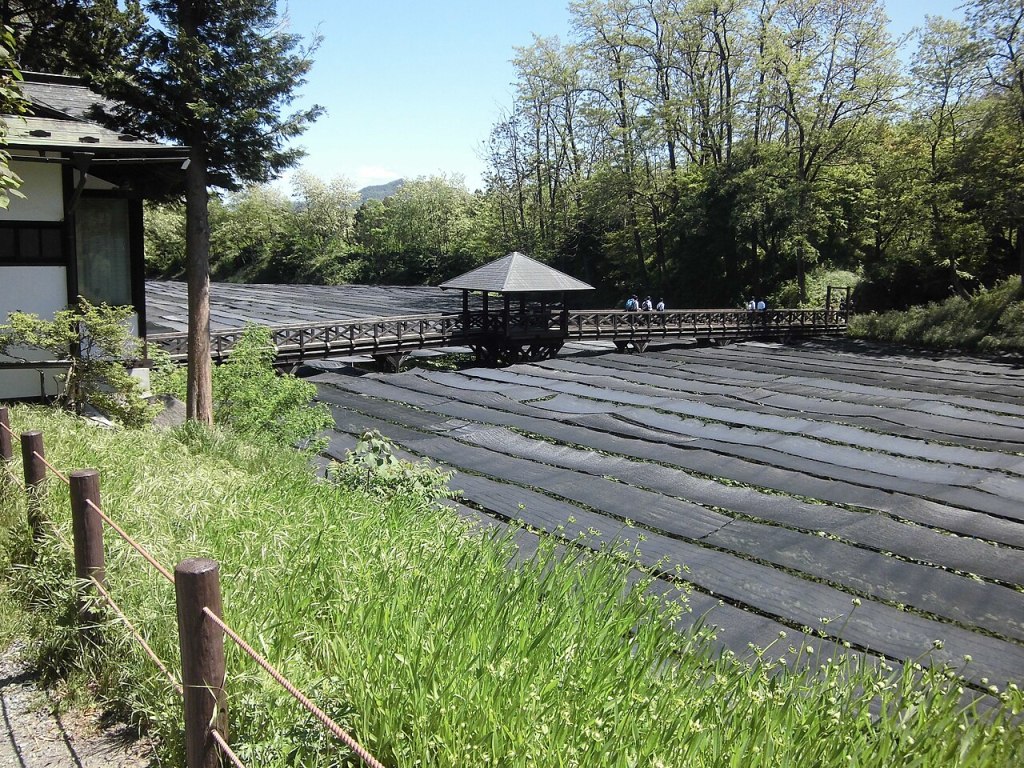
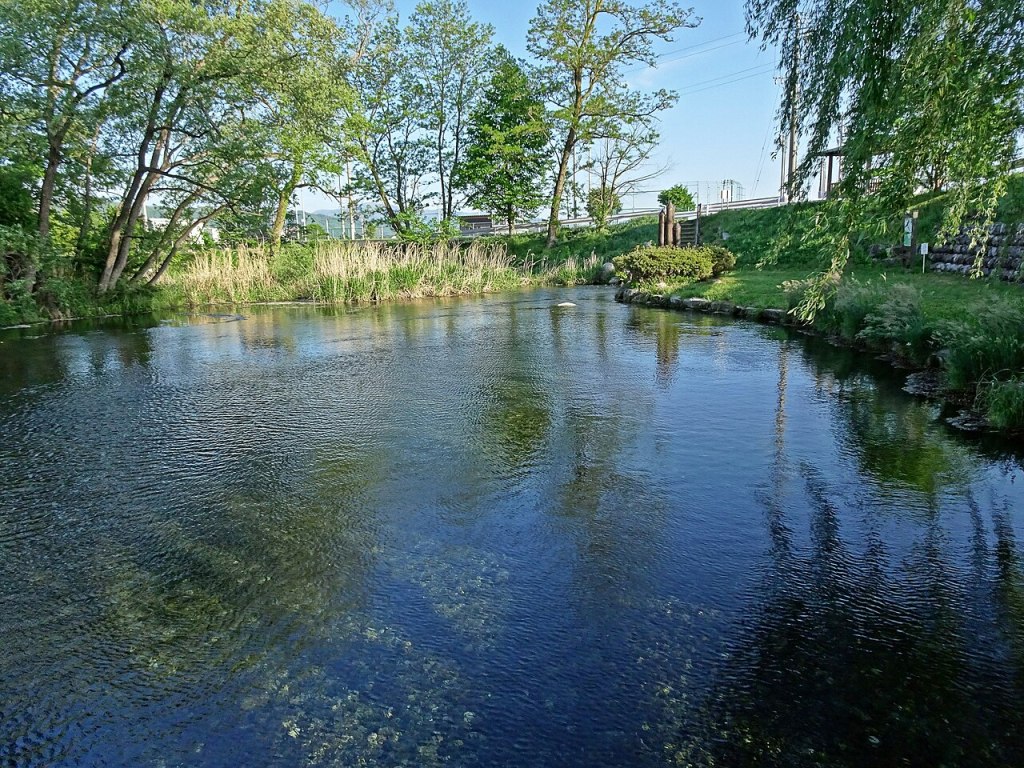

The Daio Wasabi Farm
The Daio farm is the best-known wasabi operation in Japan, with fields of the plant growing in shallow running water under a canopy of trees. The water is diverted from the river and moves slowly through the beds, and the whole site is a working farm rather than a garden. There is a shop and a few food stands, and the walk around the beds takes an hour at an easy pace.
The spring-water channels
Across the plain, narrow channels carry spring water past houses, fields and shrines. They are the visible part of the system that feeds the wasabi beds and the rice fields, and they give the area its sound: running water is audible almost everywhere. The cleanest and most photogenic stretches are in the older villages, where the channels are stone-lined and crossed by small bridges.
Cycling the plain
A rented bicycle turns Azumino into a manageable landscape. The loop from Hotaka station through the wasabi farm, the shrine and the back lanes is flat and traffic-light, and the mountains stay in view most of the way. Rental shops near the stations have city bikes and electric assist, and the latter is worth it in summer heat.
Hotaka Shrine
Hotaka Shrine sits at the foot of the mountains and is one of the older shrines in the region, associated with the worship of the Hotaka peaks. The approach is wooded, the buildings are quietly maintained, and the shrine is a working local institution rather than a tourist site. It makes a good stop on a cycle loop and a place to understand the mountain worship that shaped the area.
The Northern Alps views
The Hotaka and Jōnen peaks rise directly from the plain, and the view from the fields is unobstructed for long stretches. In the clear air of autumn and winter the mountains are sharp and close; in summer the haze softens them and the rice is green. Photographers come for the combination of farmland foreground and alpine background, and it is genuinely unusual in Japan.
The art museums
Azumino has a surprising number of small museums for a farming plain, including the Chihiro Art Museum, dedicated to picture-book illustration, and several private collections. They are modest in scale and easy to visit by bike, and they give the area something to do when the weather turns. Opening days vary, so check before you go.
The villages and farm stands
The old villages are clusters of farmhouses with deep eaves and dark timber, and the roadside stands sell vegetables, wasabi, pickles and soba. This is not a preserved district: the houses are lived in and the barns are working. Buying something at a stand and eating it by the channel is the simplest pleasure the area offers.
Food and drink
- Wasabi is used fresh here: grated onto soba, served with sashimi, or as wasabi ice cream at the farm.
- Soba is the local staple, made with buckwheat from the surrounding hills and served cold with a dipping sauce.
- The farm stands sell seasonal vegetables, pickles and fruit, and the prices are lower than in the cities.
- Local sake and wine are made in the Matsumoto and Azumino area and sold in the village shops.
- Lunch options are spread out; the area around Hotaka station has the densest cluster of restaurants.
Getting there and around
- Azumino is reached by the JR Ōito Line from Matsumoto, with stations at Hotaka, Toyoshina and Azumino-Saigawa.
- From Matsumoto the train takes around twenty-five minutes to Hotaka, which is the usual base for the wasabi farm.
- From Tokyo, take the Azusa or Super Azusa to Matsumoto and change; the whole trip is around three hours.
- Bicycle rental near the stations is the practical way to cover the plain, since buses are infrequent.
- By car, the Nagano Expressway and the Route 147 corridor connect Azumino with Matsumoto and the north.
Where to stay
- Hotaka has a cluster of small hotels and guesthouses, and several farm-stay style lodgings operate in the villages.
- Matsumoto, twenty-five minutes away, has a much larger choice of hotels and makes an easy base.
- A few onsen inns sit at the edge of the mountains, useful after a day of hiking.
- For cycling trips, stay close to a rental shop and start early, since the best light is in the morning.
Best time to visit
- Spring is green and mild, with blossom in the villages and snow still on the high peaks.
- Summer is hot on the plain but the mountains are open, and the wasabi beds are at their most lush.
- Autumn is the best season: clear air, colour in the hills and the Alps at their sharpest.
- Winter is cold and often snowy, with the mountains white and most farm activity stopped; some businesses close.
Practical tips
- Reserve a bicycle in advance at weekends and in autumn, when the rental shops run out.
- The wasabi farm is a working site; stay on the paths and do not step into the water channels.
- Carry cash for the farm stands, which rarely take cards.
- The plain is exposed, so bring sun protection in summer and a windproof layer in spring and autumn.
- Check museum opening days; several close on Mondays and over the New Year period.
- The trains on the Ōito Line are infrequent, so plan the return leg around the timetable.
Suggested day-trip outline
- Morning: arrive at Hotaka and rent a bicycle.
- Mid-morning: the Daio Wasabi Farm and the channel walk.
- Late morning: cycle to Hotaka Shrine and the back lanes.
- Lunch: soba at a village shop or near the station.
- Afternoon: a museum, or the ride towards the mountains for the Alps view.
- Late afternoon: return the bicycle and take the train to Matsumoto.
Before you go
Timetables, fares, admission fees, and seasonal access rules can change. Check the official tourism and transport sites linked below for the latest information before you travel.
Explore More of Japan
Published guides that pair with this one:
- Karuizawa Guide: Highland Walks, Old Ginza and Shiraito Falls
- Jigokudani Snow Monkey Park Travel Guide
- Nagoya Travel Guide: Castle, Miso Food and a Practical Base for Central Japan
- Kamikochi Travel Guide: Alpine Valley Walks in the Japan Alps
- Matsumoto Castle Travel Guide: Japan’s Original Black Keep
Browse every Chubu guide on this site for the rest of the region.
Sources
- city.azumino.nagano.jp (checked 2026-11-05)
- azumino-e-tabi.net (checked 2026-11-05)


Leave a Reply