A practical English guide to Minoo Park in Osaka: the waterfall trail, the quasi-national park, maple-leaf tempura, the insect museum and the Hankyu train from Umeda.
Operational details such as opening hours, admission fees, and train times can change. Prefer official pages and reconfirm before you travel (sources checked on 05 November 2026).
Why visit
- Minoo Park is a wooded valley on the northern edge of Osaka, and the waterfall at the end of it is the closest thing the city has to a proper natural sight. The park sits inside the Meiji no Mori Minō Quasi-National Park, and the valley is steep enough and wet enough to feel like a different place from the suburbs ten minutes away.
- The walk is the attraction. A paved path follows the Minō river up the valley for about three kilometres, past shrines, a insectarium and a cluster of food stalls, to a fall of roughly thirty metres. It is easy walking and takes under an hour each way, which makes it accessible to almost anyone and busy on weekends and in autumn.
- Autumn is the peak. The valley is known for its maples, and the park gets crowded in late November. The other good season is early summer, when the foliage is dense and the river is full. In winter the trees are bare and the walk is quiet, and in spring the fresh green comes late because the valley is shaded.
- Minoo is also a food stop. The local speciality is momiji no tenpura, maple leaves preserved in salt and fried in a light batter, sold at stands along the path. It is a slightly sweet, slightly salty snack that exists nowhere else in quite the same form, and eating it on the walk is part of the ritual.
Top places and highlights
The waterfall trail
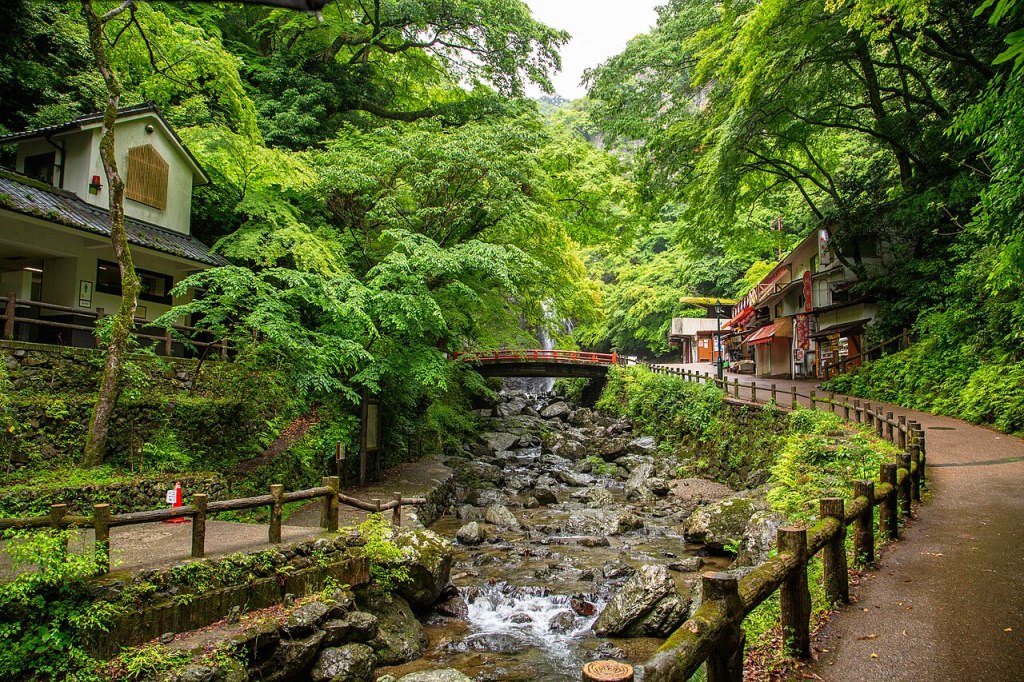
The main path is paved and mostly gentle, following the river through beech and maple forest. It starts near Minoo station, passes a small shrine and a cluster of tea shops, and reaches the fall at the head of the valley. The return is the same way, which makes it a straightforward out-and-back walk of a couple of hours with stops.
Minoh Falls
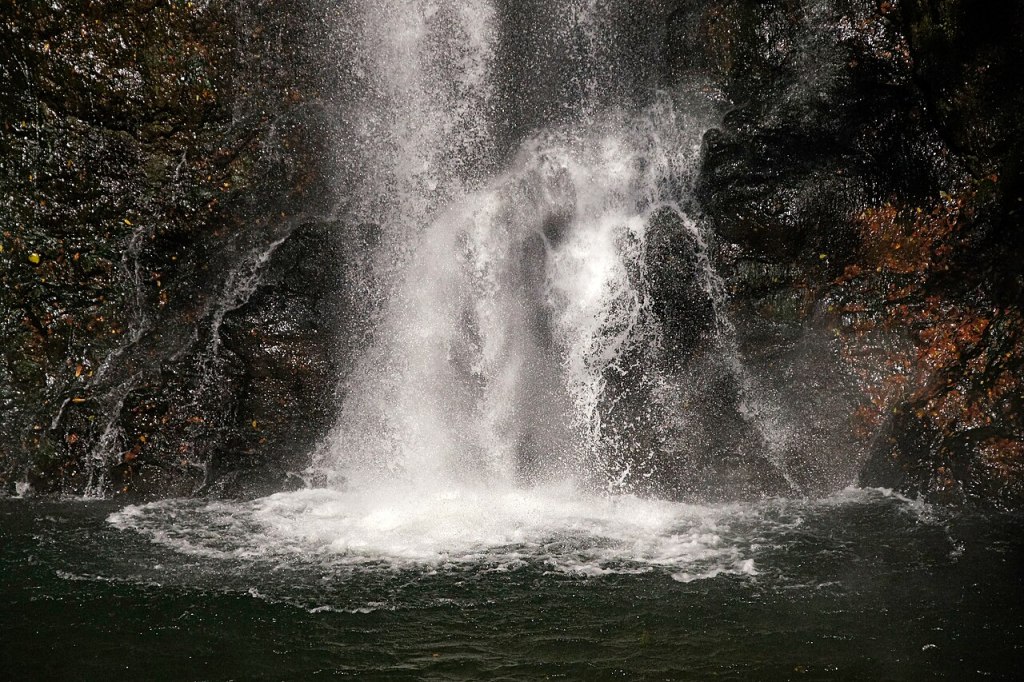
The fall drops about thirty metres over a rock face into a pool at the head of the valley, and it is the objective of the walk. There is a viewing platform and a couple of benches, and the water is at its heaviest after rain. The setting is enclosed by forest, which makes the fall feel larger than it is.
The monkeys
Japanese macaques live in the valley and are occasionally seen near the path, particularly in the quieter parts. They are wild and used to people, which is the problem: do not feed them, do not carry food in your hand, and keep a distance. The park posts warnings, and they are worth reading.
Momiji no tenpura
The maple-leaf tempura sold along the path is the local snack: leaves salted and preserved through the year, then fried in a sweet batter. It is sold in small bags and eaten on the move. The shops near the station and along the trail all sell it, and the version at the stalls halfway up is the traditional stop.
The insect museum
The Minoh Park Insectarium sits near the start of the trail and holds a large collection of Japanese insects, with live displays in season. It is a small municipal museum, old-fashioned in a good way, and a sensible stop with children or on a wet day. Hours and closures vary, so confirm before relying on it.
Katsuo-ji
A short bus or taxi ride from the park brings you to Katsuo-ji, a temple known for its daruma dolls and its position in the hills. The approach and the halls are photogenic, and the temple is popular for prayers for success and victory. It is a separate visit rather than part of the waterfall walk, but the two combine well.
The old teahouses
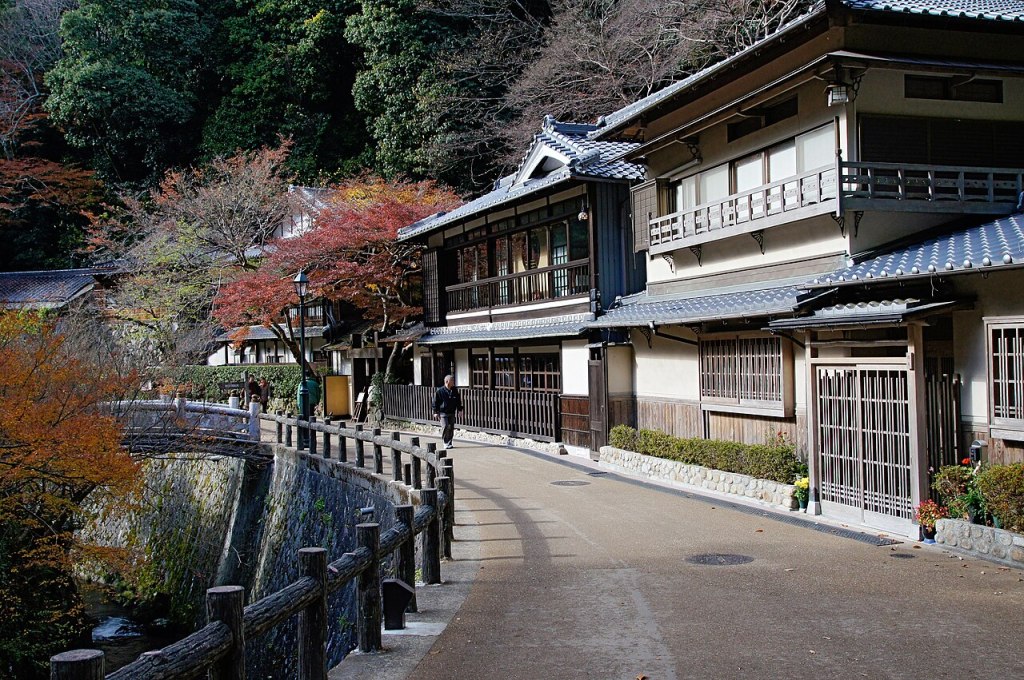
Near the station and along the lower trail, a few teahouses and shops have been in place for generations, selling sweets, drinks and simple meals. They are modest and cheap, and they give the walk a settled feel. Several close in the late afternoon, so plan lunch before the waterfall rather than after.
Food and drink
- Momiji no tenpura, fried maple leaves, is the local speciality and sold along the trail.
- The teahouses near the station serve simple meals, sweets and cold drinks.
- Yuzu products from the surrounding hills appear in drinks and sweets in winter.
- Osaka’s wider food culture is fifteen minutes away by train, and most visitors eat in the city rather than in Minoo.
- Carry water for the walk; the stalls are spread out and some close early.
Getting there and around
- Take the Hankyu Minoh Line from Umeda to Minoh station; the ride is about thirty minutes.
- From Minoh station, the trailhead is a short walk through the shopping street, and the waterfall is about forty minutes on foot.
- Buses run from the station towards Katsuo-ji and the upper valley, but the main trail is walkable from the station.
- From central Osaka, the Hankyu line is the fastest option; JR and the subway require a change.
- By car, parking near the park fills early at weekends in autumn, and the access roads are narrow.
Where to stay
- Most visitors stay in central Osaka and come out for the day, which is the simplest plan.
- A few small hotels and ryokan exist around Minoh station, useful for an early start in autumn.
- Staying near Umeda or Shin-Osaka gives the best transport links for the rest of Kansai.
- There is no accommodation inside the park itself.
Best time to visit
- Spring is fresh and green, with the valley sheltered and cool.
- Summer is hot and humid, but the river and shade make the walk bearable, and the monkeys are most often seen.
- Autumn is the peak season, with maples turning from late November, and the path is crowded at weekends.
- Winter is quiet and bare, with occasional snow and the waterfall at its most dramatic after rain.
Practical tips
- Do not feed the monkeys and keep food out of sight; they will take it.
- The path is paved but has steps in places, so wear shoes you can walk in.
- Autumn weekends are extremely busy; go on a weekday morning if you can.
- The stalls along the trail close in the late afternoon, so start the walk before lunch.
- Bring cash for the small shops and the insect museum.
- Combine the walk with Katsuo-ji only if you have time for the bus; the temple is not on the trail.
Suggested day-trip outline
- Morning: Hankyu train from Umeda to Minoh station.
- Mid-morning: the shopping street and the start of the trail.
- Late morning: the insect museum or a teahouse stop.
- Lunch: momiji no tenpura and a simple meal at a trailside shop.
- Afternoon: the waterfall and the return walk.
- Late afternoon: back to Osaka, or a detour to Katsuo-ji.
Before you go
Timetables, fares, admission fees, and seasonal access rules can change. Check the official tourism and transport sites linked below for the latest information before you travel.
Explore More of Japan
Published guides that pair with this one:
- Osaka Aquarium Kaiyukan Travel Guide: Highlights, Access, and Planning
- Osaka Travel Guide: Food, Neighborhoods and a Three-Day Plan
- Osaka Castle Travel Guide: The Keep, the Park and the Siege That Ended an Era
- Osaka Neighborhoods Food Guide: Street Food Areas and Practical Walking Tips
- Umeda Sky Building Travel Guide: Kuchu Teien Observatory in Osaka
Browse every Kansai guide on this site for the rest of the region.
Sources
- city.minoh.lg.jp (checked 2026-11-05)
- minohkankou.net (checked 2026-11-05)


Leave a Reply