Planning Hida Furukawa in Gifu? This English guide covers the Seto River, the sake breweries, the festival hall and access.
Operational details such as opening hours, admission fees, and train times can change. Prefer official pages and reconfirm before you travel (sources checked on 05 November 2026).
Why visit
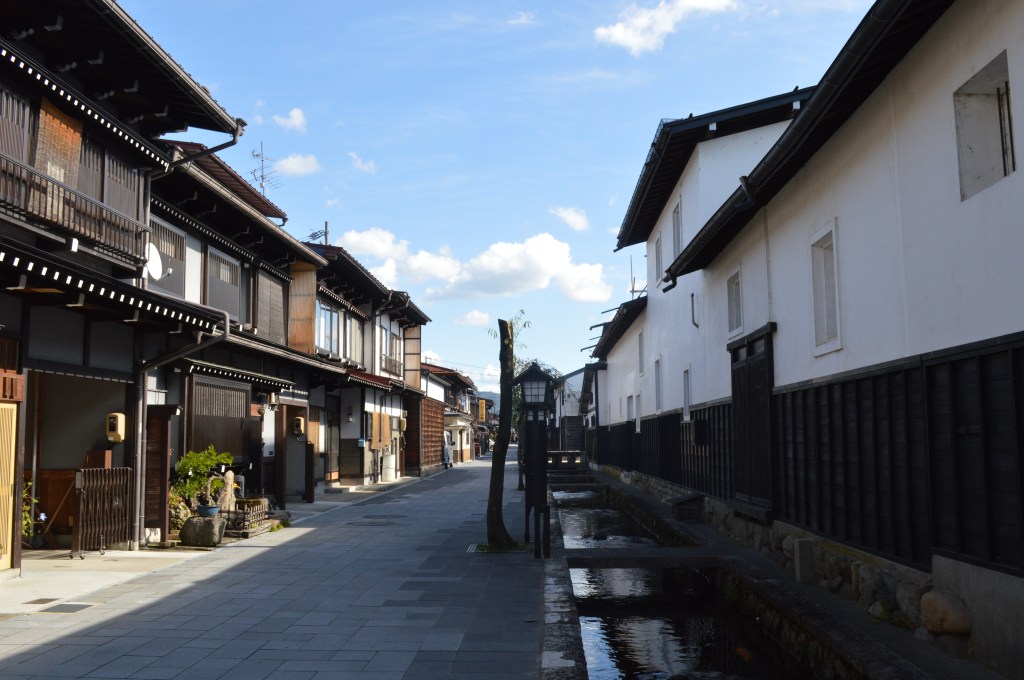
- Hida Furukawa is a small castle town in northern Gifu where a single street of white-walled storehouses still faces a clear, shallow channel called the Seto River. It is five minutes on foot from the station, so you can step off the train and be inside the old town almost immediately.
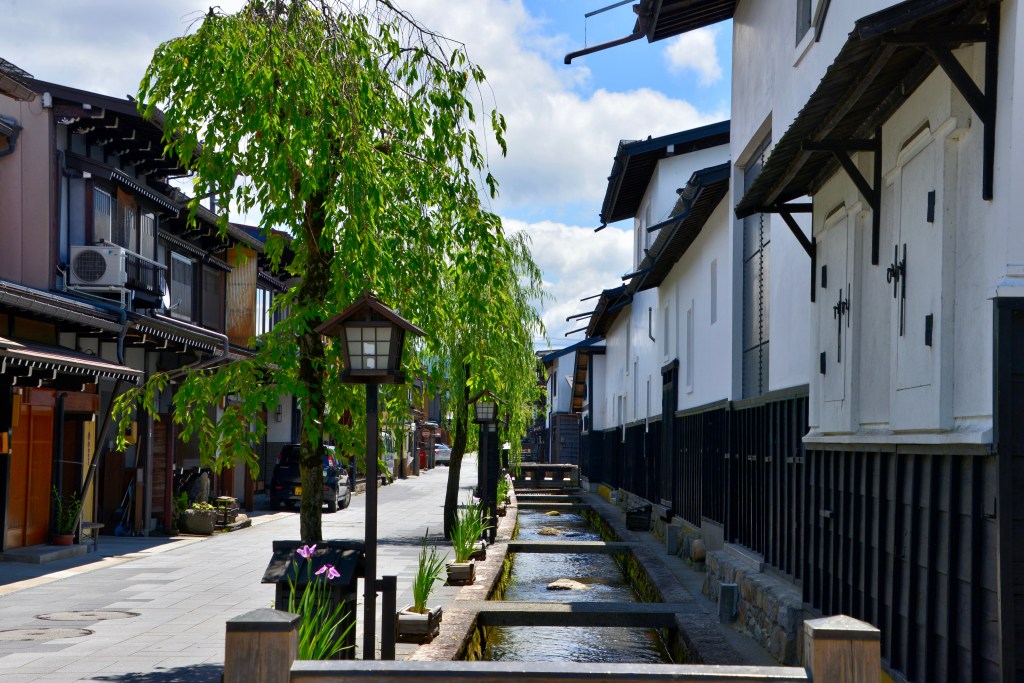
- Around a thousand carp swim in the Seto River from roughly April to November. The fish are fed by residents and by visitors who buy pellets along the street, and the combination of white walls, dark timber, water and colour is the image most people take home.
- Two working sake breweries stand on the same street. Watanabe Sake Brewery (brand name Hourai) and Kaba Sake Brewery both occupy registered tangible cultural properties, and both offer ways to taste or tour with advance notice.
- The Furukawa Festival, held every 19 and 20 April, is one of the events inscribed on the UNESCO Intangible Cultural Heritage list as part of Japan’s float festival tradition. The town’s exhibition hall lets you see the real floats and hear the story at any time of year.
- Unlike the busier parts of the Hida region, Furukawa is compact enough to cover on foot in half a day, which makes it an easy add-on to a Takayama trip rather than a separate destination.
- The town is a working place, not a museum. People shop at the brewery counter, children walk to school past the carp, and the side streets still hold carpenters and merchants rather than only souvenir shops.
- It sits in one of Japan’s snowiest inhabited areas, so the same street reads completely differently in February, when the storehouse roofs carry deep snow, and in May, when pink moss flowers line the water.
Top places and highlights
The Seto River and the white-walled storehouse street
This is the reason most travellers come. A narrow channel runs along the foot of a row of white-plastered kura storehouses, with dark wooden houses set behind them, and a thousand or so carp move slowly through the water. The street is short, perhaps a few hundred metres of the best stretch, and it is at its calmest before ten in the morning, when the light comes in low and the coach groups have not yet arrived. Feed pellets are sold nearby and feeding the carp is an accepted local habit rather than a tourist gimmick. Note the seasonal rhythm: the carp are moved to a pond to overwinter from late November until early April, so a winter visit shows you the architecture without the fish. Spring brings pink moss along the banks, summer brings the sound of water and shade, and autumn brings the students sketching the storehouses. The walkway is flat and paved, which makes it usable for most visitors.
Hida Furukawa Matsuri Kaikan (the festival hall)
If you only do one paid attraction in town, make it this one. The hall holds three of the actual festival floats used in the April procession, not replicas, and shows the festival on a large 4K screen. You can try operating a karakuri puppet mechanism and strike the okoshi-daiko drum yourself, which gives a far better sense of the weight and timing of the event than any display case. It also explains the call-and-response chanting and the festival costume called tonbo that outsiders rarely understand from watching. Admission is 700 yen for adults and 300 yen for children, with a combined ticket covering the Hida no Takumi Bunka-kan at 800 yen for adults. Opening hours are 9:00 to 17:00 from March to November and 9:00 to 16:30 from December to February, closed 29 December to 3 January. There is a small shop and an optional label-making experience. It stands one minute from the free city hall car park, so it works well as the first stop of the day while you collect a walking map.
Watanabe Sake Brewery (Hourai)
Watanabe Sake Brewery has been brewing for more than 150 years in a white storehouse that is listed as a registered tangible cultural property. The shop opens daily from 9:00 to 16:00 and is the easy way in: some bottles and amazake are free to taste, there is a coin machine that pours premium sake for 100 yen a glass, and the brewing water used in production is available to drink. For something deeper, the brewery runs a guided kura tour on Wednesday, Thursday and Friday afternoons at 14:00, roughly one hour, limited to ten people, at 2,000 yen per adult, with a tasting that includes a sake not sold anywhere. Booking by phone or email in advance is strongly advised because same-day places are limited, and the tour is not held on public holidays or long holiday periods. You are asked to avoid perfume and to keep to the start time because the building is a working site.
Kaba Sake Brewery
Kaba Sake Brewery has been making sake on this street for more than three centuries and uses the local rice variety Hida Homare. Its brands include Shirakama-yu and Yancha-zake, and its main building and storehouses are registered tangible cultural properties; the bunko storehouse standing beside the Seto River is one of the elements that makes the classic view of the street work. The shop is open from 8:00 to 17:00 on weekdays and 9:00 to 17:00 at weekends, so it is an option earlier in the morning than most places in town. Brewery tours are possible with a reservation at least one week ahead, cost 500 yen per person, take up to ten people at a time and are conducted in Japanese only. Tours are not available from October to December, when the brewery is at its busiest. Even without a tour, buying a bottle here and comparing it with one from Watanabe is a simple, pleasant way to spend an hour.
Hida no Takumi Bunka-kan (the Hida carpenter museum)
Hida carpenters were historically sent to work on major buildings elsewhere in Japan, and this small museum explains that tradition. The building itself is the exhibit: it was raised by local carpenters using timber from the region and contains not a single nail, with the joints and interlocking frames left visible for you to inspect. Displays include samples of the various joint types and a hands-on corner where you can try assembling a chidori-goshi lattice pattern like a puzzle, which keeps children occupied for longer than you might expect. Interpretation is largely in Japanese, but the woodwork does not need translation. Admission is 300 yen for adults and 100 yen for children, or 800 yen for the combined ticket with the festival hall. Hours are 9:00 to 17:00 with last entry at 16:30, shortened in the colder months, and it closes on Thursdays and over the New Year. Because of the Thursday closure, the combined ticket is not sold that day.
Enko-ji and the three temples of Sanji-mairi
Enko-ji stands directly beside the Seto River and its gate is said to have been moved here from the castle that once controlled this area, which explains why a temple entrance looks like a fortification. Look under the eaves of the main hall for the pair of carved turtles: local tradition credits them with saving the building from the great fire that destroyed most of the town in 1904, and residents call them the turtles that call the water. The temple is one of three large temples in the old town, alongside Honkoku-ji, described as the largest wooden building in Hida, and Shinshu-ji, whose curved roof and red bridge are a favourite subject for photographers. On 15 January the three are visited in turn during the Sanji-mairi evening pilgrimage, when candles are lit along the route and the town fills with people in kimono. At other times they are quiet, free to enter in the sense of no ticket, and easy to combine with the storehouse street.
The Furukawa Festival in April
The town’s main event runs every 19 and 20 April and is the reason the exhibition hall exists. It has three parts. On the evening of the 19th, hundreds of men in loincloths haul a huge drum through the streets during the okoshi-daiko, with smaller drums fighting for position closest to it, and the noise and crowding are considerable. On both days the festival floats are drawn out in the yatai-hikisoro: nine or so elaborately carved and lacquered floats gather at set places and times, and two of them present karakuri puppet performances while another stages a children’s kabuki play and a fourth performs a lion dance. A portable shrine procession moves through the town in between. The event is designated an Important Intangible Folk Cultural Property and forms part of the UNESCO-listed float festival tradition. Roads close, parking fills, and special trains run, so visitors are asked to use the railway from Takayama, roughly twenty minutes away, rather than drive into the centre.
The side streets, Chiyo-no-Matsubara and the everyday town
Most visitors walk the main storehouse street and leave, which is a mistake. Step one block back and you find the ordinary town: a covered shopping street with a few long-running shops, small workshops, and the canal channels that carry snowmelt through the district in spring. Chiyo-no-Matsubara Park sits a short walk away along the Miyagawa River; it is a modest riverside space with cherry trees that bloom in mid-April, and it once hosted sumo and horse markets in the days when the river was the working artery of the town. The Hida City Library and city hall area has benches and public toilets, useful if you are travelling with children. Bicycle rental is available locally, and cycling the flat valley roads toward the surrounding rice fields and the foot of the mountains gives a sense of how tightly the town sits between steep hills.
Food and drink
- Hida beef is the regional speciality and appears in town as steak, grilled skewers, croquettes and sushi. It is graded highly and priced accordingly; lunch sets are the cheapest way to try it.
- Gohei-mochi, rice pounded and grilled with a sweet-savoury miso and sesame coating, is sold in shops and stalls around the storehouse street and keeps well for eating later on the train.
- Midarashi dango, small skewered dumplings brushed with a soy-based glaze, is a Hida snack you will see at festival stalls and in a few shops in town.
- Hida soba and the local style of chuka soba, a light soy-based noodle soup, are the everyday lunch options; portions are generous and prices are moderate compared with the beef restaurants.
- The two breweries sell sake, amazake and, at Watanabe, brewing water to drink on the spot. Tasting is a legitimate part of a visit here, but if you are driving, note that the tours and the coin-pour machines assume you are not.
- Note that many small restaurants in town close between lunch and dinner, and a number shut on one weekday; check the day’s opening before planning your meal stop.
Getting there and around
- By train: JR Takayama Main Line to Hida-Furukawa Station. From Takayama it is about twenty minutes and 240 yen on a local train; limited express services also stop but carry a surcharge. The station is a five-minute walk from the storehouse street.
- From the Toyama side, the same line runs through Inotani and the mountains; journey times are longer and services are infrequent, so check the timetable before committing.
- By bus: Nouhi Bus runs between Takayama and Furukawa, roughly thirty minutes and around 380 yen, and continues toward Kamioka. It is a useful fallback if the train times do not suit you.
- By car: exit at Hida-Kiyomi Interchange on the Tokai-Hokuriku Expressway and drive about 25 minutes to the town centre. From Takayama the drive is roughly 20 to 30 minutes on Route 41.
- Parking is free. The city hall car park next to the festival hall holds about 73 cars and 5 buses and is three minutes from the storehouse street; the station east car park holds about 303 cars and 8 minutes away. No reservation is needed.
- During the April festival, roads in the centre close and temporary car parks open at schools and other sites with fixed entry and exit times. Special trains run on the 19th, and visitors are asked to arrive by public transport.
Where to stay
- Accommodation in town is limited to a handful of small ryokan and guesthouses, several in converted machiya townhouses; booking well ahead is necessary in festival week and during autumn foliage.
- Many travellers base themselves in Takayama and visit Furukawa as a half-day trip, which gives a much wider choice of hotels and restaurants for the evening.
- Because the town is small, staying overnight means you get the storehouse street at dusk and early morning with almost nobody there, which is the main argument for paying for a local room.
- A car is not needed within town. If you are continuing to Kamioka, Shirakawa-go or the Okuhida hot springs, a car or a carefully checked bus plan is essential.
Best time to visit
- Spring, especially late April into May, brings pink moss along the Seto River, cherry blossom at Chiyo-no-Matsubara and the festival on 19 and 20 April. Expect crowds and closed roads on those two days.
- Summer is green and mild compared with the plains; the carp are active, the streets are shaded, and the surrounding valleys are good for walking. Rain in June and July is common.
- Autumn is the most comfortable season, with clear air, rice harvested and hung to dry in the fields, and the large ginkgo tree beside the carpenter museum turning yellow in late October and November.
- Winter is serious snow country. The storehouse street under deep snow is beautiful, but the carp have been moved away, some businesses shorten their hours, and driving requires winter tyres. The Sanji-mairi on 15 January is the winter event worth planning around.
Practical tips
- Start at the festival hall when it opens at 9:00, pick up a walking map, then walk the storehouse street before the coaches arrive around mid-morning.
- Bring cash. Several small shops and some restaurants in town do not take cards, and the coin-pour sake machines are coin-only.
- Brewery tours require booking: Watanabe by phone or email for the weekday afternoon tour, Kaba at least a week ahead and in Japanese only. If you turn up without a booking, plan on the shop rather than the tour.
- Do not plan a visit around the carp in winter. They are moved out from late November and return in early April.
- Half a day is enough for the town centre. Add a second half-day if you want a brewery tour, the carpenter museum and a proper lunch.
- The Hida no Takumi Bunka-kan closes on Thursdays, so do not buy the combined ticket that day and check Thursday hours for anything you specifically want to see.
- If you are driving, use the free city hall or station east car parks and walk in; the storehouse street itself has no parking and the lanes are narrow.
- Confirm current hours, prices and tour availability with the official Hida City tourism site or the facility directly, since small operations adjust schedules seasonally.
Suggested day-trip outline
- 09:00 Arrive at Hida-Furukawa Station, walk five minutes to the festival hall. See the floats, watch the 4K film and try the drum, about an hour.
- 10:15 Walk the Seto River and the white storehouse street, feed the carp, then step into Watanabe Sake Brewery for a tasting at the counter.
- 11:30 Continue to Enko-ji and the neighbouring temples, then the Hida no Takumi Bunka-kan if the joints and woodwork interest you.
- 12:30 Lunch: Hida beef if you want the splurge, soba or chuka soba if you want to keep it simple. Leave time for gohei-mochi afterwards.
- 14:00 Either join the Watanabe brewery tour if you booked it, or take a slow walk through the back streets and along the Miyagawa River before returning to the station.
Before you go
Timetables, fares, admission fees, and seasonal access rules can change. Check the official tourism and transport sites linked below for the latest information before you travel.
Explore More of Japan
Published guides that pair with this one:
- Takayama Travel Guide: Hida Old Town and Alps Access
- Shirakawa-go Travel Guide: UNESCO Gassho Village, Access, and Day-Trip Tips
- Magome and Tsumago Travel Guide: A Nakasendo Walk between Post Towns
- Kamikochi Travel Guide: Alpine Valley Walks in the Japan Alps
- Gokayama Ainokura Guide: The Quiet Side of the Thatched Villages
Browse every Chubu guide on this site for the rest of the region.
Sources
- hida-kankou.jp (checked 2026-11-05)
- city.hida.gifu.jp (checked 2026-11-05)
- hida-kankou.jp (checked 2026-11-05)
- okosidaiko.com — Visitor information (checked 2026-11-05)
- sake-hourai.co.jp (checked 2026-11-05)
- kankou-gifu.jp (checked 2026-11-05)
- hida-kankou.jp (checked 2026-11-05)
- hida-kankou.jp (checked 2026-11-05)


Leave a Reply