Planning Imbe in Bizen, Okayama? This English guide covers the kiln sites, the pottery museum, clay workshops and access.
Operational details such as opening hours, admission fees, and train times can change. Prefer official pages and reconfirm before you travel (sources checked on 05 November 2026).
Why visit
- Imbe, in Bizen city, is one of Japan’s six ancient kiln towns and the only place where Bizen ware is made. Pottery has been fired here since around the twelfth century, and the whole town is organised around it.
- The station itself is the entrance to the craft: the building doubles as the Bizen ware traditional industry hall, so you walk out of the ticket gate and into a display of local work rather than onto a road.
- A single day covers a serious museum, a walk past working kilns and galleries, a hands-on clay session and a 350-year-old school that is a National Special Historic Site, all without a car.
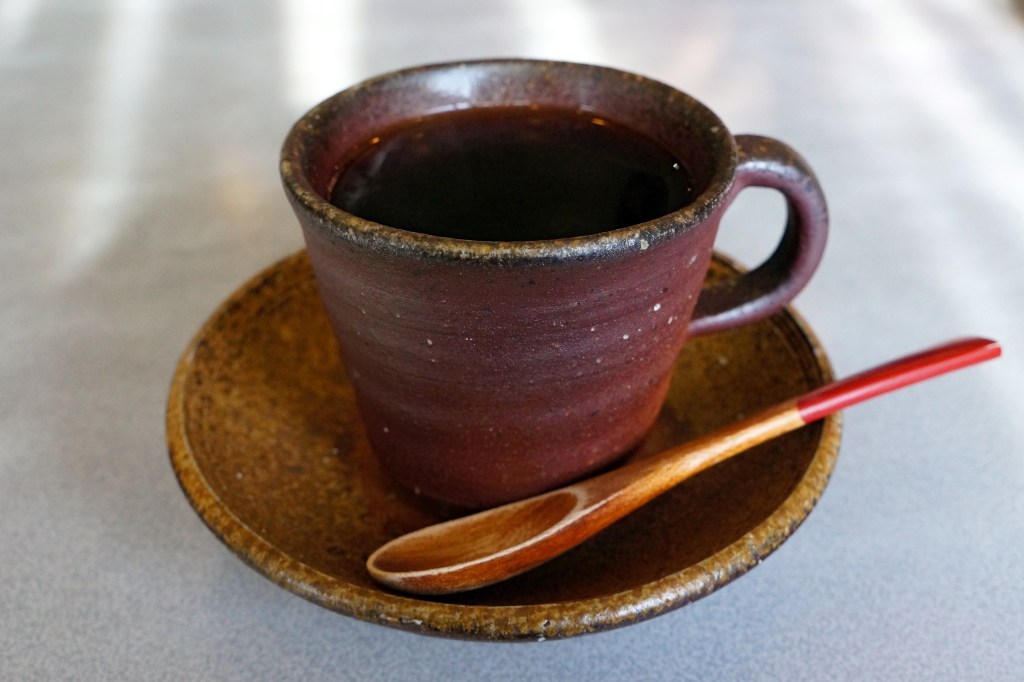
- Bizen ware is unusual in ceramics because nothing is added: no glaze, no painting. Colour and texture come from the clay, the ash and the fire over a firing of around two weeks, which makes the pieces easy to appreciate even if you know nothing about pottery.
- Prices range from a few hundred yen for a small cup from a shared kiln to museum-grade pieces, so the town works equally well as a cheap half-day and as a place to buy something serious.
- Because the sites cluster within about fifteen minutes on foot from one small station, the day has almost no transit overhead. It suits travellers based in Okayama, Kurashiki or Himeji.
- The town is not a theme park. Workshops still fire and sell here, the side streets are ordinary, and on a weekday you may be the only visitor on the street.
Top places and highlights
Bizen City Museum of Art (the former Bizen Pottery Museum)
This is the right first stop. The building reopened in July 2025 as the Bizen City Museum of Art, one minute from Imbe station, replacing the older pottery museum, so older guidebooks and maps still use the old name. The collection moves from old Bizen pieces made for tea ceremony through to contemporary ceramics, and it puts the town’s craft in a context you will not get from shop shelves. The permanent displays are on the paid second floor; the ground floor exhibition room and the history room are free, which makes a cheap first look possible. Adult admission is 500 yen, students 300 yen and junior high and under free, with special exhibitions charged separately. Hours are 9:00 to 17:00 with last entry at 16:30, closed Mondays except public holidays, and closed 29 December to 3 January. There is a shop and a cafe, and a tea room on the top floor with a view over the remains of the great South Kiln.
Imbe Minami Ogama, the great climbing kiln site
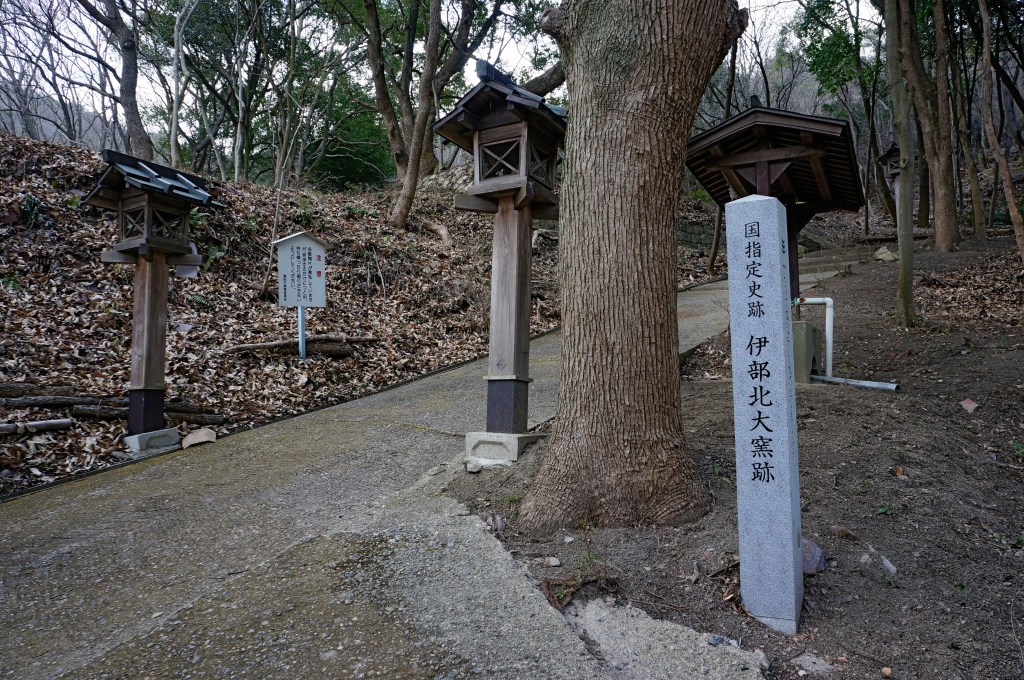
About five minutes on foot from the station, at the foot of the low hill behind the town, three communal climbing kilns were cut into the slope and fired from the Muromachi period until the end of the Edo period. The east kiln runs roughly fifty-four metres, and the scale is the point: this was not a workshop but an industrial facility shared by the potters of the district, fired for days at a time by a crew. You can walk along the kiln mouths and read the brickwork. Nothing here is reconstructed or roped off into a showpiece, which is what makes it convincing. A second site, Imbe Kita Ogama, lies about fifteen minutes north on foot. There is no admission charge and no set opening time, so it fits anywhere in the day, but wear shoes that cope with uneven ground and do not climb on the kiln walls.
The kiln street: red brick chimneys and working workshops
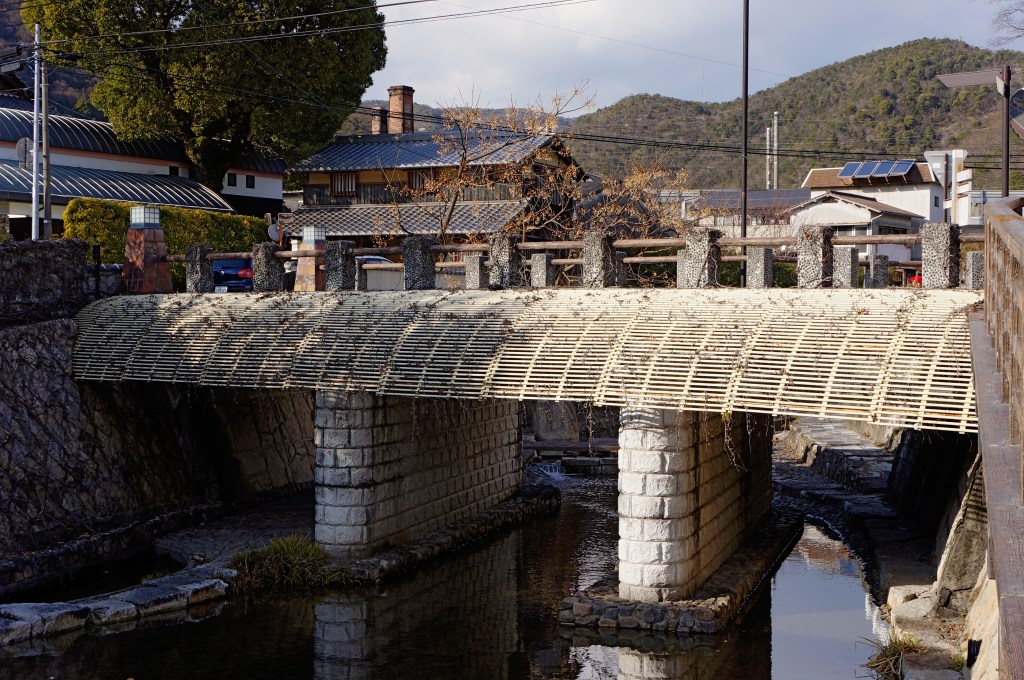
The main street running south from the station is the spine of the town, lined with galleries, kiln workshops and long-established shops, with red brick chimneys rising behind the roofs. The chimney of the historic Tokaido workshop is the most photographed, and the whole street is a working district rather than a shopping arcade, which means opening days vary from shop to shop. Several workshops let you walk in and look at the climbing kiln and the workroom at the back of the shop; one kiln about five minutes from the station keeps its kiln and workshop open to visitors and also runs a clay-throwing session, limited to one group a day with booking required a few days ahead. Prices and schedules differ by workshop, so ask at the counter or check the Bizen tourist site rather than assuming a standard fee. Carry cash, as many small galleries do not take cards.
Bizen ware traditional industry hall, inside the station
The hall occupies the station building itself, its exterior shaped like a climbing kiln, and holds the tourist information counter on the ground floor and a display and sales floor run by the potters’ association upstairs. It is the practical base: maps, local advice, and a concentration of work by member potters in one room, which is the quickest way to understand the range of styles and prices before walking the street. Information counter hours are 9:30 to 17:00 and the sales floor 10:00 to 17:00, closed Tuesdays except public holidays and over New Year. Clay sessions are offered at weekends and on public holidays with an instructor, by telephone reservation, lasting about an hour. Be aware that from 1 April 2026 the sales area was moved temporarily to the Furusato exchange centre at the station’s south exit while the building is renovated, so confirm the current location before you plan to buy.
Tenmangu shrine, where the shrine itself is Bizen ware
Seven minutes from the station, this small shrine is the most unusual sight in town: the paving, the guardian lion-dogs, the roof tiles, the votive plaques and the ceramic panels set into the boundary wall are all made of Bizen ware, many carrying the seals of individual potters. The shrine is said to have been founded in 1411 and enshrines Sugawara no Michizane alongside its main deity, which links it to the study and scholarship theme that runs through this part of Okayama. It takes fifteen or twenty minutes to look properly and costs nothing. Because it sits slightly off the main street it is usually quiet even when the galleries are busy, and the low walls with pottery panels make it one of the better places in town for close-up photographs of the material itself.
Shizutani School, the 1670 school for commoners
Fifteen minutes by car or a short bus ride from Yoshinaga station, Shizutani School is the reason to give Bizen a full day. Founded in 1670 by the Okayama domain lord Ikeda Mitsumasa, it is described as Japan’s oldest public school for commoners, and the main hall is a National Treasure, roofed in Bizen tiles that have survived more than three centuries. The site is a National Special Historic Site and part of the first Japanese Heritage designation covering early modern educational heritage. Admission including the museum is 450 yen for adults, 100 yen for school pupils and 230 yen for those 65 and over, open 9:00 to 17:00 and closed only 29 to 31 December, with free parking for around five hundred cars. Take the bus from JR Yoshinaga station, about ten minutes, or a taxi from Bizen-Katakami on the Ako line, about fifteen minutes. English audio guidance is available.
Bizen ware festival in October
If your dates are flexible, the town’s biggest event is the Bizen ware festival, held every year on the third Sunday of October and the Saturday before it, around the station and along the main street. Member workshops and invited potters set up stalls and sell at a standard twenty percent discount, which is when local buyers do their year’s shopping, and around a hundred thousand people pass through over the two days. It runs 9:00 to 17:00 on the Saturday and finishes at 16:00 on the Sunday. Expect the street to be packed, extra trains to run, and parking to fill early; the organisers ask visitors to come by train. A separate spring edition was held for the first time in 2026 in early May, so check whether it continues. Outside festival dates the same shops are calmer and you can talk to the potters.
Hinase, the fishing side of Bizen
Bizen city stretches to the coast at Hinase, about thirty minutes by car from Imbe, and the food there is a different story from the pottery. The local speciality is kaki-oko, an oyster version of okonomiyaki made with the small oysters landed in these waters, cooked on the griddle in front of you and eaten with a spatula straight from the hotplate. Winter is the oyster season and the busiest time. There is a fish market and a roadside seafood station where you can buy what came in that morning, and the islands offshore are reached by a bridge and are known for mikan orange picking in autumn. If you are driving between Okayama and Imbe, adding the coast turns a half-day into a full loop and gives you a reason to be hungry by lunchtime.
Food and drink
- Kaki-oko, the oyster okonomiyaki of Hinase, is the local dish worth planning around. It is made with small oysters from the surrounding waters and is at its best in winter.
- Seafood from the Hinase fish market and the roadside stations is sold fresh and simply; buying and grilling or eating at the attached counters is the cheapest good meal near the coast.
- Around Imbe station the eating options are modest: cafes inside and near the museum, a few noodle shops and bakeries, and restaurants that serve meals in Bizen ware, which is a good reason to sit down rather than eat on the move.
- Bizen ware is said to suit food because the unglazed clay absorbs and releases moisture slowly, keeping dishes from drying out and drinks cooler. Restaurants in town use the argument freely, and it is a pleasant one to test.
- Mikan oranges from the islands off Hinase are in season from autumn into early winter, and picking farms operate on some of the islands.
- Carry cash. Several galleries, kilns and small restaurants in Imbe do not accept cards, and the station area has limited late-opening food.
Getting there and around
- By train: JR Ako line from Okayama station to Imbe, about forty minutes, roughly 590 yen, direct with no change. Trains are less frequent than on the Sanyo main line, so check the return times before you leave the station.
- From Himeji or Ako, the same line runs west along the coast; the journey is longer but the route passes the sea at Hinase.
- By car: about fifteen minutes from Bizen interchange or Wake interchange on the Sanyo Expressway. The traditional industry hall has parking for around twenty-eight cars and eight buses.
- Imbe station is unstaffed, with ticket machines only, so have a ticket or enough IC card balance before boarding.
- For Shizutani School, use JR Yoshinaga station on the Sanyo main line and take the municipal bus for about ten minutes, or a taxi for about ten minutes. Buses are infrequent, at roughly five to seven a day.
- A car makes the coast at Hinase and Shizutani School in one day much easier; without one, choose either the pottery town or the school rather than both.
Where to stay
- Imbe has very little accommodation, mainly small guesthouses and business hotels, so most visitors stay in Okayama or Kurashiki and come out for the day.
- Staying in Okayama gives you the widest choice for the evening and puts the Ako line within walking distance of the hotel district.
- Kurashiki suits travellers who want the canal district in the evening; the train to Imbe requires a change at Okayama.
- If you want the coast as well, a night in Hinase or near Bizen interchange turns the pottery and the seafood into a relaxed two-day trip instead of a rushed one.
Best time to visit
- Spring is the most comfortable season for walking the kiln street, with fresh green on the hills behind the town and the school’s plum and cherry trees opening in March and early April.
- Summer is hot and humid in this part of Okayama; the workshops are shaded but the walk between kiln sites is exposed, so start early.
- Autumn is the best time to visit, with mild air and the festival in mid-October. The ginkgo at Shizutani School turns in late October and the maples follow in November, when the site is lit in the evening for about a week.
- Winter is quiet and cold, with few visitors and the best oysters at Hinase. Some small galleries close for New Year and a few shut on additional days in the coldest weeks.
Practical tips
- Start at the museum next to the station to understand what you are looking at, then walk the street. Buying first and learning later is the common mistake.
- Check the day of the week: the museum closes Mondays, the industry hall closes Tuesdays, and many individual galleries close one weekday of their own choosing.
- The sales floor of the traditional industry hall is temporarily relocated to the station’s south exit while the building is renovated, so confirm before you set out to buy.
- Book any clay session in advance. Weekend sessions at the hall are by telephone reservation, and workshop sessions typically need a few days’ notice.
- Bring cash and a bag with some padding if you plan to buy. Shops can usually arrange shipping for large pieces, but ask before you fall for something two feet wide.
- Do not expect to climb on the kiln remains. They are archaeological structures in an open hillside, and the ground is uneven.
- If you are combining the town with Shizutani School by public transport, plan the bus times first; the school’s buses are the fixed point that everything else has to fit around.
- Confirm current opening days, admission and session availability on the official Bizen tourism or city sites before travelling, since renovation work and seasonal closures change the details.
Suggested day-trip outline
- 09:30 Arrive at Imbe station and go straight into the traditional industry hall for a map and a look at the sales floor.
- 10:00 Bizen City Museum of Art: the paid floor for context, then the free ground floor displays and the shop.
- 11:15 Walk south to the Imbe Minami Ogama kiln site, then back through the kiln street, stopping at any workshop that is open.
- 12:30 Lunch in town, ideally somewhere that serves the meal in Bizen ware, then a slow browse of the galleries along the main street.
- 14:30 Either join a booked clay session, walk north to Tenmangu shrine and the Kita Ogama site, or drive to Shizutani School for the late afternoon.
Before you go
Timetables, fares, admission fees, and seasonal access rules can change. Check the official tourism and transport sites linked below for the latest information before you travel.
Explore More of Japan
Published guides that pair with this one:
- Kurashiki Travel Guide: Bikan Canal District
- Okayama Korakuen Travel Guide: A Garden Beside the Castle
- Onomichi Travel Guide: Temple Walks and the Shimanami Kaido Gateway
- Okunoshima Travel Guide: The Rabbit Island with a Difficult History
- Hagi Travel Guide: A Castle Town That Shaped Modern Japan
Browse every Chugoku guide on this site for the rest of the region.
Sources
- bizen-moa.jp (checked 2026-11-05)
- okayama-kanko.jp (checked 2026-11-05)
- okayama-kanko.jp (checked 2026-11-05)
- okayama-kanko.jp (checked 2026-11-05)
- okayama-kanko.jp (checked 2026-11-05)
- shizutani.jp (checked 2026-11-05)
- okayama-kanko.jp (checked 2026-11-05)
- bizen-kanko.com (checked 2026-11-05)


Leave a Reply