Visiting the Himeyuri Peace Museum in Itoman? This English guide covers the exhibits, the tower, admission and access.
Operational details such as opening hours, admission fees, and train times can change. Prefer official pages and reconfirm before you travel (sources checked on 04 November 2026).
Why visit
- The Himeyuri Peace Museum is the memorial to the Himeyuri student nurses, and it is the most direct way for a visitor to understand what happened to civilians in the Battle of Okinawa. It is not a general war museum and it does not try to be: it tells one story, of 222 schoolgirls and 18 teachers, with their belongings, their photographs and the testimony of the few who survived.
- The story is specific and it is worth knowing before you go in. In late March 1945 the girls of the Okinawa Normal School women’s division and the Okinawa First Higher Girls’ School were mobilised as nursing staff for the Okinawa Army Hospital. They were 15 to 19 years old. When the American advance forced the hospital south, they moved with it, and on 18 June 1945 they were suddenly ordered to disband. In the days that followed, more than 100 of them died, roughly 80 percent of the students who were killed.
- The museum opened in 1989 on the site of the Ihara Third Surgery Cave, one of the last places the students were sent, and the cenotaph known as Himeyuri no To stands above it. That geography matters: the museum is not a national institution in a capital but a local memorial built by survivors and bereaved families at the place where the girls died.
- The exhibits are the reason it works. The students’ belongings, letters, diaries and photographs are shown with the testimony of survivors on video, and there is a reconstruction of the army hospital cave at Minamihabara and of the interior of the Ihara cave. The girls’ faces are at the centre of it, and the museum keeps them as individuals rather than as a symbol.
- It is a place to visit with time and quiet rather than as one stop on a checklist. The route through the exhibits is not long, but the material is heavy, and most visitors need longer than the 40 minutes that the city suggests. Going slowly and then sitting outside at the tower is the right way to do it.
- The location makes it practical to combine with the rest of southern Okinawa. The Peace Memorial Park is ten minutes away by car, the Okinawa World caves twenty minutes, and the glass workshops of the coast three minutes, so the museum can be the centre of a day in Itoman rather than a detour.
- It is also one of the few Okinawan sites where the island’s own war is explained from the islanders’ side, in English as well as Japanese. For travellers who have seen the Peace Memorial Park and want the civilian story rather than the strategic one, this is the next place to go.
Top places and highlights
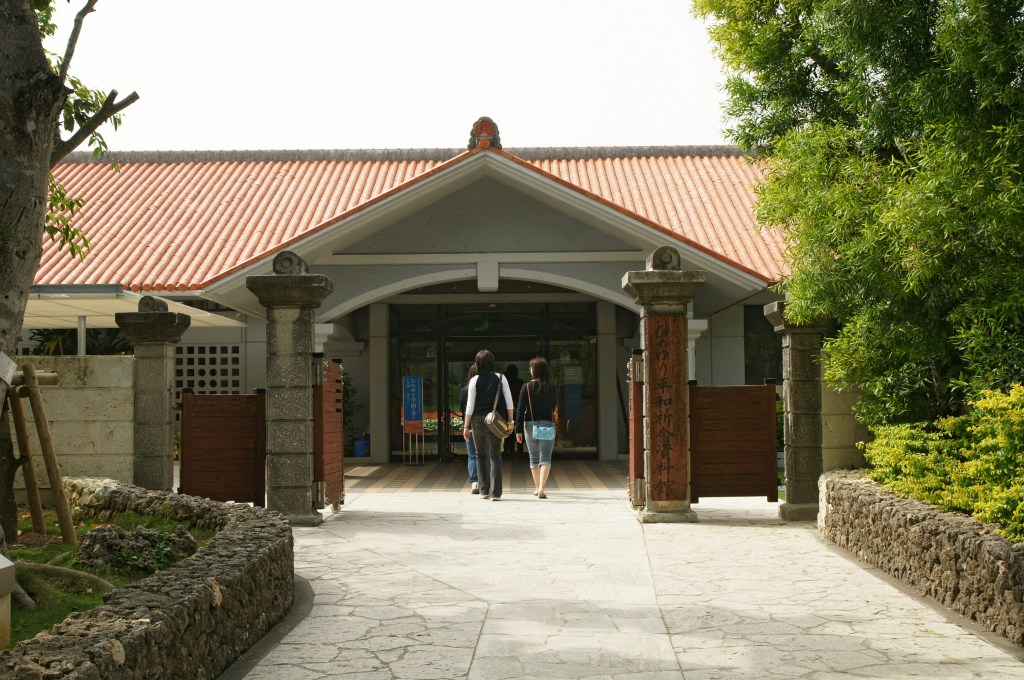
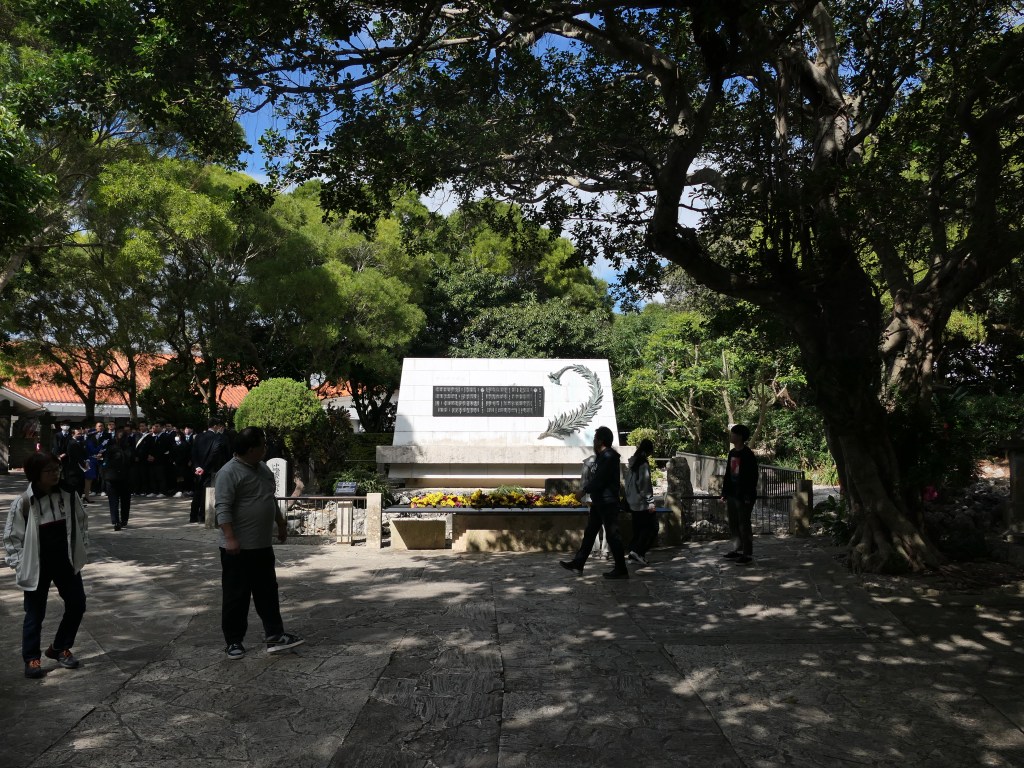
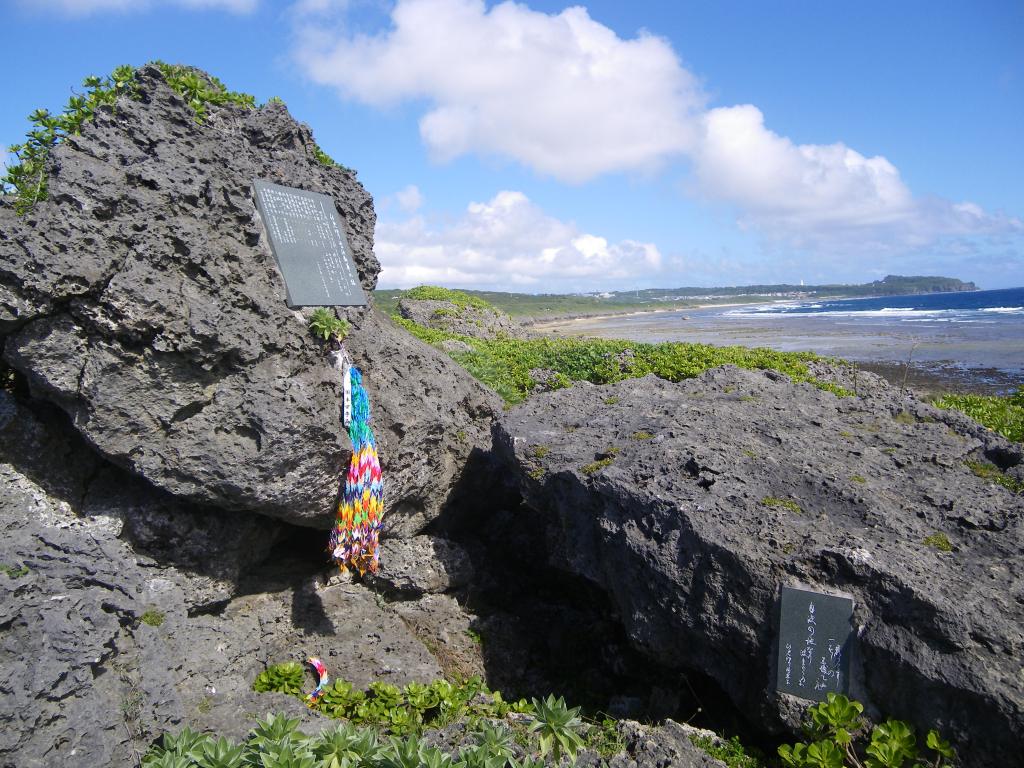
The Himeyuri no To cenotaph
The tower stands on the ground above the Ihara Third Surgery Cave, one of the last places the students were sent, and it can be visited even when the museum is closed. It is a plain stone monument with the names and the school’s memory, and it is where the school groups and the bereaved families come. Visit it before or after the exhibits rather than skipping it; it is the reason the museum is here, and the ground it stands on is part of the history.
The students’ belongings and photographs
The first part of the museum is the girls themselves: class photographs, school uniforms, letters, diaries and the small personal objects that survived. Displaying them as a group of named individuals rather than as victims is the museum’s method, and it is why the rooms are quiet. Look at the ages on the panels, because most were between 15 and 19, and the ordinary school life in the photographs is the context for what follows.
The testimony videos
The survivors’ testimony is the centre of the museum, recorded over decades and shown in short segments through the exhibits. The women describe the mobilisation, the hospital caves, the retreat south and the order to disband, in their own words and without narration smoothing it over. The videos are subtitled, and the English option makes the museum genuinely usable for visitors who do not read Japanese. Plan to sit through at least a few of them.
The hospital cave reconstructions
The museum reconstructs the army hospital cave at Minamihabara and the interior of the Ihara Third Surgery Cave, where the students worked in the dark, under fire, with almost no supplies. The reconstructions are life-size and deliberately cramped, and they are the part that makes the testimony physical: the wounded lying on the floor, the instruments, the narrow tunnels. It is the most affecting section, and it is not suitable for very young children.
The order to disband
The museum explains the order of 18 June 1945 clearly, because it is the hinge of the story: the students were told to disperse and fend for themselves, and the days that followed killed most of those who died. Understanding that order changes how the rest of the site reads, and the exhibit does not soften it. It is the part of the history that visitors most often do not know before they arrive.
The view from the site
The museum sits on a low hill in Itoman with the sea and the southern coast in the distance, and the grounds are planted and quiet. Standing outside after the exhibits, with the tower behind you, is part of the visit rather than a break from it. The site is also a working memorial with ceremonies through the year, so the atmosphere changes with the season and the anniversary.
The southern Okinawa sites nearby
The museum is at the centre of the southern battle sites: the Peace Memorial Park with the Cornerstone of Peace is about ten minutes by car, the Okinawa World caves about twenty, and the Ryukyu glass workshops three minutes. The combination makes a coherent day rather than a set of unrelated stops, and the sequence from the museum to the peace park is the one most visitors take.
The museum shop and the books
The shop sells the museum’s own publications, the survivors’ accounts and the school histories, in Japanese and some in English, and it is the place to buy the fuller version of the story. It is a small shop rather than a souvenir hall, and the books are the reason to stop: the museum’s permanent exhibit is an introduction, and the printed testimony goes much further.
Food and drink
- The museum has no restaurant, and the nearest food is in Itoman town or at the roadside stops on the way to the Peace Memorial Park. Plan lunch before or after rather than in the middle of the visit.
- Itoman is a fishing town, and the local food follows the sea: the fish of the southern coast, the sea grapes and the Okinawan dishes of the town’s small restaurants. The town centre is a short drive away.
- Okinawa soba is the everyday option, and the shops around the peace park and the coast serve it with the usual toppings. It is the practical lunch for a day of southern sites.
- The souvenir shops near the tower and the peace park sell the standard Okinawan sweets and the local brown sugar, and the glass workshops sell their own work rather than food.
- Carry water. The site is outdoors between the buildings, the southern sun is strong, and the vending machines are the only thing on site.
Getting there and around
- By car, the museum is about 30 to 40 minutes from Naha city and Naha Airport, and about 20 minutes from the Tomigusuku or Nakachi interchange on the Naha airport expressway. Follow the road signs for Himeyuri no To rather than the navigation system, which sometimes routes to the farm track behind the museum.
- There is no dedicated car park. The museum asks visitors to use the car parks of the souvenir shops nearby, and the walk from them is short. Do not park on the narrow lanes around the site.
- By bus, take route 89 from the Naha bus terminal or from Akamine station on the Yui Rail to the Itoman bus terminal, about 30 minutes, then change to route 82, 107 or 108 for the Himeyuri no To stop, about 15 to 25 minutes. The whole trip from Naha is 60 to 90 minutes with the change.
- For the return, the stop depends on the bus: 82 and 107 pick up in front of the Himeyuri soba shop, and 108 in front of the Deigo Plus shop. Check which one you need before you leave the museum.
- The Peace Memorial Park is about 10 minutes by car or 15 minutes by bus on route 82, and the Okinawa World caves are about 20 minutes by car. The museum is the natural first stop of a southern Okinawa day.
Where to stay
- The nearest hotels are in Naha, which has the widest range and the airport connections, and in the resort hotels along the southern coast. The museum is a half-day trip from either.
- Itoman town has small business hotels and guesthouses, which put you close to the site and the peace park for an early start. The town is quiet in the evening.
- Staying in the south is the way to visit the museum and the peace park in the morning, when the groups are fewer and the light is softer, and to spend the afternoon on the coast.
- The southern coast resorts are the family option, with the beaches and the pools, and the museum is a short drive from them.
Best time to visit
- Spring is the season of the school trips, and the museum is busy with Japanese school groups in May and June. The site is also at its best weather-wise, before the rainy season.
- The rainy season runs from around May to June, and the museum is a good wet-weather option because the exhibits are indoors. The grounds are exposed, so bring an umbrella for the walk to the tower.
- Summer is hot and bright, with the strongest sun of the year and the anniversary events in June. The air conditioning in the museum makes it a reasonable stop in the middle of a hot day, but the site outside is punishing at midday.
- Autumn and winter are the quietest and the most comfortable seasons, with clear light on the coast and fewer groups. The anniversary dates in June are the busiest and the most solemn, and they are worth planning around if you want to attend a ceremony.
Practical tips
- Allow more than 40 minutes. The city suggests 40 minutes, but the testimony videos and the cave reconstructions take longer, and the museum rewards a slow visit of 60 to 90 minutes.
- Read about the Himeyuri students before you arrive. Knowing who they were and what the order to disband meant makes the exhibits legible, and the museum’s own leaflet is a good short introduction.
- Use the English subtitles on the testimony videos. The museum is genuinely accessible to non-Japanese speakers, and the videos are the heart of the exhibit.
- Do not treat it as a family attraction. The cave reconstructions and the testimony are graphic, and the museum is not suitable for very young children. Older children who have studied the battle will get much more from it.
- Park at the souvenir shop car parks as the museum asks, and follow the Himeyuri no To road signs rather than the navigation. The site has no dedicated parking and the lanes are narrow.
- Check the day’s status in a typhoon. The museum closes when the bus services stop, and it reopens after the operators confirm the roads and the building are safe.
- Combine it with the Peace Memorial Park. The two sites tell different halves of the same history, and doing them in one day is the reason to come south.
Suggested day-trip outline
- The half day: the museum in the morning, the tower and the grounds, lunch in Itoman, and the Peace Memorial Park in the afternoon. It is the core of the southern Okinawa visit.
- The full day: the museum first, then the Peace Memorial Park and the Cornerstone of Peace, then the Okinawa World caves or the glass workshops, and the coast road back to Naha.
- The school-trip season: an early start to be at the museum before the buses, the tower before the groups, and the peace park after lunch. May and June need the timing.
- The anniversary visit: the memorial ceremonies in June, the tower and the museum on the same day, and the peace park in the late afternoon. Confirm the year’s ceremony schedule before you plan around it.
- The southern coast day: the museum, the peace park, and the beaches and the glass workshops of the coast, with a night in Itoman or Naha. The site is the historical centre of the day.
Before you go
Timetables, fares, admission fees, and seasonal access rules can change. Check the official tourism and transport sites linked below for the latest information before you travel.
Explore More of Japan
Published guides that pair with this one:
- Okinawa Peace Memorial Park Guide: Mabuni and the Battle Sites
- Shuri Castle Guide: The Heart of the Ryukyu Kingdom
- Okinawa Travel Guide: Discover Japan’s Tropical Paradise
- Naha and Kokusai Street Guide: Markets, Food and the Old Capital
- Sefa Utaki Travel Guide: The Ryukyu Sacred Grove in Nanjo
- Okinawa Prefectural Museum and Art Museum Travel Guide: Highlights, Access, and Planning
Browse every Okinawa guide on this site for the rest of the region.
Sources
- himeyuri.or.jp — Visitor information (checked 2026-11-04)
- himeyuri.or.jp (checked 2026-11-04)
- himeyuri.or.jp (checked 2026-11-04)
- city.itoman.lg.jp (checked 2026-11-04)


Leave a Reply