A practical English guide to Itoman in Okinawa: the peace memorial park, the fishing port, the coast and access from Naha.
Operational details such as opening hours, admission fees, and train times can change. Prefer official pages and reconfirm before you travel (sources checked on 05 November 2026).
Why visit
- Itoman is a city at the southern tip of Okinawa’s main island, and it has two faces that sit side by side. It is a working fishing port, with one of the largest catches on the island, a market and a harbour full of boats. And it is the site of the peace memorial park, built on the ground where the Battle of Okinawa ended in 1945, with the Cornerstone of Peace, a memorial hall and a museum.
- The peace memorial park is the reason most visitors come. The Cornerstone of Peace is a series of concentric arcs of black granite, inscribed with the names of everyone who died in the battle, Okinawan, Japanese and American, and the effect of the names, row after row, is overwhelming. The memorial hall and the museum explain the battle, the civilian suffering and the aftermath, and they are among the most important museums in Japan.
- The fishing port is the other side of the city, and it is a reminder that Itoman is a living place rather than a memorial. The market, the boats and the restaurants serve the catch of the day, and the harbour is a good place to walk in the late afternoon. The city also has a long tradition of shark fishing and of the Okinawan folk religion, with the women who call the sharks and the shrines along the coast.
- Itoman is an hour from Naha by bus or car, and it makes a full day with the peace park and the port. It is a place that asks for time and attention rather than a quick stop, and it is one of the most meaningful visits on the island.
Top places and highlights
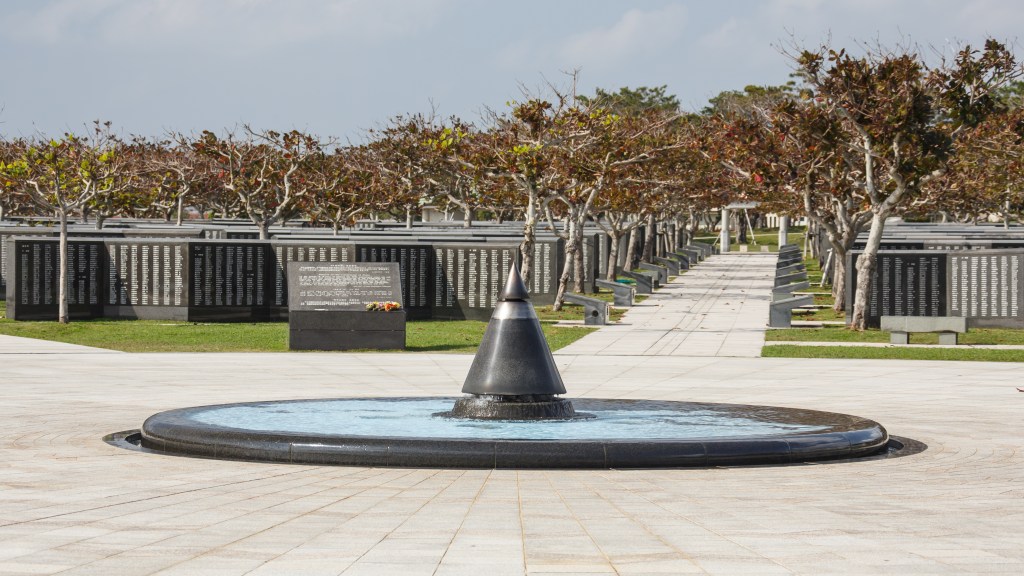
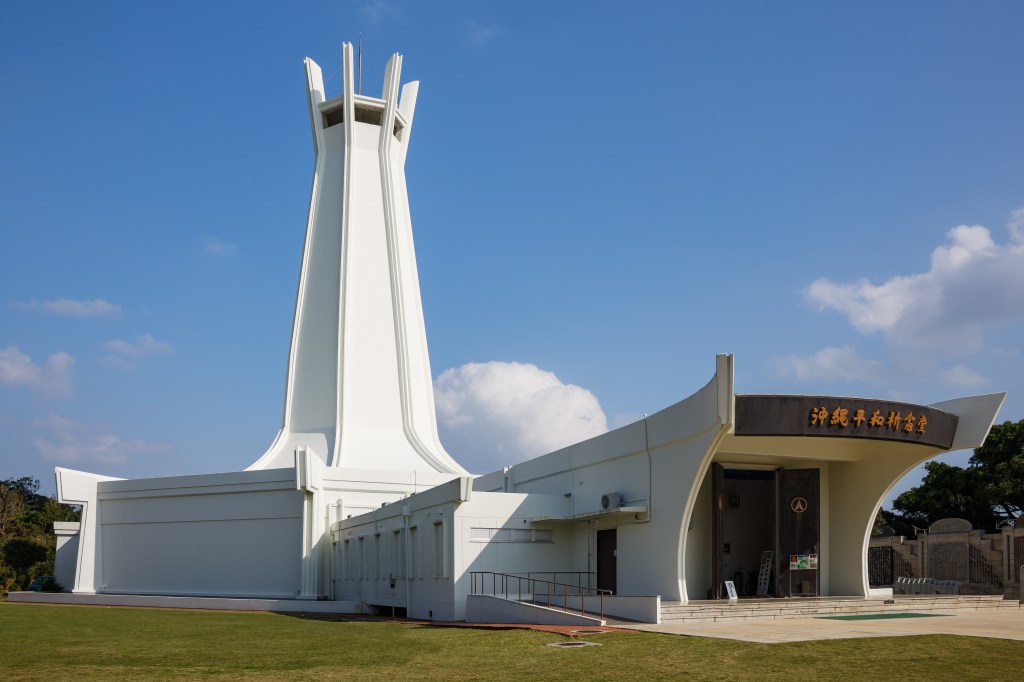
The Cornerstone of Peace
The monument is a series of curved walls of black granite, arranged in arcs on a hill above the sea, inscribed with the names of the dead of the Battle of Okinawa, regardless of nationality. The names are grouped by prefecture and by country, and the rows continue across the walls. Walking along the arcs, with the sea below and the names at eye level, is the most powerful experience in the park. It is free and open at all hours.
The peace memorial museum
The museum explains the Battle of Okinawa, the civilian experience, the mobilisation of schoolchildren and the aftermath of the war, with photographs, documents, personal effects and testimony. It is direct and unsentimental, and it does not avoid the difficult parts. Allow an hour or more, and go before the monument so that the names have context.
The peace memorial hall
The hall is a quiet, dark space with a wall of names and a single light, and it is designed for reflection rather than information. It holds the records of the dead and a small exhibition, and the atmosphere is calm and solemn. Visitors sit on the benches or stand at the wall, and the silence is part of the design. It is a short visit, and it complements the monument and the museum, and it is the place to end the day.
The cliffs and the coast
The park is on a plateau above the sea, with cliffs and a view along the southern coast, and the paths run between the monuments and the edge. The coast below is rocky and the sea is deep blue, and the contrast between the beauty of the place and the history is part of the experience. Walk the paths and look at the water.
The fishing port
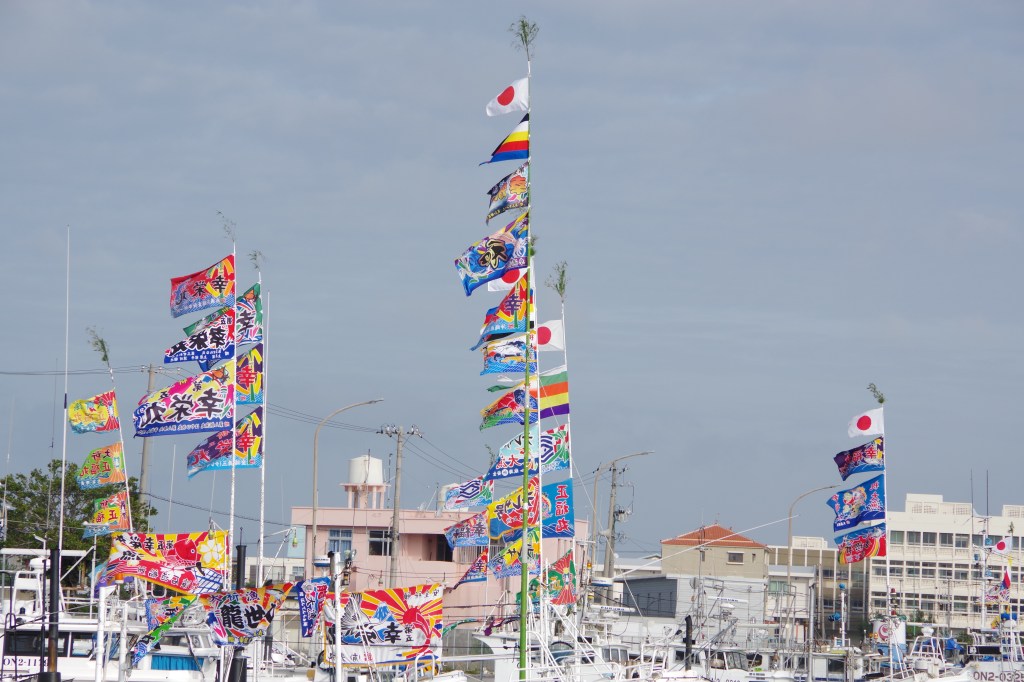
Itoman’s port is one of the busiest on the island, with boats unloading tuna, bonito and the local catch, and the market and the restaurants around it serve the fish fresh. The harbour is a working place, with ice houses, nets and the smell of the sea, and it is a good counterpoint to the memorial. Go in the morning for the market.
The local culture
Itoman has a strong tradition of Okinawan folk religion, including the shark-calling rituals that were performed by the women of the port, and the shrines and the old houses of the city reflect it. The city museum has displays on the fishing culture and the local festivals, and the streets around the port have the old shopfronts and the shrines.
The food of the south
The seafood is the local speciality, with tuna, bonito and the fish of the southern coast, and the restaurants around the port serve it as sashimi, grilled or in bowls. The Okinawan staples, soba, champuru and the purple sweet potato sweets, are everywhere, and the market sells the local produce. The port restaurants are cheap and informal, and the fish is landed a few metres away. It is the honest cooking of a working town.
Food and drink
- The tuna and bonito from the port are the local speciality, served as sashimi, grilled or in bowls, and the restaurants around the harbour serve them fresh and cheap.
- Okinawa soba, with pork and bonito broth, is the everyday lunch, and the shops in the city serve it with a piece of braised pork.
- The purple sweet potato sweets, the tarts and the ice cream are sold at the roadside stands and the market, and they are the local snack.
- The market near the port sells the fish, the tropical fruit and the vegetables, and it is a good place for a cheap lunch or a picnic.
- The city has a few cafes and restaurants away from the port, and the choice is limited outside the centre. The main island has the wider range, an hour away.
Getting there and around
- Itoman is at the southern tip of the main island, about an hour by bus or car from Naha, and the roads are wide and signed.
- The peace memorial park is on the coast south of the city, reached by bus from the Itoman bus terminal or by car, with a large car park.
- The fishing port is in the city centre, a short walk from the bus terminal, and the market and the restaurants are around it.
- A rental car is the easiest way to see the park and the port in one day, and the drive along the southern coast is scenic.
- From Naha airport, the drive takes about forty minutes, and the bus takes about an hour and a half with a change.
Where to stay
- The hotels and guesthouses around Itoman are simple and cheap, and they suit an early start at the peace park.
- Naha is an hour away and has the full range of accommodation, and most visitors come as a day trip.
- The southern coast has a few resorts and guesthouses with sea views, and they are quiet and close to the park.
- The traditional Okinawan houses rented as guesthouses in the city are a good option for a quiet stay, with tatami rooms and walled gardens.
Best time to visit
- Spring, from March to May, is warm and clear, with calm seas and few visitors. It is the best season for the park and the port.
- Summer is hot and humid, with strong sun and the typhoon season from August. The park is exposed and the heat is severe at midday.
- Autumn, from October to November, is warm and clear, with the typhoons tailing off. It is the second-best season.
- Winter is mild and windy, with grey days and occasional rain. The park is quiet and the museum is a good indoor stop.
- The rainy season runs from mid-May to June, and the typhoon season peaks from August to September. Check the forecast in those months.
Practical tips
- Go to the museum first, then the monument. The context makes the names meaningful.
- Allow at least half a day for the park and the museum. It is not a place to rush.
- Bring water and sun protection. The park is exposed and there is little shade.
- Visit the port in the morning for the market, and the park in the afternoon for the light.
- Dress modestly and keep your voice low at the monument and the hall. It is a place of mourning.
- Combine the park with the Himeyuri museum and the southern coast, and allow a full day.
Suggested day-trip outline
- Morning: bus or car to Itoman, the peace memorial museum first.
- Late morning: the Cornerstone of Peace and the memorial hall, and the cliffs above the sea.
- Lunch: a seafood bowl at the port, or Okinawa soba in the city.
- Afternoon: the fishing port and the market, and the old streets and shrines.
- Late afternoon: the coast road and the sunset over the sea.
- Evening: dinner in Naha, an hour away, or a quiet night in the city.
Before you go
Timetables, fares, admission fees, and seasonal access rules can change. Check the official tourism and transport sites linked below for the latest information before you travel.
Explore More of Japan
Published guides that pair with this one:
- Shuri Castle Guide: The Heart of the Ryukyu Kingdom
- Okinawa Peace Memorial Park Guide: Mabuni and the Battle Sites
- Himeyuri Peace Museum Travel Guide: Okinawa’s Student Nurses
- Cape Manzamo Travel Guide: Elephant Rock, Sunset and the Onna Coast
- Okinawa Prefectural Museum and Art Museum Travel Guide: Highlights, Access, and Planning
Browse every Okinawa guide on this site for the rest of the region.
Sources
- city.itoman.lg.jp (checked 2026-11-05)
- okinawastory.jp (checked 2026-11-05)


Leave a Reply