A practical English guide to Okawachiyama in Saga: the Nabeshima kiln village, its porcelain-stone walls and bridges, the workshops, and access from Imari and Arita.
Operational details such as opening hours, admission fees, and train times can change. Prefer official pages and reconfirm before you travel (sources checked on 05 November 2026).
Why visit
- Okawachiyama is a village in a narrow valley in the hills outside Imari, in western Saga, and for most of the Edo period it was where the Nabeshima domain made its porcelain. The kilns were kept in one place, behind checkpoints, and the techniques were guarded. That secrecy is the origin of the village’s nickname, and it shaped the layout you walk through today.
- The village is small: a single street following a stream, houses and workshops on both sides, and steep wooded hills above. What makes it memorable is the use of porcelain in the fabric of the place. Broken shards, kiln furniture and waste from the kilns were built into walls, bridges and embankments, so the village is physically made of its own industry.
- The kilns still operate at a small scale. Workshops sell Nabeshima ware and the more commercial Imari styles, and several have small displays where you can see the stages of production. It is a working craft village rather than a museum, and the best visits involve looking into a workshop and talking to the people running it.
- Okawachiyama pairs naturally with Arita, the larger porcelain town an hour away, and with the Imari coast. On its own it is a half-day, and a quiet one: the crowds that visit Arita rarely make the detour, which is part of its appeal.
Top places and highlights
The village street
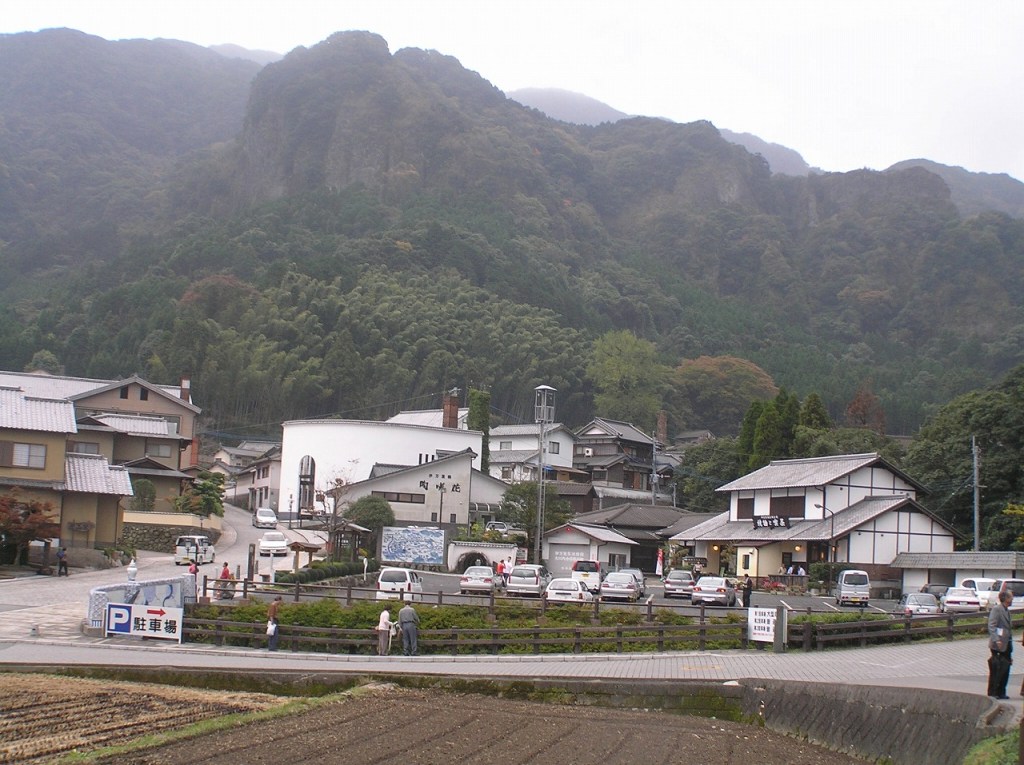
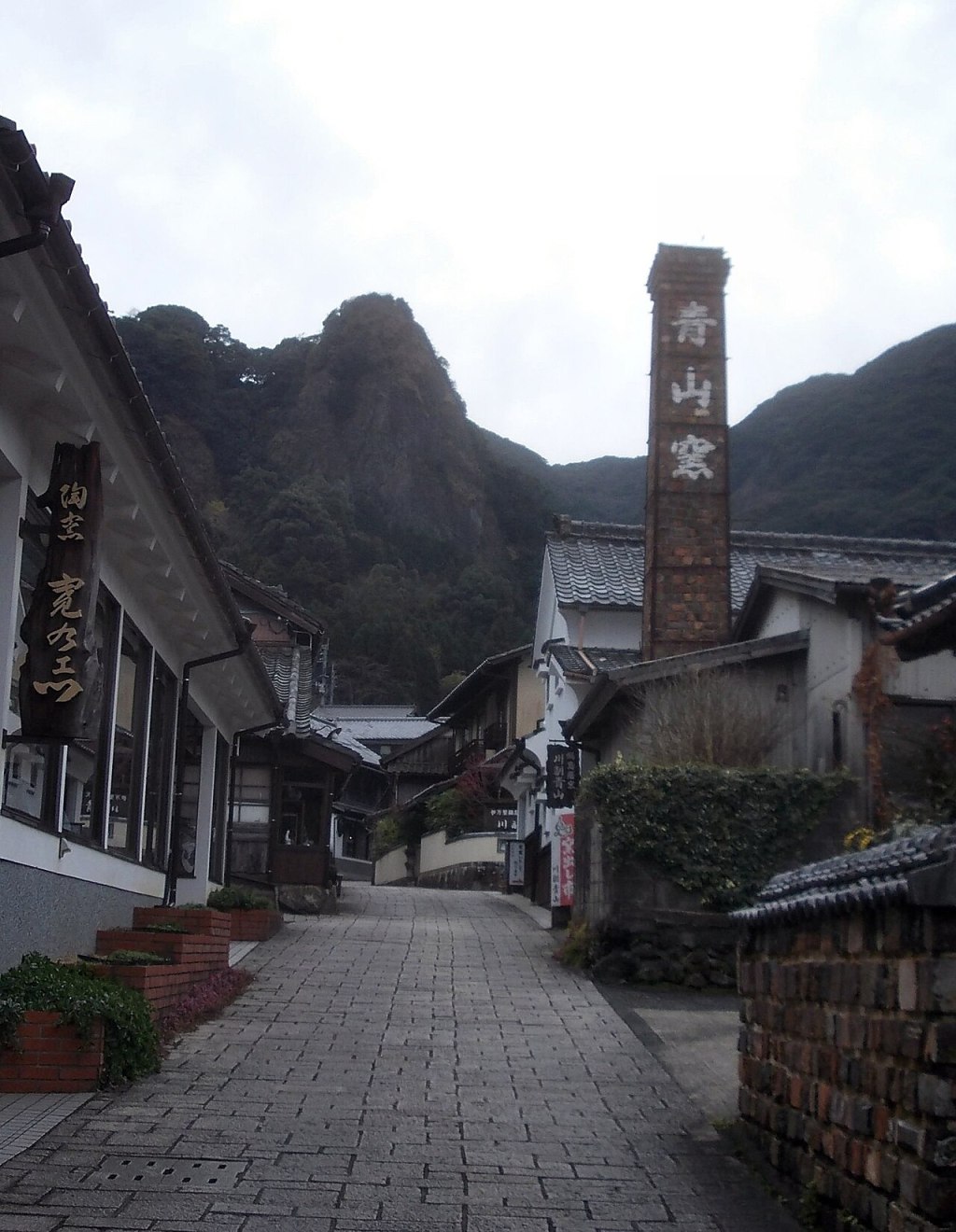
The main street follows the stream up the valley, with workshops, houses and small shops on both banks. It is narrow, and the architecture is a mix of Edo-period merchant houses and later workshops. The scale is intimate: you can walk the whole village in twenty minutes, and the pleasure is in the detail rather than the distance.
The porcelain walls and bridges
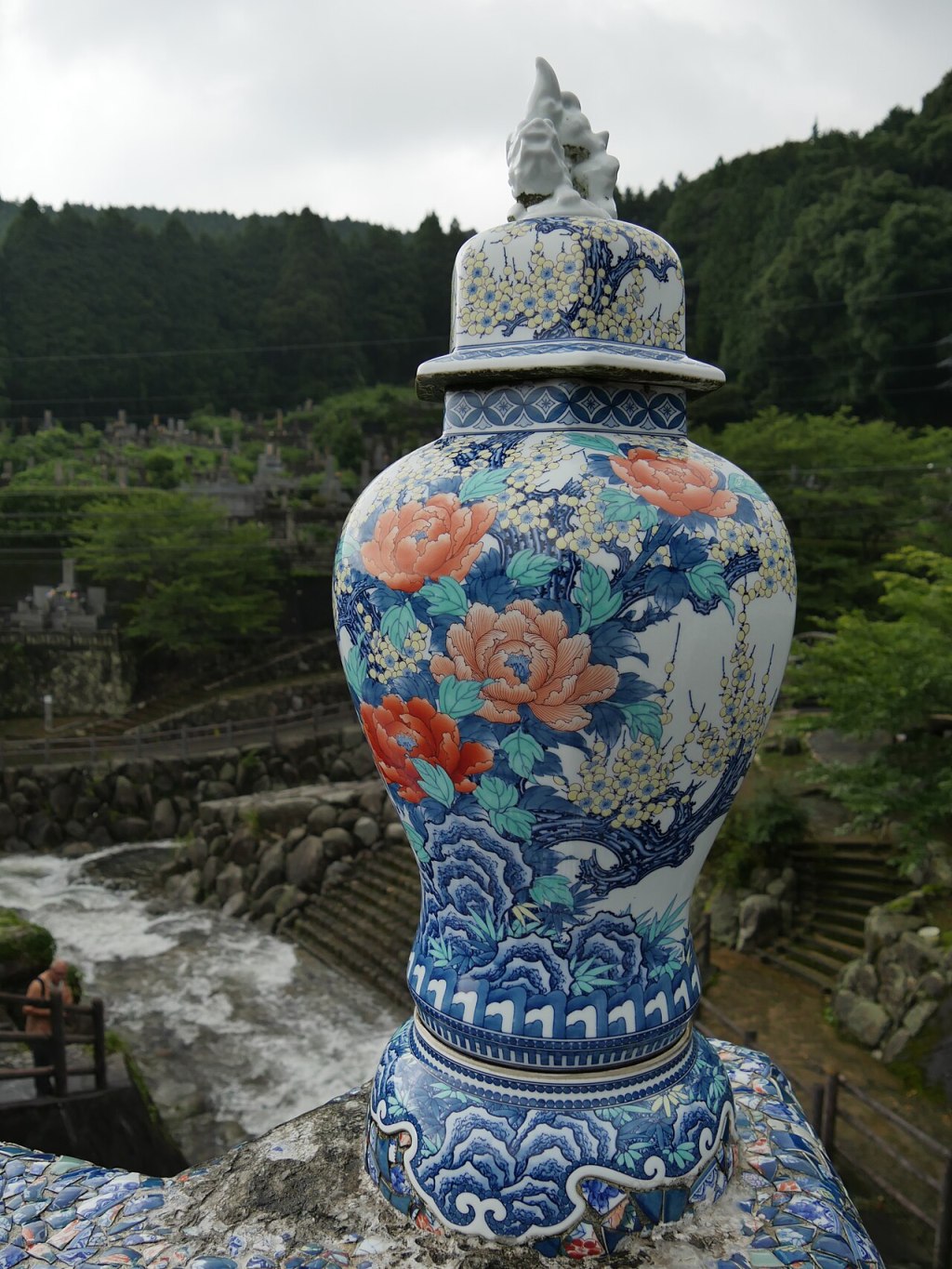
The walls, embankments and bridges are built with porcelain waste: shards, saggar fragments and kiln material set in mortar. Up close the surfaces are a mosaic of white, blue and brown. This is the most distinctive thing about the village, and it is easy to walk past without noticing, so look at the retaining walls along the stream.
The workshops and kilns
Several workshops in the village still fire porcelain, and some welcome visitors to look at the throwing, painting and glazing. The techniques range from the formal Nabeshima style, with its precise underglaze blue and celadon, to the denser Imari palette of red, gold and blue. Opening days vary by workshop, and some are closed outside the tourist season.
The climbing kiln sites
The hillsides above the village hold the remains of the old climbing kilns, the stepped structures that fired the porcelain before modern kilns replaced them. Some are preserved and signposted, and walking up to them gives a view over the roofs and the valley. The climb is short but steep, and the paths are not always well maintained.
The shrine and the valley head
At the top of the village a small shrine marks the end of the street, and the valley closes into forest. It is a quiet place with a view back down over the kiln roofs. The walk up takes a few minutes and is a good way to see the whole layout of the village at once.
The shops
The village shops sell work from the local kilns, from everyday tableware to signed pieces. Prices are lower than in the city galleries, and buying directly is part of the reason to come. Some shops ship, which matters if you are travelling with hand luggage.
The approach road
The road into the valley passes through ordinary Saga countryside: rice fields, small hamlets and wooded hills. Coming by bus or car, the contrast between the plain and the sudden enclosed village is striking, and it explains why the kilns were sited here in the first place.
Food and drink
- There are a few small restaurants and cafes in the village, and they keep limited hours.
- The nearby Imari coast is known for seafood, and the port area has more choice than the village.
- Saga beef and local sake are the regional specialities, best found in Imari or Arita.
- Carry water; the village is small and the shops are mostly selling porcelain rather than food.
- Lunch in Arita or Imari is the practical option if you are visiting outside the peak hours.
Getting there and around
- Okawachiyama is reached by bus from Imari station, and the ride takes about twenty minutes.
- Imari station is on the Matsuura Railway, connected to Arita and to the JR network at Arita.
- From Fukuoka and Saga, the route is by JR to Arita and then the Matsuura line to Imari.
- By car, the village is a short drive from central Imari, with parking at the edge of the village.
- The bus service is infrequent, so check the return times before starting the walk.
Where to stay
- Most visitors stay in Arita, Imari or the wider Saga area, and the village itself has almost no accommodation.
- Imari has business hotels and small inns near the station.
- Arita has a handful of hotels and guesthouses convenient for both porcelain towns.
- Fukuoka and Nagasaki are within reach for a longer base, though the day becomes long.
Best time to visit
- Spring is mild, with green hills and comfortable walking.
- Summer is hot and humid, and the valley holds the heat.
- Autumn is the best season, with clear light on the walls and the kiln sites.
- Winter is cold and quiet, with some workshops on reduced hours and occasional snow on the hills.
Practical tips
- Check which workshops are open before you go; several close on irregular days.
- Bring cash for the small shops, and ask before photographing inside a workshop.
- Porcelain is heavy and fragile: ask about shipping if you buy.
- The bus is infrequent, so plan the village around the timetable.
- Wear shoes for the steep paths up to the kiln sites.
- Combine the village with Arita rather than making a separate trip from Fukuoka.
Suggested day-trip outline
- Morning: JR to Arita, then the Matsuura line to Imari, then the bus.
- Late morning: walk the village street and the porcelain walls.
- Midday: a workshop visit and a look at the kiln sites above the village.
- Lunch: in the village if the cafes are open, otherwise back in Imari.
- Afternoon: the shops, then the bus back to Imari.
- Late afternoon: Arita’s ceramic museums, or the train back towards Fukuoka.
Before you go
Timetables, fares, admission fees, and seasonal access rules can change. Check the official tourism and transport sites linked below for the latest information before you travel.
Explore More of Japan
Published guides that pair with this one:
- Ureshino Onsen Guide: Saga’s Tea Town and Hot Spring Water
- Karatsu Travel Guide: Pottery, a Castle, and the Saga Coast
- Nagasaki Travel Guide: Harbor History, Hills, and Kyushu Flavors
- Chiran Travel Guide: Samurai Gardens and the Peace Museum
- Gunkanjima Travel Guide: Hashima Island and the Coal City
Browse every Kyushu guide on this site for the rest of the region.
Sources
- city.imari.saga.jp (checked 2026-11-05)
- pref.saga.lg.jp (checked 2026-11-05)


Leave a Reply