A practical English guide to Cape Chinen in Nanjo, Okinawa: the clifftop park, the view to Kudaka Island, sunrise, the nearby coast and access from Naha.
Operational details such as opening hours, admission fees, and train times can change. Prefer official pages and reconfirm before you travel (sources checked on 05 November 2026).
Why visit
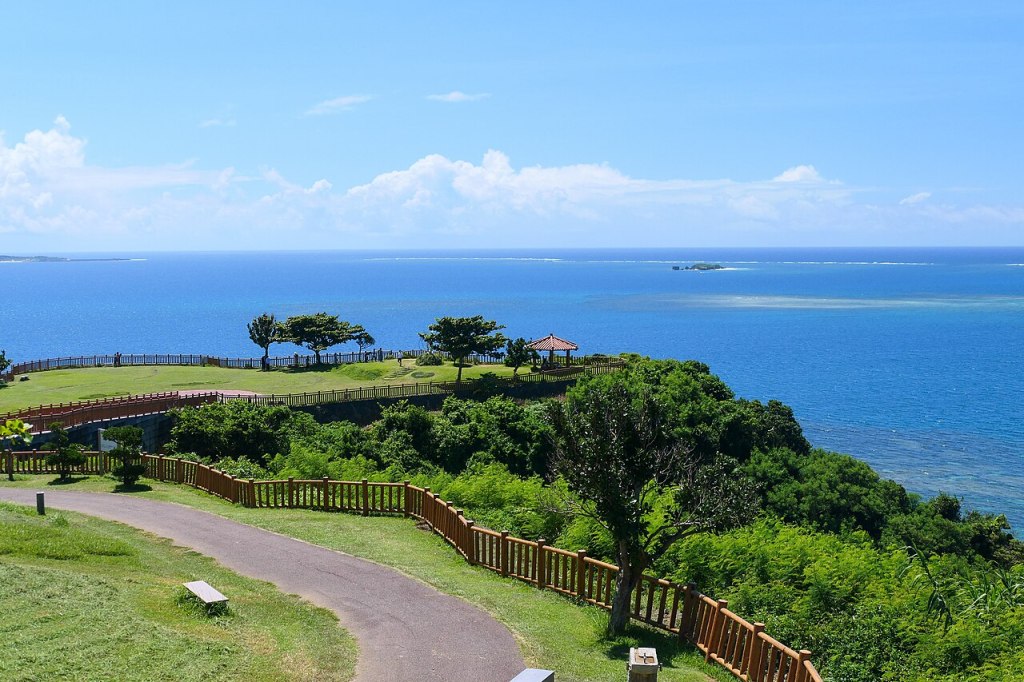
- Cape Chinen is the southeastern tip of Okinawa’s main island, in the city of Nanjo, and it is a grassy clifftop above a limestone shore with an open view across the Pacific. On a clear day the island of Kudaka sits directly offshore, and beyond it there is nothing but water until the horizon.
- The cape is best known as a sunrise spot. It faces east and south, the horizon is unobstructed, and the park at the top is open at all hours. People come before dawn with coffee and leave after the sun is up, and outside those hours it is a quiet place with wind and a few walkers.
- The view matters more than any single sight. Kudaka is the ‘island of the gods’ in Ryukyuan tradition, associated with the founding myths of the Ryukyu kingdom, and the sight of it from the cape explains why the whole southern coast is treated as a sacred landscape. The nearby Sefa-utaki, one of the most important sites of Ryukyuan religion, is a short drive away and completes the picture.
- Cape Chinen is not a beach resort and there is little to buy. It is a place to stand still, look at the water, and understand the geography of southern Okinawa: limestone terraces, deep blue water, and the smaller islands that were the stepping stones of the old kingdom.
Top places and highlights
The clifftop park
A mown grass area runs along the edge of the cliff, with a low wall and a few benches, and the drop to the water is considerable. The park is free and always open, with a car park behind it. It is a simple place: grass, wind, and the sea below, and it is at its best in the early morning or late afternoon.
The view to Kudaka Island
Kudaka lies a few kilometres offshore, low and green, and is visible from the cape on most days. In Ryukyuan tradition it is the island from which the founding deities came, and it is still visited for religious reasons. The view is the main reason the cape is considered special, and the light changes the colour of the water through the day.
Sunrise
The cape faces the open Pacific to the east and south, and sunrise over the water is the local event. On the summer solstice the sun comes up almost directly ahead; in winter it is further south. Arrive before the published sunrise time, since the good light comes in the twenty minutes before, and bring something warm for the wind.
The limestone shore
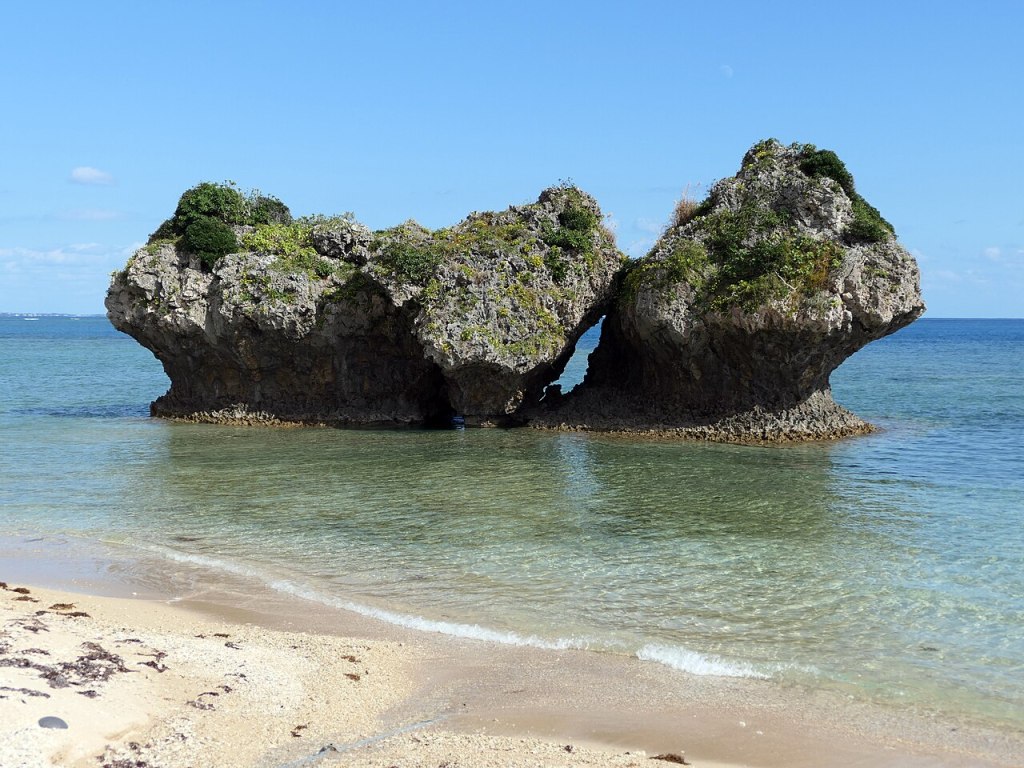
Below the cliff the coast is a platform of raised limestone with rock pools and eroded shapes, typical of southern Okinawa. Access to the water is not straightforward from the park, and the cliff is dangerous, so the shore is better seen from above. The rock formations along the nearby coast are part of what makes the landscape distinctive.
The nearby coast road
The road along the southern coast passes small fishing harbours, sugar-cane fields and quiet beaches, and it is one of the least developed stretches of the main island. Driving it slowly, with stops at the small ports, gives a better sense of the south than any single sight. Azama and its beach are a short drive west.
Sefa-utaki
The most sacred site of the Ryukyuan religion is a short drive inland from the cape, a grove of trees and rock formations where the creation myths are set. It is a UNESCO-listed component of the Ryukyu kingdom sites, and it is treated as a place of worship rather than a monument. Visit quietly, and read the explanations at the entrance.
The town of Nanjo
The surrounding town is a mix of farmland, small settlements and new housing, with a few cafes and roadside shops. It is not a sight in itself, but it is where you will eat and buy water, and the pace is slow. The local sweet potato and sugar-cane products are worth trying.
Food and drink
- There are few restaurants at the cape itself, and the nearest choice is in the surrounding town.
- Okinawan soba, made with wheat noodles in a pork broth, is the local staple and easy to find nearby.
- Sugar-cane and sweet-potato sweets are sold at roadside stands in the area.
- Seafood is best eaten on the coast at Itoman or in Naha rather than at the cape.
- Bring water and coffee for sunrise; nothing is open at that hour.
Getting there and around
- Cape Chinen is in Nanjo city, about forty minutes by car from Naha.
- Local buses run from Naha to the Nanjo area, but the service to the cape is limited and the walk from the nearest stop is long.
- A rental car is the practical way to combine the cape with Sefa-utaki and the southern coast.
- Taxis from Naha are possible but expensive for a return trip; arrange a pickup time or use a hire car.
- The park has a car park and is open at all hours, with no admission charge.
Where to stay
- Most visitors stay in Naha, which has the widest choice of hotels and is within an hour of the cape.
- A few small hotels and guesthouses operate in the Nanjo and Azama area for a quieter stay.
- Resorts on the southern coast offer beach access and are convenient for sunrise visits.
- Staying nearby is worth it only if you plan to be at the cape before dawn.
Best time to visit
- Spring is warm and clear, with good visibility and fewer typhoons.
- Summer is hot and bright, the best sunrise season, but typhoon risk peaks from August.
- Autumn is warm and comfortable, with clear water and quieter roads.
- Winter is mild and windy, with the clearest air and the lowest prices, though swimming is for the hardy.
Practical tips
- The cliff edge is unprotected in places; keep children close and stay behind the wall.
- Bring a windproof layer for sunrise, even in summer.
- There is no shop at the cape, so buy water and food before you arrive.
- Check the sunrise time for your date rather than guessing.
- Sefa-utaki is a religious site: keep quiet and follow the marked route.
- A car makes the difference between seeing one sight and seeing the southern coast.
Suggested day-trip outline
- Before dawn: drive to the cape and wait for sunrise.
- Early morning: the view to Kudaka and a walk along the clifftop.
- Mid-morning: Sefa-utaki, a short drive inland.
- Lunch: Okinawan soba in the surrounding town.
- Afternoon: the southern coast road and Azama beach.
- Late afternoon: back to Naha, or on to Itoman.
Before you go
Timetables, fares, admission fees, and seasonal access rules can change. Check the official tourism and transport sites linked below for the latest information before you travel.
Explore More of Japan
Published guides that pair with this one:
- Gyokusendo Cave Travel Guide: Okinawa Underground
- Hamahiga Island Travel Guide: Okinawa Quiet East Coast
- Chatan Travel Guide: American Village, Sunset Beach and Araha
- Ikei Island Travel Guide: Okinawa Beaches and the East Coast
- Itoman Travel Guide: Peace Memorial Park and the Fishing Port
Browse every Okinawa guide on this site for the rest of the region.
Sources
- city.nanjo.okinawa.jp (checked 2026-11-05)
- okinawastory.jp (checked 2026-11-05)


Leave a Reply