A practical English guide to Takaoka in Toyama: the bronze casting, the great Buddha, the temple town and access from Kanazawa.
Operational details such as opening hours, admission fees, and train times can change. Prefer official pages and reconfirm before you travel (sources checked on 05 November 2026).
Why visit
- Takaoka is a city on the coast of Toyama, west of the prefectural capital, and it has been a centre of metal casting for four hundred years. The city made the bronze bells, the temple ornaments and the household metalwork of Japan, and it still has the workshops, the foundries and the craft shops that made it famous.
- The symbol of the city is the Takaoka Daibutsu, a bronze Buddha about sixteen metres tall, one of the three great Buddhas of Japan, and it stands in the middle of a residential district, surrounded by houses and small shops. The statue is dark bronze, weathered and impressive, and the setting is completely unassuming.
- The city has a temple district with the Zuiryuji, the family temple of the Maeda clan, and its buildings are among the finest of the Edo period, with a garden and a hall that are national treasures. The old town has merchant houses, the castle site and the Kanayamachi district, where the metalworkers lived and worked.
- Takaoka is a short train ride from Kanazawa and Toyama, and it is an easy stop on the Hokuriku route. It is not a major tourist destination, and that is part of its appeal: a working city with a serious craft tradition, a great temple and a strange, memorable Buddha.
Top places and highlights
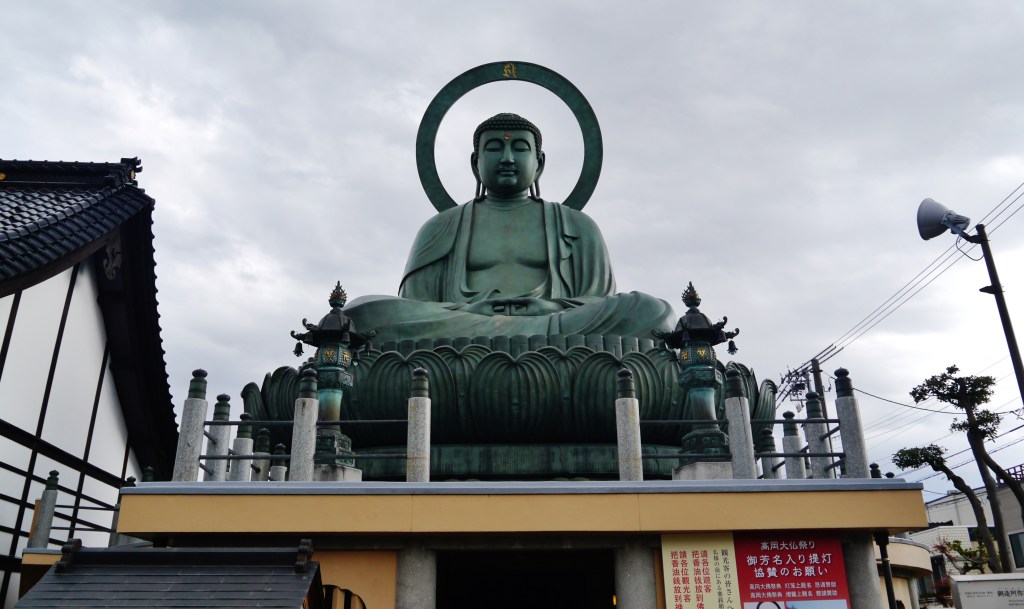
The Takaoka Daibutsu
The great Buddha is a bronze statue about sixteen metres tall, cast in the 1930s to replace an earlier wooden figure, and it stands in a small precinct among houses. The face is serene, the body is dark with age and weather, and the scale is best understood from the base, looking up. It is one of the three great Buddhas of Japan, and it is free to visit and open at all hours.
The Zuiryuji temple
The temple was built by the Maeda clan in the seventeenth century, and its main hall, the gate and the study are national treasures, with a precision and a restraint that are unusual even in Japan. The buildings are dark wood with copper roofs, the garden is raked gravel and moss, and the arrangement is symmetrical and calm. It is the finest sight in the city, and it takes about an hour.
The metal casting workshops
Takaoka has been a casting town since the Edo period, and the workshops still make bells, Buddhist altars, tea kettles, wind chimes and ornaments. Some of the foundries and the shops are open to visitors, with demonstrations and explanations, and the craft shops sell the products. The sound of the casting and the smell of the metal are part of the experience.
The Kanayamachi district
The old metalworkers’ district has narrow lanes, wooden houses, small workshops and the traces of the foundries, and it is quiet and atmospheric. The buildings are a mix of the Edo and the modern, with the tools and the products visible in the doorways. Walk the lanes and look at the details, and stop at the small shops and the galleries.
The castle site and the park
The site of Takaoka castle is now a park with moats, stone walls, lawns and a few reconstructed buildings, and it is the green centre of the city. The park has cherry trees in spring, a museum and a tea house, and it is a good place to walk between the temple and the old town. The castle itself was dismantled in the seventeenth century, and only the earthworks remain.
The local food
Toyama is known for its seafood, especially the white shrimp, the firefly squid and the yellowtail, and Takaoka’s restaurants serve them along with the local sake and the mountain vegetables. The city also has a tradition of confectionery, and the sweets shops near the temple sell the local specialities. The food is robust and inexpensive.
The Hokuriku route
Takaoka is on the Hokuriku shinkansen and the local lines, about twenty minutes from Toyama and forty from Kanazawa, and it is an easy stop between the two. The city combines with the Tateyama Kurobe route, the Noto peninsula and the Gokayama villages, and it is a good base for the western Hokuriku region.
Food and drink
- The white shrimp of Toyama bay is the local delicacy, served raw, boiled or fried, and the restaurants around the station and the market serve it in season.
- The firefly squid in spring and the yellowtail in winter are the other seasonal fish, and the sushi and the seafood bowls are good value.
- The local sake from the Toyama breweries is clean and dry, and the bars and the restaurants carry the regional labels.
- The city has a tradition of sweets, and the shops near the temple sell the local confections and the rice crackers.
- The Toyama black ramen, with its dark soy broth, is the everyday meal, and the shops around the station serve it cheaply.
Getting there and around
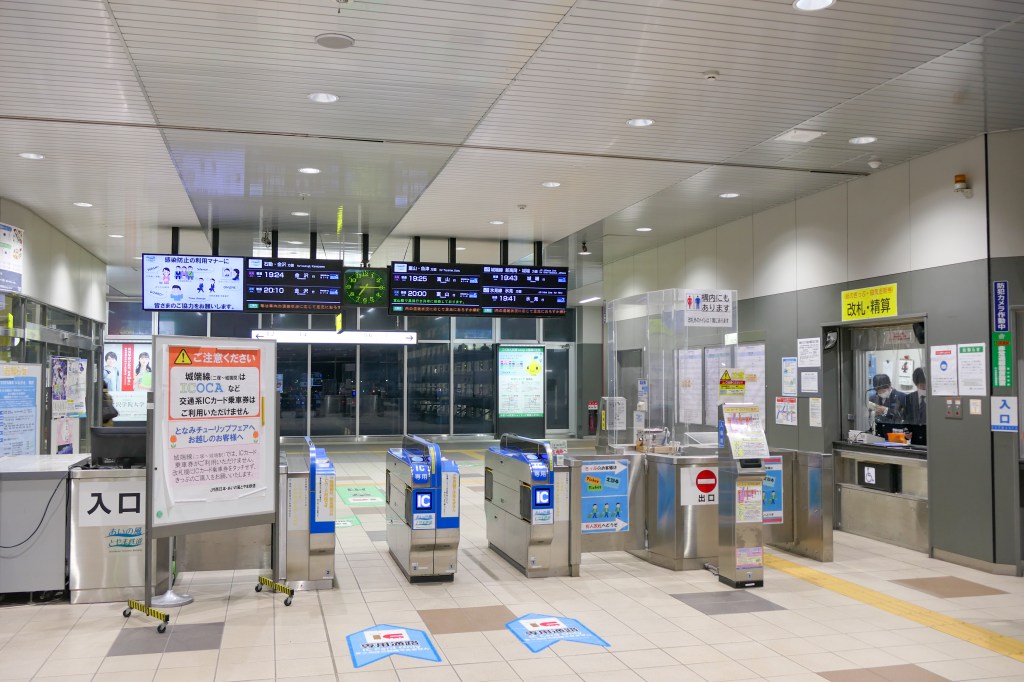
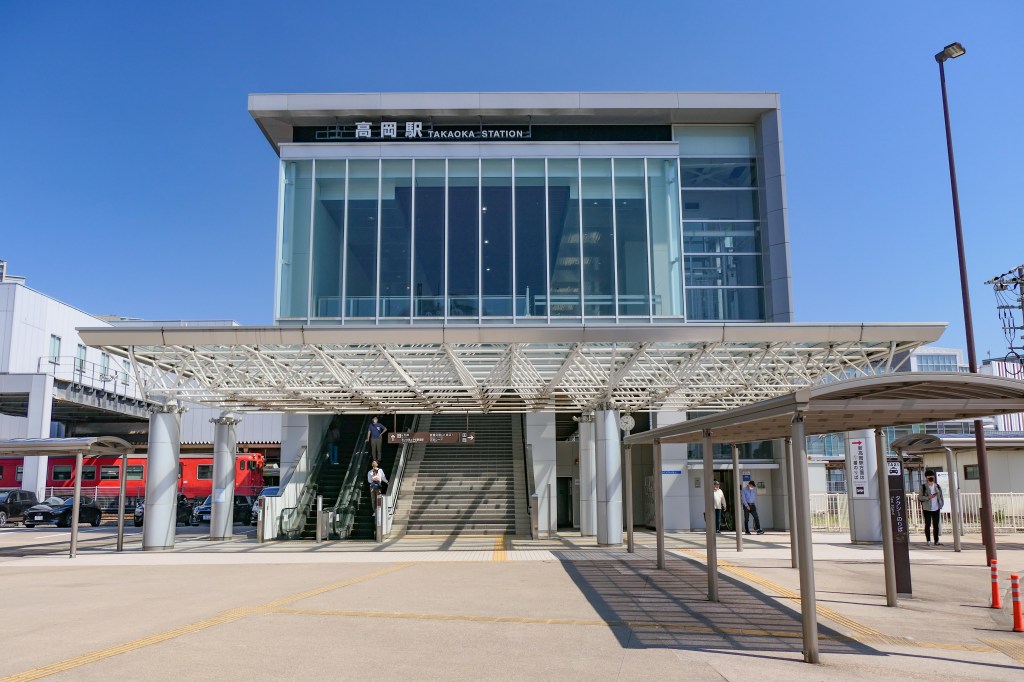
- Takaoka is about twenty minutes from Toyama and forty minutes from Kanazawa by the local train, and the shinkansen stops at Shin-Takaoka, a short bus ride from the centre.
- The city is compact and the main sights are within walking distance of the station, though the temple and the Buddha are a bus or a twenty-minute walk apart.
- By car, the expressway and the national roads connect Takaoka with Toyama, Kanazawa and the Noto peninsula, and the city has parking.
- From Tokyo, the shinkansen to Toyama takes about two hours, and the local train to Takaoka is a short ride.
- The airport, Toyama, is about thirty minutes away by car or bus, with domestic flights and connections to Seoul and Shanghai.
Where to stay
- The hotels around Takaoka station are the practical base, with the full range of prices and easy access to the sights.
- The hotels in Toyama and Kanazawa are close and have a wider range, and they suit a longer stay in the region.
- The onsen inns in the surrounding mountains and on the coast offer baths and local meals, and they are within an hour by car.
- The guesthouses and the business hotels in the city are cheap and clean, and they suit a short stay.
Best time to visit
- Spring, from April to May, is mild and green, with the cherry trees in the castle park and the firefly squid in the market.
- Summer is warm and humid, with the festivals and the fireworks, and the evenings are pleasant.
- Autumn, from October to November, is the best season: clear air, good fish and comfortable walking.
- Winter is cold and snowy, with the yellowtail at its best and the city quiet. The temples and the workshops are the indoor options.
- The rainy season runs from early June to mid-July. The temple, the museum and the workshops are good wet-weather stops.
Practical tips
- Visit the temple in the morning. The light in the garden is best before noon, and the crowds are small.
- Check the opening days of the workshops. Some are only open by appointment.
- Allow a full day for the city. The Buddha, the temple and the old town are spread out.
- Try the white shrimp and the yellowtail. The seafood is the reason to eat here.
- Carry cash for the craft shops and the small restaurants. Not every place takes cards.
- Combine the city with Kanazawa or the Tateyama Kurobe route. The train connections are quick.
Suggested day-trip outline
- Morning: train to Takaoka, the Zuiryuji temple and the garden.
- Late morning: the Takaoka Daibutsu and the surrounding streets.
- Lunch: a seafood bowl or the Toyama black ramen.
- Afternoon: the Kanayamachi district and the craft workshops, and the castle park.
- Late afternoon: the shops and the sweets near the temple, and the station.
- Evening: dinner in Toyama or Kanazawa, and the train onward.
Before you go
Timetables, fares, admission fees, and seasonal access rules can change. Check the official tourism and transport sites linked below for the latest information before you travel.
Explore More of Japan
Published guides that pair with this one:
- Toyama Travel Guide: The Castle, the Glass and the Mountains
- Tateyama Kurobe Alpine Route Travel Guide: Crossing the Japan Alps
- Kanazawa Travel Guide: Kenrokuen and Teahouse Districts
- Noto Peninsula Travel Guide: Wajima, Senmaida and the Okunoto Coast
- Takayama Travel Guide: Hida Old Town and Alps Access
Browse every Chubu guide on this site for the rest of the region.
Sources
- city.takaoka.toyama.jp (checked 2026-11-05)
- info-toyama.com (checked 2026-11-05)


Leave a Reply