Plan a visit to the Noto Peninsula in Ishikawa, with the Shiroyone Senmaida terraces, Wajima lacquer and the coastal drive.
Operational details such as opening hours, admission fees, and train times can change. Prefer official pages and reconfirm before you travel (sources checked on 03 November 2026).
Why visit
- The Noto Peninsula is a 100-kilometre arm of land reaching north into the Sea of Japan, and until 2024 it was known for one of the most intact satoyama and satoumi landscapes in Japan: terraced rice fields falling to the sea, fishing villages in the inlets, salt made by hand on the beach, and lacquerware produced in Wajima for centuries. In 2011 the whole of Noto’s countryside and coast was designated a Globally Important Agricultural Heritage System, and it was the first place in Japan to be recognised for the combination of land and sea rather than for a single landscape.
- The symbol of that landscape is Shiroyone Senmaida, 1,004 tiny rice terraces stacked down a slope to the Sea of Japan, each one too small for a machine and farmed by hand. It is a nationally designated Place of Scenic Beauty, and it is the image that appears on every poster of the region. What makes it more than a photograph is that the terraces are still worked, by a local association of about 30 people plus several hundred owners from across Japan who pay to sponsor a plot and come to plant and harvest it.
- The reason to go now is the recovery. The peninsula was hit by a magnitude 7.6 earthquake on 1 January 2024 and then by record rainfall in September of the same year, and the damage to the terraces, the roads and the towns was severe. In 2026 the first proper harvest since the earthquake was taken from individually sponsored plots, with the owners’ name posts back in place for the first time in two years, and the association has been running volunteer weeding teams called the Kusanuki Crusade. Visiting is not disaster tourism here: the region’s own tourism bodies are asking people to come, and the money and the attention are part of how it recovers.
- Wajima is the other anchor. The town is famous for Wajima-nuri lacquerware, made with a technique that builds up layers over months and finishes with a polishing that brings out a deep lustre, and for a morning market that was one of the three great markets of Japan. The market street was destroyed by fire in the 2024 earthquake, and the town is rebuilding, so the honest advice is to check what is open before making it the centre of a day.
- The coast and the interior are worth the drive on their own. Agehama salt is still made by drawing seawater onto a sand bed on the beach and boiling the brine, a method that survives in very few places, and the Okunoto coast has rock formations, small fishing ports and a lighthouse at the northern tip at Rokkosaki. The Noto Satoyama Kaido expressway runs along the bay and makes the peninsula accessible from Kanazawa in about two hours.
- The practical case is that Noto is a manageable road trip from Kanazawa, a city that most visitors to Japan already reach. It is about two hours and 20 minutes by car to Shiroyone, or two and a half hours by express bus to Wajima and a local bus onward. It is not a day trip in the casual sense, but it is one of the most rewarding two-day drives in central Japan, and it is a place where spending money locally has a direct and visible effect.
Top places and highlights
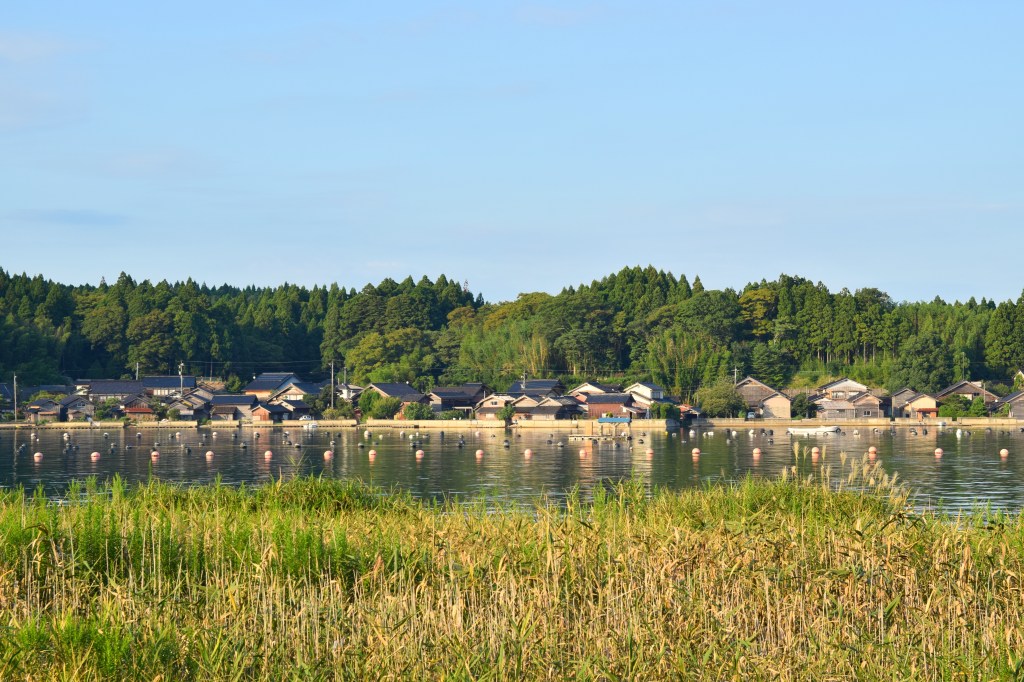
Shiroyone Senmaida
The 1,004 terraces run from the hillside down to the sea, each one small enough that the work is done by hand, and the whole slope changes colour through the year: water and sky in May, deep green in summer, gold in September. It is free to visit and always open, with a car park at the roadside station. The view from the upper road is the classic one, and the path down through the terraces gives the scale.
The owner system and the recovery
About 480 individuals and organisations now sponsor a plot, paying an annual fee of 30,000 yen for five kilograms of rice and local pickles, and they come for planting, weeding and harvest. In 2026 the name posts returned to the terraces for the first time since the earthquake, and the harvest in September was the first in three years in which sponsors took rice from their own plots. It is the clearest sign of how the recovery is being done, by people outside Noto as well as inside it.
The pocket park and the terraces at dusk
The roadside station at the top of the terraces has a shop open 10:00 to 15:00 and a restaurant 11:00 to 14:00, and both currently operate at weekends rather than every day. The car park is free and takes 51 cars and 5 buses, with two disabled spaces and an EV charger. Sunset over the terraces is the reason to time the visit for late afternoon rather than midday.
Wajima lacquer
Wajima-nuri is built up over months from a wooden base, with layers of cloth, clay and lacquer, and finished by polishing to a deep gloss that is unique to the town. The earthquake damaged workshops, tools and stock, and the craft is in a fragile state, so buying a piece from a workshop that has reopened is the most direct support a visitor can give. Check which workshops and galleries are currently open before travelling.
Agehama salt making
The agehama method draws seawater onto a sand bed on the beach, rakes it to concentrate the brine, and boils it down in a furnace, and it survives in only a handful of places in Japan, with the Okunoto coast one of them. Watching the process is a lesson in how much labour a commodity can contain, and the salt is sold at the site. It is also one of the few traditional industries on the peninsula that visitors can see being practised rather than only displayed.
The Okunoto coast and Rokkosaki
The road along the northern coast passes fishing ports, rock formations and small bays, and ends at Rokkosaki, the northern tip of the peninsula, with a lighthouse and a view across the Tsugaru strait towards Hokkaido on a clear day. The drive is the attraction rather than any single stop, and it is one of the quieter and more beautiful coastal roads in Japan.
The satoyama and satoumi landscape
Noto’s world heritage designation is for the whole system: forests managed for charcoal and mushroom, terraces and fields, villages, and the sea where fishing and seaweed gathering are part of the same economy. Driving through it, the point is the relationship between the hills and the water, and the fact that it has been maintained by small communities rather than by a preservation authority. That is why the earthquake was a cultural loss as well as a human one.
Food and drink
- Noto’s food is the sea and the mountains together: oysters and rock oysters from the bays, squid, yellowtail in winter, and the seaweed and salt of the coast. The fishing ports along the Okunoto coast have small restaurants that serve what was landed that morning, and they are the reason to eat on the peninsula rather than in Kanazawa.
- Noto beef and Noto pork are the local meats, and the charcoal-grilled chicken of the region is a specialty of the inland towns. The rice from the terraces is the other thing to eat, since the whole point of the landscape is the grain it produces.
- The salt from the agehama salt farms is the most portable thing to bring home, along with the lacquerware and the dried fish. It is coarser and more mineral than industrial salt, and it is the product that best explains the peninsula’s economy.
- Wajima and Suzu have restaurants and cafes, but the number is small and the hours are limited, and some are still closed after the earthquake. The roadside stations on the Satoyama Kaido are the reliable places to eat, and they are where the local produce is sold.
Getting there and around
- By car from Kanazawa, take the Noto Satoyama Kaido to the Noto-Mii interchange, which puts Shiroyone about 20 minutes away; the whole drive from Kanazawa is about two hours and 20 minutes. The road runs along the bay for much of the way and is the easiest approach to the peninsula.
- By public transport, take the Wajima express bus from Kanazawa Station, about two and a half hours to Wajima Station, then the Machino line bus to the Shiroyone Senmaida stop. The bus is the only practical way to reach the area without a car, and the connections need checking because the local service is infrequent.
- The car park at the terraces is free and does not need booking, with 51 spaces for cars, 5 for buses, 2 for disabled visitors and an EV charger. It is at the roadside station at the top of the slope, and the terraces are a short walk down from it.
- The peninsula’s roads were damaged in the 2024 earthquake and the September floods, and some sections have been rebuilt or rerouted. The prefecture publishes current road restrictions, and it is worth checking before setting out, particularly for the northern coast and the interior.
- Distances within Noto are long for the size of the place: Wajima to the northern tip is about an hour, and Wajima to Suzu about 40 minutes. The peninsula is best done as an overnight rather than a day trip, and the roads are narrow in the villages.
Where to stay
- Wajima has ryokan and hotels, and a number of them reopened after the earthquake, though the total number of rooms is reduced. Staying there puts the lacquer workshops and the morning market area within walking distance.
- The onsen towns of the peninsula, including Wakura on the bay and the smaller springs along the coast, are the traditional places to stay, with seafood dinners and baths. Some were damaged and are reopening in stages, so availability needs checking directly.
- Kanazawa is the practical base for a day trip, but Noto deserves the night: the drive is long, the light on the terraces is best in the late afternoon, and the coast road is not something to rush. A night in Wajima or Suzu turns the trip into a proper two days.
Best time to visit
- May is the season of the rice planting, when the terraces fill with water and reflect the sky, and it is the image most people have of Shiroyone. The planting is done by hand and the owners come from across Japan, so the terraces are busy with activity rather than only with photographers.
- Summer is green and hot, with the rice tall in the terraces and the sea at its most inviting. It is the season for the coastal drive and the beaches, and for the festivals of the fishing villages, though some are still reduced in scale after the earthquake.
- September brings the harvest and the gold of the rice, and in 2026 it brought the first proper harvest since the earthquake, with the owners’ name posts back in place. It is the best season for the combination of the landscape and the food, since the squid and the yellowtail begin to arrive.
- Winter is cold and grey, with snow on the terraces and the Sea of Japan at its wildest, and the agehama salt farms at their most atmospheric. The illumination event that used to run from mid-October to mid-March on the terrace edges has not been held since the earthquake and is not currently scheduled, so do not plan around it.
Practical tips
- Plan for two days, not one. The drive from Kanazawa is two hours and 20 minutes, the peninsula is 100 kilometres long, and the coast road is the point. A day trip from Kanazawa gives you the terraces and a rushed drive back, which misses most of what the region offers.
- Check what is open before you go. The earthquake and the 2024 floods closed businesses across the peninsula, and some are still shut; the roadside station at the terraces currently opens at weekends only, with the shop 10:00 to 15:00 and the restaurant 11:00 to 14:00. The prefecture’s tourism site and the town’s own pages carry the current status.
- Buy something made here. Wajima lacquer, agehama salt and the local sake are the products the peninsula is trying to keep alive, and the recovery is being financed partly by visitors spending money in the towns rather than only photographing the terraces. This is the most useful thing a tourist can do.
- Do not expect the old Wajima morning market. The market street was destroyed by fire in the January 2024 earthquake, and it is being rebuilt rather than restored as it was. Check the current situation before making it the centrepiece of a visit.
- Drive the Okunoto coast if you have the time. The northern coast road past the fishing ports to Rokkosaki is one of the quietest and most beautiful drives in Japan, and it is where the satoumi part of the heritage designation becomes visible.
- Watch the road information. Some routes were rebuilt after the earthquake and some remain restricted, and the interior roads are narrow and can close in winter. The prefecture publishes a live restriction map, and the local advice is to check it the day before rather than the week before.
- Time the terraces for late afternoon. The classic view is with the sun low over the sea, and the terraces face the water so the light comes across them. Arriving at midday gives a flatter picture and a busier car park.
Suggested day-trip outline
- Leave Kanazawa in the morning and take the Noto Satoyama Kaido to the Noto-Mii interchange, stopping at a roadside station on the way for lunch and local produce. Continue to Shiroyone Senmaida and walk down through the terraces before the light goes, which is the best hour of the day there.
- Stay the night in Wajima or on the coast, and eat the local fish and the Noto rice. If you are in Wajima, ask at your accommodation which lacquer workshops are open, since the situation changes as the town rebuilds.
- Spend the next morning on the craft and the town: a lacquer workshop or gallery, the rebuilt market area if it is open, and the streets that survived. Then drive north along the Okunoto coast, stopping at an agehama salt farm to see the process and buy salt.
- Continue to Rokkosaki at the northern tip for the lighthouse and the view, and come back down the other side of the peninsula through Suzu, which has its own coast and its own food. The loop is a full day of driving with short stops rather than a day of sightseeing.
- Return to Kanazawa in the evening, or take a third day for Wakura Onsen and the bay. Noto rewards the extra night more than almost anywhere else in the region, because the distances are long and the landscape is the destination.
Before you go
Timetables, fares, admission fees, and seasonal access rules can change. Check the official tourism and transport sites linked below for the latest information before you travel.
Explore More of Japan
Published guides that pair with this one:
- Kanazawa Travel Guide: Kenrokuen and Teahouse Districts
- Shirakawa-go Travel Guide: UNESCO Gassho Village, Access, and Day-Trip Tips
- Takayama Travel Guide: Hida Old Town and Alps Access
- Gokayama Ainokura Guide: The Quiet Side of the Thatched Villages
- Tateyama Kurobe Alpine Route Travel Guide: Crossing the Japan Alps
- 21st Century Museum of Contemporary Art, Kanazawa Travel Guide: Highlights, Access, and Planning
- Hakusan and Shirayama Hime Shrine Guide: Ishikawa’s Sacred Mountain
- Nozawa Onsen Travel Guide: Hot Springs, Snow, and the Fire Festival
- Fukui Prefectural Dinosaur Museum Travel Guide: Highlights, Access, and Planning
- Wakasa Obama Guide: Fukui’s Old Port and the Five-Colour Noodles
Browse every Chubu guide on this site for the rest of the region.
Sources
- hot-ishikawa.jp (checked 2026-11-03)
- hot-ishikawa.jp (checked 2026-11-03)
- wajima-senmaida.jp (checked 2026-11-03)
- wajimanavi.jp (checked 2026-11-03)
- city.wajima.ishikawa.jp (checked 2026-11-03)
- pref.ishikawa.jp (checked 2026-11-03)


Leave a Reply