A practical English guide to Tonaki island in Okinawa: the quiet village, the beaches, the ferry from Naha and what to expect.
Operational details such as opening hours, admission fees, and train times can change. Prefer official pages and reconfirm before you travel (sources checked on 05 November 2026).
Why visit
- Tonaki is a small island in the Kerama group west of Naha, about two hours by ferry from the city, with a village of a few hundred people, low stone walls and a coastline of limestone rock. It is one of the least visited of the Okinawan islands, and that is its main attraction: no resort, no shopping street, and very little to do beyond walking, swimming and looking at the sea.
- The island is flat and small, and you can walk most of it in a couple of hours. The village is a density of old houses behind coral-stone walls, with hibiscus and fukugi trees, and the lanes open onto small beaches and rocky points. There are several utaki, the sacred sites of the Ryukyu religion, and a few small shrines, and the whole island has the quiet of a place that has not been rearranged for visitors.
- The water is clear and the reef is close, and the beaches at the north and south ends are good for swimming and snorkelling when the sea is calm. Facilities are minimal: a few shops, a guesthouse or two, and no convenience store. You bring what you need, and the ferry timetable sets the rhythm of the day.
- Tonaki is not for everyone. It suits travellers who have seen the main islands of Okinawa and want somewhere slower, and who are content with a small village, a rocky coast and a lot of sky. For that kind of traveller it is one of the most rewarding places in the prefecture.
Top places and highlights
The village lanes
The village is a network of narrow lanes between coral-stone walls, with wooden houses behind them, fukugi trees and pots of flowers. Some walls are old and blackened, others are newly rebuilt, and the contrast shows how the village has been maintained rather than restored. Walking without a destination is the point: the lanes open onto small squares, wells and views of the sea, and every turn is a composition.
The utaki
Several utaki, the sacred groves and stone sites of the Ryukyu religion, stand in and around the village, marked by low walls and old trees. They are places of prayer rather than sightseeing, and visitors should keep a respectful distance and follow the signs. The presence of these sites gives the island a spiritual geography that is easy to miss if you only walk the coast.
The beaches
There are small beaches at the ends of the island, with white sand and shallow reef, and they are rarely crowded. The water is clear, the coral is close, and the swimming is good when the sea is calm. There are no lifeguards and few facilities, so check conditions and bring your own gear. In the right weather, the beaches are as good as any in the Kerama group.
The rocky coast
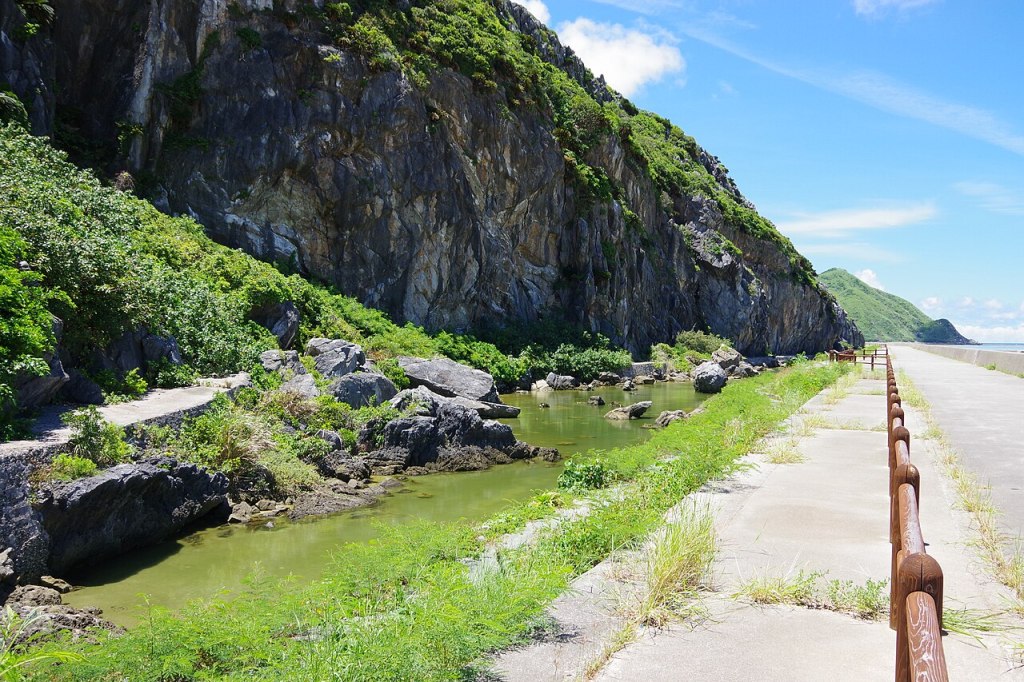
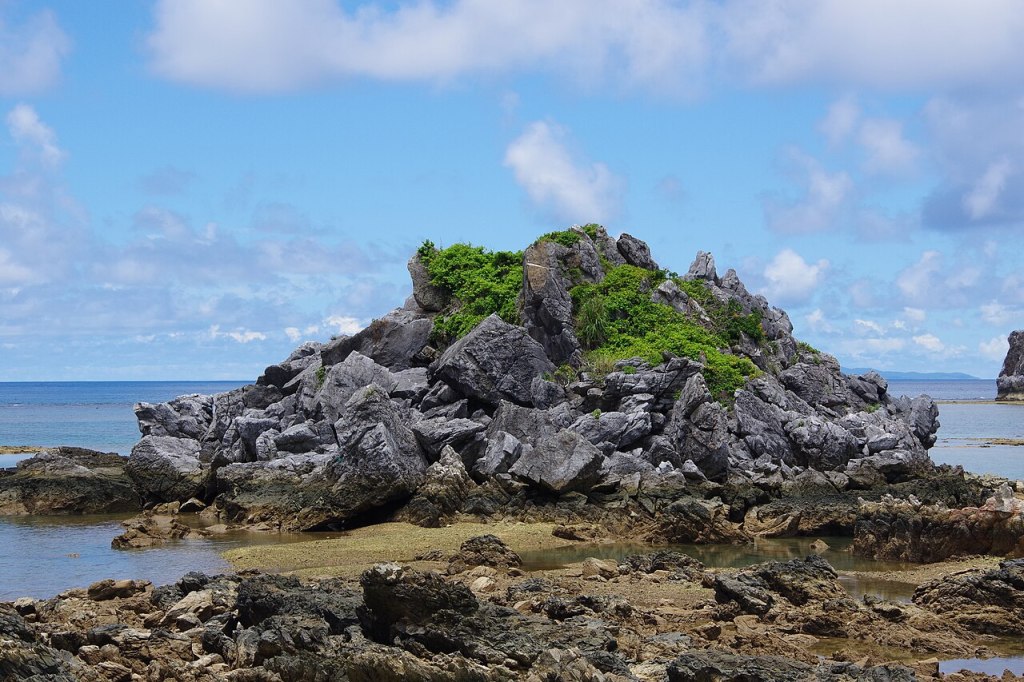
Much of the coastline is limestone rock rather than sand, with flat platforms, small coves and pools left by the tide. Walking the shore at low tide is the best way to see the island’s geology and its small creatures, and the views across to the other Kerama islands are long and open. Wear shoes with grip, since the rock is sharp and slippery in places.
The ferry crossing
The ferry from Naha takes about two hours and crosses open water, with the Kerama islands appearing one by one. It is a working ferry rather than a sightseeing boat, and the passengers are mostly islanders and a few travellers. Standing on the deck as the island grows out of the sea is the best introduction to the place, and the return trip at sunset is its own reward.
The silence
Tonaki is quiet in a way that is hard to find near Naha: no traffic noise, no music from shops, no crowds. The sounds are wind, waves, goats and the occasional scooter. For travellers used to the busy resorts of the main island, the first hour is almost disorienting, and then it becomes the reason to stay another night.
Okinawan home cooking
The island has a few small places to eat, serving Okinawan home cooking: soba, stir-fried bitter melon, fish and rice. The ingredients are simple and local, and the portions are generous. Because the options are so few, it is worth asking at your guesthouse about dinner when you book, since some places cook only for guests.
The night sky
With almost no street lighting outside the village and no large settlement for miles, Tonaki has one of the darkest skies in Okinawa. On a clear night the stars come down to the horizon and the Milky Way is obvious overhead. Walk to the shore after dinner, let your eyes adjust, and listen to the reef. It is the simplest and best thing to do on the island after dark.
The view from the northern point
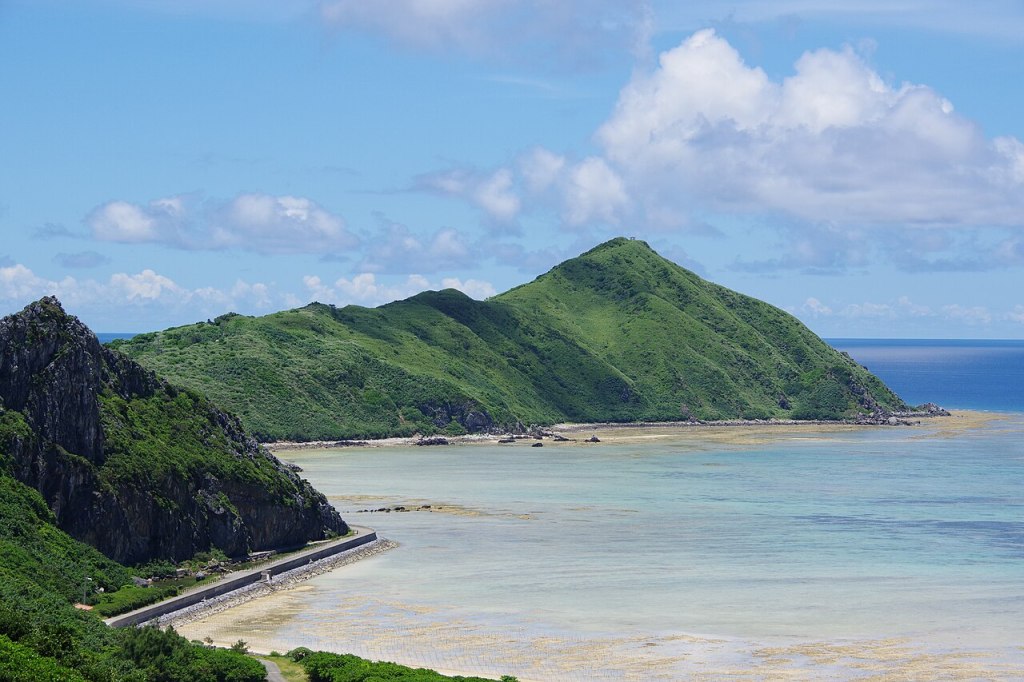
Walking to the northern tip of the island takes about half an hour and brings the other Kerama islands into view across the water. The coast there is rock and low scrub, with a few small coves and a lot of sky, and on a clear day the sea is several shades of blue. It is the best place on Tonaki for a long look at the horizon, and it is usually empty.
Food and drink
- Okinawa soba with pork and fish cake is the standard meal, and the few shops on the island serve it.
- Bitter melon stir-fried with egg and pork is the everyday dish of the islands.
- Fish from the reef appears on the menus of the guesthouses, grilled or in soup.
- There is no convenience store, so buy snacks and water in Naha before the ferry.
- Some guesthouses cook dinner for guests and need to be asked in advance.
Getting there and around
- Tonaki is reached by ferry from Tomari port in Naha, with a crossing of about two hours and a limited number of sailings.
- The ferry is the only public transport to the island, and it can be cancelled in rough weather.
- From Naha airport, a taxi or the monorail and a bus reach Tomari port in about twenty minutes.
- On the island, everything is within walking distance of the port and the village.
- There are no rental cars on the island, and the lanes are too narrow for most vehicles.
Where to stay
- A small number of guesthouses and minshuku provide rooms, some with meals, and they are the only accommodation.
- Book well ahead, especially in summer, since the number of beds is very small.
- Some houses are let as whole cottages, which suits families and small groups.
- Naha has the full range of hotels for travellers who visit as a day trip.
Best time to visit
- Late spring to early autumn is the beach season, with warm water and the ferry running regularly.
- Summer is hot and bright, and the island is at its busiest, though that is still quiet by Okinawan standards.
- Autumn is warm and calm, with good visibility in the water, though typhoons can disrupt the ferry.
- Winter is cool and windy, and the ferry may be cancelled; the island is not a winter beach destination.
Practical tips
- Check the ferry timetable and the weather before booking, since sailings are limited and cancellable.
- Bring cash, water and snacks; there are no ATMs or convenience stores on the island.
- Wear shoes with grip for the rocky coast, and carry sun protection.
- Ask your guesthouse about dinner when you book.
- Respect the utaki and the private lanes, and do not enter gardens or houses uninvited.
- Plan for a night rather than a day trip; the ferry times make a day visit rushed.
Suggested day-trip outline
- Morning: ferry from Tomari port to Tonaki, then walk to the guesthouse.
- Midday: the village lanes and the utaki.
- Lunch: soba or a set meal at one of the few shops.
- Afternoon: the beach and the rocky coast at low tide.
- Evening: dinner at the guesthouse, then the stars over the village.
- Next morning: the other end of the island before the ferry back to Naha.
Before you go
Timetables, fares, admission fees, and seasonal access rules can change. Check the official tourism and transport sites linked below for the latest information before you travel.
Explore More of Japan
Published guides that pair with this one:
- Zamami Travel Guide: Kerama Islands, Clear Water, and a Ferry from Naha
- Tokashiki Island Guide: A Kerama Day Trip from Naha
- Kume Island Travel Guide: Beaches West of Okinawa Island
- Naha and Kokusai Street Guide: Markets, Food and the Old Capital
- Hateruma Island Travel Guide: Japan’s Southernmost Inhabited Island
Browse every Okinawa guide on this site for the rest of the region.
Sources
- vill.tonaki.okinawa.jp (checked 2026-11-05)
- visitokinawajapan.com (checked 2026-11-05)


Leave a Reply