A practical English guide to Hokkaido Shrine and Maruyama Park in Sapporo: what the shrine is, when the cherry blossoms open, how to walk the park, and how to get there on the subway.
Operational details such as opening hours, admission fees, and train times can change. Prefer official pages and reconfirm before you travel (sources checked on 05 November 2026).
Why visit
- Hokkaido Shrine sits at the foot of Mount Maruyama on the western edge of central Sapporo, and it is the closest thing the city has to an old sacred place. It was established in 1869, the same year the Meiji government created the Hokkaido Development Commission and began treating the island as a place to be settled and defended, and it has been the focus of public ceremony in Sapporo ever since.
- The shrine is not ancient in the way Kyoto’s are. Its importance is civic and regional: it enshrines the deities of the northern frontier, it was renamed Hokkaido Shrine in 1964, and it carries the memories of the development era rather than the courtly history of the old capitals. That makes it a useful place to read Hokkaido’s modern history through a religious site.
- Maruyama Park surrounds the shrine with an unusually large area of mature forest inside a city of two million people. The park holds cherry trees, a zoo, an athletics stadium and walking paths, and the forest of Mount Maruyama behind it is protected. In a city laid out on a grid and rebuilt in concrete, this is where the original landscape survives.
- Together the shrine and the park make one of the easiest half-days in Sapporo. The subway reaches the edge of the park, the walk is short and flat, and the place works in every season: blossom in early May, deep green in summer, colour in autumn and heavy snow in winter.
Top places and highlights
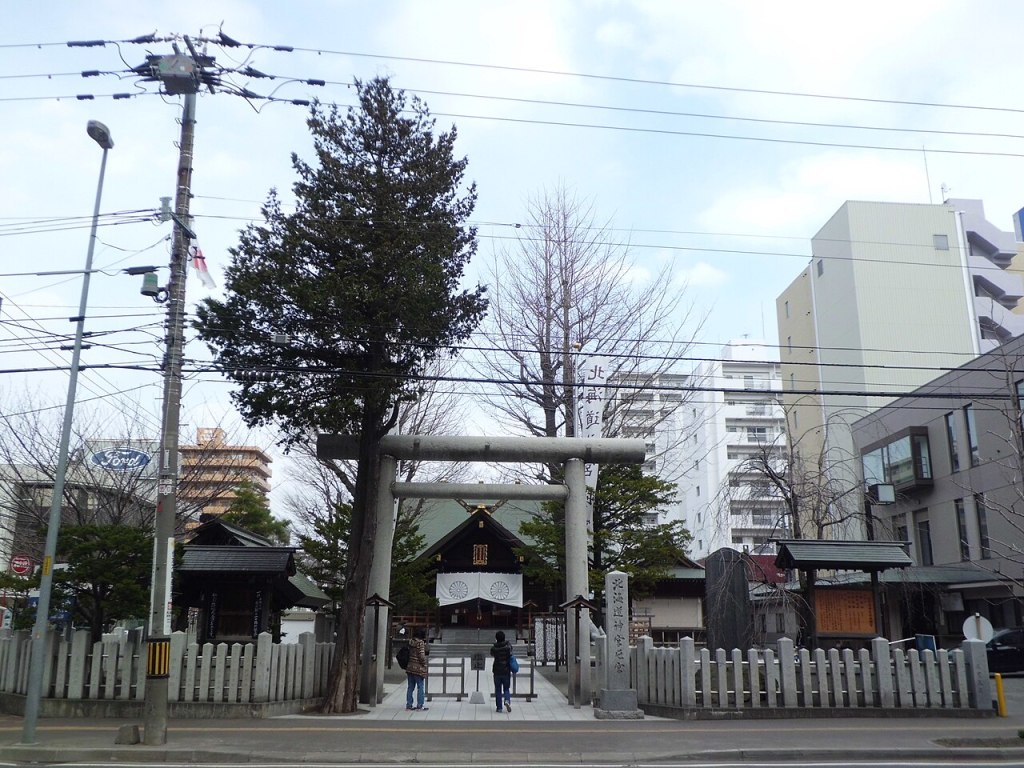
The main shrine buildings
The shrine follows the standard layout of a large Shinto complex, with a torii at the entrance, a purification fountain, an approach lined with trees, and the main hall and offering hall beyond. The buildings are twentieth-century reconstructions of earlier structures, and they are kept immaculate. Look at the roof lines and the unvarnished wood rather than expecting carving: this is northern shrine architecture, built for snow loads and cold, and its severity suits the setting.
The shrine’s history
The shrine was founded in 1869 as Sapporo Shrine, when the development of Hokkaido was a state project and Sapporo was barely a town. It was given its present name in 1964, and it enshrines Ōkunitama, Ōnamuchi and Sukunabikona, deities associated with the land and its cultivation. The small museum and the explanatory panels give the sequence without much drama, and the story they tell is the story of how Hokkaido was incorporated into modern Japan.
Cherry blossom in early May
Sapporo’s blossom comes weeks after Tokyo’s, and the Hokkaido Shrine approach is one of the best places to see it. The trees are mostly Ezoyamazakura, the northern species, which flowers in a tighter burst than the familiar Somei Yoshino. Golden Week is the peak and the crowd is enormous, with food stalls along the path. If you want the blossom without the queue, come on a weekday morning in the first half of May.
New Year at the shrine
Hatsumode at Hokkaido Shrine is one of the largest in northern Japan, with queues that stretch out of the grounds and a queue management system that feels like a transport hub. The atmosphere is worth seeing once, but the practical advice is to go early, dress for real cold, and expect to wait. The days around 1 January are the busiest of the year.
Maruyama Park
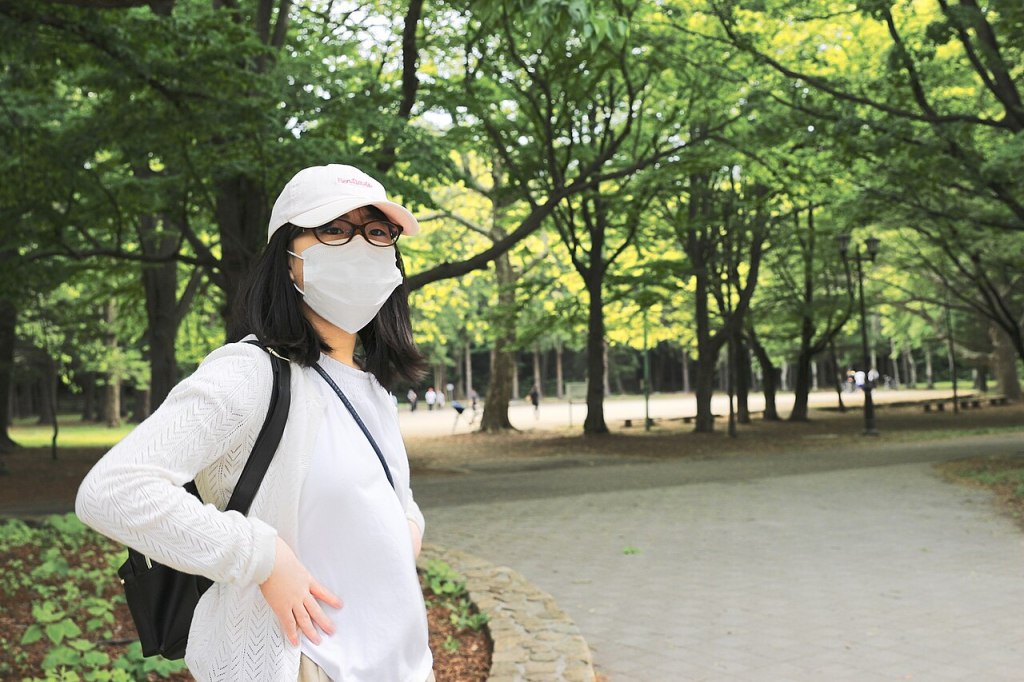
The park around the shrine is a broad, informal space of grass, trees and paths, with the zoo at one end and the stadium at the other. It is a picnic park rather than a formal garden, and locals use it for walking, jogging and blossom parties. In summer the shade is welcome, in autumn the maples along the paths turn, and in winter the snow is left to lie.
The forest of Mount Maruyama
Behind the park, Mount Maruyama holds a remnant of the forest that once covered this part of Hokkaido, with a mix of conifers and broadleaf trees. Access to some trails has been restricted at times to protect the vegetation, so check locally before planning a walk. Even from the lower paths, the size of the trees gives a sense of what the land looked like before the grid was laid out.
Maruyama Zoo
The city zoo sits inside the park and is a proper municipal zoo rather than a theme attraction, with Hokkaido species such as brown bears, Ezo deer and red foxes alongside the usual collection. It is a good stop with children and a sensible way to fill the rest of the day. Hours and admission change by season, so confirm on the day.
Food and drink
- There is little to eat inside the shrine grounds; the stalls that appear at blossom and New Year are the exception rather than the rule.
- The Maruyama area has a scatter of small restaurants and coffee shops, mostly along the streets between the subway station and the park.
- Sapporo soup curry and miso ramen are the city’s staples, and both are easy to find a few subway stops away in the centre.
- Seafood is the other local speciality, and the markets near Susukino and the central stations do it better than anything around the park.
- Carry water in summer: the walk from the station to the shrine is short but open, and the park has few shops.
Getting there and around
- The nearest subway station is Maruyama-koen on the Tozai Line, about fifteen minutes on foot from the shrine entrance.
- From Sapporo Station, take the Namboku Line to Odori and change to the Tozai Line; the whole trip is around half an hour.
- Several bus routes stop closer to the shrine, including services from the central area; check the current route and stop before you set out.
- If you arrive by car, the shrine has a car park that fills quickly at New Year and during blossom season.
- The park is large, so plan which end you want: the shrine, the zoo and the stadium are all a few minutes apart on foot but not adjacent.
Where to stay
- Most visitors stay in central Sapporo around Sapporo Station, Odori or Susukino, where the hotel stock is deepest.
- The Maruyama area itself has few hotels, and the ones that exist are small; staying there is quiet but not convenient for the rest of the city.
- The subway makes a central base perfectly workable, and the ride out to Maruyama-koen is short.
- In winter, choose a hotel close to a subway entrance rather than one that looks close on the map; the snow changes the walking time.
Best time to visit
- Early May is blossom season and the busiest fortnight of the year at the shrine.
- Summer is green and comfortable, with long evenings and no rainy season as pronounced as in southern Japan.
- Autumn brings colour to the park and the forest, usually from late September into October.
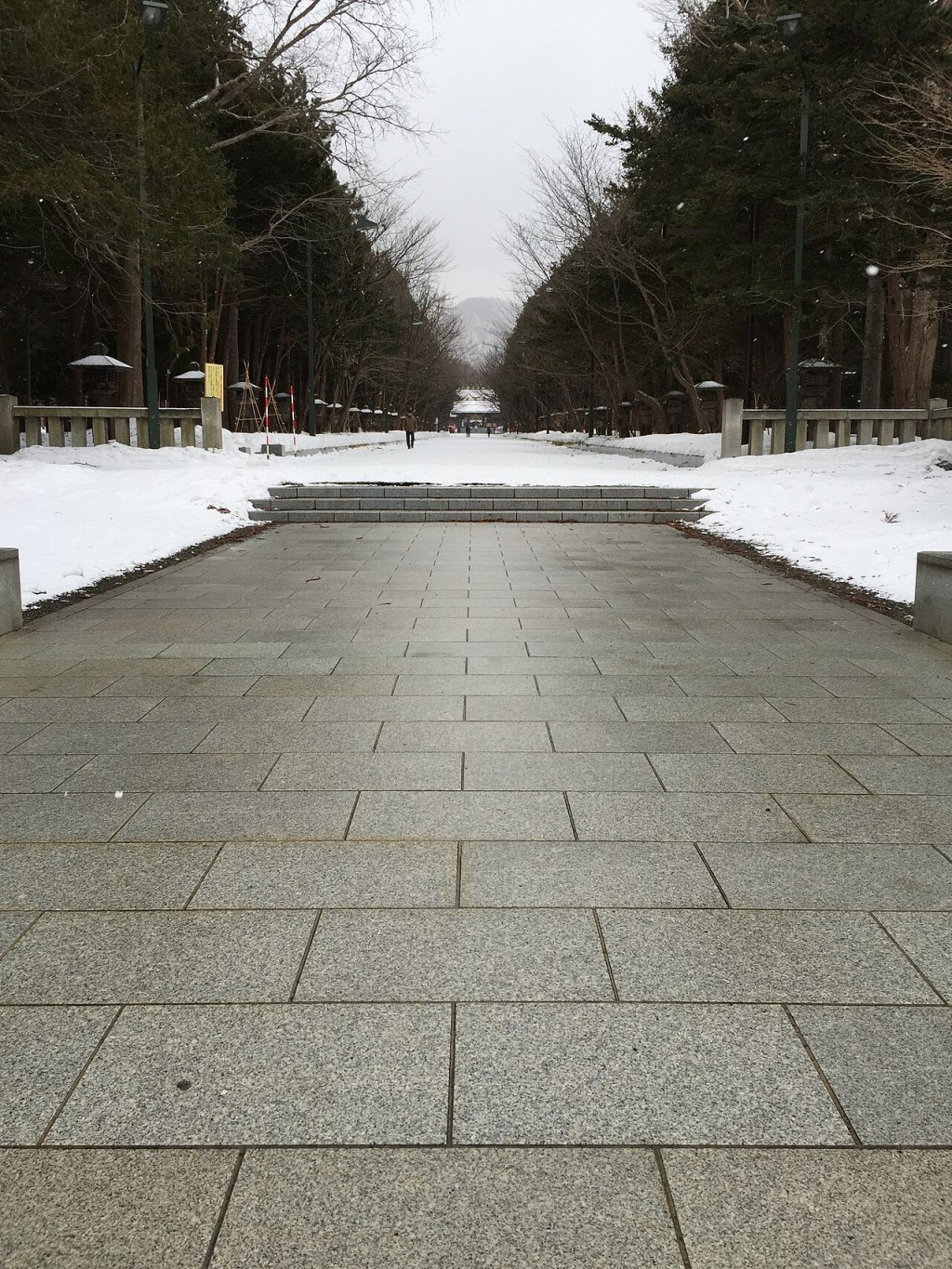
- Winter is long and snowy, and the shrine in snow is one of the most photogenic sights in the city, but paths can be icy and the New Year crowds are heavy.
Practical tips
- Observe shrine etiquette at the purification fountain and in front of the main hall; the signs explain the order.
- During hatsumode and blossom season, use the subway rather than a taxi; the roads around the park jam.
- The park is a public space with no closing time, but the shrine buildings close in the evening.
- Wear shoes with grip in winter; the paths through the park are packed snow and ice for months.
- Combine the shrine with the zoo or the park rather than making a special trip for the buildings alone.
- Check the shrine’s own notice for festival dates, since the calendar changes from year to year.
Suggested day-trip outline
- Morning: subway to Maruyama-koen, walk to the shrine and visit the main hall.
- Mid-morning: the shrine’s museum and the blossom path if it is early May.
- Late morning: cross into Maruyama Park and walk towards the zoo.
- Lunch: a small restaurant between the park and the station, or return to the centre.
- Afternoon: the zoo, or a longer walk through the park and the lower forest paths.
- Evening: back to Odori or Susukino for dinner.
Before you go
Timetables, fares, admission fees, and seasonal access rules can change. Check the official tourism and transport sites linked below for the latest information before you travel.
Explore More of Japan
Published guides that pair with this one:
- Historical Village of Hokkaido Travel Guide: Kaitaku no Mura
- Moerenuma Park Travel Guide: Noguchis Sculpted Landscape in Sapporo
- Sapporo Art Park Travel Guide: Sculpture, Forest and the Art Museum
- Takino Suzuran Hillside Park Travel Guide: Sapporos Flower Hills
- Esashi Travel Guide: The Herring Port of Southern Hokkaido
Browse every Hokkaido guide on this site for the rest of the region.
Sources
- sapporo.travel (checked 2026-11-05)
- visit-hokkaido.jp (checked 2026-11-05)


Leave a Reply