A practical English guide to Zenko-ji in Nagano: the main hall, the underground passage, the approach, the food street and access from Tokyo.
Operational details such as opening hours, admission fees, and train times can change. Prefer official pages and reconfirm before you travel (sources checked on 05 November 2026).
Why visit
- Zenko-ji is one of the oldest and most important Buddhist temples in Japan, founded in the seventh century before the capital moved to Nara, and it holds the first Buddhist image said to have reached the country. The image itself is a hibutsu, a secret Buddha never shown to anyone, and that absence is the heart of the place: pilgrims have walked here for fourteen centuries to stand in front of a curtain.
- The main hall is enormous and dark, with a great sloping roof and a curtained inner sanctum, and it is a working temple rather than a monument. Morning prayers are held before sunrise, the smell of incense and tatami fills the hall, and the wooden floor is cold underfoot in winter. It is one of the few major temples in Japan where you can join a service at dawn without a reservation and simply sit.
- Under the hall there is a pitch-dark corridor, the okaidan meguri, where you feel your way along a wall to find a metal key. It sounds like a tourist gimmick and it is not: the passage runs beneath the inner sanctum, and the darkness is total. Pilgrims have done this for centuries, and the effect on the senses is stronger than any explanation.
- The approach is its own attraction. The Omotesando runs from the station area up to the temple gate, lined with shops selling oyaki, shichimi pepper, soba and sweets, many of them family businesses that have been there for generations. Nagano is a small city with a big temple, and the street between the two is where the everyday life of the place happens.
Top places and highlights
The main hall
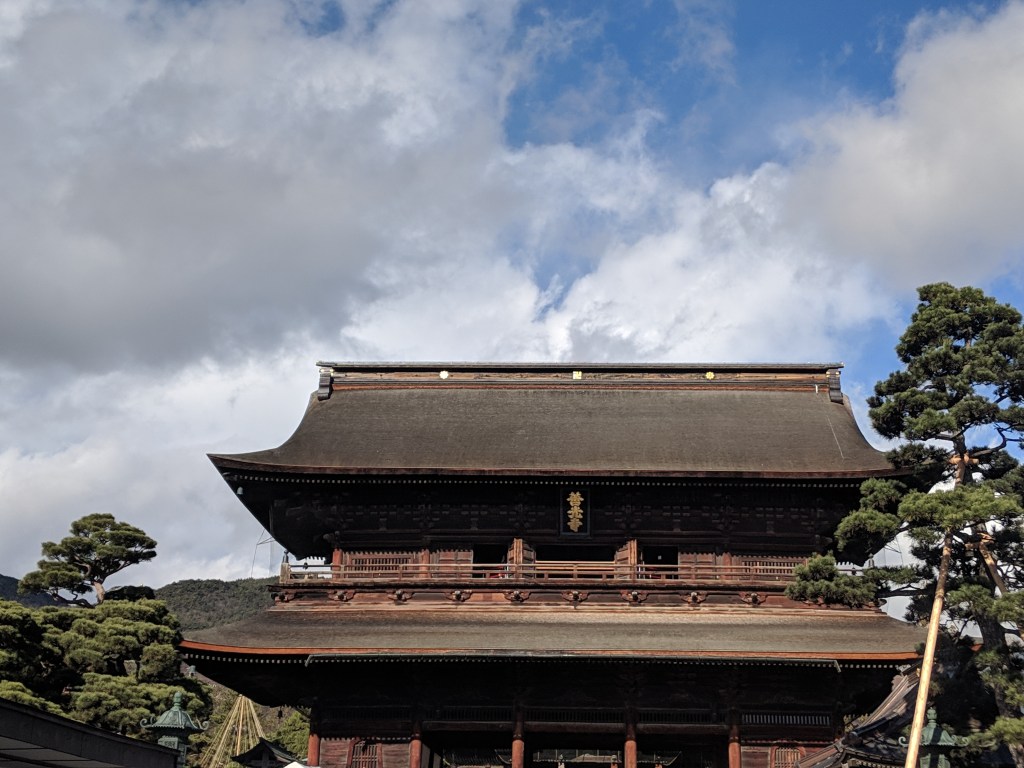
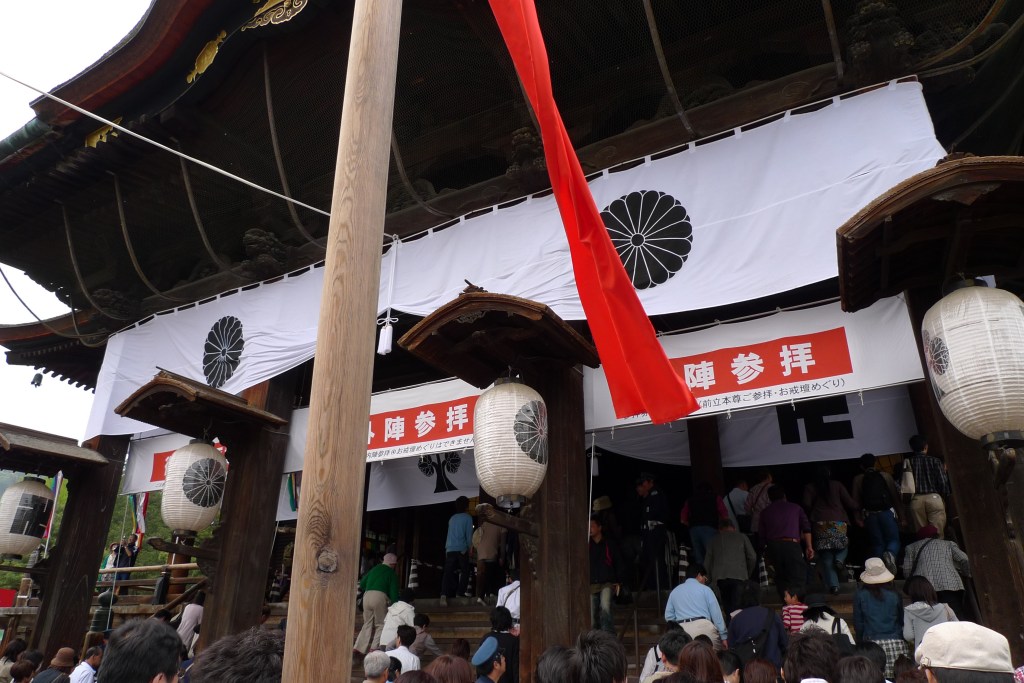
The hondo is a national treasure, rebuilt in the early eighteenth century after fires, and its scale is what strikes you first: a huge sweeping roof of dark tiles, thick pillars, and a dim interior where the ceiling disappears into shadow. The inner sanctum is behind a curtain and a set of altars, and the secret image is never displayed. Look at the joinery, the copper fittings and the votive objects hung around the pillars, and take a seat on the tatami at the back to watch people pray. The hall is open from early morning, and the light through the doors at either end changes through the day.
The morning service
The asa-ji, the morning service, begins before sunrise and lasts about an hour, with chanting, bells and incense, and visitors are welcome to sit at the back of the hall. It is the best single experience at Zenko-ji: the hall is cold and dark, the priests move slowly, and the sound of the chanting fills the whole building. Arrive early to get a seat, keep quiet, and do not use a flash. The service is a religious event rather than a performance, and the atmosphere depends on the people in the hall respecting that.
The okaidan meguri
The entrance to the underground passage is beside the main hall, and the descent leads into a corridor with no light at all. You keep your right hand on the wall and walk until you find the key, a heavy metal object set into the wall, which is said to unlock paradise. The darkness is absolute and disorienting, and the passage is narrow enough that you meet people coming the other way by touch. It takes only a few minutes, and it is suitable for children and most adults. Leave bags and phones with someone outside, since you will need both hands.
The gate and the precinct
The sanmon gate is a massive wooden structure from the eighteenth century with a row of statues under its eaves, and the courtyard between it and the main hall is paved and ringed by subsidiary buildings: the Daikanjin and Daihongan halls, a bell tower, votive stone monuments and rows of lanterns. Walk the whole precinct rather than just the axis, and look for the small shrines and the pilgrim graffiti on the pillars. There are places to sit, and the temple is large enough that it never feels crowded except on festival days.
The Omotesando
The approach is a street of low buildings, shopfronts and lanterns that runs from the station up to the gate, and it is where you should eat. Oyaki, a grilled dumpling of buckwheat dough with a filling of pumpkin, nozawana greens or red bean, is sold hot from the griddle; shichimi pepper is blended and sold by a shop that has been doing it since the eighteenth century; and the soba shops serve the local buckwheat. Walk it slowly in both directions, and go early in the morning when the shopkeepers are sweeping and the street is quiet.
The side halls and the treasure displays
The precinct includes smaller halls with their own histories, and a treasure hall with Buddhist sculpture, scrolls and ritual objects. The displays are modest and often unlabelled in English, but the pieces are old and worth the small admission. The Daikanjin and Daihongan are the two sub-temples that administer the site, and their halls are open at different times. If you have an hour to spare after the main hall, this is where to spend it, and it is also a good place to escape the cold.
The view over Nagano
Behind the temple, the ground rises towards Joyama park, and a short walk brings you to a viewpoint over the city and the surrounding hills. Nagano sits in a basin ringed by mountains, and on a clear day the ranges to the west and north are visible above the roofs. It is a good place to end the visit, especially in the late afternoon, and the park itself has cherry trees and a small zoo and is popular with families. The walk back down to the station takes about twenty minutes.
Food and drink
- Oyaki is the local snack: a ball of buckwheat dough wrapped around pumpkin, nozawana greens, red bean or eggplant, then grilled or steamed. Buy one hot from a shop on the approach and eat it standing up.
- Shichimi pepper is blended in Nagano, and the shops on the approach sell their own mixtures in small tins. It is the useful souvenir: light, cheap, and genuinely different from the supermarket version.
- Nagano soba is the other staple, and the shops around the temple and the station serve it cold with a dipping sauce or hot in broth. The local buckwheat is aromatic and the portions are generous.
- Nagano ramen is a thing in its own right, with a soy-based broth and a reputation among noodle fans. The shops around the station are the place to try it, and they are open late.
- Apples from the surrounding orchards are sold in autumn, and the region’s sake and wine appear on the menus of the izakaya near the station. For a quick lunch, the covered arcade between the station and the temple has bakeries and cafes.
Getting there and around
- Nagano is on the Hokuriku shinkansen, about an hour and twenty minutes from Tokyo, and the station is the transport hub for the region. From the station, the temple is a twenty-five minute walk up the Omotesando, or ten minutes by bus.
- Local buses leave from the station forecourt for the temple gate, and the fare is paid on board or by IC card. Taxis are easy to find and cheap for the short ride.
- If you are coming from Matsumoto or the Japan Alps, the JR Shinonoi line and the express buses connect to Nagano, and a car is useful for the wider region but not for the city centre.
- The walk from the station is flat and signposted, and it passes the covered arcade and the shops, which makes it the better option in good weather. In winter the pavements can be icy.
- For the surrounding hot springs and ski areas, buses leave from the station, and the expressway connects Nagano with Joetsu and the Nagano ski resorts.
Where to stay
- Hotels around Nagano station are the practical choice, with business hotels, a few larger ones and easy access to the shinkansen. The temple is a short bus or a twenty-five minute walk away.
- The streets near the temple have a handful of small inns and guesthouses, which put you within a few minutes of the morning service. They are quiet and book out early in winter.
- The hot spring towns outside the city, such as Yudanaka and Shibu, have ryokan with outdoor baths and are a good base for a slower trip combining the temple with the snow monkeys.
- For a splurge, the ryokan in the surrounding valleys offer kaiseki dinners and views of the mountains. A car or a shuttle is usually needed.
Best time to visit
- New Year is the busiest time of the year, when hundreds of thousands of people come for the first visit. The approach is lined with stalls and the temple is open through the night, and it is spectacular if you can handle the crowd.
- Cherry blossom comes to Joyama park in mid-April, later than Tokyo, and the combination of the temple, the park and the mountains is the best of the spring.
- Summer is cooler than the cities of the plain, which is why Nagano has long been a summer retreat. The temple is busy with school groups, and the surrounding mountains are green and walkable.
- Autumn colour runs from late October into November, and the temple precinct and the park are at their best then. The air is clear and the mountains are sharp.
- Winter is cold and snowy, with the temple roof under snow and the approach slippery. The morning service in a cold hall is memorable, and the ski resorts are within reach.
Practical tips
- Go to the morning service. It is free, it starts before sunrise, and it is the reason to stay overnight rather than visit on a day trip from Tokyo.
- The okaidan meguri is dark and narrow. It is safe for most people, but skip it if you are claustrophobic, and leave your bag with a companion.
- Dress for the season: the hall is unheated and the floor is cold, and winter mornings are well below freezing. Warm socks and a coat make the difference.
- Do not photograph the inner sanctum or the priests during the service. Photography is allowed in the precinct but not in the halls during prayers.
- Buy oyaki from a shop with a queue of local people, and eat it while it is hot. The fillings sell out through the day.
- There is a festival, the Gokaicho, held roughly every seven years when a replica of the secret image is shown. It draws enormous crowds, so check the date if you want a quiet visit.
Suggested day-trip outline
- Evening arrival: check in near the station, walk the Omotesando at dusk, eat oyaki and soba, and see the temple gate lit up.
- Dawn: the morning service in the main hall, then the okaidan meguri before the day visitors arrive.
- Breakfast: a soba shop or a cafe on the approach, then a slow walk through the precinct and the side halls.
- Late morning: the treasure hall and the walk up to Joyama park for the view over the city.
- Lunch: Nagano ramen near the station, then a train to Matsumoto or on to the hot springs for the night.
- With a second day: the snow monkeys at Jigokudani or the mountains around Togakushi, both an easy bus ride from the city.
Before you go
Timetables, fares, admission fees, and seasonal access rules can change. Check the official tourism and transport sites linked below for the latest information before you travel.
Explore More of Japan
Published guides that pair with this one:
- Gero Onsen Guide: One of Japan’s Three Great Hot Springs
- Shirakawa-go Travel Guide: UNESCO Gassho Village, Access, and Day-Trip Tips
- Matsumoto Castle Travel Guide: Japan’s Original Black Keep
- Takayama Travel Guide: Hida Old Town and Alps Access
- Kanazawa Travel Guide: Kenrokuen and Teahouse Districts
- Jigokudani Snow Monkey Park Travel Guide
Browse every Chubu guide on this site for the rest of the region.
Sources
- zenkoji.jp (checked 2026-11-05)


Leave a Reply